Why Asking 'What Does a Shop Cost?' Is the Wrong Question
When you search for "Shopware agency costs," you probably expect a simple number. The short answer is: A solid Shopware 6 shop costs between €25,000 and €70,000 to create.
But this answer is dangerously incomplete.
In 2025, the e-commerce landscape has fundamentally changed. It's no longer enough to simply make products "available online." The market is saturated, and customer acquisition is expensive. The critical question for your budget is therefore not "What does programming cost?" but rather "What is the Return on Investment (ROI) of my shop?"
While traditional agencies simply hand you a technical catalog, modern partners integrate Artificial Intelligence (AI) deeply into the shop's sales psychology. This changes the cost structure entirely: investment shifts from pure maintenance to active sales automation. Understanding Shopware AI features is now essential for any merchant planning a new shop.
In this article, we'll transparently break down the costs for 2025, illuminate the new licensing models (including the critical Fair Usage Policy), and show why a seemingly more expensive AI-powered shop will ultimately cost you less in the long run.
What Does a Shopware 6 Shop Really Cost? The Basics
To make budgets comparable, we divide projects into three categories. These prices are based on current market analyses from German Shopware agencies according to shopwareagentur.info and shop-studio.io.
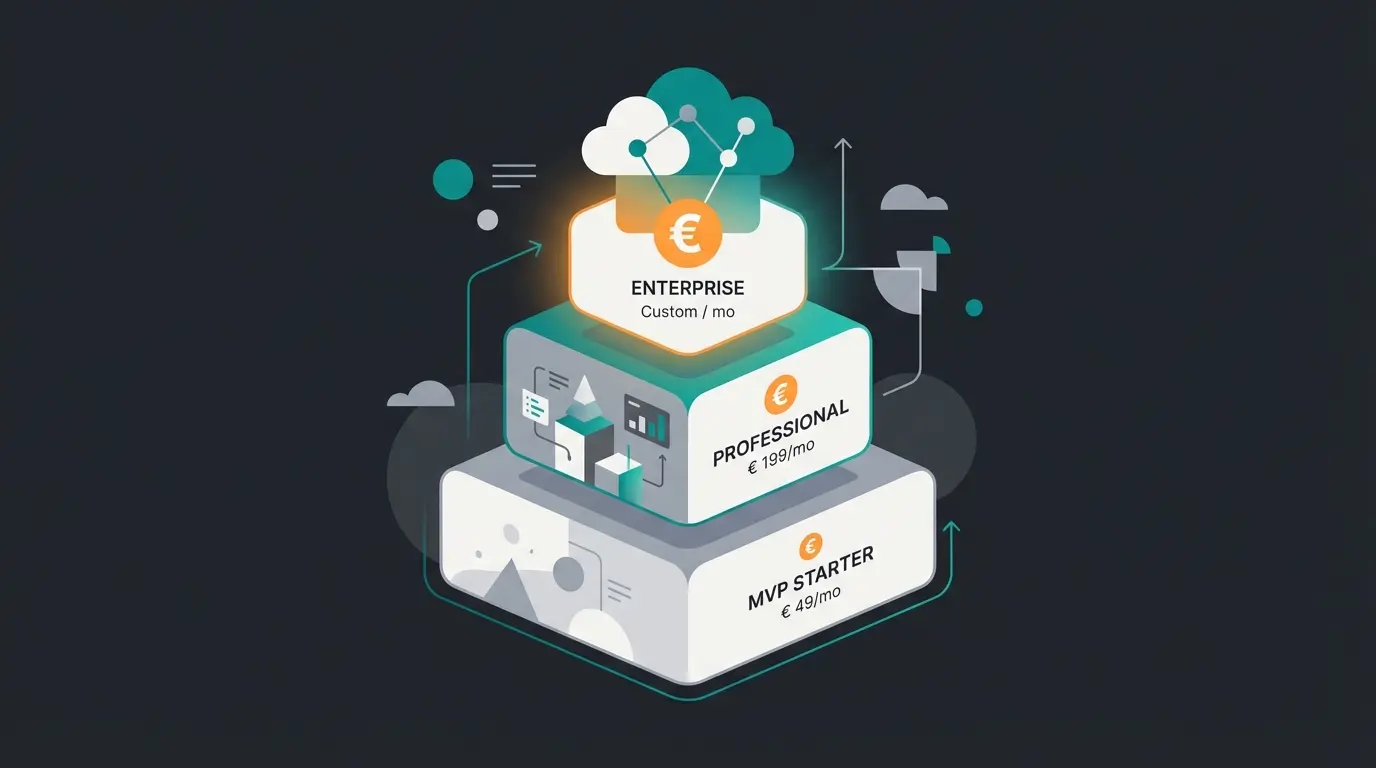
1. The MVP / Starter Project (€15,000 – €25,000)
Ideal for smaller businesses or brands that want to validate quickly (time-to-market).
- Base: Shopware 6 Community Edition or Rise
- Design: Use of a high-quality theme with adjustments to corporate design (no custom design)
- Features: Standard functionality, connection to common payment methods (PayPal, Stripe) and shipping providers
- Interfaces: None or very simple connections (e.g., via CSV upload)
2. The Professional Shop (€30,000 – €70,000)
The standard for established medium-sized businesses looking to grow. When comparing platforms, our Shopware vs Shopify comparison shows why Shopware often wins for complex B2B requirements.
- Base: Shopware Rise or Evolve
- Design: Individual UX/UI design optimized for conversion
- Features: B2B features (customer group pricing), complex filters, blog integration
- Interfaces: Fully automated connection to ERP systems (e.g., SAP, Microsoft Dynamics, Weclapp) and PIM
- Migration: Transfer of customer data and order histories from legacy systems (Magento 1/2, Shopware 5)
3. The Enterprise Solution (€80,000 – €200,000+)
For market leaders and complex B2B scenarios. Understanding the differences between Shopware editions comparison becomes critical at this level.
- Base: Shopware Evolve or Beyond
- Design: Headless approach or highly complex Shopping Experiences
- Features: Multi-inventory (multiple warehouses), international sub-shops, guided shopping, custom configurators
- AI Integration: Tailored AI sales agents (see USP section below)
Cost Table Overview
| Project Phase | Starter (MVP) | Professional | Enterprise |
|---|---|---|---|
| Conception & Strategy | €1,500 - €3,000 | €5,000 - €10,000 | €15,000+ |
| Design (UX/UI) | €1,000 (Theme) | €8,000 - €15,000 | €25,000+ |
| Development & Setup | €10,000 - €15,000 | €20,000 - €40,000 | €60,000+ |
| Interfaces (ERP/PIM) | €0 - €2,000 | €5,000 - €15,000 | €20,000+ |
| Quality Assurance & Launch | €1,500 | €4,000 | €10,000+ |
| Total Budget (net) | ~€15k - €25k | ~€30k - €70k | ~€80k - €200k+ |
What Are the Cost Components?
A quote for "€50,000" is abstract. Let's look at the cost drivers in detail, especially the changes for 2025.
1. License Costs: The New Rental Model & Fair Usage Policy
According to webwirkung.ch and imi-digital.de, Shopware has completely switched the licensing model to monthly rentals (SaaS or Self-Hosted Subscription). Purchase licenses no longer exist.
- Shopware Rise (from €600/month): The entry point for professional merchants. Includes the "AI Copilot" and extended support.
- Shopware Evolve (from approx. €2,400/month): Focus on B2B. Includes features like budget management, quote processes, and advanced search. The price is often negotiable based on revenue, as noted by erock-marketing.de and official Shopware.com pricing pages.
- Shopware Beyond (from approx. €6,500/month): For corporations. Includes multi-inventory, subscriptions, and 24/7 support.
Consequence: Successful shops must effectively switch to a paid plan (at least Rise). Plan for these operating costs (at least €7,200/year) if you want to grow.
2. Migration: The Invisible Effort
Switching from Shopware 5, Magento, or Shopify to Shopware 6 is not a simple "update." It's a system change (re-platforming). According to migration specialists at webshop-migration.de, proper planning is essential.
- Data: Customer and order data can often be migrated well.
- Content: Shopping Experiences and landing pages usually need to be manually rebuilt.
- SEO: To avoid ranking losses, a comprehensive redirect concept (301 redirects) is necessary. This takes time but saves real money by preserving visibility.
3. Interfaces (API)
Shopware 6 follows an "API-First" approach. This makes integrations easier, but not free. A clean connection to an ERP (e.g., SAP Business One or Microsoft Dynamics) quickly consumes 10-20 project days, as data structures need to be mapped and synchronization logic defined. For comprehensive technical maintenance, our Shopware 6 support guide covers everything you need to know.
Requirements analysis, competitor research, technical planning (1-3 weeks)
Wireframes, UI design, conversion optimization, prototyping (2-4 weeks)
Core development, API connections, ERP/PIM integration (6-12 weeks)
Testing, performance optimization, go-live, monitoring (2-3 weeks)
AI integration, analytics, continuous improvement (ongoing)
The Hidden Cost Factor: Consultation & Personnel
This is where the wheat separates from the chaff. Most agencies only talk about creation costs (Capex). But operating costs (Opex) determine your profit. Working with a Shopware full service agency that understands this distinction is crucial.
The Problem: The "Silent" Shop
A classic online shop is like a supermarket without staff. The customer must search on their own. If they can't find the product or are unsure (e.g., "Does this spare part really fit?"), they abandon the cart or call support.
- Cost Factor 1: High abandonment rate (Lost Revenue)
- Cost Factor 2: Expensive support staff for trivial questions
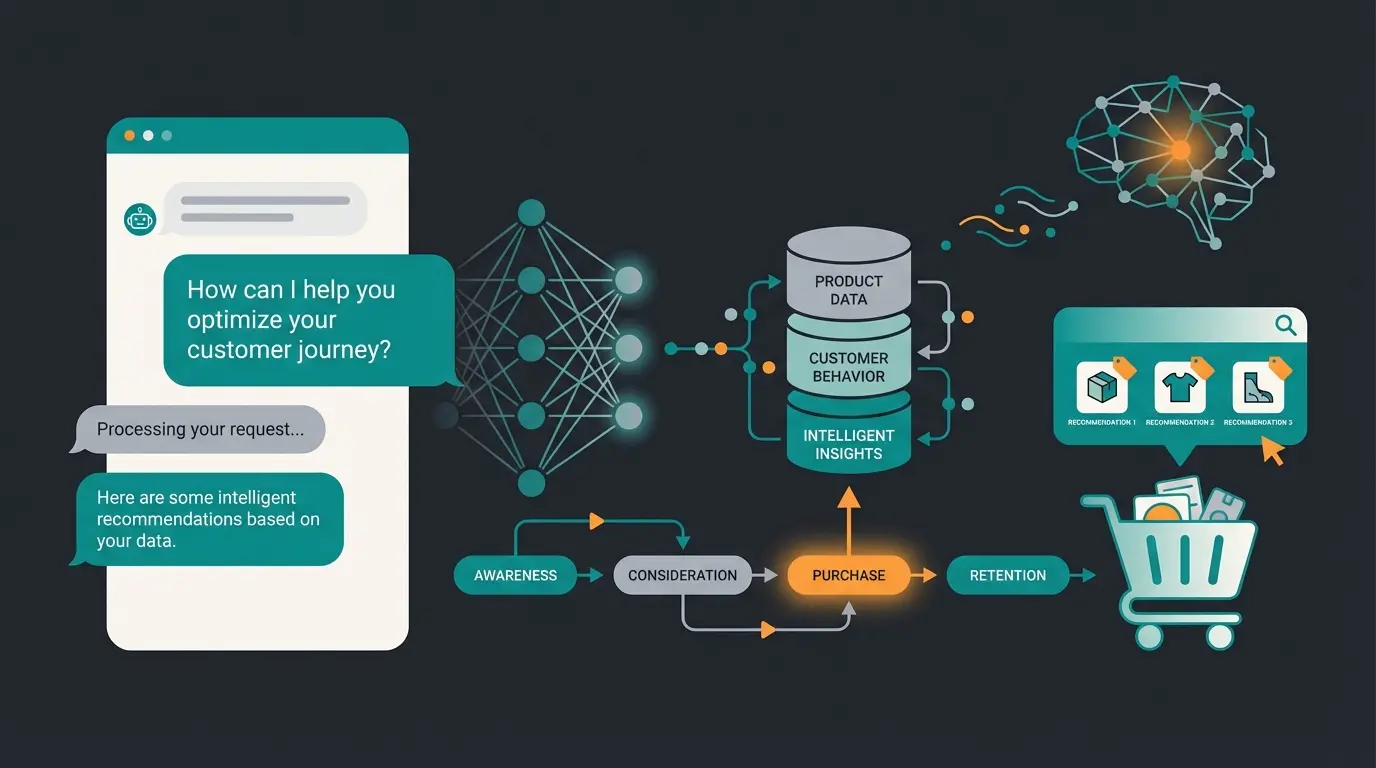
The Solution: AI-Driven Sales Automation
Modern agencies don't just integrate Shopware – they build AI sales assistants. We're not talking about dumb chatbots that read FAQs. We're talking about LLM-based agents (based on GPT-4 or Claude) that know your product catalog and technical documentation. Implementing Shopware 6 chatbots with true intelligence is now a competitive differentiator.
The impact of AI in customer service has been transformative, reducing operational costs while improving customer satisfaction. This is particularly relevant as businesses navigate the EU AI Act requirements for transparent AI usage.
ROI Calculation: Standard vs. AI-Enhanced Shop
Let's look at the Total Cost of Ownership (TCO) over 3 years for a technical B2B merchant. This comparison demonstrates why focusing solely on initial development costs misses the bigger picture.
| Cost Position (3 Years) | Classic Agency Solution | AI-Optimized Solution (Your Advantage) |
|---|---|---|
| Initial Setup (Project) | €50,000 | €65,000 (+€15k for AI training) |
| License Costs (Rise) | €21,600 | €21,600 |
| Maintenance & Hosting | €18,000 | €25,000 (incl. AI token costs) |
| Support Staff (internal) | €180,000 (1.5 FTE at €40k/year) | €60,000 (0.5 FTE, AI handles the rest) |
| Lost Revenue (Churn) | High (customer buys from competitor) | Low (immediate 24/7 consultation) |
| Total Costs (TCO) | €269,600 | €171,600 |
Result: Although the AI shop costs €15,000 more to acquire, you save almost €100,000 in operating costs over 3 years – with simultaneously higher conversion rates.
Net reduction in TCO over 3 years with AI integration
From €180,000 to €60,000 through AI automation
Round-the-clock customer consultation without additional staff
Typical improvement through intelligent product recommendations
Shopware AI Copilot vs. Custom AI Solutions
According to Shopware.com and scope01.com, Shopware already offers native functions with the "AI Copilot":
- Content generation for Shopping Experiences
- Automatic image keywords (alt tags)
- Review summarization
- Personalized checkout messages
These are excellent tools for backend efficiency (admin time savings). For deeper insights into leveraging AI for e-commerce, explore our comprehensive guide on AI e-commerce solutions.
However, the real revenue lever lies in the frontend: A custom AI agent that advises the customer ("Which bicycle fits my height and budget?") is a feature that standard agencies often don't offer. This type of AI-powered consultation transforms passive browsing into active selling.
Stop losing customers to uncertainty. Our AI consultation solution answers product questions 24/7, reduces support costs by up to 66%, and increases conversion rates.
Get Your Free AI AssessmentAgency Hourly Rates & Models Compared
When comparing offers, you'll encounter very different hourly rates. Understanding these differences is essential for budgeting accurately.
Market Overview: Hourly Rates 2025
Based on market research from qualimero.com and industry surveys, here's what you can expect:
- Freelancer / Offshore: €60 - €90 / hour. Risk: Often lacking availability, no backup if sick, less strategic foresight.
- Standard Agency: €100 - €125 / hour. Performance: Solid implementation according to requirements.
- Premium / Enterprise Agency: €130 - €170 / hour. Performance: Strategic consulting, certified developers, AI expertise, quality management.
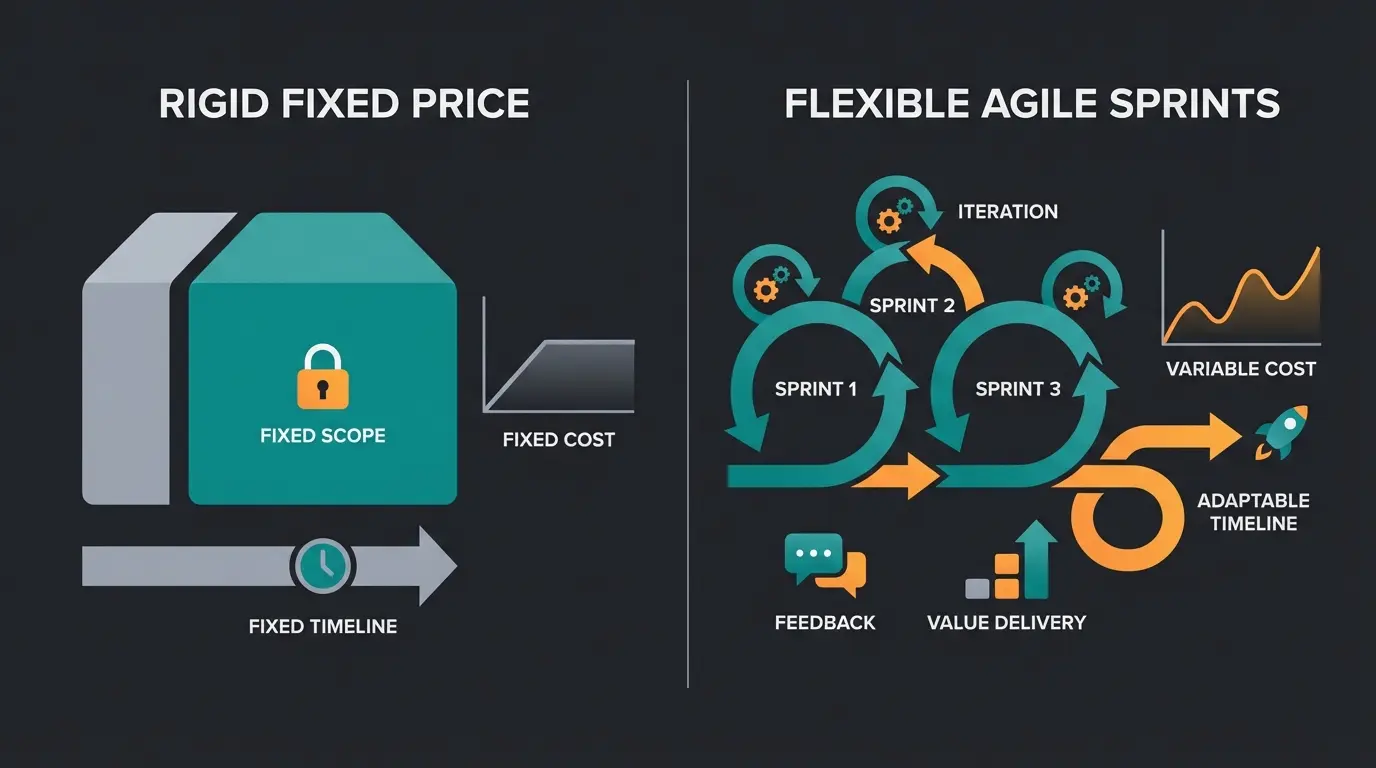
Fixed Price vs. Agile (Time & Material)
Fixed Price: Sounds safe ("The shop costs €40,000").
- Problem: Agencies calculate a high risk buffer (approx. 20-30%). Changes during the project are expensive ("Change Requests"). Innovation often falls by the wayside as only the bare minimum is implemented.
Agile (Time & Material): Billing based on effort.
- Advantage: Maximum flexibility. You only pay for what is actually delivered. Through regular sprints (e.g., every 2 weeks), you have full cost control.
- Recommendation: Start with a fixed price for the MVP (to secure the launch) and switch to an agile model for further development.
Checklist: How to Choose the Right Shopware Agency
Don't rely solely on pretty reference images. Ask these questions in the pitch to separate the wheat from the chaff. Looking at AI readiness comparison can also help you evaluate agency capabilities:
- Certification: How many certified Shopware 6 developers are permanently employed (not freelancers)?
- TCO Understanding: "Can you provide me with a TCO calculation for 3 years, including hosting and updates?"
- The AI Question (The Test): "How do you use AI not just to program faster, but to increase my revenue?" Bad answer: "We use ChatGPT for writing code." Good answer: "We implement AI-powered product search and consultation bots to reduce your service costs."
- Fair Usage Policy: "How do you handle the new revenue threshold for the Community Edition? Do you have experience with upgrading to Rise/Evolve?"
- Performance: "Show me a live shop and its Google PageSpeed Insights scores (Mobile)."
For merchants seeking comprehensive guidance on automating customer interactions, our guide on how to automate Shopware support provides actionable strategies.
Where Does the Money Actually Go?
Understanding the breakdown of a typical €50,000 Shopware project helps you evaluate agency proposals more effectively. Most merchants are surprised to learn that development is often not the largest cost component when viewed over the full project lifecycle.
Core Shopware installation, customizations, and plugin configuration
Custom theme development, conversion optimization, mobile experience
ERP, PIM, payment, and shipping provider connections
Requirements analysis, technical architecture, project management
The often-missed 'growth engine' that standard agencies overlook
The last category – Sales Tech & AI – is what separates modern e-commerce agencies from traditional web developers. This small investment percentage can generate the highest ROI through improved conversion rates and reduced support costs. For a deeper understanding of how AI transforms e-commerce operations, our guide on AI product consultation provides comprehensive insights.
Conclusion: Reducing Costs Through Intelligent Technology
The costs for a Shopware agency in 2025 are no longer just about design and code. Those who buy "cheap" today (e.g., a €15,000 flat-rate package without strategy) will pay double tomorrow: through high support costs, poor rankings, and lack of scalability when hitting the €1 million threshold.
Our Recommendation:
Consider your Shopware shop as a digital sales representative.
- Plan realistically with €30,000 - €50,000 for a professional start.
- Factor in license costs (Rise/Evolve) to be future-proof.
- Invest the budget you save through efficient agency processes directly into AI features that drive your conversion rate.
A shop costs money. An intelligent shop makes money.
FAQ: Common Questions About Shopware Costs
The Community Edition is license-free, but since March 2025, it's been tied to a revenue threshold (€1M GMV). Additionally, there are costs for hosting, plugins, and maintenance. There is no 'free' professional shop.
Expect monthly costs of approximately €300 to €1,500 for hosting, security updates, and monitoring, depending on shop size and SLA level.
For B2B companies and merchants with complex requirements (individual pricing, inventory management, data privacy): Yes. The TCO with Shopware can actually be lower due to the elimination of transaction fees (which Shopify charges) above a certain revenue level, despite higher initial costs.
An MVP can be launched in 8-12 weeks. A professional shop with custom design and ERP integration typically takes 4-6 months. Enterprise projects may extend to 9-12 months depending on complexity.
Rise (from €600/month) is for professional merchants needing AI Copilot and standard B2C features. Evolve (from €2,400/month) adds B2B capabilities like customer-specific pricing and quote management. Beyond (from €6,500/month) includes enterprise features like multi-inventory, subscriptions, and 24/7 support.
Get a transparent TCO analysis that includes AI-powered sales automation. Discover how much you can save while increasing conversion rates with intelligent product consultation.
Start Your Free Consultation