Introduction: Why a Shopware Shop Is Like a Sports Car
Imagine buying a state-of-the-art sports car. It looks fantastic, it's fast, and it's technically brilliant. But what happens if you never change the oil, never check the tires, and ignore warning lights? It breaks down—usually when you need it most.
A Shopware shop behaves exactly the same way. Many retailers invest five-figure sums in the setup (design, development, launch) but forget to budget realistically for ongoing operations. The result: security vulnerabilities, slow loading times, incompatible plugins, and in the worst case, a complete outage during Black Week.
However, in 2025, the concept of "maintenance" has evolved. It's no longer just about "keeping the lights on" (technical updates). It's about value preservation and performance. While agencies sell you technical security packages, many retailers overlook content maintenance: outdated FAQs, static shopping assistants, and dead links cost you revenue every single day.
In this comprehensive guide, we analyze Shopware maintenance costs for 2025 in detail. We uncover hidden cost traps, compare agency prices, and show you how modern AI tools can drastically reduce the manual maintenance effort for your customer consultation. Whether you're evaluating Shopware vs Shopify or already committed to the platform, understanding these costs is essential for your 2025 budget planning.
What Does Shopware Maintenance Really Cost? Pricing Models
One of the most common questions from shop operators is: "What do I need to budget monthly for maintenance?" The answer depends heavily on your shop's size, the chosen edition (Community vs. Rise/Evolve), and the number of plugins installed.
Based on current market data and agency offers for 2025, the following price structure can be derived, according to sources like vierpunkt-commerce.de and byte-networks.de:
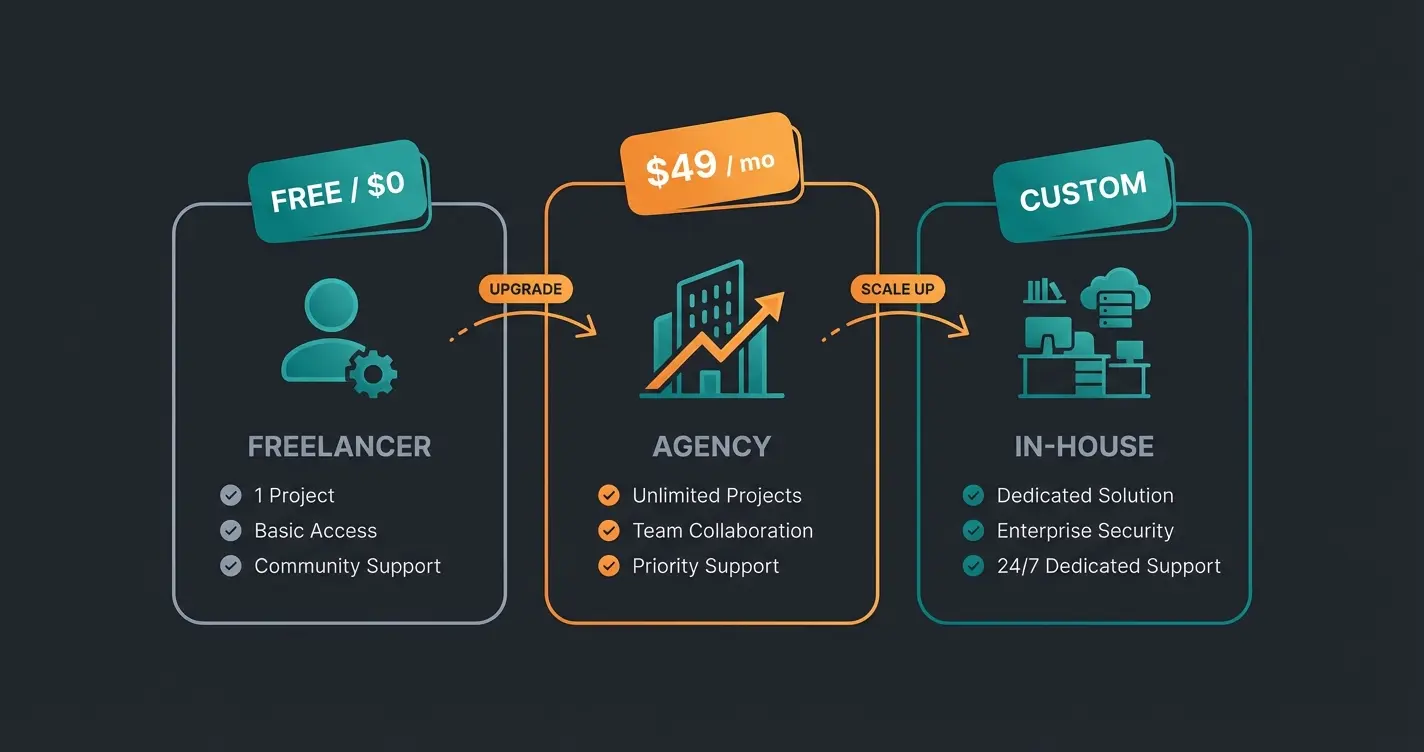
The Three Common Pricing Models Compared
| Model | Cost Range | Advantages | Disadvantages | Suitable For |
|---|---|---|---|---|
| Freelancer | €50-100/hour | Affordable, direct contact | Availability risk (illness/vacation), often less specialized expertise across the board | Small shops, startups with limited budget |
| Agency (Maintenance Contract) | €150-1,000+/month | Guaranteed response times (SLA), expert teams, vacation coverage, structured processes | Higher fixed costs, often tied to contract terms | Ambitious SMBs, enterprise shops |
| In-House Developer | €60,000+/year (salary) | Full control, deep understanding of your own shop | Very expensive, "operational blindness," recruitment difficulties | Large enterprise retailers (GMV > €5 million) |
Typical Agency Maintenance Packages
Most agencies bundle their services into packages. Here's what you can expect for your money when working with a Shopware full service agency:
The Basic Package ("The Insurance")
- Price: approximately €150-299 per month
- Scope of Services: Security patch installation, uptime monitoring, regular backups (database & files), minor updates within a version (e.g., 6.5.1 to 6.5.2)
- Goal: Keep the shop secure and online. No further development included.
The Premium Package ("The Worry-Free Service")
- Price: approximately €399-800 per month
- Scope of Services: Everything from the basic package plus plugin updates (testing and updating third-party extensions), performance monitoring, guaranteed response time (SLA) of 4-24 hours, often includes a small hour contingent (1-2 hours) for support requests
- Goal: Proactive maintenance with faster response times
The Enterprise Package ("Full-Service Care")
- Price: €1,000-2,500+ per month
- Scope of Services: 24/7 emergency support, dedicated test and staging environments, proactive code reviews, strategic consulting (regular meetings), updates for complex interfaces (ERP, PIM)
- Goal: Comprehensive care for mission-critical operations
Hourly Rates for Individual Work
Everything not covered by the flat rate (e.g., designing a new landing page element or connecting a new shipping provider) is billed based on effort. According to shopwareagentur.info and satware.com:
- Average hourly rate 2025: €100 to €160 net
- Specialist rate: For senior developers or software architects, €160 to €200 may apply
The 3 Pillars of Shopware Maintenance: More Than Just Updates
To understand the costs, we need to define what "maintenance" actually means. Many retailers fall into the trap of viewing maintenance purely as a technical evil. In reality, healthy shop maintenance consists of three pillars that you should consider when planning your Shopware 6 support strategy.
Pillar 1: Technical Maintenance (The Foundation)
This is the classic component that agencies offer. It's essential for security.
- Shopware Core Updates: Updating the shop software itself (e.g., from version 6.5 to 6.6). This is often time-consuming as it must be verified whether the theme and all plugins are compatible.
- Security Patches: Closing critical vulnerabilities to prevent hacks and data leaks.
- Server Maintenance: PHP updates (e.g., switching to PHP 8.2/8.3), database optimization.
Pillar 2: Functional Maintenance (The Mechanics)
A shop consists of many moving parts that need regular attention.
- Plugin Compatibility: After a Shopware update, certain plugins often no longer work correctly. Functional maintenance includes testing the checkout, search function, and forms after every update.
- Interface Monitoring: Are order data correctly flowing into the ERP? Are inventory levels being synchronized?
Pillar 3: Content & Consultation Maintenance (The Forgotten Cost)
This is where the greatest savings potential lies and the biggest gap in most calculations. A technically perfect shop sells nothing if the content is outdated.
- The Problem: Retailers often use static FAQ pages or simple chatbots ("If customer clicks X, show answer Y").
- The Maintenance Effort: Every time a product changes, a new collection arrives, or return conditions change, these static texts and chatbot scripts must be manually adjusted. This costs internal personnel resources or expensive agency hours.
- The Consequence: This maintenance is often neglected. The customer receives outdated information, abandons the purchase, and burdens support.
This is where you can automate Shopware support to dramatically reduce these ongoing costs.
Security patches, core updates, server maintenance - keeping the foundation secure
Plugin compatibility testing, interface monitoring, checkout verification after updates
FAQ updates, shopping guides, product advisors - often neglected but critical for conversions
Why "Hidden Costs" Often Exceed the Flat Rate
The monthly flat rate to the agency is often just the tip of the iceberg. When planning your budget for 2025, you need to consider these hidden cost factors according to analysis from uptain.de and Shopware.
1. Plugin Subscriptions (The Subscription Trap)
In Shopware 6, you often no longer buy plugins once—you rent them or pay an annual subscription for updates. According to 8mylez.com and nextshops.de:
- Costs: An average shop has 10-20 plugins. Costs often range from €10 to €50 per plugin/month or annual fees.
- Risk: If you cancel the subscription, you no longer receive updates. With the next Shopware update, the plugin becomes incompatible and the shop crashes.
2. Major Updates (The Big Leaps)
Most maintenance contracts only cover "minor updates" (e.g., 6.5.1 to 6.5.2). A "major update" (e.g., from 6.5 to 6.6 or even 6 to 7) is often a mini-project according to mediameets.de:
- Effort: Since deep changes to the architecture are often made here (breaking changes), themes and custom programming must be adapted.
- Additional Costs: Plan for 1 to 3 days of agency effort extra, which is not included in the flat rate.
3. Staging Environments
Professional maintenance never happens on the "open heart" (live shop). You need a test environment (staging).
- Costs: Many hosters charge extra for the second instance (database, storage). Additionally, the synchronization between staging and live (deployment processes) must be set up.
4. Cost of Inaction (Opportunity Costs)
What does it cost you if you don't maintain?
- Security Vulnerabilities: A hacked shop costs an average of €20,000 to €50,000 (data loss, GDPR fines, image damage).
- Conversion Loss: An outdated checkout or slow search (because the search index wasn't maintained) costs real money daily.
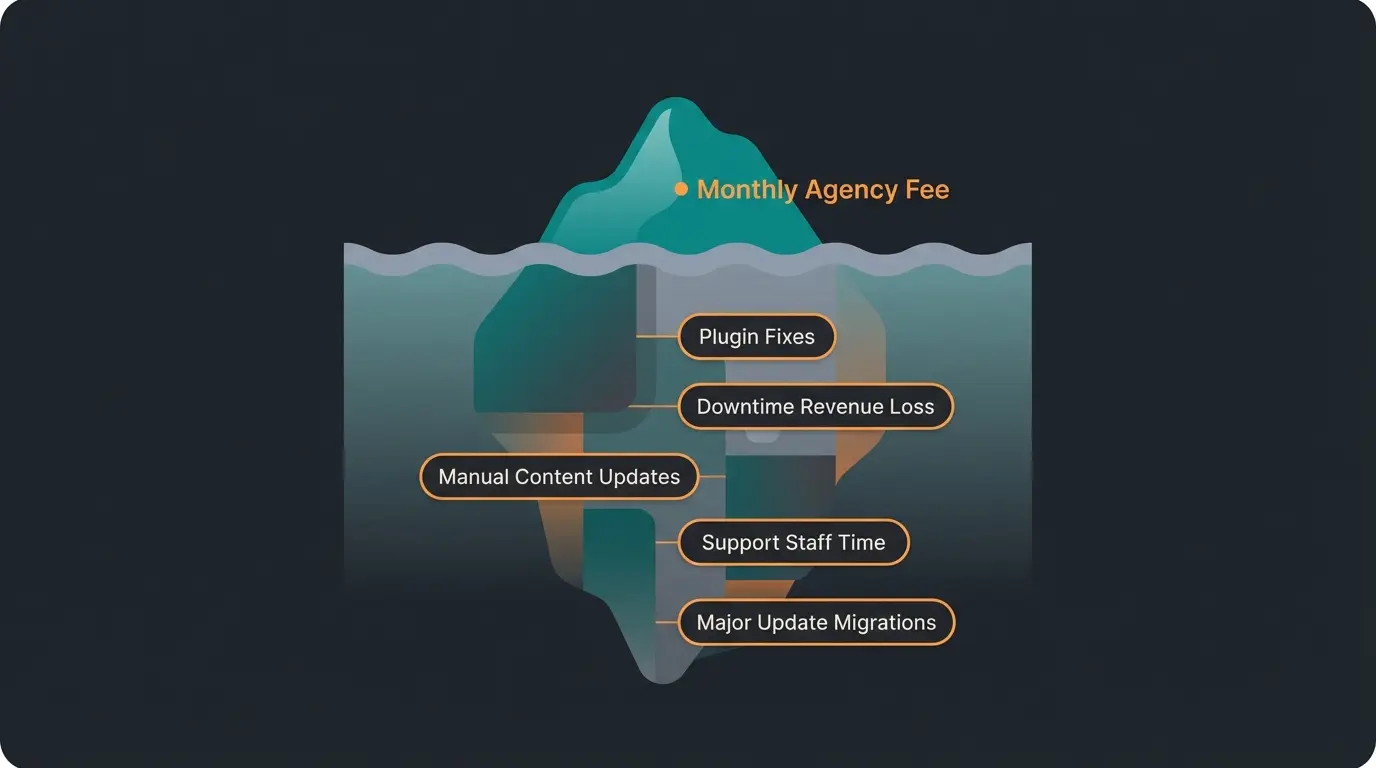
The typical agency maintenance contract cost
Annual subscriptions for 10-20 plugins add up quickly
1-3 days agency work for version jumps not in contract
Data loss, GDPR fines, and reputation damage
Shopware 5 vs. Shopware 6: Different Maintenance Worlds
A decisive factor for your cost calculation in 2025 is the version you're using. Understanding the Shopware editions comparison is essential for making informed decisions.
Shopware 5: End of Life (EOL) – The Cost Driver
Since July 2024, Shopware 5 no longer receives official security updates from the manufacturer according to Shopware's official announcement and vierpunkt-commerce.de.
- The Situation: Anyone still on SW5 is driving a car without insurance.
- The Solution (and Costs): You must rely on external service providers like SafeFive that provide unofficial security patches, as noted by area-net.de. This causes additional monthly costs.
- Maintenance Effort: Since plugins for SW5 are also no longer being developed, the effort for agencies to keep them "alive" increases drastically. Maintenance costs for SW5 shops are expected to rise in 2025 as expertise becomes scarcer in the market.
Shopware 6: Self-Hosted vs. Cloud (SaaS)
With Shopware 6, you have a choice that massively influences your maintenance costs according to magnalister.com and official Shopware documentation:
| Aspect | Self-Hosted (On-Premise) | Shopware Cloud (SaaS) |
|---|---|---|
| Hosting Costs | €50-500/month (own hoster) | Included in plan (from €600/month) |
| Server Maintenance | Your responsibility (or agency) | Shopware handles it |
| Shopware Updates | Manual (agency effort) | Automatic by Shopware |
| Flexibility | Unlimited (custom code) | Limited (only apps, no core hacks) |
| Maintenance Focus | Technical & Content | Primarily Content & Configuration |
Conclusion: The cloud variant (SaaS) has higher monthly license costs but saves massively on technical maintenance costs (server, updates). For retailers with little technical staff, this is often the more affordable TCO (Total Cost of Ownership) solution.
While technical maintenance is unavoidable, content maintenance doesn't have to be. Our AI Product Consultant automatically stays current with your product catalog—no manual updates required.
Discover AI AutomationDIY vs. Agency: Is the Risk Worth It?
Many small retailers try to perform updates via the "auto-updater" in the backend themselves to save the €250 agency flat rate. Before making this decision, consider getting proper Shopware technical support.
Why This Often Goes Wrong
- No Backup: If the auto-updater crashes at 99%, the shop goes white (White Screen of Death). Without a professional database backup, the shop is often offline for days.
- Plugin Conflicts: The updater doesn't logically check whether Plugin A harmonizes with Plugin B in the new version.
- Friday Afternoon Syndrome: Updates are often done "quickly." When errors occur, no support is available on the weekend.
Our Recommendation
If you don't have an internal developer, a maintenance contract is without alternative. The costs of a single day of downtime usually exceed the annual costs of a maintenance contract.
Checklist: What Belongs in Every Maintenance Contract
Before you sign a contract, check these points. A good contract ("SLA" - Service Level Agreement) must clarify the following questions:
- Response Time: How quickly does the agency start working on a critical error (shop offline)? (Standard: 4-8 hours, Premium: < 2 hours)
- Update Frequency: Are updates applied immediately or collected (e.g., quarterly)? (Security updates should happen immediately).
- Testing Procedure: Is always tested on a staging system first? (A "No" is an exclusion criterion).
- Browser Testing: Is it verified that the shop still works on mobile devices (iOS/Android) after the update?
- Plugin Updates: Are these included or do they cost extra?
- Reporting: Do I receive a monthly protocol of the work performed?
How to Reduce Maintenance Costs Without Cutting Security
Want to optimize your budget? Here are strategic approaches that leverage modern solutions including Shopware AI features:
1. Practice Plugin Hygiene
Every plugin costs maintenance. Check annually: Do I still need this plugin? Is the function now included in the Shopware core? Fewer plugins = fewer incompatibilities = lower maintenance costs.
2. Longer Update Cycles for Features (Not Security!)
You don't have to immediately adopt every feature update (e.g., 6.6.1 to 6.6.2) if you don't need the new functions. Arrange with the agency to only apply security updates immediately and bundle feature updates semi-annually. This saves testing effort.
3. Automate Content Maintenance with AI
As mentioned above, maintaining shopping assistants and service content is a massive time sink. Instead of paying agency hours to update texts in an FAQ bot, deploy AI-powered product consultation. This approach to AI Customer Service is transforming how retailers handle customer support.
Comparison: Manual Maintenance vs. AI Solution
| Feature | Classic Chatbot / Advisor | AI Product Consultant |
|---|---|---|
| Setup | Manual writing of questions & answers | Crawling of product data (Plug & Play) |
| Maintenance for new products | Manual adding of new attributes/links | Automatic (0 effort) |
| Maintenance for assortment changes | High effort (deleting old paths) | Automatic (recognizes out-of-stock) |
| Ongoing Costs | High (personnel time or agency) | Low (SaaS fee) |
By using such a solution through AI driven consultation, you transform "maintenance costs" (dead capital) into an active sales instrument that keeps itself current. Modern Shopware 6 chatbots powered by AI represent the next evolution in Shopware customer service.
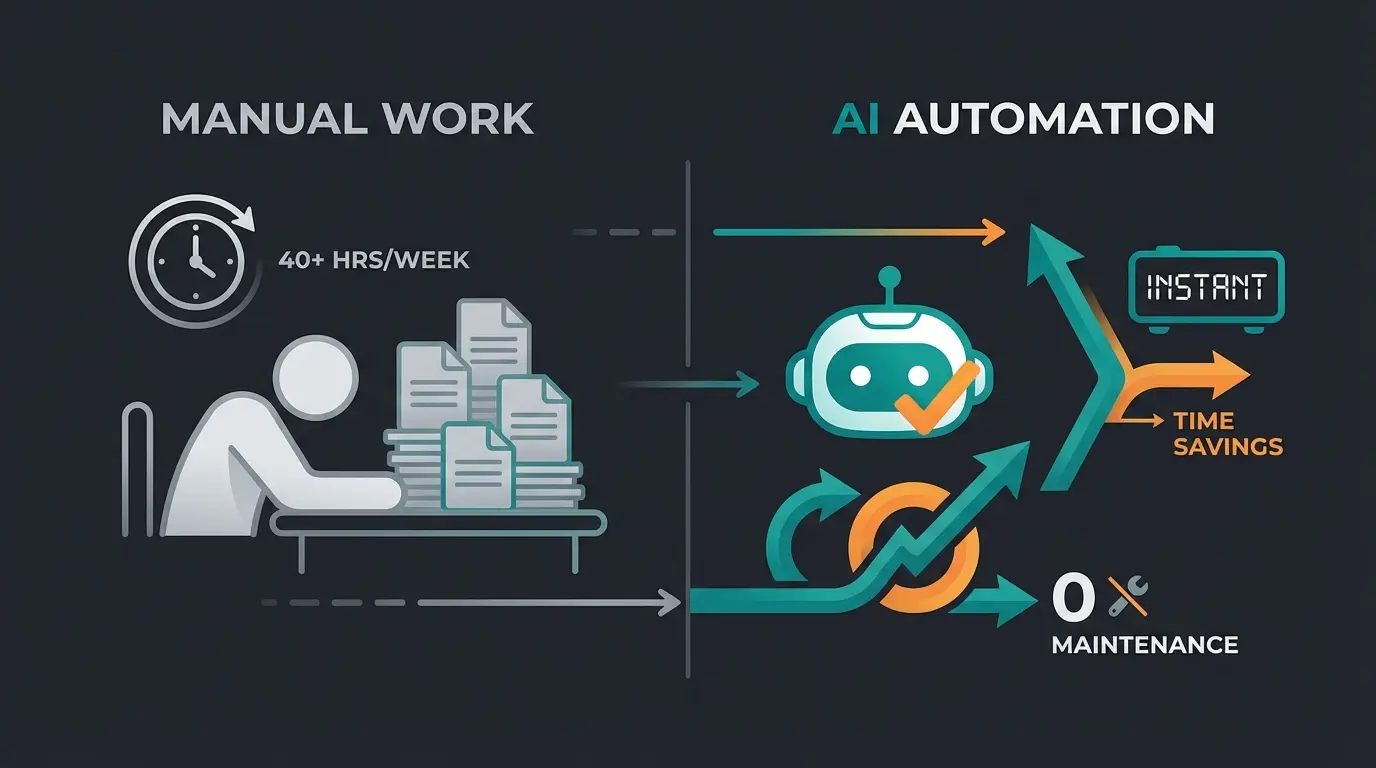
Updating FAQs, chatbot scripts, and product guides manually
AI reads product data in real-time, no updates needed
Agency hours or internal staff time for content updates
Potential savings by switching to AI-powered consultation
Shopware Maintenance Cost Calculator by Shop Size
Use this reference table to estimate your expected monthly maintenance investment based on your shop complexity:
| Shop Size | Standard Setup | Custom Plugins | Estimated Monthly Cost |
|---|---|---|---|
| Small (< €100k GMV) | Basic theme, 5-10 plugins | Few or none | €150-250 |
| Medium (€100k-500k GMV) | Custom theme, 10-20 plugins | 2-5 custom plugins | €300-500 |
| Large (€500k-2M GMV) | Heavily customized, 20+ plugins | 5-10 custom plugins | €600-1,000 |
| Enterprise (> €2M GMV) | Full custom, ERP/PIM integration | Extensive customization | €1,000-2,500+ |
Frequently Asked Questions About Shopware Maintenance
For small to medium businesses, expect to pay between €150 and €500 per month for professional maintenance. Enterprise solutions with 24/7 support and complex integrations typically range from €1,000 to €2,500+ monthly. These figures don't include hidden costs like plugin subscriptions and major version updates.
Shopware 5 reached End of Life in July 2024 and no longer receives official security updates. If you're still on SW5, you need third-party security solutions like SafeFive, which adds costs. We strongly recommend migrating to Shopware 6 to ensure security and access to modern features.
Shopware Cloud has higher monthly license costs (from €600/month) but eliminates server maintenance, automatic updates, and hosting management. Self-hosted gives you more flexibility but requires ongoing technical maintenance. For teams without dedicated developers, Cloud often offers better TCO.
While the admin panel offers auto-update functionality, DIY updates are risky without proper backups, staging environments, and technical expertise. Plugin conflicts and failed updates can result in extended downtime costing more than a year's maintenance contract. We recommend professional support.
AI-powered product consultants and customer service tools automatically stay current with your product catalog without manual updates. Unlike traditional FAQ bots requiring constant script maintenance, AI reads your product data in real-time. This eliminates content maintenance effort (typically 5+ hours monthly) and reduces support staff burden.
Conclusion: Maintenance Is Value Preservation, Not Just Cost
The question "What does Shopware maintenance cost?" can be answered for 2025 as follows: Plan for at least €250 to €500 per month for professional operation for technical security. Anything less is often negligent.
But don't view maintenance in isolation. A well-maintained shop is fast, secure, and offers an excellent shopping experience.
- Don't skimp on backups and staging systems.
- Factor in plugin follow-up costs.
- Use AI technology to eliminate manual content maintenance costs while simultaneously increasing conversion rates.
Want to reduce your content maintenance costs? Review how much time your team spends monthly maintaining FAQs and product advisors—and replace this effort with an intelligent AI solution that always stays current without you lifting a finger.
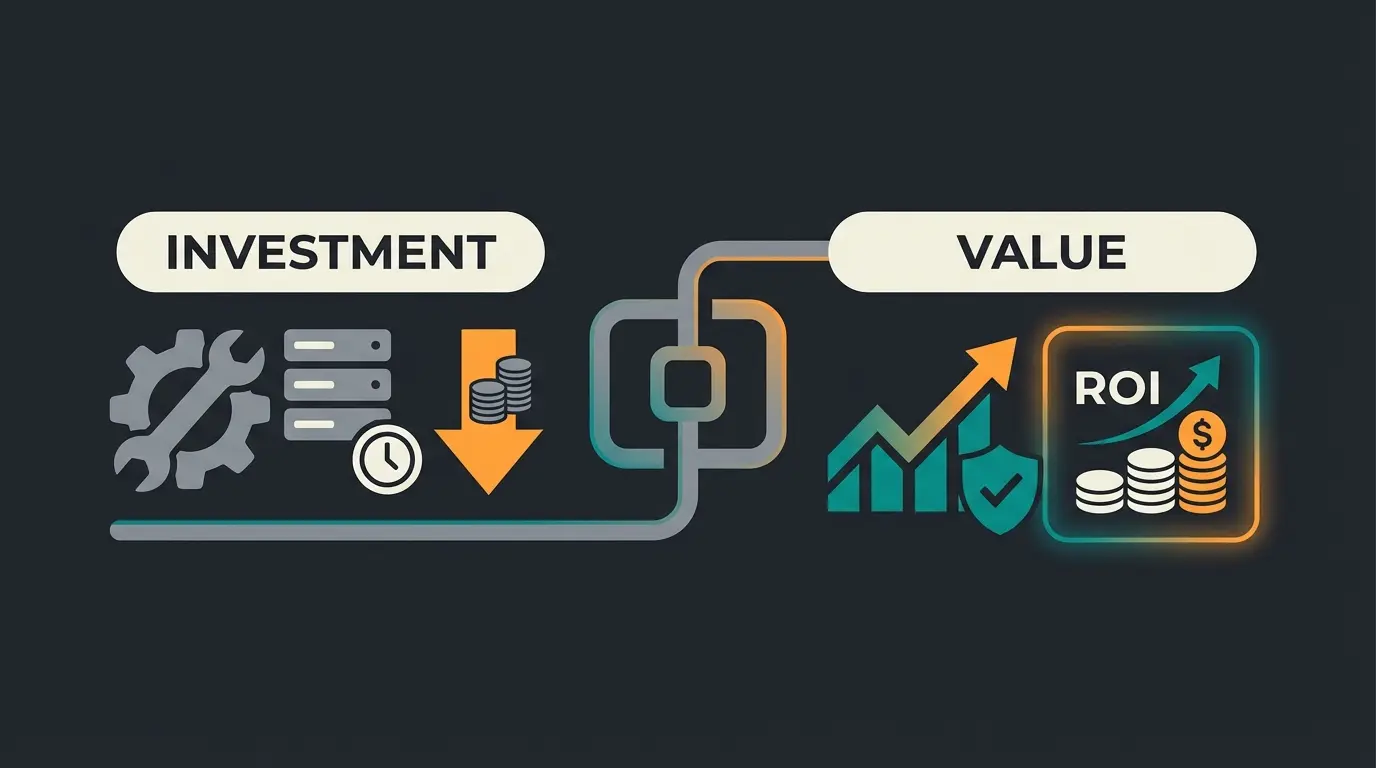
Stop treating customer consultation as a maintenance burden. Our AI Product Consultant keeps your shopping assistance perfectly current, reduces support tickets, and boosts conversions—all without ongoing content maintenance.
Start Your Free Trial