Key Takeaways at a Glance
- Market Position 2025: WooCommerce dominates globally through WordPress integration, while Shopware remains the undisputed market leader in the DACH region (Germany, Austria, Switzerland) for mid-market and enterprise segments according to 6sense and Shopware.
- Technological Leap: WooCommerce has massively improved its biggest weakness—scalability—with HPOS (High-Performance Order Storage) as reported by WooNinjas. Meanwhile, Shopware sets new standards for data-driven commerce with the 'AI Copilot' and API-first architecture.
- Cost Reality: The 'free' entry barrier with WooCommerce often obscures high maintenance and plugin costs (e.g., for legal compliance in Germany). Shopware introduced a 'Fair Usage Policy' in 2025 that enforces license fees for the Community Edition starting at €1 million GMV (Gross Merchandise Volume) as noted by Themeware Design.
- AI Readiness: Shopware offers native AI tools for B2B and content. WooCommerce relies on an open ecosystem and plans 'Agentic Commerce' according to Kanuka Digital and WooCommerce, but depends more heavily on third-party solutions.
Introduction: The Era of Intelligent Shop Systems
If you're facing the decision between Shopware vs WooCommerce in 2025, you're probably asking the wrong questions. The classic debate—'Open Source vs. License Costs' or 'Simplicity vs. Scalability'—is still relevant, but it doesn't capture the full picture anymore.
E-commerce has fundamentally transformed. It's no longer enough to simply make products transactionally available. The market is shifting from pure transactions to consultation. Today's customers expect an online shop to understand them, advise them, and provide personalized solutions—similar to a knowledgeable salesperson in a physical store. This is where Artificial Intelligence (AI) enters the conversation.
In this comprehensive comparison, we analyze not only the technical features and cost structures for the European market. Above all, we examine which platform provides the better data foundation for feeding AI-powered consultation models (such as product advisors or chatbots). For deeper insights into how AI transforms online shopping, explore our guide on AI E-Commerce solutions.
Whether you're an emerging retailer opening your first shop or an established mid-sized business needing to scale: This article provides you with the decision-making foundation for your e-commerce strategy in 2025 and beyond.
Quick Comparison: Shopware vs WooCommerce Overview
For those in a hurry, we've summarized the most important differences in a decision table. Here you can see where the strengths of both systems lie in direct comparison.
| Feature / Criterion | WooCommerce | Shopware 6 |
|---|---|---|
| Target Audience | Beginners, content-driven brands, small to medium shops | Ambitious startups, mid-market (SMB), enterprise & B2B |
| Cost Model | Free core (Open Source), but paid plugins & hosting | License model (from €600/month) or Community Edition (free up to €1M GMV) |
| Legal Compliance (EU) | Requires plugins (e.g., Germanized Pro), high manual effort | Native legal compliance ('Made in Germany'), GDPR-compliant in core |
| Scalability | Good up to ~50,000 SKUs (better with HPOS), but database-heavy | Excellent, API-first architecture, designed for millions of SKUs |
| B2B Features | Only possible through complex plugin setups | Native B2B Suite (in Evolve/Beyond plans) with rights/roles system |
| AI Readiness | Plugin-based (external tools), 'Agentic Commerce' in development | Native 'AI Copilot' deeply integrated in backend (export, content, classification) |
| Technology | WordPress plugin (PHP), monolithic (becoming more modular) | Symfony framework (PHP), API-first, headless-capable |
| Maintenance Effort | High ('plugin updates', compatibility checking) | Medium (more stable release cycles, fewer plugin conflicts) |
Deep Dive: Shopware 6 – The German Scaling Champion
Shopware is the dominant player in the German-speaking region (DACH) for the upper mid-market segment. With a market share of over 11.5% among the top 1,000 shops in Germany, it's the standard solution for companies wanting to operate 'mature' e-commerce. Understanding Shopware B2B vs B2C differences is essential for making the right choice.
The Architecture: API-First and Headless
Unlike older systems, Shopware 6 was completely rebuilt based on the Symfony framework and Vue.js. The approach is 'API-first.' This means: every function of the shop (shopping cart, product data, checkout) is accessible via an interface (API).
- Why this matters: You can use Shopware purely as a backend and design the frontend completely freely—whether it's an app, a voice skill, or a marketplace integration.
- For AI applications, this clean data structure is invaluable. The structured approach enables seamless integration with AI-powered product consultation systems.
Native B2B Power
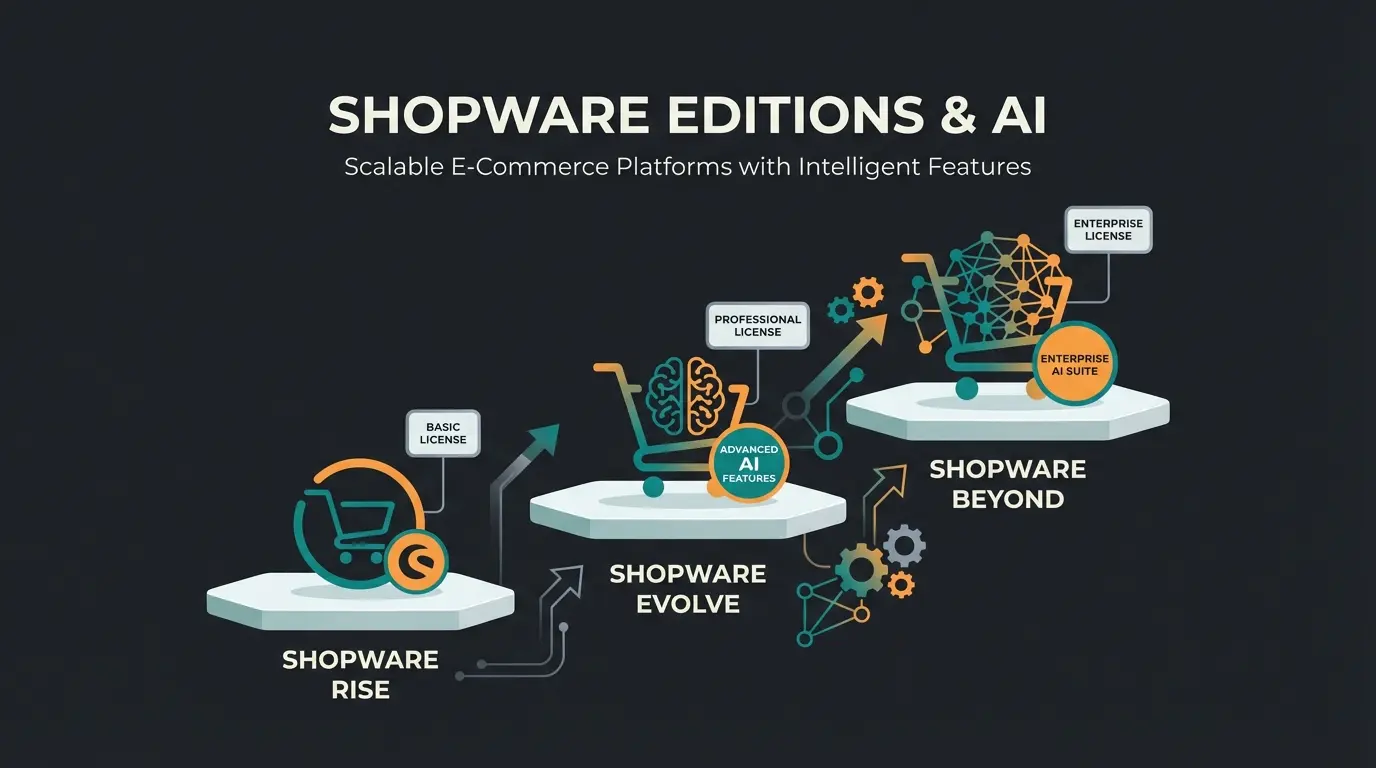
A decisive advantage of Shopware over WooCommerce is its focus on B2B (Business-to-Business). While WooCommerce requires laborious retrofitting of B2B features, Shopware offers the B2B Suite in its commercial plans (Evolve & Beyond) according to Media4U.
- Rights & Roles: Customers can create their own employee accounts with budgets and approval processes.
- Quick Orders & Quotes: Upload of CSV order lists and individual quote creation are integrated.
- Customer-Specific Pricing: Complex price lists for different customer groups are processed natively and performantly.
For a comprehensive understanding of B2B capabilities, check out our Shopware B2B guide that covers features, strategy, and consultation gaps.
Shopware AI Copilot: Built-in Intelligence
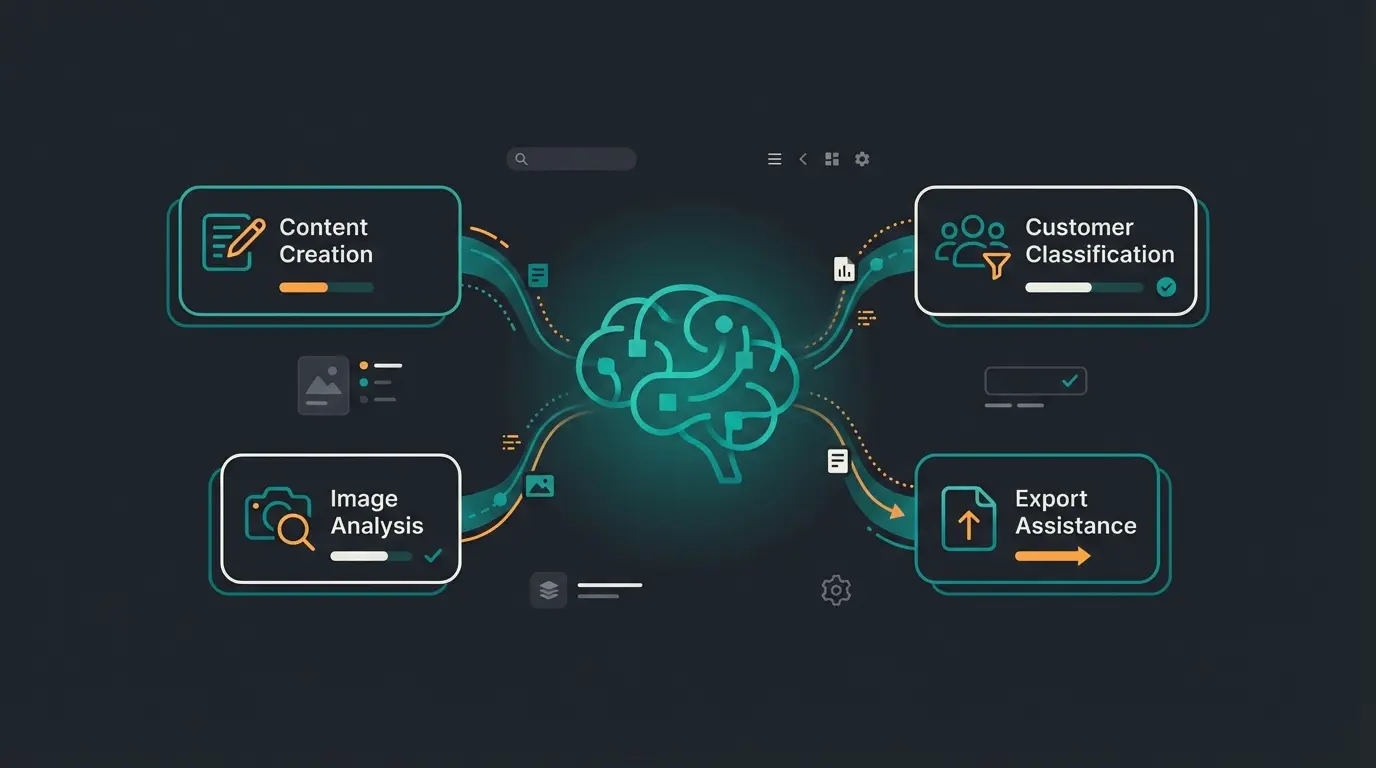
Shopware recognized early that AI isn't hype—it's a tool. The AI Copilot is directly integrated into the admin area and offers functions that would require multiple external subscriptions with WooCommerce according to Folio3. Learn more about Shopware AI features in our detailed guide.
- Content Creation: Generation of product descriptions and experience world texts.
- Image Analysis: Automatic keyword tagging of uploaded images for SEO.
- Customer Classification: AI analyzes purchasing behavior and automatically tags customers (e.g., 'Bargain Hunter', 'Loyal Regular') for marketing campaigns.
- Export Assistant: You can tell the AI in natural language: 'Export all orders from yesterday with a shopping cart over €100,' and it generates the CSV.
The Cost Trap: Fair Usage Policy 2025
A critical point for 2025 is the new pricing policy. The free Community Edition remains open source but is subject to a Fair Usage Policy starting March 24, 2025.
Deep Dive: WooCommerce – Flexible WordPress Power
WooCommerce is the most-used e-commerce platform worldwide with approximately 67% market share. It transforms any WordPress site into an online shop. Its strength lies in incredible flexibility and a massive ecosystem.
HPOS: The Performance Update of the Decade
For a long time, the perception was: 'WooCommerce is slow and bloats the database.' This was because orders were technically stored like blog posts (`wp_posts` table). In 2025, HPOS (High-Performance Order Storage) is the new standard according to WooCommerce.
- What is it? Orders get their own optimized database tables.
- The effect: Order creation is up to 5x faster, checkout up to 1.5x faster.
- The significance: WooCommerce is now technically capable of processing shops with tens of thousands of orders per day without breaking down.
The 'Plugin Puzzle' for EU Compliance
WooCommerce is built at its core for the US market. To operate it legally in Germany and the EU, 'DIY work' or the use of specialized plugins is necessary. Understanding chatbot compliance requirements is also crucial when implementing AI solutions.
- Germanized for WooCommerce: This plugin is practically mandatory. It adds legal checkboxes, delivery time displays, base prices, and legally compliant email texts according to Kinsta and PluginsForWP. The Pro version (~€79/year) also automates PDF invoices and returns.
- Cookie Consent: Tools like Borlabs Cookie (~€49/year) or Real Cookie Banner are necessary to enable GDPR-compliant tracking as noted by OMR and WP-Space.
- The Danger: Each plugin is a potential security vulnerability and maintenance risk. When WordPress, WooCommerce, Germanized, and your theme all receive updates, conflicts can occur ('Plugin Hell').
AI in WooCommerce: The 'Agentic' Future
WooCommerce doesn't yet have AI as deeply integrated as Shopware, but it has an exciting roadmap. With the Merchant Control Protocol (MCP), WooCommerce is paving the way for 'Agentic Commerce.'
- The Vision: AI agents (autonomous bots) should in the future not only interact with the shop to search for products but independently execute orders for the user.
- The Status Quo: Currently, merchants must rely on plugins like Kestrel AI or external tools to generate product texts or SEO data via AI according to SEO Solution Local.
For businesses exploring AI integration, our AI consulting e-commerce guide provides valuable insights into implementation strategies.
Manual browsing through product categories and hierarchies
WooCommerce/Shopware default search functionality
Intelligent product advisors understanding customer needs
The 'Hidden' Comparison: Data Quality & Intelligence
Here's your opportunity to differentiate from the competition. Most comparisons end at features and prices. But if you want to use AI to consult customers (e.g., 'Which bike fits my height and commute?'), you need structured data.
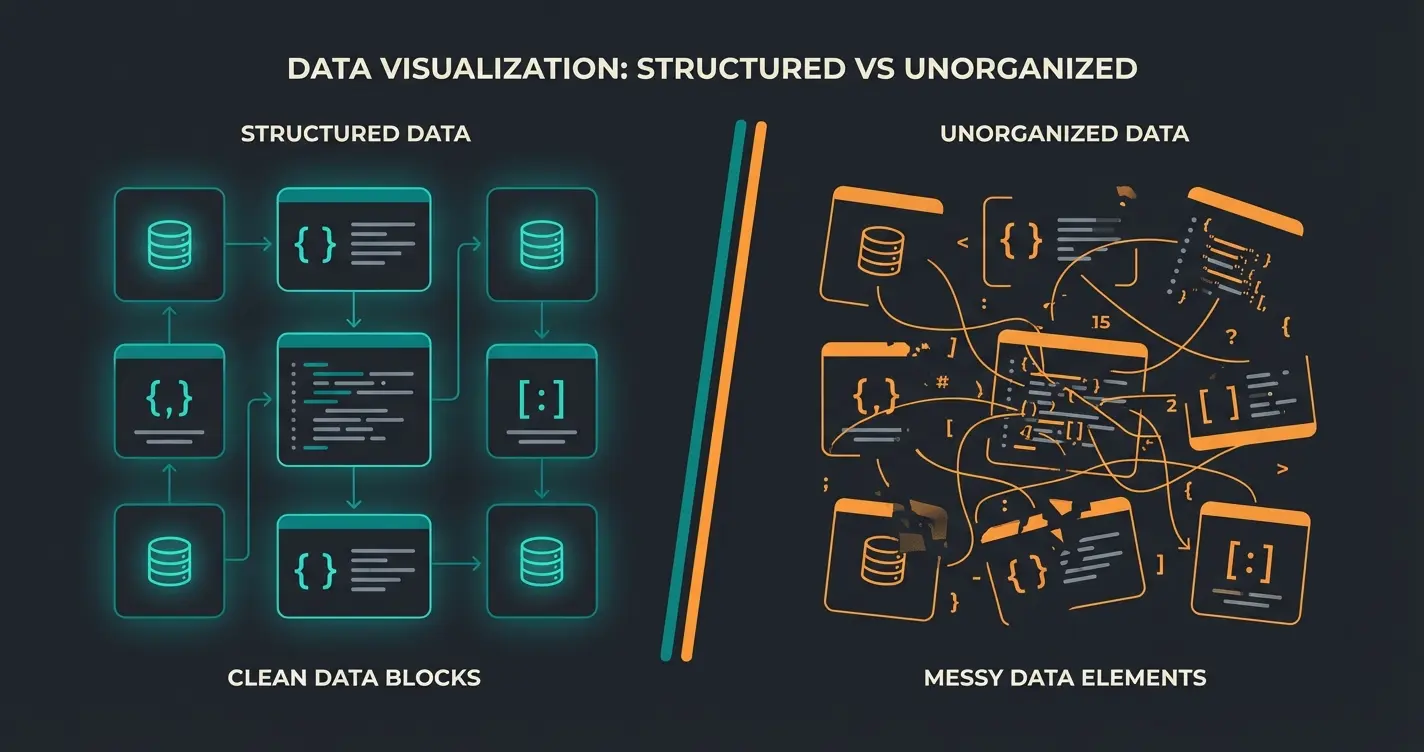
Shopware: Structured Data as AI Fuel
Shopware forces merchants through its architecture to maintain clean data. This is where Shopware personalization truly shines.
- Properties: In Shopware, product properties (color, size, material, technical values) are created in fixed sets.
- Advantage for AI: An AI can read this structured data extremely easily. If a customer asks: 'Show me red bikes under 15kg,' the AI can precisely access the 'Weight' attribute. The API delivers clean JSON data.
WooCommerce: Freedom vs. Chaos
In WooCommerce, data is often stored in 'Custom Fields' or unstructured text blocks.
- The Problem: Many merchants use variant plugins that don't store data in a standardized way.
- Disadvantage for AI: An AI often has to parse unstructured HTML texts to find technical data. This increases the error rate in consultation ('hallucinations').
- Solution: You need disciplined data maintenance or middleware solutions (PIM) to make WooCommerce 'AI-ready.'
Cost Reality Check: The European Perspective
Many beginners are blinded by the 'free' WooCommerce. Let's realistically calculate the Total Cost of Ownership (TCO) for a professional European shop over 3 years.
Scenario: Ambitious Shop (~€500k Revenue/Year)
| Cost Position | WooCommerce (Annual) | Shopware 6 Rise Plan (Annual) |
|---|---|---|
| License Fees | €0 (Core is free) | €7,200 (€600/month) per Shopware |
| Hosting (High Performance) | €1,200 (~€100/month for Managed WP) | Included (SaaS) or ~€1,800 (Self-Hosted) |
| Legal Compliance (Plugins) | ~€200 (Germanized Pro, Borlabs, etc.) | €0 (Natively included) |
| Essential Premium Plugins | ~€500 (SEO, Import, Filter, Languages) | €0 (Much included in Rise Plan) |
| Maintenance & Updates (Ext.) | €3,000 (~2-3 hrs/month agency) | €500 (Significantly less effort with SaaS) |
| Setup / Initial Costs | €5,000 - €15,000 | €10,000 - €25,000 |
| Total Year 1 (approx.) | ~€10,000 - €20,000 | ~€18,000 - €33,000 |
| Running Costs (from Year 2) | ~€5,000 / Year | ~€7,200 / Year |
Cost Analysis
WooCommerce is often cheaper in the first year and in running costs, but the risk of unforeseen costs from plugin conflicts or performance problems is higher. The 'free' core becomes expensive when you add compliance plugins, quality hosting, and ongoing maintenance.
Shopware has higher fixed costs (license) but offers planning security and included manufacturer support. Starting at €1 million revenue, the Fair Usage Policy also kicks in, changing the cost structure according to Shopware's pricing page.
Lower initial, higher hidden costs
Higher initial, predictable costs
WooCommerce plugins for EU markets
Shopware Fair Usage Policy trigger
Discover how AI-powered product consultation can transform your customer experience—regardless of your platform choice. Our solution integrates with both Shopware and WooCommerce.
Start Free TrialDecision Framework: Which System Fits You?
Use these scenarios to make your choice. Understanding your business model is key to selecting the right platform.
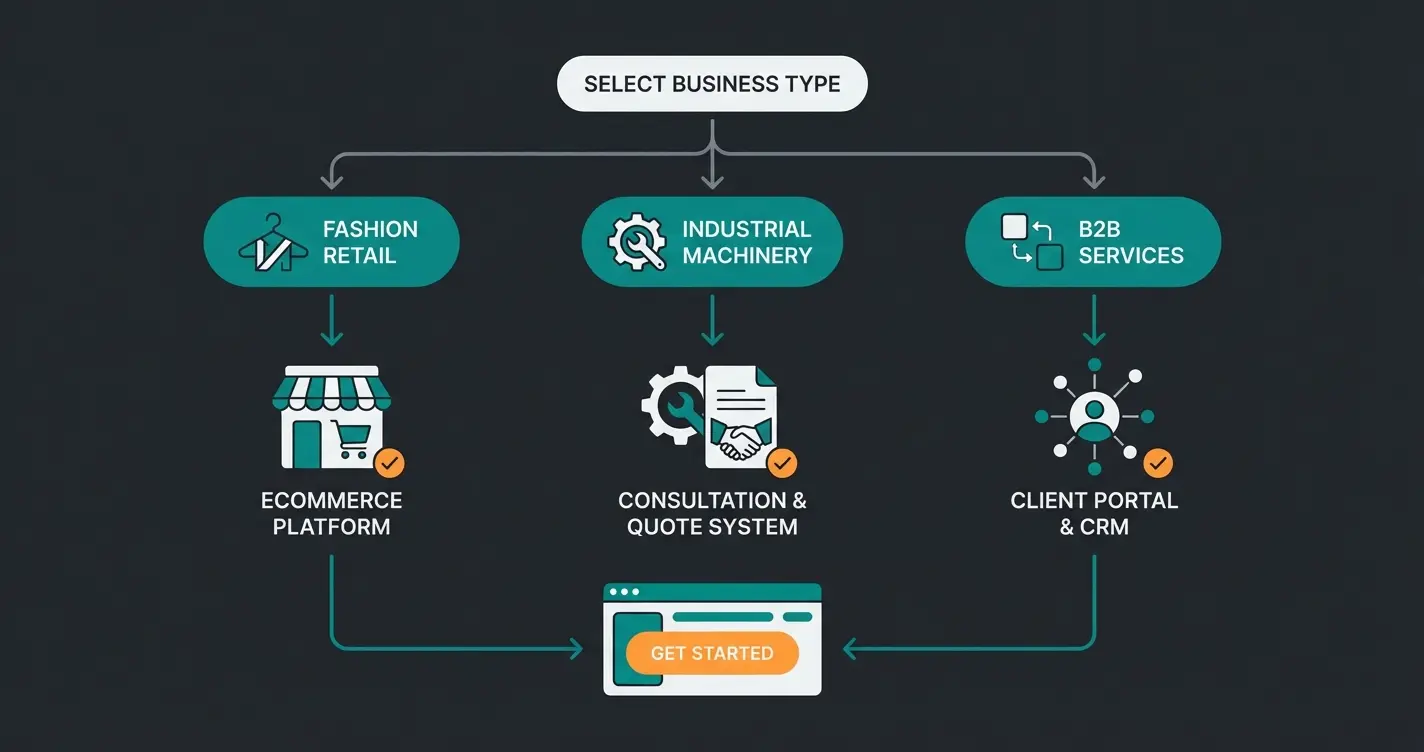
Scenario A: The 'Marketing-First' Shop (WooCommerce)
- Your Focus: Storytelling, content marketing, social media.
- Products: Fashion, lifestyle, simple consumer goods (low technical explanation needed).
- Team: You already know WordPress and have a small team.
- Why WooCommerce? The integration of content and commerce is unmatched in WordPress. You can build landing pages extremely quickly.
Scenario B: The 'Consultation-First' Shop (Shopware + AI)
- Your Focus: B2B, technical products, spare parts, or consultation-intensive assortments.
- Products: Machinery parts, configurable furniture, electronics.
- Team: You have developer resources or an agency and are planning long-term growth.
- Why Shopware? The clean data structure enables you to set up AI consultants. The B2B Suite solves complex requirements of your business customers (budgets, roles) without DIY work.
For businesses considering AI-driven approaches, explore how AI-driven consultation can boost upselling and customer satisfaction.
Legal Compliance Comparison: EU Market Requirements
For European merchants, legal compliance isn't optional—it's mandatory. Here's how both platforms handle essential requirements:
| Compliance Feature | WooCommerce | Shopware 6 |
|---|---|---|
| Imprint/Legal Notice | Plugin Required | Native |
| GDPR Cookie Consent | Plugin Required (Borlabs/RCB) | Native Integration |
| Revocation Rights Display | Germanized Plugin | Native |
| Button Solution (Buy Button) | Germanized Plugin | Native |
| Base Price Calculation | Germanized Plugin | Native |
| Delivery Time Display | Germanized Plugin | Native |
| PDF Invoice Generation | Premium Plugin | Native (Commercial Plans) |
| VAT ID Validation | Plugin Required | Native |
Conclusion: Betting on the Future
The Shopware vs WooCommerce decision in 2025 isn't a question of 'good or bad' but of 'fitting or unfitting.'
Choose WooCommerce if you're seeking maximum freedom with low entry costs and are prepared to invest time in maintaining the plugin ecosystem. With HPOS, performance is no longer a barrier. It's ideal for content-driven brands and simpler product catalogs.
Choose Shopware if you're looking for a robust, scalable platform that offers 'Made in Germany' legal compliance and is technologically equipped (API, AI) for the next 5-10 years—even if the entry price is higher. It excels for B2B, complex products, and data-driven consultation.
The real differentiator isn't the platform itself—it's the intelligence layer you build on top. Both Shopware and WooCommerce can support AI product consultation when properly configured. The question is which platform makes that journey easier for your specific use case.
Frequently Asked Questions (FAQ)
Yes, but not 'out of the box.' You absolutely need plugins like Germanized or German Market to fulfill the strict requirements (button solution, base prices, GDPR). Budget approximately €200-400 annually for compliance plugins.
It depends. The Community Edition is license-free up to €1M revenue but requires your own hosting and technical know-how. For very small shops without developers, Shopify or WooCommerce is often simpler to start with.
Starting March 24, 2025, you must switch to a paid plan (Rise from ~€600/month) according to the new Fair Usage Policy to continue receiving updates and plugin store access.
Yes, tools like Shopware's Migration Assistant or services like LitExtension can transfer products, customers, and orders. However, ensure SEO rankings (URLs) are secured through proper redirects.
Shopware's structured data architecture makes it inherently better suited for AI applications. WooCommerce can work with AI consultants but requires more careful data management and potentially middleware solutions to ensure data quality.
Whether you choose Shopware or WooCommerce, your customers deserve intelligent product guidance. Test our AI consultation solution and see how structured data powers better customer experiences.
Start Your Free Trial