Introduction: The Hidden Revenue Killer in Your Shop
Have you ever wondered why customers leave your online shop even though they had products in their cart or spent considerable time browsing category pages?
The answer often isn't about price or shipping speed. The problem is more subtle and psychological: it's choice paralysis. In an era where the average chatbot in an online shop merely serves as a glorified search bar or FAQ dumping ground, merchants are leaving massive revenue potential on the table.
The German e-commerce market stands at a turning point. The era of "dumb" support bots that can only answer "Where is my package?" is coming to an end. We're entering the era of AI Product Consultants—intelligent systems that don't just answer questions but actively sell.
In this comprehensive guide, you'll discover why the traditional chatbot has outlived its usefulness, how AI-powered AI product consultation can massively increase your conversion rate, and how to integrate this technology into systems like Shopware, JTL-Shop, or Shopify in a privacy-compliant manner.
The Problem: Why Support Automation Falls Short
When merchants think about implementing a chatbot for their online shop, their first thought is usually: "How can I reduce my support costs?" That's a valid goal, but it falls dramatically short of the real opportunity.
The Reality of Choice Paralysis
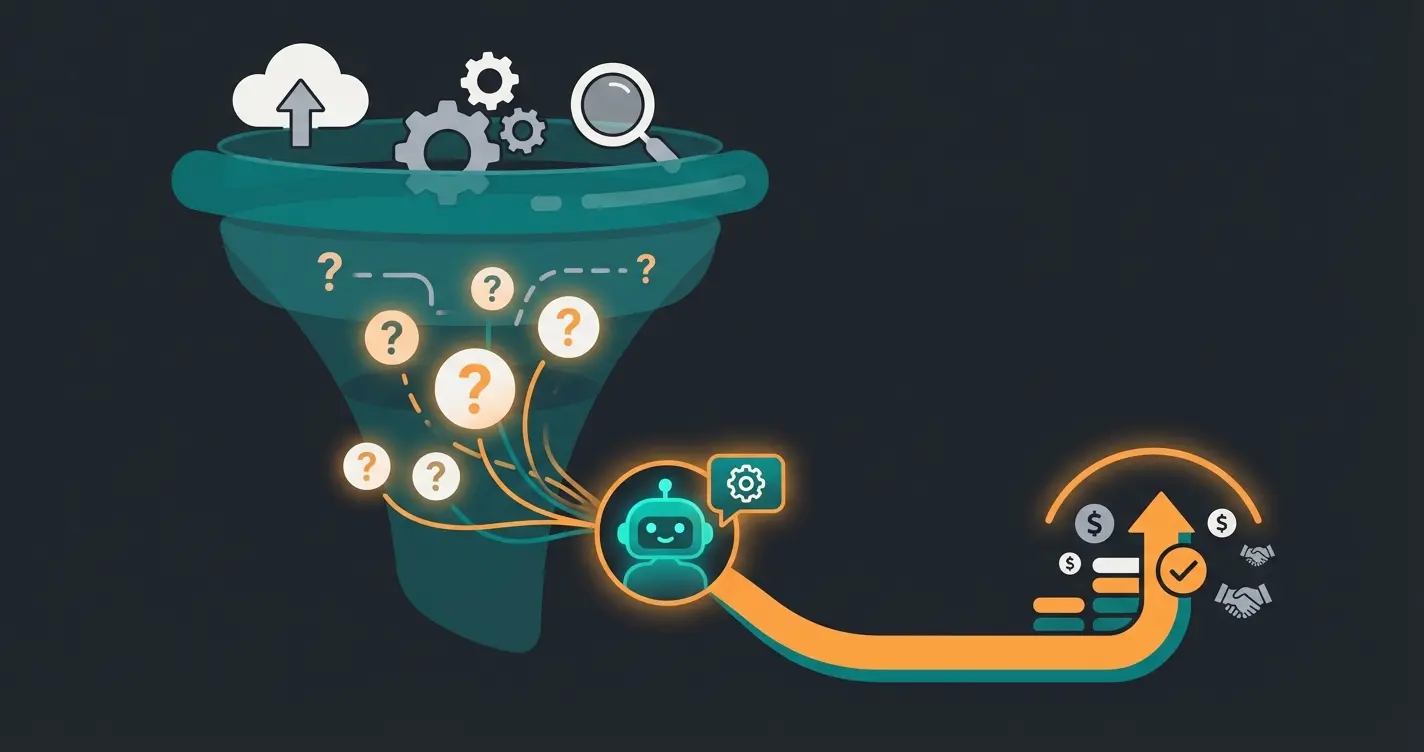
Current research paints an alarming picture for online retail. According to studies from GlobeNewswire, 54% of consumers abandon a purchase when the selection becomes too difficult or overwhelming. Even more striking: 42% report having completely abandoned a planned purchase because they were overwhelmed by the sheer number of options.
Imagine a customer searching for "running shoes" in your shop. They get 150 results.
- Without consultation: They click through 10 products, lose track, become uncertain ("Do I need pronation support?") and leave the shop.
- With a traditional chatbot: They ask "Which shoe is good?" The bot responds: "Here's a link to our running shoes category." → Result: Frustration and abandonment.
Consumers who leave when selection becomes too difficult
Shoppers who completely give up planned purchases
Potential lift with personalized AI recommendations
The Blind Spot in E-Commerce
While we optimize every pixel of the checkout process, we often neglect the consultation process. In brick-and-mortar retail, a salesperson approaches the customer, asks three targeted questions, and hands over the right product. In online retail, we leave customers alone with filters and technical spec sheets.
Here lies the content gap that many "Top 10 Chatbot Tools" articles overlook: It's not about preventing support tickets. It's about eliminating uncertainty. This is precisely where AI consulting in e-commerce creates transformative value.
Two Types of Bots: Support vs. Sales Differentiation
To understand why you need a new strategy, we must distinguish between two fundamentally different technologies. Many providers throw everything into one pot, but for your ROI, this distinction is critical. Understanding the different chatbot types is essential for making the right choice.
The Support Bot (The Defender)
This is the standard we all know. It's reactive. It waits until a problem occurs.
- Primary task: Deflect tickets (Ticket Deflection)
- Typical questions: "What are the return conditions?", "Where is my delivery?"
- Technology: Often rule-based (If X, then Y) or simple keyword recognition
- Business Value: Cost savings
The AI Product Consultant (The Attacker)
This is the new generation. This AI is proactive and sales-oriented. It functions as a true AI employee that actively drives revenue.
- Primary task: Fill the shopping cart and increase conversion rate
- Typical questions: "I'm looking for a gift for my wife, she likes hiking but has knee problems."
- Technology: Large Language Models (LLM), vector search, deep learning
- Business Value: Revenue generation
Comparison: Traditional Chatbot vs. AI Product Consultant
| Feature | Traditional Chatbot (Support) | AI Product Consultant (Sales) |
|---|---|---|
| Primary Goal | Reduce costs (Efficiency) | Increase revenue (Effectiveness) |
| Trigger | Customer has a problem | Customer has a need/desire |
| Knowledge Base | Static FAQs, text templates | Deep product attributes, relationships |
| Dialog Style | "Choose an option: 1, 2, or 3" | "Tell me more about your use case." |
| Outcome | Ticket avoided | Product added to cart |
| KPI | Resolution rate / Time saved | Conversion rate / Cart value |
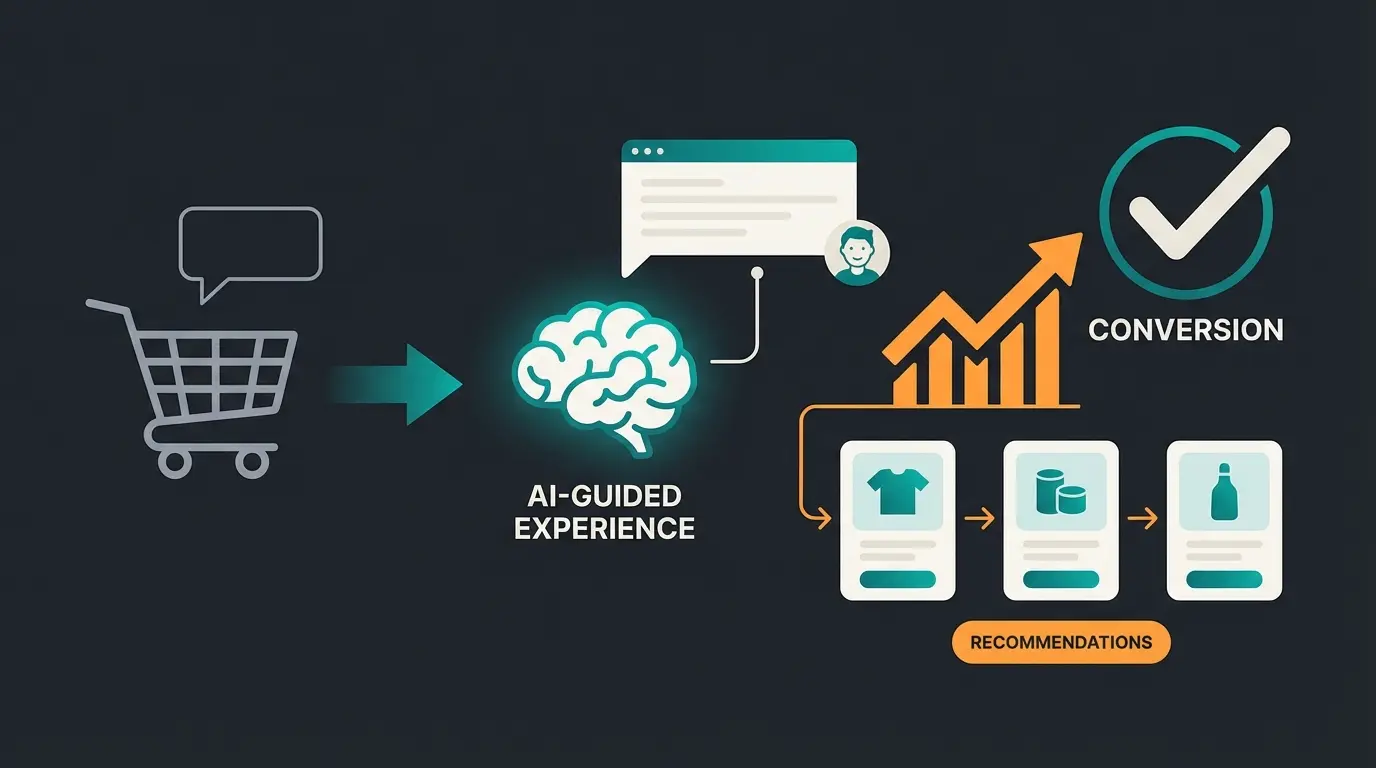
Why does this matter? Data from Thunderbit shows that personalized AI recommendations can boost conversion rates by up to 26%. A pure support bot has almost no impact on this metric. So when you're looking for a chatbot for your online shop, you need to decide: Do you want to manage or sell?
Why German Online Shops Specifically Need Sales AI
Why German Online Shops Specifically Need Sales AI
The DACH market (Germany, Austria, Switzerland) differs significantly from the US or Asian markets. Here, high customer expectations meet specific regulatory requirements. Understanding these nuances is crucial for successful AI e-commerce consultation implementation.
The German Return Culture
Germany is the "world champion in returns." According to current figures from Bitkom (2024), German online shoppers return an average of 11% of their purchases. In specific industries like fashion, this rate often reaches 50% or higher, as documented by research from neocom.ai and EHI Retail Institute.
The reasons for returns are revealing:
- 67%: Size/fit incorrect
- 56%: Product defective/damaged
- 41%: Product doesn't match description/expectations
How an AI Consultant Helps Here
A large portion of returns result from wrong purchase decisions due to inadequate consultation. When a customer wavers between two sizes, they often order both in Germany (selection ordering). An intelligent chatbot in your online shop that specifically asks about body measurements or fit preferences ("Does this manufacturer run small?") can give the customer the confidence to choose the right size before purchasing.
Thesis: Better consultation = Fewer selection orders = Lower return costs. This is exactly where AI Chatbots for Customer Service deliver measurable ROI.
High Information Requirements
German consumers are known for meticulously checking product details. They read specs, compare data sheets, and are skeptical of superficial marketing claims.
A simple FAQ bot that responds to the question "Is this lacquer suitable for oak wood?" only with "Here are our lacquers" leads to purchase abandonment. An AI consultant that understands the chemical properties from the product data sheet (PIM) and answers: "Yes, but only if the wood has been primed first" creates the trust necessary for purchase completion.
Data Privacy as a Quality Feature
In the US, data privacy is often just a checkbox. In Germany, it's a purchase criterion. The integration of US-based chatbots that train customer data on servers outside the EU is a legal minefield.
A chatbot for online shops in Germany must:
- Be GDPR-compliant (server location EU/Germany)
- Make transparent that no personal data is used for training public models (like ChatGPT)
- Respect consent management (cookie banners)
Ensure all data processing happens within EU borders, preferably Germany
Establish proper AV-Vertrag with your chatbot provider
Integrate with cookie consent to respect user preferences
Verify customer data isn't used to train public AI models
Clearly inform users how their chat data is handled
See how our GDPR-compliant AI Product Consultant can boost your conversion rates by up to 26% while reducing returns. Purpose-built for German e-commerce.
Start Free TrialCore Features of a Consultation-First AI
What makes a real sales consultant? It's not enough to simply connect ChatGPT to your shop. Here are the technical features that make the difference when implementing AI chatbot integration.
Deep Catalog Understanding (Attribute Comprehension)
A standard bot searches for keywords. When a customer searches "red dress cheap," the bot searches for "red" + "dress."
A Sales AI understands attributes and relationships.
- Example: A customer searches "A laptop for video editing on the go"
- The AI understands: "Video editing" means: High RAM (at least 16GB), dedicated graphics card, powerful processor. "On the go" means: Long battery life, low weight, bright display.
- Result: The AI filters the catalog by these technical attributes without these keywords needing to be explicitly in the product description.
Guided Selling Flows (The Art of Follow-Up Questions)
A good salesperson doesn't immediately respond with a product—they ask a counter-question.
- Customer: "I need a face cream."
- Bad Bot: "Here are all our creams." (Link to category).
- AI Consultant: "Happy to help. Do you have dry or oily skin? And are you looking for something for day or night use?"
This interactive decision support reduces the choice paralysis mentioned above. The customer feels guided. Studies show that 68% of buyers want honest and personal advice to avoid decision paralysis—this is the foundation of effective AI product consultation.
Integration into the Customer Journey
The chatbot can't be an isolated window in the bottom right corner. It must be part of the shop experience.
- In-Chat Add-to-Cart: The customer should be able to add the product directly to the cart within the chat.
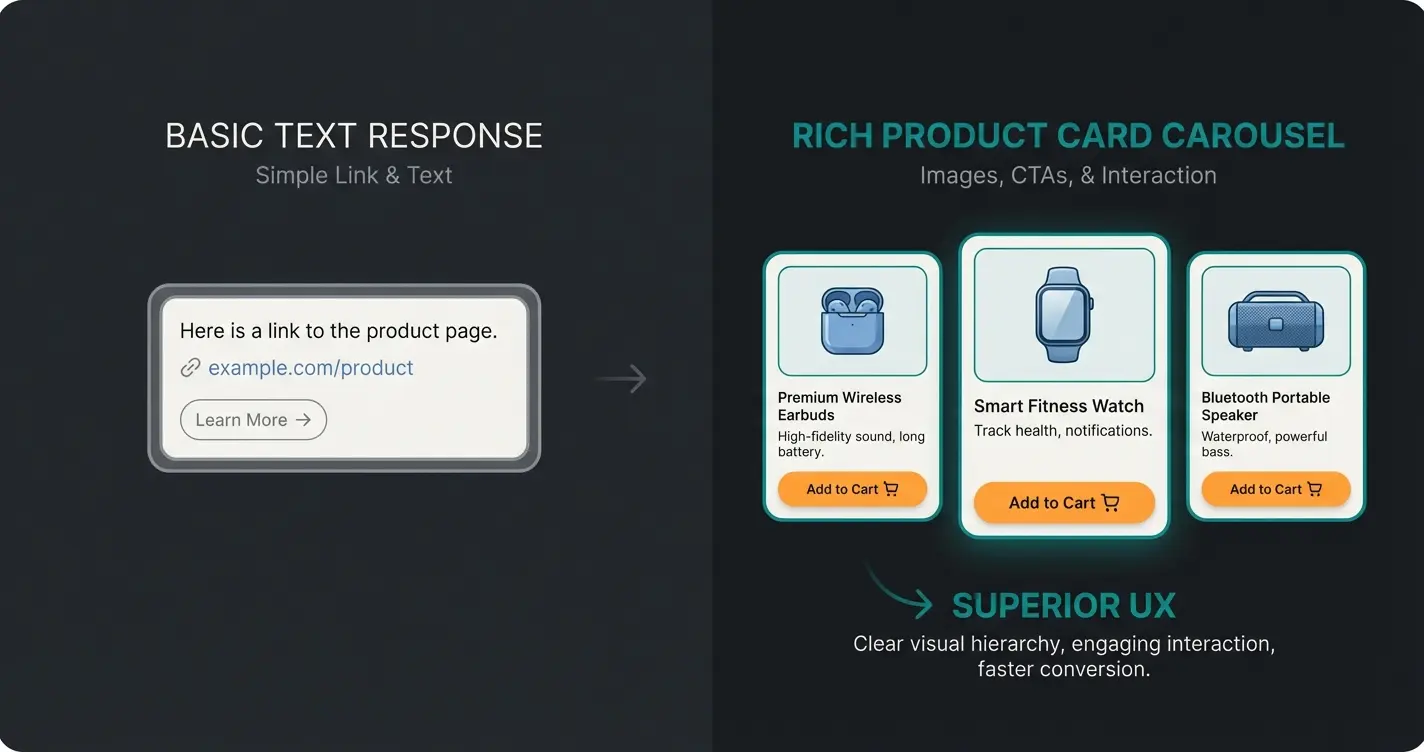
- Visual Product Cards: Instead of text links, the bot shows images, prices, and availability directly in the chat window (carousels).
- Context Awareness: When the customer is on the "hiking boots" page, the bot shouldn't ask "What are you looking for?" but rather "Are you looking for boots for flatland or mountain terrain?"
Real-World Scenarios: Consultation vs. FAQ
To make the difference tangible, let's look at two scenarios that illustrate the gap between traditional and intelligent approaches.
Scenario A: The Frustration Purchase (Classic FAQ Bot)
- User: "Which bike lock is the most secure?"
- Bot: "We have many secure locks. Take a look at our 'Security' category here: [Link]."
- User's Thought: "Great, now I have to click through 50 products and figure out myself what Security Level 10 means."
- Result: User leaves the page, googles "Best bike locks test" and ends up on Amazon or a competitor with better content.
Scenario B: The Sales Experience (AI Product Consultant)
- User: "Which bike lock is the most secure?"
- AI Consultant: "That depends on where you park your bike. Are you looking for maximum protection for the city (e.g., overnight) or something lighter for quick stops?"
- User: "For the city, it's often parked outside."
- AI Consultant: "Understood. For this purpose, I recommend a U-lock with Security Level 10 or higher. Our bestseller is the X-Protect Model (hardened steel). It's a bit heavier, but offers the best protection against bolt cutters."
[Product card appears in chat with image and price]
[Button: "Add to Cart"]
- User's Thought: "Exactly what I wanted to know. Purchased."
Analysis: Scenario B solves the customer's problem, reduces cognitive load (they don't have to research themselves), and leads directly to conversion. This is the power of treating your chatbot as an AI employee rather than just a FAQ machine.
Shop Integration: Shopware, JTL and Beyond
The best AI is useless if it doesn't communicate with your shop system. This is where the wheat separates from the chaff in the DACH region, as many international tools only support Shopify.
Shopware 6 Integration
Shopware 6, with its "API-First" approach, is predestined for AI integrations. A proper Shopware AI chatbot implementation requires attention to several key areas. According to Shopware, there are still challenges to consider:
- Data Synchronization: An AI bot must know your product feed (title, description, properties, prices, inventory) in real-time.
- Plugin vs. Middleware: There are hardly any native plugins that offer genuine LLM consultation out-of-the-box. Often middleware is needed that pulls data from Shopware, vectorizes it (makes it readable for AI), and plays back the responses.
- Tip: Make sure the bot has access to the "Custom Fields" (additional fields) in Shopware. Often the important consultation details are hidden here (e.g., "material composition" or "care instructions").
For comprehensive implementation guidance, check out our detailed Shopware AI product consultation resource.
JTL-Shop & JTL-Wawi Integration
JTL is extremely widespread in the German-speaking region but often technologically more rigid than Shopify. Solutions like BetterAssist specialize in these integrations.
- The Challenge: Many chatbot providers ignore JTL. There's no "one-click installation" like in the Shopify App Store.
- The Solution: Integration usually runs via the JTL Connector or direct API connections to JTL-Wawi. Since Wawi is the "single source of truth," the bot ideally needs to be connected directly to the Wawi database or online shop export.
- Status Quo: Individual development work or the use of specialized German agencies/tools that natively support JTL interfaces is often still necessary.
Shopify (The Easy Path?)
For Shopify, there are hundreds of AI bots available.
- Advantage: Installation in 5 minutes.
- Disadvantage: Many apps are US-centric, not GDPR-compliant, and offer only English support. Additionally, they're often generic and don't deeply understand complex product catalogs.
Time-to-Value: How Long Does Training Take?
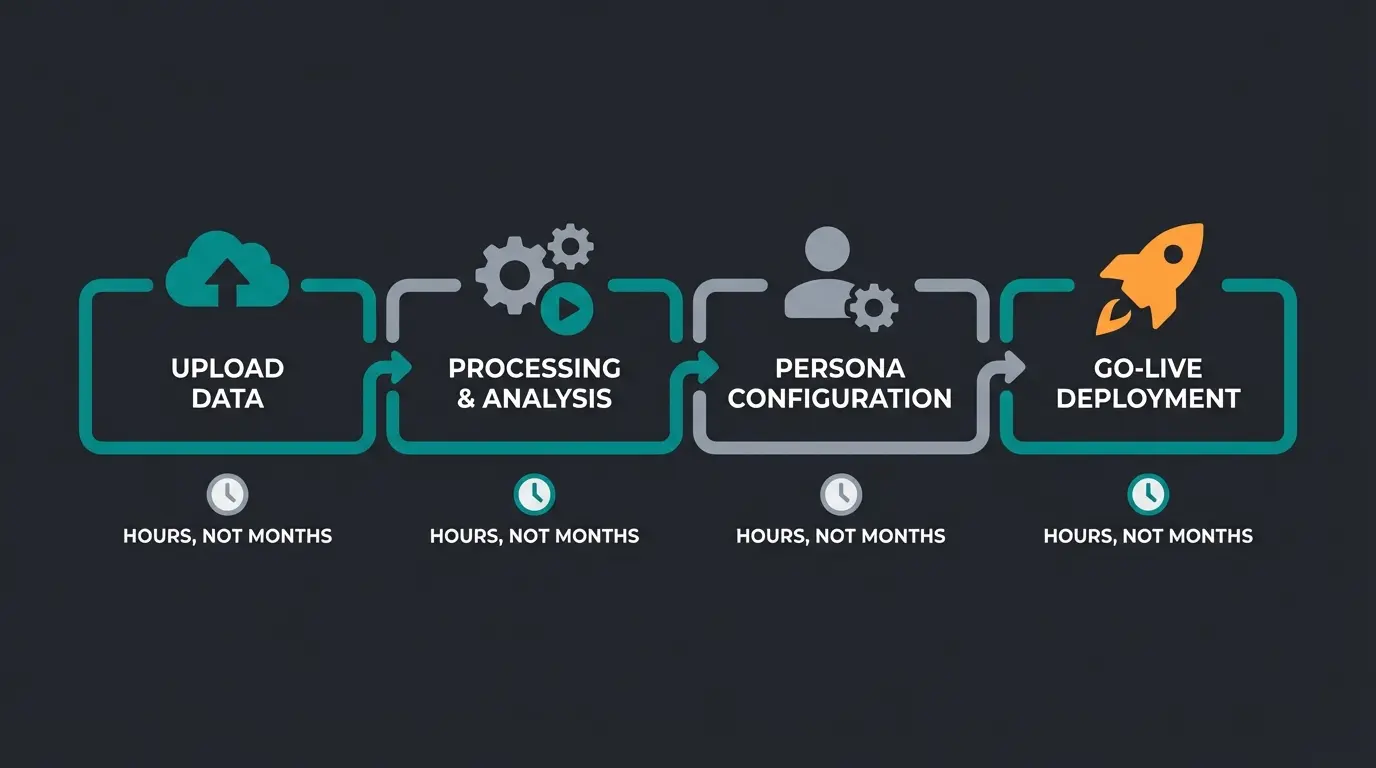
A common myth is that AI must learn for months. Modern systems use RAG (Retrieval-Augmented Generation).
- You upload your product feed (CSV, XML, or API).
- The AI indexes the data (Duration: a few hours).
- You define the "persona" (Tonality: formal/informal, relaxed/serious).
- Go-Live: The bot can immediately answer questions about the catalog based on the data it has. The "training" consists more of fine-tuning sales psychology, not memorizing prices.
This efficient approach also benefits AI product consultation for SEO, as the AI can help generate optimized content based on your product data.
Checklist: Choosing the Right Provider
Before deciding on a solution, use this checklist to ensure you're buying a Sales Consultant and not a glorified answering machine.
- ✅ Attribute Understanding: Can the bot correctly filter questions like "Show me red sneakers under €100 in size 42"? (Test this! Many fail here).
- ✅ EU Hosting & GDPR: Is data processed in Europe? Is there a data processing agreement (DPA)?
- ✅ Platform Integration: Is there a ready-made plugin for your system (Shopware/JTL/Magento) or a documented API?
- ✅ Hallucination Protection: How is the bot prevented from inventing products or quoting wrong prices? (The AI may only respond based on your feed).
- ✅ Handover Protocol: Can the bot seamlessly hand over to a human when the customer is frustrated or has a complex complaint?
- ✅ Reporting: Do you see not just "number of chats" but "revenue generated through chat" (attribution)?
Frequently Asked Questions About AI Chatbots
A support chatbot is reactive and focuses on ticket deflection (answering "Where is my order?"). An AI product consultant is proactive and sales-oriented, guiding customers through product selection with intelligent questions and personalized recommendations. The key difference is in the business outcome: cost savings vs. revenue generation.
Modern AI chatbots using RAG (Retrieval-Augmented Generation) can be operational within hours to days, not months. You upload your product feed, the AI indexes the data in a few hours, you configure the personality, and you're live. Fine-tuning sales psychology is an ongoing process, but basic functionality is immediate.
GDPR compliance depends entirely on the provider. For German shops, ensure: EU/German server location, a proper data processing agreement (AV-Vertrag), no use of customer data for training public models, and integration with your cookie consent management. US-based solutions often fall short on these requirements.
Yes, significantly. Since 67% of returns are due to wrong size/fit and 41% because products don't match expectations, better pre-purchase consultation directly addresses these issues. An AI consultant that asks the right questions helps customers buy the RIGHT product the first time, reducing costly selection orders.
Studies show AI-powered personalized recommendations can boost conversion rates by up to 26%. Combined with reduced support costs and lower return rates (which cost €5-15 per return in Germany), the ROI typically becomes positive within 3-6 months for mid-sized shops with significant product catalogs.
Conclusion: Automate Sales, Not Silence
E-commerce is evolving from a "self-service warehouse" to a "digital consultation experience." Customers are overwhelmed by choice and yearn for guidance.
A chatbot in your online shop is no longer a nice-to-have gadget for support. It's the lever to significantly increase your conversion rate and combat the high return rates in the German market.
The Core Message
Stop viewing chatbots only as a cost brake. Start seeing AI as your best salesperson—one who works 24/7, is never annoyed, knows every product detail, and personally greets every visitor.
Action Recommendations
- Analyze your current abandonment rates on category pages.
- Test an AI Product Consultant against your current status quo (A/B test).
- When selecting a provider, strictly pay attention to GDPR compliance and deep integration with your product attributes.
The technology is here. Customers are waiting for it. It's time to break the silence in your online shop.
Join leading German e-commerce brands using AI Product Consultants to boost conversions by 26% and slash return rates. GDPR-compliant, Shopware-ready, live in days.
Get Started Free