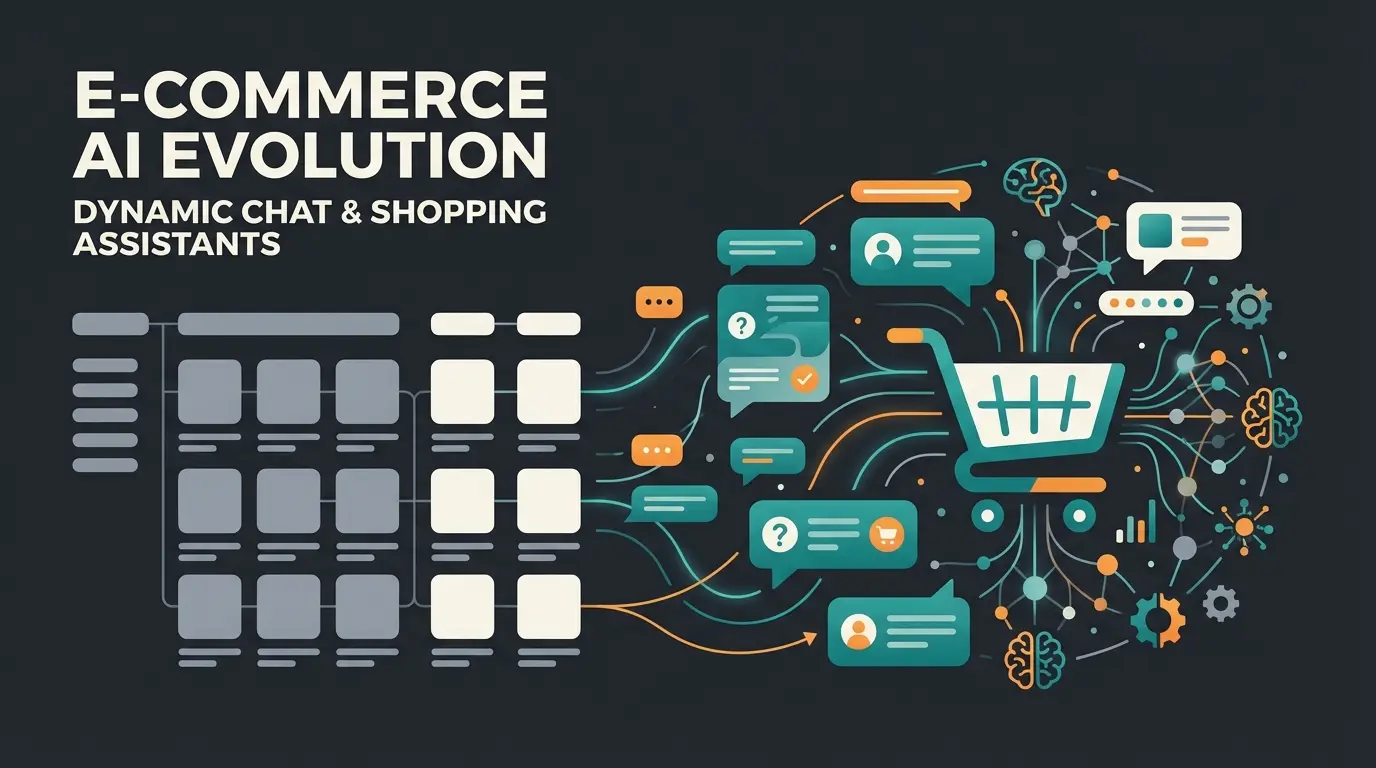
Why Label Printing Is Only Half the Battle
Shipping in e-commerce has long evolved beyond simply transporting goods from A to B. It represents one of the most critical touchpoints in the customer journey. When you search for "Shopware shipping plugins" in 2025, you'll typically find lists focused on one thing: warehouse efficiency.
That's important. But it's not everything.
While most merchants invest their energy in printing shipping labels 5 seconds faster, they're losing customers at an entirely different point: In the shopping cart, before the label is even generated. Studies from Sellers Commerce consistently show that unexpected shipping costs and unclear delivery times account for 50% to 70% of cart abandonments. According to research from Vibetrace, shipping uncertainty remains the number one conversion killer in online retail.
This comprehensive guide therefore covers two essential areas:
- Backend Logistics: The best plugins for DHL, DPD, Sendcloud & Co. to ship your packages efficiently.
- Frontend Consultation: How new AI solutions and intelligent communication eliminate your customers' "shipping anxiety" and increase conversions.
Due to unexpected shipping costs and delivery uncertainty
Average customer checks per order during delivery
Related to shipping questions that could be automated
Part 1: The Foundation – Backend & Logistics Plugins
Before we address the advanced aspects (customer consultation), we need to master the fundamentals (logistics). Shopware 6 offers an extremely flexible ecosystem for this purpose. The choice of the right plugin depends heavily on your shipping volume and warehouse strategy. Understanding Shopware AI features can help you make the most of these integrations.
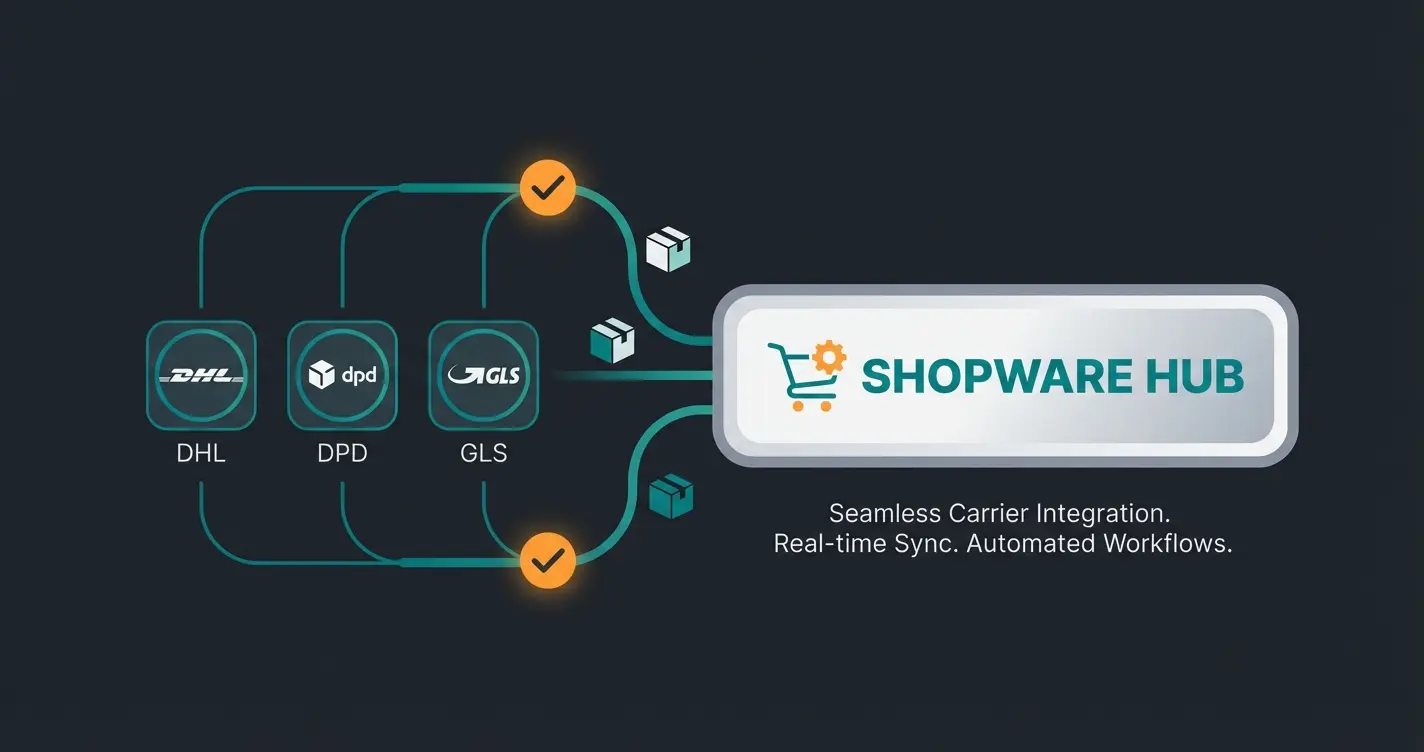
The "Big 3" Carrier Adapters: DHL, DPD & GLS
For merchants with direct contracts with shipping providers, the official adapters are usually the most cost-effective and stable solution.
DHL Adapter (Powered by Pickware)
In Germany, DHL is the dominant player. For Shopware users, the DHL Adapter powered by Pickware is the gold standard. It's often pre-installed or available for free in the Store. According to the official Shopware documentation, this integration provides seamless functionality.
- Feature Set: Creation of shipping and return labels directly in the Shopware backend.
- Key Features: Supports services like Branch Routing, Identity Check (important for 18+ products), Preferred Day, and Drop-off Location.
- Advantage: Since Pickware is closely integrated with Shopware, the integration works seamlessly. Tracking codes are automatically written to the order and emailed to the customer.
- Best For: Merchants with their own DHL business customer contract (from approximately 200 packages/year).
DPD & GLS Integration Options
Official integrations are also available for DPD and GLS that function similarly:
- DPD (via MyDPD): Enables label printing and the use of Predict (live tracking for end customers). A major advantage here is automatic weight calculation based on article data.
- GLS: The official extension supports Guaranteed 24 and express services. Particularly relevant for B2B shops that depend on guaranteed delivery times.
Multi-Carrier Aggregators: Sendcloud vs. Shipcloud
If you don't want to negotiate individually with each service provider or use a mix of carriers (e.g., UPS for express, DHL for standard, DPD for international), aggregators are the better choice. They bundle everything into one plugin. This approach aligns well with AI-readiness hosting strategies for modern e-commerce.
| Feature | Sendcloud | Shipcloud |
|---|---|---|
| Focus | E-commerce growth & internationalization | Simplicity & "One contract for all" |
| Carrier Selection | Extensive (80+), strong across Europe (Colissimo, PostNL etc.) | Focus on DACH region (DHL, DPD, UPS, Hermes, GLS) |
| Contract Model | Use own contracts OR Sendcloud rates | Use own contracts OR Shipcloud rates |
| Returns | Very strong, dedicated return portal for end customers (self-service) | Solid return portal, QR code returns |
| Service Points | Integrated location selection in checkout (customer chooses parcel shop) | Available, but focus often on direct delivery |
| Special Feature | Marketing features on tracking page (branded tracking) | Very lean API, often cheaper for beginners |
ERP & Warehouse Management: Pickware
Pickware occupies a special position in the Shopware ecosystem. It's not just a shipping plugin but a complete Enterprise Resource Planning (ERP) system directly integrated into Shopware. As noted by OMR Reviews, Pickware has become the standard for serious Shopware merchants.
- The Concept: "Shopware is your ERP." There's no external database required.
- Pickware WMS: With mobile scanners (or iOS devices), your warehouse staff walks through the aisles. The system guides them on optimized routes. When an item is scanned, the shipping label is automatically printed.
- Advantage: Inventory errors are minimized. When an item is scanned in the warehouse, the inventory in the shop is corrected in real-time.
- Gap: Pickware is excellent for fulfillment but offers no solutions for customer communication before purchase.
The Shopware Flow Builder can extend Pickware's capabilities by automating workflows between inventory management and customer notifications.
Part 2: The Missing Link – Shipping Consultation
Here lies the real potential for 2025. The tools mentioned above solve your problem (How do I get the package out?). But they often don't solve the customer's problem (When will it arrive? What does shipping cost for heavy freight to an island?). This is where AI Product Consultation becomes essential.
The Problem: "Shipping Anxiety"
Customers abandon their carts when they're uncertain. Typical questions that a static "shipping costs" PDF in the footer doesn't answer:
- "I need this gift by Friday. Is standard shipping enough or do I need to choose express?"
- "Do you deliver this 40kg table to my apartment or just to the curb?"
- "I live in Switzerland – what customs fees will be added?"
According to research from Cloudways, these pre-purchase questions represent the largest untapped opportunity for conversion optimization in e-commerce.
The Solution: AI-Powered Shipping Consultation
Instead of forcing customers to read complex tables, modern Shopware plugins can handle this consultation automatically. This is where you differentiate yourself from the competition. The concept extends the capabilities of traditional Shopware 6 chatbots with intelligent shipping expertise.
The AI Shipping Consultant (AI Chatbots)
Plugins like the AI Copilot or integrations from Tidio and Userlike can do far more today than just say "Hello." By connecting to your Shopware data (Rule Builder, shipping methods), an AI can:
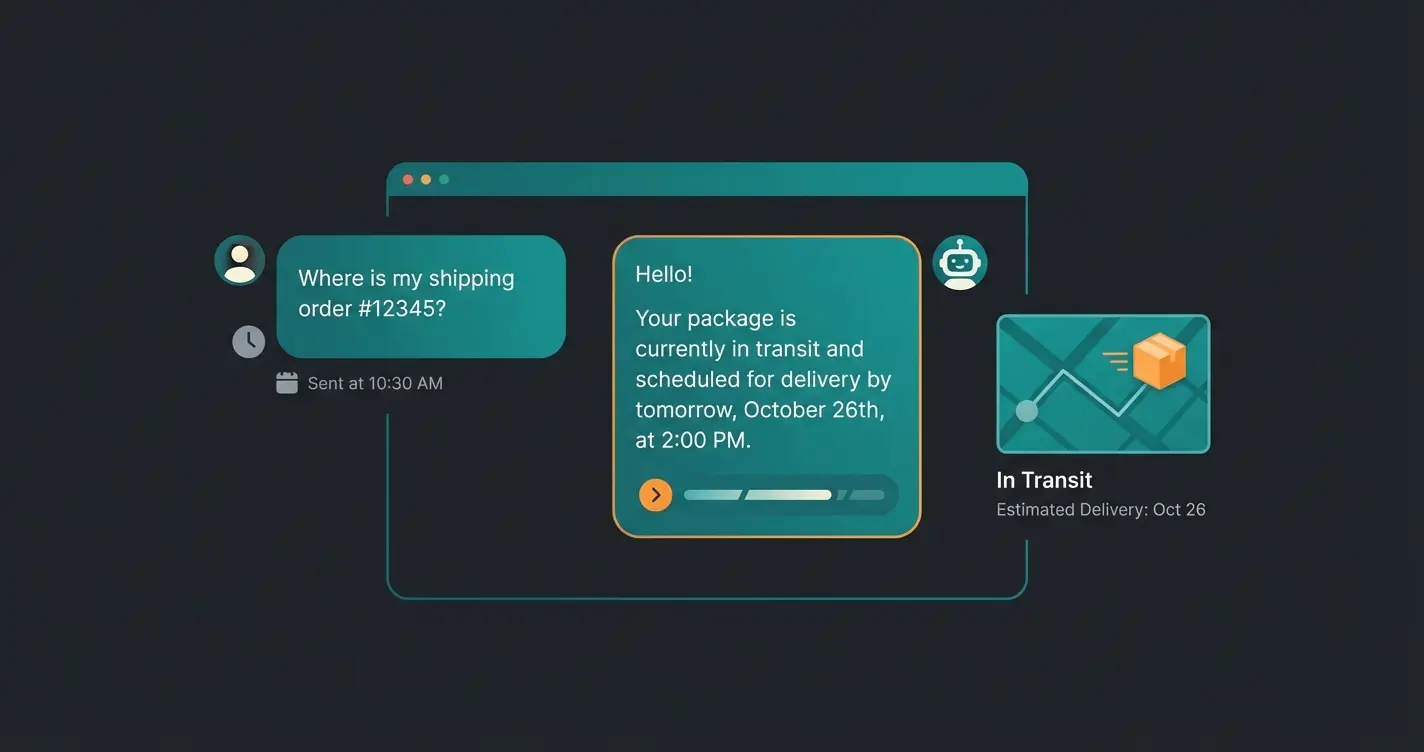
- Understand Context: When a customer asks "Will this arrive by Friday?", the AI checks the current time (e.g., Wednesday 2:00 PM), the product's processing time (e.g., "in stock"), and the shipping method (DHL transit time 1-2 days) and gives a precise answer: "If you order within the next 2 hours, there's a very high probability (90%) it will arrive Friday."
- Explain Costs: Instead of a table, the bot explains: "There's a €49 freight charge for the table. However, this includes delivery to your installation location."
This type of intelligent consultation demonstrates how AI consultants boost conversion rates by addressing concerns in real-time.
Proactive Communication in Checkout
It's not enough to wait until the customer asks.
- Dynamic Delivery Date Display: Use plugins that show a specific date based on cart contents ("Expected delivery on Tuesday, March 14th") instead of a range ("2-5 business days").
- Why This Matters: Specific dates create commitment and trust. They transform vague promises into concrete expectations.
"Will this arrive by Friday for a birthday?"
Static text: "Delivery time 2-4 days" - leaves customer uncertain
"If you order in the next 2 hours via DHL Express, it will arrive Thursday."
Context-aware answer eliminates uncertainty and saves the sale
Our AI consultation answers complex shipping queries instantly, reducing cart abandonment and support tickets while boosting customer confidence.
Start Free TrialPart 3: Strategic Setup in Shopware 6
The best AI and the most beautiful plugin are useless if the data foundation in Shopware 6 isn't solid. The heart of this is the Rule Builder. Many merchants use only 10% of its potential. Our comprehensive Shopware Rule Builder guide covers advanced strategies in detail.
The Rule Builder: The Brain of Your Shipping
The Rule Builder in Shopware 6 allows you to create shipping rules based on almost any variable. According to Konvis, mastering the Rule Builder is essential for competitive shipping strategies.
Practical Example: The "Island Rule"
A classic scenario: You offer free shipping, but not to German islands, since DHL charges a surcharge there.
- Create Rule: In the Rule Builder, create a rule "Is Island" (based on postal code ranges).
- Configure Shipping Method: In the "DHL Standard" shipping method, adjust the price matrix.
- Logic: Standard: €0.00 / Rule "Is Island": + €15.00 surcharge.
Practical Example: "Mixed Cart Freight"
What happens when a customer buys a vase (package) and a sofa (freight)?
- Wrong: Charge double shipping costs (this discourages customers).
- Right (via Rule Builder): Rule "Contains Freight Item". When this rule is true, the "Freight" shipping method is automatically enforced for the entire cart, but the package price for the vase is ignored.
Connecting Rule Builder and AI
Here's where the circle closes. When you've properly maintained your rules in the Rule Builder, AI tools can read this logic. This integration is a key aspect of modern KI E-Commerce strategies.
- Scenario: Customer asks the chatbot: "Why do I have to pay €50 shipping?"
- AI Response (based on Rule Builder): "That's because your cart contains the sofa. That's a freight item. If you remove the sofa, shipping for the vase is free."
That's service that saves shopping carts. This level of intelligent customer interaction is what separates leading e-commerce businesses from the competition. When customers understand why they're paying what they're paying, they're far more likely to complete the purchase.
Part 4: Post-Purchase – After the Sale Is Before the Next
Once the customer has ordered, the "waiting game" begins. Where is my package? Specialized plugins offer enormous value over Shopware's standard emails.
PAQATO – Maintaining the Brand Experience
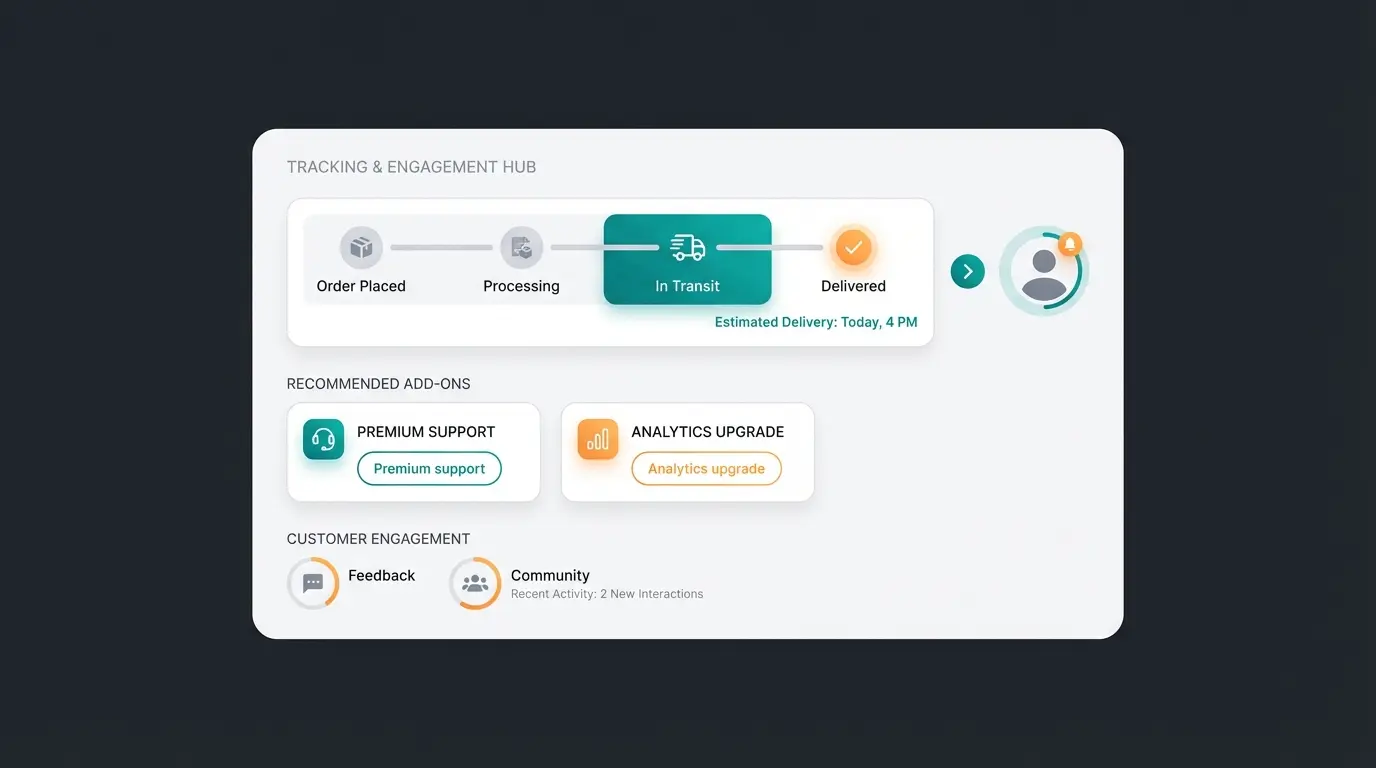
The plugin from PAQATO is an excellent example of "retention through shipping." As highlighted by PAQATO, branded tracking experiences significantly impact repeat purchase rates.
- The Problem: Normally, the customer clicks on the tracking link and lands on DHL's yellow-red page. They've left your shop.
- The Solution: PAQATO creates a tracking page in your shop's design.
- The Effect: The customer checks the status (an average of 3 times per order) and sees your banners, cross-selling offers, or discount codes for their next purchase.
- Statistics: PAQATO reports that this leads to significant repeat purchases since traffic stays within your own ecosystem.
Decision Guide: Which Plugin Setup Do You Need?
To make your selection easier, we've analyzed different merchant profiles. Find yourself among them?
The Starter (0 - 200 Packages/Month)
- Focus: Keep costs low, simple setup.
- Recommendation:
- Logistics: Shipcloud (no own contracts needed, ready immediately) or Sendcloud (Free Plan).
- Frontend: Use standard Shopware features.
- Tip: Use the time to write personal emails rather than buying expensive automation.
The Scaler (200 - 2,000 Packages/Month)
- Focus: Increase efficiency, avoid errors, internationalization.
- Recommendation:
- Logistics: Pickware ERP Starter (to keep inventory clean) + Sendcloud (for international carriers).
- Frontend: Tidio or Userlike chatbot for FAQs ("Where is my package?").
- Post-Purchase: PAQATO for branded tracking.
At this stage, AI product consultation reduces operational costs significantly while improving customer satisfaction.
The Enterprise Merchant (2,000+ Packages/Month)
- Focus: Maximum automation, warehouse performance, customer experience.
- Recommendation:
- Logistics: Pickware WMS (with mobile scanners) + Own carrier contracts (DHL Adapter).
- Frontend: Custom AI Solution (e.g., via Biloba AI Plugin) that digs deep into product data.
- Strategy: Shipping becomes a marketing instrument. Explore same-day delivery options.
Enterprise merchants benefit most from comprehensive AI Employee E-Commerce implementations that handle complex shipping queries automatically.
Yes → Get Sendcloud for multi-carrier efficiency
Yes → Get Pickware for inventory management
Yes → Get AI Consultation to automate responses
Yes → Get PAQATO for branded tracking
Comparison Table: Logistics vs. Consultation
| Feature | Logistics Plugins (Backend) | Consultation Plugins (Frontend) |
|---|---|---|
| Examples | DHL Adapter, Pickware, Sendcloud | Tidio, Userlike, Custom GPTs |
| Target Audience | Warehouse staff, Fulfillment Manager | End customer, Support Team |
| Main Goal | Time savings, Label printing, Returns | Conversion rate, Trust, Cart recovery |
| When Active? | After purchase (Checkout & Fulfillment) | Before and during purchase |
| ROI Factor | Reduces process costs (Cost Saving) | Increases revenue (Revenue Growth) |
This distinction is crucial for understanding where to invest your resources. While logistics plugins are essential for operations, consultation plugins directly impact your bottom line through improved conversions. For comprehensive optimization, review our Shopware SEO guide to ensure your shipping pages rank well.
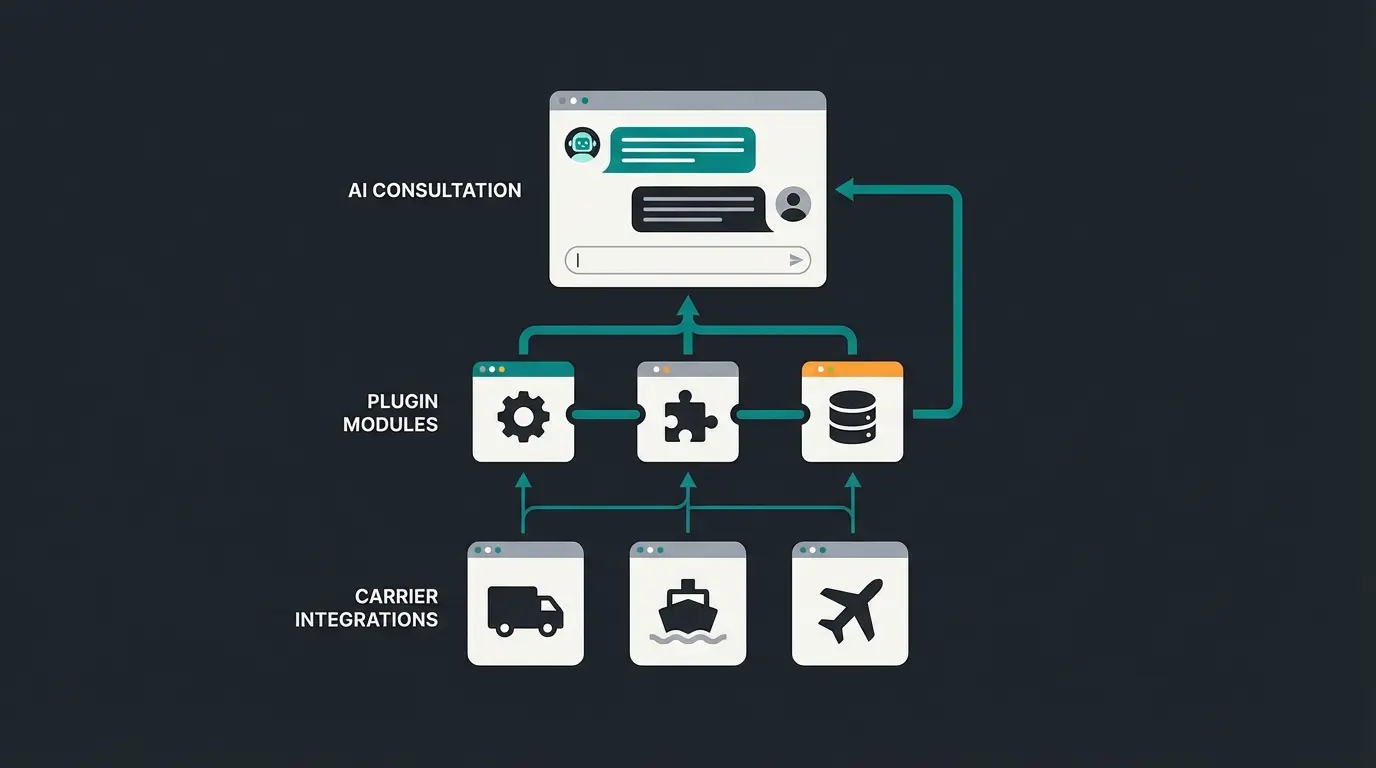
The Complete Shipping Stack Visualization
Understanding how all these components work together is essential for building an effective shipping strategy. Think of your shipping infrastructure as three distinct layers, each building upon the one below:
- Bottom Layer - Carrier Integration: This is your foundation. Direct connections to DHL, DPD, GLS, and other carriers handle the actual physical delivery. These are non-negotiable basics.
- Middle Layer - Logistics Plugins: Pickware, Sendcloud, or Shipcloud sit on top of your carrier integrations. They streamline operations, automate label printing, and manage inventory.
- Top Layer - AI Consultation (The Differentiator): This is the interface between complex logistics and the customer. It translates shipping rules into human-friendly explanations and answers questions before they become support tickets.
Most competitors focus only on the bottom two layers. By adding the AI consultation layer, you create a competitive advantage that directly impacts conversion rates and customer satisfaction.
Conclusion & Outlook: The Future Is Hybrid
The market for Shopware shipping plugins has evolved significantly. It's no longer enough to just be a "logistics champion." Those who want to win in e-commerce in 2025 must understand shipping as part of the sales conversation.
Our recommendation for your strategy:
- Automate the backend: Use Pickware or Sendcloud to make label printing a secondary concern.
- Invest in the frontend: Install an AI assistant or use intelligent Rule Builder logic to eliminate customer anxiety about high shipping costs or late deliveries.
- Maintain control: Use tools like PAQATO to keep customers on your platform during delivery, not on DHL's.
Shipping is the only physical touchpoint you have with your customer. Make it an experience, not an obstacle. The combination of efficient logistics and intelligent consultation creates a shipping experience that drives loyalty and repeat purchases.
FAQ: Common Questions About Shopware Shipping Plugins
Yes, this is often even advisable. For example, you can use the DHL Adapter for national packages and Sendcloud for international shipments. The Rule Builder in Shopware then controls when each plugin "kicks in." This hybrid approach gives you flexibility while optimizing for different shipping scenarios.
Once you're shipping more than 10-20 packages per day and losing track of your inventory, an ERP like Pickware often pays for itself within a few months through avoided errors and time savings. The ROI becomes even clearer when you factor in reduced customer complaints from inventory mismatches.
AI helps primarily with communication. It can instantly answer complex questions ("Do you deliver to parcel lockers if the package is 120cm long?") by matching product data (length) with shipping rules (DHL parcel locker maximum dimensions). This massively relieves your support team and improves customer satisfaction.
Sendcloud focuses on international growth with 80+ carriers and advanced features like branded tracking pages and sophisticated return portals. Shipcloud is optimized for the DACH region (Germany, Austria, Switzerland) with a simpler setup and often lower entry costs. Choose based on your primary market and growth plans.
The key is proactive transparency. Display specific delivery dates instead of ranges, show shipping costs early in the shopping journey, and implement AI consultation to answer questions in real-time. Studies show that addressing shipping concerns before checkout can reduce abandonment by up to 35%.
Combine logistics automation with AI-powered customer consultation. Reduce support tickets, increase conversions, and turn shipping from a cost center into a competitive advantage.
Get Started Today