
Why "Shopware Partner" Means More Than Finding an Agency
The e-commerce market in Germany stands at a turning point in 2025. With over 31,000 active Shopware stores according to StorLeads and Shopware's positioning as a "Visionary" in the Gartner® Magic Quadrant™ 2025 as reported by Shopware, the platform is the first choice for ambitious mid-market and enterprise customers. Yet technology alone is just the foundation. The success of your online shop stands and falls with the people and tools you choose to build and grow that shop: your Shopware partners.
Many merchants make the mistake of thinking only about agencies that program the shop when searching for "Shopware partner." However, this is an outdated mindset. In the modern composable commerce world, your "partner network" consists of three critical pillars:
- The Agency (Build & Strategy)
- The Hoster (Performance & Infrastructure)
- The Technology Providers (Specialized solutions like AI, search, payment)
This article is not another "Top 10 Agencies" ranking. It is a strategic guide that closes the content gap that exists in most search results: How do you orchestrate the interplay of agency services and highly specialized technology to not just have a functioning shop, but one that actively sells? We'll examine the differences between partner types, analyze the cost structure for 2025, and show you why for the topic of Artificial Intelligence (AI) you need more than just the standard copilot. If you're looking for a comprehensive overview, our Shopware full service agency guide provides additional context.
What Is a Shopware Partner? The Complete Ecosystem
Before you sign contracts, you must understand who plays what role in the Shopware universe. Shopware strictly distinguishes between different partner types. A misunderstanding at this point often leads to false expectations and inefficient budgets.
1. Shopware Solution Partners (The Agencies)
These are the classic service providers. They conceptualize, design, and develop your shop. They are responsible for migration (e.g., from Shopware 5 to 6), theme customization, and interface integration. As documented by Shopware's official partner program, these partners form the backbone of the ecosystem.
- Focus: Project business, individual customizations, long-term support
- Examples: Agencies like Elio (Platinum) or Solution25 as highlighted by Solution25
2. Shopware Technology Partners (App & Tool Providers)
Here lies the greatest untapped potential for merchants. Technology partners are software companies that connect their solutions to Shopware via app or plugin. They often solve specific problems better and cheaper than an agency that would have to program a solution "from scratch." The Shopware Store showcases the breadth of available solutions.
- Categories: Payment (Mollie, PayPal), Shipping (Sendcloud), Marketing (Klaviyo), and increasingly important: AI & Product Consultation
- Focus: Product solutions, scalability, specialized features
3. Shopware Hosting Partners
Shopware 6 is performant but requires an optimized server environment. Hosting partners offer specialized infrastructures (often Linux-based with Elasticsearch/OpenSearch and Redis) precisely tuned to Shopware's system requirements. According to Shopware's documentation and Firebear Studio, proper hosting is crucial for shop performance. For more details on infrastructure costs, check our Shopware hosting costs breakdown.
- Examples: Timme Hosting, maxcluster, Profihost

Responsible for code, design, updates, and long-term shop maintenance
Provides speed, security, scaling, and optimized server infrastructure
Delivers specialized features: payment, shipping, AI, search capabilities
Agency vs Technology Partner: Which Do You Really Need?
A common scenario: A merchant wants better product consultation in their shop. They go to their agency and ask: "Can you program a consultant for me?" The agency says "Yes" and estimates 50 person-days. The strategically smarter way: The merchant searches for a specialized Technology Partner for AI-powered consultation, integrates their ready-made app, and has the agency only adapt the design.
Understanding this distinction is critical for your Shopware agency costs optimization. The following table helps you decide when to consult which partner type:
| Criterion | Solution Partner (Agency) | Technology Partner (App/SaaS) |
|---|---|---|
| Primary Focus | Build, maintenance, individual development | Providing a specific software solution |
| Cost Model | Project-based (Capex) or hourly rate | License / Subscription (Opex) |
| Time-to-Market | Weeks to months (development time) | Minutes to days (installation & configuration) |
| When to Choose? | For design, complex interfaces, strategy | For standard problems (search, shipping, AI, payment) |
| Example | Build me a B2B shop with ERP connection | I need an AI that advises my customers |
| Risk | Dependency on developer resources | Dependency on external roadmap |
The Hybrid Approach as a Success Factor
The most successful Shopware projects in 2025 use a hybrid approach. They commission a strong agency for the core system but use a dedicated technology partner for every specialty discipline (search, AI, personalization). Why? Because no agency can be as good at developing AI as a company that does nothing else but develop AI. This is where AI product consultation specialists make the difference.
Partner Levels Explained: Silver, Gold, Platinum & Diamond
When you search for a partner, you will inevitably be confronted with precious metals. But what does a "Platinum Partner" status really mean? Is it automatically better for your project?
According to Shopware's value points system, Shopware evaluates partners based on:
- Revenue: License sales (Shopware Rise, Evolve, Beyond)
- Certifications: Number of trained developers
- Engagement: Participation in events, case studies
The Hierarchy at a Glance
Shopware Platinum Partner
These are the "heavyweights" in the ecosystem. They have enormous expertise, often over 100 certificates, and serve enterprise customers with high revenues.
- Suitable for: Large enterprise projects, complex B2B platforms, international rollouts
- Advantage: Direct line to Shopware management, dedicated partner manager
- Costs: Expect hourly rates in the upper segment (€150+)
Shopware Gold Partner
Gold partners are often established agencies with proven track records and high reliability. They must demonstrate at least 10 certifications.
- Suitable for: Ambitious mid-market companies, complex relaunches
Shopware Silver Partner
Agencies that have specialized in Shopware and have passed the first certification hurdles (at least 4 certificates).
- Suitable for: Smaller to medium projects, specific customizations, budget-conscious merchants
Shopware Bronze / Community Partner
The entry into the partner program. Often smaller agencies or freelancers.
Criteria for Choosing the Right Agency Partner
Choosing an agency is like a marriage – it's designed for the long term, and separation is expensive. Based on current market data for 2025 from Qualimero's analysis, you should check the following criteria:
1. Certification Depth
Don't just ask "Are you certified?" but "Which certificates do you have?" Shopware distinguishes very precisely in 2025 according to their certification program:
- Certified Developer: Basic knowledge
- Advanced Developer: Can write complex plugins and core customizations
- Template Designer: Important for the frontend and user experience
2. Experience with Shopware 6 & Migration
Since Shopware 5 has been "End of Life" (EOL) since July 2024 as confirmed by Shopware and EndOfLife.date, experience with migration to Shopware 6 is essential. Ask for specific cases: "How many shops have you successfully migrated from SW5 to SW6?"
3. Hourly Rates and Budget Fit
Transparency is crucial here. Hourly rates in the DACH region have stabilized in 2025 according to Qualimero's pricing analysis:
- Freelancer: €70 - €100 / hour
- Standard Agency: €100 - €125 / hour
- Premium/Enterprise Agency: €125 - €160+ / hour
A "cheap" hourly rate can become expensive if a junior developer takes three days for what a senior developer (€150/hour) solves in four hours. For alternatives to Shopware, check our Shopware alternatives comparison.
4. Industry Fit (Verticals)
Search specifically for your industry in the Shopware Partner Listing. An agency that knows the processes in the food trade (cold chains, deposits, best-before dates) saves you hundreds of hours of explanation compared to a generalist agency.
Growing ecosystem in the German-speaking market
For certified agencies in the DACH region
Minimum for Gold Partner status
End of official support and security updates
How to Evaluate a Technology Partner (AI Focus)
Here the wheat separates from the chaff. While agencies are comparable, technology solutions are often very different. Especially in the area of Artificial Intelligence (AI), there is much confusion.
Shopware offers native functions with the AI Copilot. So why look for an external partner? Understanding Shopware AI features helps clarify this distinction.
The Gap in the Native System
The Shopware AI Copilot (available from the "Rise" plan) offers 12 strong features according to Shopware's AI documentation and their feature overview:
- AI-generated product descriptions
- Review summaries
- Image keyword assistant
- Customer classification
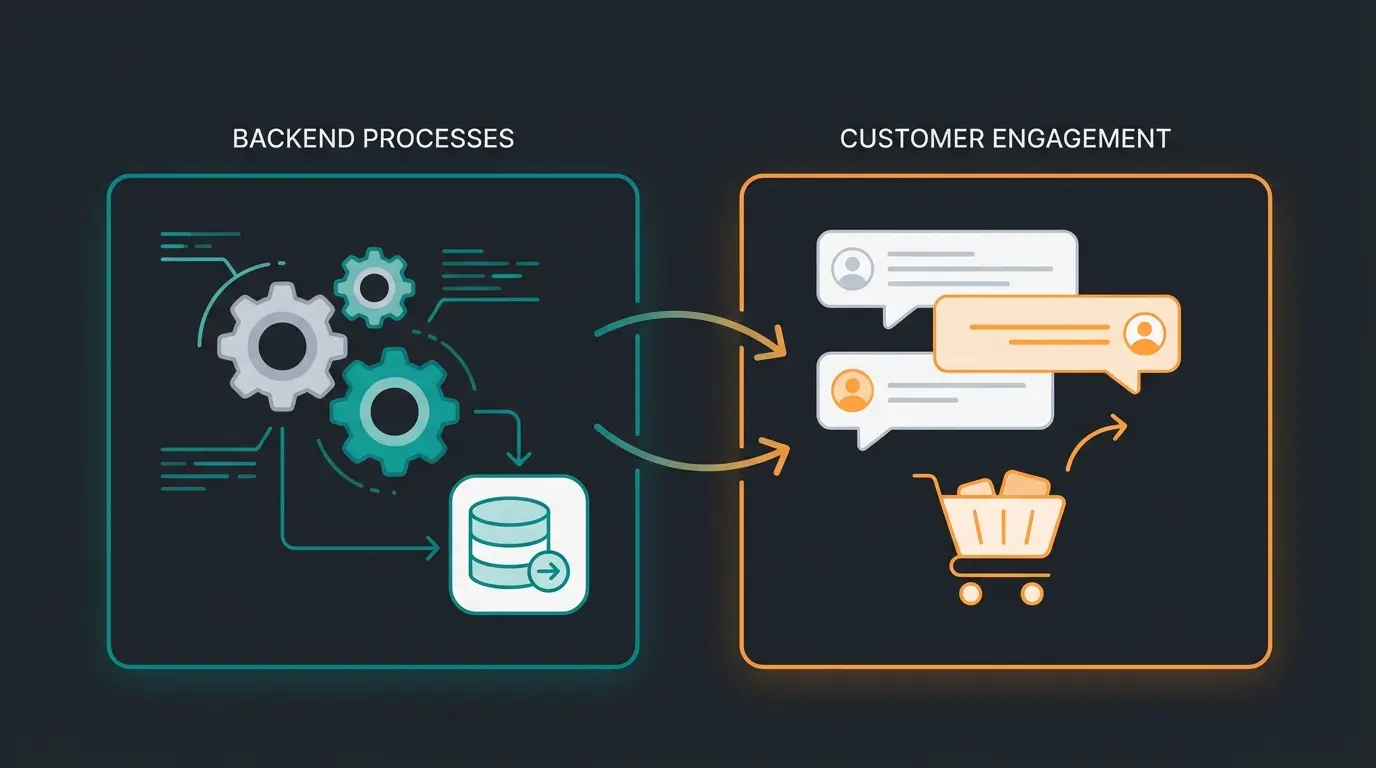
The problem: These features target almost exclusively backend efficiency. They help you save time. But they hardly help the customer find the right product.
The Role of Specialized AI Partners
An external AI Technology Partner fills the gap in the frontend – where the revenue happens. This is precisely what our AI Employee Flora demonstrates in practice. When searching for a partner for "Product Consultation AI" or "Guided Selling," use this checklist:
AI Technology Partner Evaluation Checklist
- Specialization: Is it just a generic chatbot (like ChatGPT in an iframe) or a specialized e-commerce AI that understands product attributes, variants, and availability?
- Integration: Is there a ready-made Shopware 6 app? (Avoid makeshift solutions). Our Shopware chatbots guide covers integration details.
- Data Protection (GDPR): Where is the data processed? For German merchants, servers in the EU and GDPR compliance are mandatory. Many US tools fail here.
- Goal Setting: Does the tool only optimize support (save tickets) or actively boost sales (increase conversion rate)?
- Onboarding: Does the AI have to be trained for months, or does it use your existing product feed "out of the box"?
Discover how specialized AI technology partners can transform your customer experience and drive sales growth beyond what native tools offer.
Start Free TrialDeep Dive: Cost Structure and Budgeting for 2025
To make this guide truly comprehensive, we need to take a detailed look at the financial aspects. Transparency about costs is one of the greatest needs of merchants but is often obscured by many partners.
License Costs as the Foundation
Since the pricing model switch, there are no longer one-time purchase licenses (like the old Professional Edition). Shopware is fully committed to subscriptions. You must plan this into your Opex (Operational Expenditures) according to Qualimero's cost analysis:
- Shopware Rise: From €600/month. Suitable for B2C merchants who want to use standard features and the AI Copilot
- Shopware Evolve: Price on request (approx. €2,400/month). Contains the B2B suite and extended CMS functions
- Shopware Beyond: Price on request (approx. €6,500/month). For enterprise customers with Multi-Inventory and 24/7 support
Project Costs (Capex)
The initial costs for building or relaunching a shop through a Solution Partner vary greatly depending on complexity:
- MVP (Minimum Viable Product): €15,000 - €30,000. Standard theme, little customization, basic plugins
- Professional Shop: €40,000 - €80,000. Individual design (theme), interfaces to ERP/PIM, marketing integrations
- Enterprise Solution: €100,000 - €200,000+. Headless approach, complex B2B logic, international rollouts
The Hidden Costs of Missing Technology Partners
An often overlooked cost factor is the absence of suitable Technology Partners.
Scenario 1: You save yourself the €200/month for a professional search solution (e.g., Doofinder or Algolia) and use the standard search. Consequence: Your customers don't find products, the conversion rate drops. The lost revenue often exceeds the app costs many times over.
Scenario 2: You forgo a specialized product consultation AI (Technology Partner) and instead hire more support staff to answer customer inquiries. Calculation: An AI solution might cost €500-1000 per month. A single support employee costs (with payroll taxes) about €4,000 per month. The ROI of a Technology Partner is achieved extremely quickly here. For more on business integrations, explore our Shopware ERP integration guide.
Shopware 5 End of Life: What Merchants Must Do Now
A critical context for partner selection in 2025 is the definitive end of Shopware 5. Support and security updates officially ended in July 2024.
Why Is This Relevant for Partner Selection?
- Security Risk: Anyone still running Shopware 5 is acting negligently. There are no more official patches. You urgently need a partner who either offers a "Safe Five" solution (external support) or – better – performs the migration.
- Resource Scarcity: Since many merchants postponed migration until the last minute, good Solution Partners are heavily utilized.
- Technology Jump: The switch from SW5 to SW6 is not an update but a re-platforming. Shopware 6 is based on Symfony and Vue.js according to IT Delight. This requires different developer skills.
The Role of Technology Partners in Migration
During a migration, all plugins often need to be replaced as well. This is the perfect time to clean up your "tech stack." Instead of migrating the old "Live Shopping" plugin from 2018, check out modern Shopping Experience apps. Instead of old chat windows, integrate modern AI Consultants directly now. For plugin recommendations, see our Shopware plugins 2025 overview.
A migration is the opportunity to switch from a "monolith mindset" (everything in one system) to a "best-of-breed" strategy (Shopware Core + specialized tech partners).
Trust Through Certificates: A Look Behind the Scenes
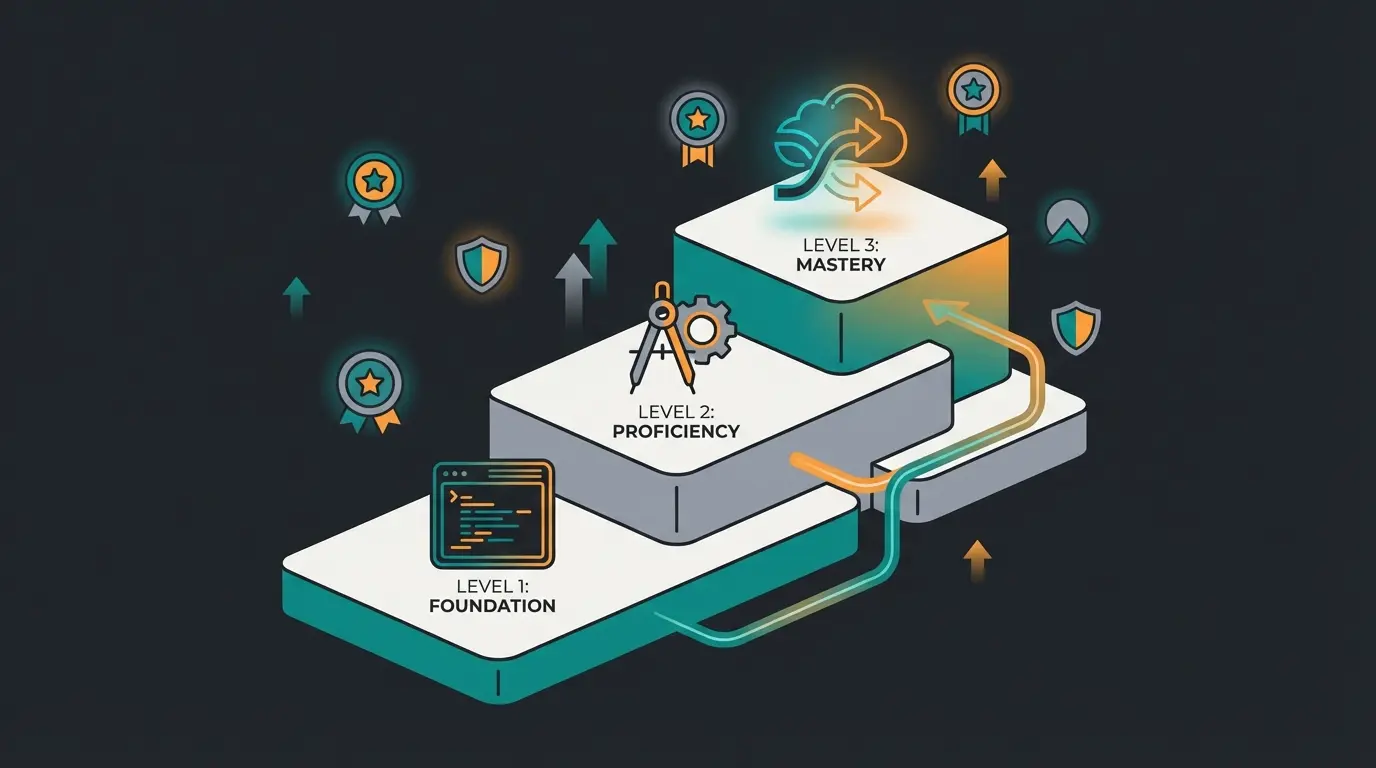
We have already mentioned the partner levels (Silver, Gold, Platinum). But what do the technical certificates specifically mean for your project? When an agency claims to be "highly qualified," have them show you the badges.
The Most Important Certificates in 2025
Shopware 6 Certified Developer
- What they can do: They understand the basic architecture, can install Shopware, and perform simple configurations
- What you need them for: Setup, maintenance, simple customizations
Shopware 6 Certified Advanced Developer
- What they can do: They can deeply intervene in the "core," build complex interfaces, optimize performance, and develop their own complex apps
- What you need them for: When you have special B2B processes that Shopware doesn't map in the standard, or when you have extremely high performance requirements
Shopware 6 Certified Template Designer
- What they can do: They master Twig (the template engine) and SCSS. They ensure the shop not only works but looks perfect on every device (mobile, tablet, desktop)
- What you need them for: For user experience (UX) and design. A backend developer can rarely implement good design
The Future of Shopware Partners: AI & Automation
The market is developing rapidly. Shopware itself was rated as a "Visionary" in the Gartner Report because it is driving topics like Spatial Commerce and Agentic Commerce as reported by PR Newswire. What does this mean for your partner selection?
1. The Rise of Consultation Partners
The days when a partner only delivered code are over. The best partners in 2025 are consultants who help you automate processes. Look for partners who don't just "implement" but "question." Our comparison of Shopware vs Shopify highlights these evolving partner dynamics.
2. TCO (Total Cost of Ownership) Instead of Project Costs
Good partners discuss TCO with you. A shop doesn't just cost €50,000 once for the build. It costs hosting, maintenance, licenses, and transaction fees.
Example: Cheap hosting (€20/month) can cost you thousands of euros in revenue on Black Friday if the shop crashes. A hosting partner like maxcluster or creoline costs more but secures the revenue.
3. Composable Commerce
Shopware 6 is "API-first." This means the future belongs to specialized apps. Your shop becomes a puzzle of the best solutions on the market:
- Search: Algolia or Doofinder
- Shipping: Sendcloud or ShipStation
- AI Consultation: Specialized Product Consultation AI
- Frontend: Shopware Storefront or a PWA (Headless)
A good agency partner will not try to build everything themselves but will recommend the best Technology Partners for these puzzle pieces. Track your results with proper Google Analytics integration.
Conclusion & Checklist for Your Start
Searching for the term "Shopware partner" often leads astray if you're only looking for a list of agencies. Your success in 2025 depends on how well you assemble your personal ecosystem of Agency (strategy & build), Technology (features & AI), and Hosting (performance).
Your Roadmap to Partner Selection
- Define needs: Do you need a complete shop build (-> Agency) or do you want to solve a specific problem like "poor conversion" (-> Technology Partner)?
- Set budget framework: Consider license costs (Shopware Rise from €600/month) plus agency hourly rates (approx. €140)
- Check partner level: Use Platinum partners for enterprise complexity, but don't underestimate specialized Silver/Gold partners
- Choose technology stack: Opt for "best-of-breed". Use the Shopware AI Copilot for the backend, but look for specialized partners for customer experience
- Review contracts: Pay attention to SLAs (Service Level Agreements) and response times, not just the price
Summary: Your Success Recipe
- Diversify: Don't rely on a single partner for everything
- Automate: Use Technology Partners (especially AI) to save personnel resources and increase revenue
- Invest in quality: An hourly rate of €150 for an expert is cheaper than €80 for someone who still has to learn the system
- Think in TCO: Consider total costs over 3 years, not just the go-live price
With the right combination of a strategically thinking agency, a robust hoster, and innovative technology partners, your Shopware shop will contribute to market leadership in your niche.
Frequently Asked Questions About Shopware Partners
Solution Partners are agencies that build, design, and maintain your shop through project-based work. Technology Partners provide specialized software solutions (apps, plugins, AI) that integrate with Shopware via subscription or license models. Most successful shops use both: an agency for the core build and specialized tech partners for features like AI consultation, search, and payment.
Certified agency hourly rates in the DACH region range from €100-125 for standard agencies to €125-160+ for premium/enterprise agencies. Total project costs vary widely: €15,000-30,000 for an MVP, €40,000-80,000 for a professional shop, and €100,000-200,000+ for enterprise solutions with complex B2B logic or headless architecture.
Not necessarily. Partner levels indicate revenue and certifications but don't guarantee fit for your project. A Silver Partner specialized in your industry (e.g., fashion or B2B building materials) may deliver better results than a Platinum Partner unfamiliar with your sector. Always evaluate industry expertise, specific references, and the certification mix (developers + designers) alongside the level.
Shopware's AI Copilot focuses on backend efficiency: generating product descriptions, summarizing reviews, and assisting with content. However, it doesn't help customers find products in the frontend where sales happen. Specialized AI technology partners provide product consultation, guided selling, and personalized recommendations that directly increase conversion rates and revenue.
Take immediate action. Shopware 5 reached End of Life in July 2024 with no more official security patches. You need a partner who can either provide extended support (temporary) or perform a migration to Shopware 6 (recommended). Note that SW5 to SW6 is a complete re-platforming, not an update, so ensure your partner has specific Shopware 6 certification and migration experience.
Join merchants who are increasing conversions with specialized AI product consultation. Get started with our technology partner solution today.
Start Your Free Trial