
The 2025 Turning Point in E-Commerce
The German e-commerce market is experiencing a fundamental shift in 2025. For years, Shopware—particularly Shopware 5 and later version 6—was the undisputed market leader for German mid-sized businesses. However, the landscape is changing dramatically. With the introduction of new pricing plans (Rise, Evolve, Beyond) and the Fair Usage Policy taking effect in March 2025, merchants with a GMV (Gross Merchandise Value) exceeding €1 million must switch to paid plans. According to Qualimero, the era of the free 'Community Edition' for high-revenue shops has definitively ended.
Many shop operators are now asking themselves: Are there better Shopware alternatives available?
The search for alternatives is often driven by technical factors: hosting costs, updates, and security vulnerabilities. However, anyone changing their shop system in 2025 should not merely replace the 'warehouse' (the backend). The market is shifting from pure product management toward active customer guidance. This evolution toward AI product finder solutions represents a fundamental change in how online retail operates.
In this comprehensive guide, we analyze not only the classic Shopware alternatives like Shopify or Adobe Commerce regarding costs and 'German Compliance.' We also uncover an entirely new category of solutions that address the actual problem facing many online shops: the lack of consultation. The emergence of AI-powered sales consultants is reshaping what merchants should expect from their e-commerce technology stack.
Decision Criteria: What Actually Matters When Choosing
Before comparing systems, we must define the criteria. A shop system switch is an 'open-heart surgery' for your business. If you're switching now, you need to do it right.
Total Cost of Ownership (TCO)
The license price is only the tip of the iceberg. Understanding the full cost picture is essential for making an informed decision about Shopware alternatives.
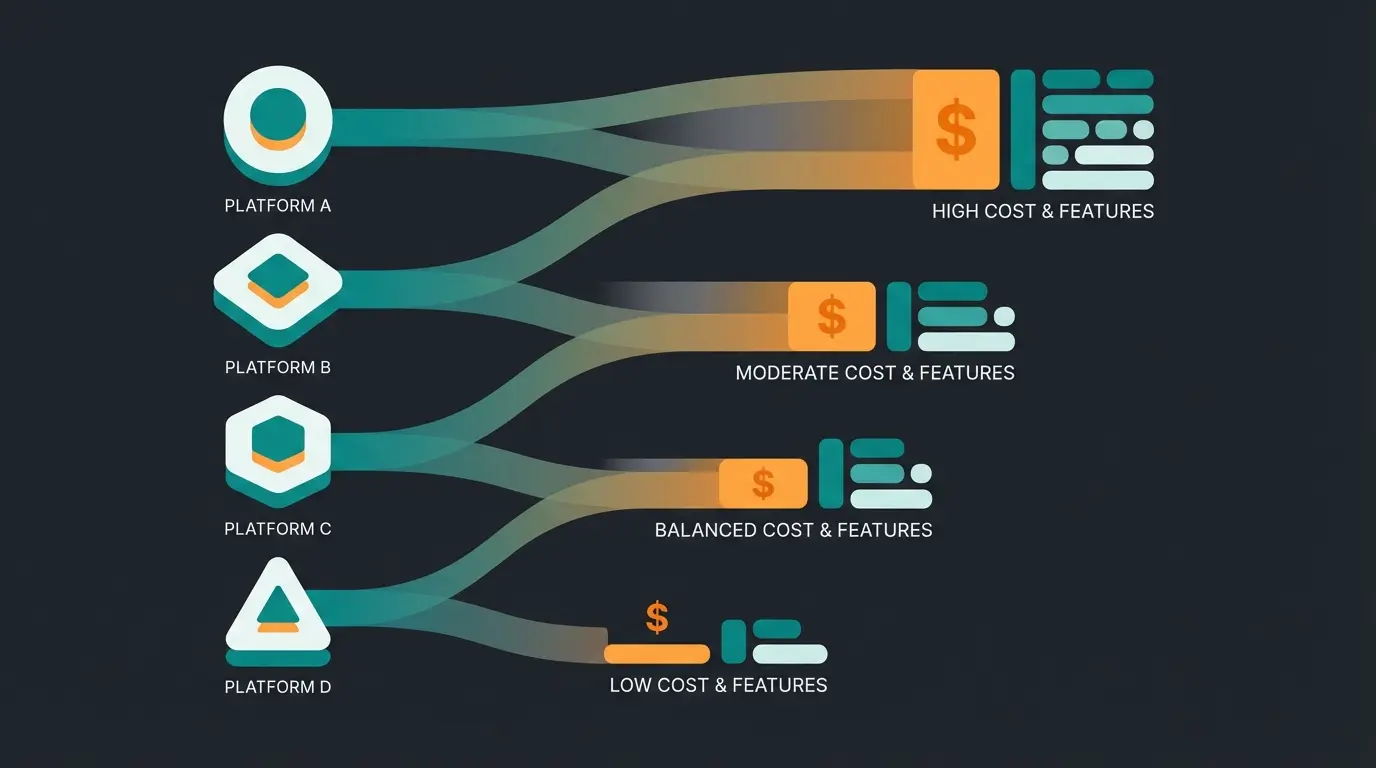
- Shopware: Costs for the Rise edition start at €600/month, with Evolve already at approximately €2,400/month according to Shopware. Add hosting and agency costs on top of this.
- SaaS (e.g., Shopify): Hosting and security are included, but transaction fees and app costs can drive up the bill significantly.
- Open Source (e.g., WooCommerce): No license fees, but high maintenance and development costs to reach enterprise level.
German Compliance (Legal Security)
The biggest obstacle for international Shopware alternatives is often German law. This is where many foreign platforms struggle and where Shopware has traditionally excelled.
- GDPR & Server Location: Where is customer data stored? The EU AI Act adds additional compliance considerations for AI-powered features.
- Button Solution (Buttonlösung): Is the checkout legally compliant according to German legislation?
- Base Price Regulation: Can prices per liter/kilogram be displayed correctly?
- B2B Logic: German B2B customers expect net prices, complex tax rates, and invoice uploads.
The New Metric: Consultation Capability
Here lies the biggest gap in the market. Most shop systems excel at storing and filtering products. However, they are poor at actually selling products. This is where AI Product Consultation becomes the decisive differentiator.
Global e-commerce conversion rate in 2024 according to Envive.ai
Visitors who leave without purchasing anything
Shopping carts abandoned before checkout completion
These statistics reveal a fundamental truth: A filter showing 'Color: Red' is not consultation. A modern system must be capable of guiding the customer like a salesperson in a physical store. This is precisely what AI shop consultation addresses—the gap between product availability and purchase decision.
Classic Shopware Alternatives in Detail
Here we analyze the market leaders that function as direct replacements for the Shopware backend. Each platform has distinct strengths and weaknesses that make them suitable for different business scenarios.
Shopify: The SaaS Market Leader
Shopify has established itself massively in Germany and is often the first choice for merchants tired of Shopware's technical complexity. The comparison between Shopware vs Shopify reveals significant differences in philosophy and target audience.
Cost Structure:
- Basic: approximately €36/month (for beginners) according to Coding9
- Shopify: approximately €105/month (for growing shops)
- Advanced: approximately €384/month (scalable)
- Plus: from approximately €2,300/month (Enterprise) as reported by Latori
Advantages: Extremely fast time-to-market, no server maintenance, massive app ecosystem. For merchants who want to focus on selling rather than technology management, Shopify offers a compelling proposition.
Disadvantages: Transaction fees (if Shopify Payments is not used), servers often not located in Germany (though GDPR-compliant solutions exist), B2B functions are weaker in the standard version than with Shopware Evolve.
German Compliance: Requires apps for Terms and Conditions, imprint, and cookie banners (e.g., from Trusted Shops or IT-Recht Kanzlei). As Latori notes, proper legal configuration requires additional setup. YouTube tutorials from German agencies can help navigate these requirements.
Adobe Commerce (formerly Magento): The Enterprise Solution
For corporations that find Shopware still too 'small,' Adobe Commerce is often the logical next step. This platform represents the heavyweight category of e-commerce solutions.
Cost Structure: License fees often start at $22,000 to $125,000 per year, depending on GMV, according to LitExtension and Eesel.ai. Extremely high development costs come on top of this.
Advantages: Maximum flexibility, extremely powerful B2B features, multi-inventory management. For businesses with complex requirements spanning multiple countries and sales channels, Adobe Commerce offers unparalleled capability.
Disadvantages: Very high TCO, long development times, 'overkill' for merchants under €10-20 million in revenue. The platform requires significant technical expertise and ongoing investment.
JTL-Shop: The German Efficiency Machine
JTL comes from the warehouse management world (JTL-Wawi) and offers a seamlessly integrated shop solution specifically designed for the German market.
Cost Structure: Community Edition (free up to 500 articles), Standard from approximately €499 (purchase) or hosting subscriptions from €29/month according to Uptain.
Advantages: Perfect synchronization with Wawi, German legal compliance 'out of the box,' no transaction fees. For merchants already using JTL warehouse management, the shop integration is seamless.
Disadvantages: Design templates often appear somewhat 'wooden,' fewer marketing apps than Shopify/Shopware. The platform prioritizes functionality over aesthetics.
WooCommerce: The Flexible Entry Point
For merchants already using WordPress, WooCommerce offers a natural extension into e-commerce. The platform's flexibility is both its greatest strength and potential weakness.
Cost Structure: Plugin is free, but hosting, premium themes, and plugins drive costs to realistically $200 - $1,500+ per year according to Omnisend.
Advantages: Full control, huge community, cheapest entry point. For technical teams comfortable with WordPress, WooCommerce offers maximum customization potential.
Disadvantages: With many products (>10,000) often performance problems, security risks from many plugins, high maintenance effort ('plugin updates break the shop'). The comparison of Shopware vs WooCommerce highlights where WooCommerce reaches its limits and where AI readiness becomes a differentiating factor.
The Hidden Problem with All Standard Shop Systems
When you examine the Shopware alternatives mentioned above, one thing stands out: they are all management systems. They excel at organizing products, processing orders, and handling transactions. But they fundamentally fail at one critical task: selling.
Imagine entering a physical store:
- Scenario A (Today's Online Shop): The store is huge, clean, and well-organized. But there's no staff. You must walk through the aisles yourself and read signs. When you have questions, you must use the search function, which often only understands keywords.
- Scenario B (The Specialist Retailer): A salesperson approaches you: 'Are you looking for something specific? What do you need it for?'
The Core Problem: Shopware, Shopify, and Magento build Scenario A. They are excellent 'warehouses.' They optimize loading times and checkout processes. But they don't solve the problem of choice overload. This gap is precisely where AI Chatbots transforming the shopping experience step in.
The statistics are alarming and reveal the true cost of passive product presentation:
- Cart Abandonment: Over 70% of shopping carts are abandoned according to Envive.ai
- Conversion Rate: Only approximately 1.65% actually purchase
- Root Cause: Customers often don't find the right product because filters (size, color, price) cannot replace consultation
Understanding these dynamics is essential for anyone exploring KI E-Commerce solutions. The future of online retail isn't about better warehouses—it's about smarter sales assistance.
The New Class: AI-Driven Consultation as an Alternative
Here in 2025, a new category of Shopware alternatives is emerging. Instead of replacing the entire backend (the 'warehouse') for €50,000 to €100,000, innovative merchants are implementing a 'Headless Sales Layer'—an intelligent consultation layer that sits on top of the existing shop.
What is AI Product Consultation?
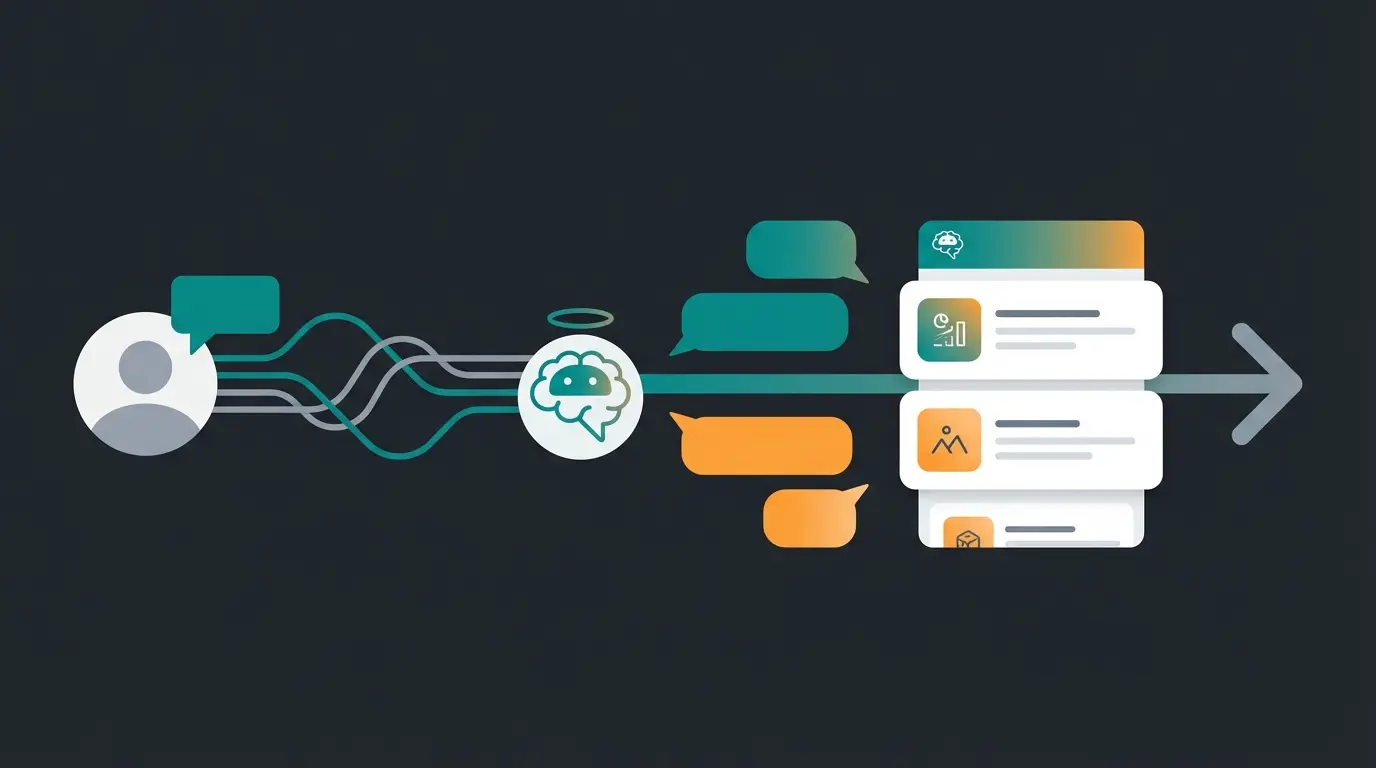
These are not simple chatbots that answer FAQs ('Where is my package?'). These are Guided Selling systems that act like a salesperson. The conversational commerce guide explains how this technology transforms the customer journey from passive browsing to active dialogue.
How It Works: The AI conducts a dialogue with the customer, understanding context and intent rather than just keywords.
- Customer: 'I'm looking for a mountain bike for beginners, but I also ride on the road sometimes.'
- AI: 'I understand. A hardtail would be ideal for that. How tall are you so I can determine the right frame size?'
The Result: The AI filters 5,000 products down to the 3 most suitable ones and explains why they match. This is the essence of what Shopware AI features should deliver—but most implementations fall short because they focus on backend efficiency rather than customer-facing intelligence.
Why This Can Be the Better Alternative
Many merchants search for Shopware alternatives because they want more revenue or want to avoid costs. Understanding where AI consultation closes the gap between browsing and buying is essential for making the right decision.
- Cost Comparison: A migration to Adobe Commerce often costs six figures. Implementing an AI Sales Layer costs a fraction of that while potentially delivering greater ROI.
- Revenue Lever: AI-powered personalization can increase revenue by 10-15% according to Envive.ai—without the disruption and risk of a full platform migration.
- Hybrid Approach: Keep an affordable backend (e.g., Shopify or an older Shopware version, if secure) and outsource the sales intelligence to AI.
Online shops were digital Excel spreadsheets displaying products in simple lists without any intelligent organization
Faceted Search (Amazon-style) became standard, allowing customers to filter by attributes—this is where Shopware and Shopify remain today
Guided Selling emerges—customers no longer press buttons, they express needs and receive personalized recommendations through AI dialogue
Stop losing 98% of visitors to choice overload. Our AI Product Consultation layer sits on top of your existing shop system—no expensive migration required.
Start Free Consultation DemoThe Comprehensive Comparison: Backend vs. Sales Layer
To help you make the right decision, we've compared the classic systems with the new AI Consultation approach. This table reveals why the traditional comparison of Shopware alternatives misses the most important dimension. The integration of AI-powered sales consultants represents a paradigm shift in how we should evaluate e-commerce technology.
| Feature | Shopware 6 (Evolve) | Shopify (Advanced) | Adobe Commerce | AI Consultation Layer |
|---|---|---|---|---|
| Type | On-Premise / PaaS | SaaS | Enterprise PaaS | Sales Add-on (Headless) |
| License Cost | ~€2,400/month | ~€384/month | >€2,000/month | Variable (often performance-based) |
| Setup Costs | High (agency required) | Medium | Very High | Low (Plug & Play) |
| German Compliance | Very High (Native) | Medium (apps needed) | High | N/A (uses existing shop) |
| Consultation Level | Low (filters & search) | Low (filters & search) | Medium (segmentation) | Very High (active dialogue) |
| Target Group | B2B / Upper mid-market | D2C Brands / Scalers | Corporations | All with complex products |
| Conversion Potential | Standard (~1-2%) | Standard (~1-2%) | Standard (~1-2%) | High (through consultation) |
The Consultation vs. Search Comparison
To make the difference concrete, consider how standard Shopware filters compare to AI Consultation in practice. This comparison illustrates why the technology represents a fundamental shift in customer experience:
| Aspect | Standard Shopware Filters | AI Consultation |
|---|---|---|
| Input Method | Customer clicks 'Red' | Customer says 'I need something for a wedding in Italy' |
| Result | 500 red items displayed | 3 curated recommendations with explanations |
| Customer Effort | High—must browse and evaluate | Low—receives guided selection |
| Context Understanding | None—only attributes | Full—understands occasion, purpose, preferences |
| Purchase Confidence | Low—uncertainty remains | High—recommendations are explained |
The Real Cost of Migration: A Critical Analysis
Before committing to any Shopware alternative, you must understand the true cost of switching platforms. Many merchants underestimate these hidden expenses and disruptions.
Development, design, and integration for enterprise-level platform switches
From decision to full launch, depending on complexity and platform choice
Expected organic traffic decline during URL migrations, even with proper 301 redirects
Period needed to regain pre-migration search rankings and traffic levels
These figures reveal why implementing an AI Sales Layer on top of your existing infrastructure often delivers better ROI than a complete platform migration. You avoid the disruption while gaining the capability that actually drives revenue.
Practical Tips for Your Decision
If you're currently facing the decision to leave or upgrade Shopware, follow this systematic approach to ensure you're solving the right problem with the right solution.
Step 1: Check the Fair Usage Policy Impact
Will you fall under the €1 million GMV threshold starting March 2025? If so, you must act. Remaining in the Community Edition is no longer an option for high-revenue shops. Calculate your exact position and timeline for compliance.
Step 2: Calculate the Pain of Change
A system switch costs not only money but also nerves and SEO rankings. Be realistic about the true investment required:
- Migration to Shopify: Expect 3-6 months of project runtime and initial traffic dips from URL restructuring (301 redirects are mandatory!). Budget for app costs to achieve German compliance.
- Migration to Adobe Commerce: Expect 9-12 months minimum. This is a major undertaking requiring significant agency support and internal resources.
Step 3: Analyze Your Actual Sales Problem
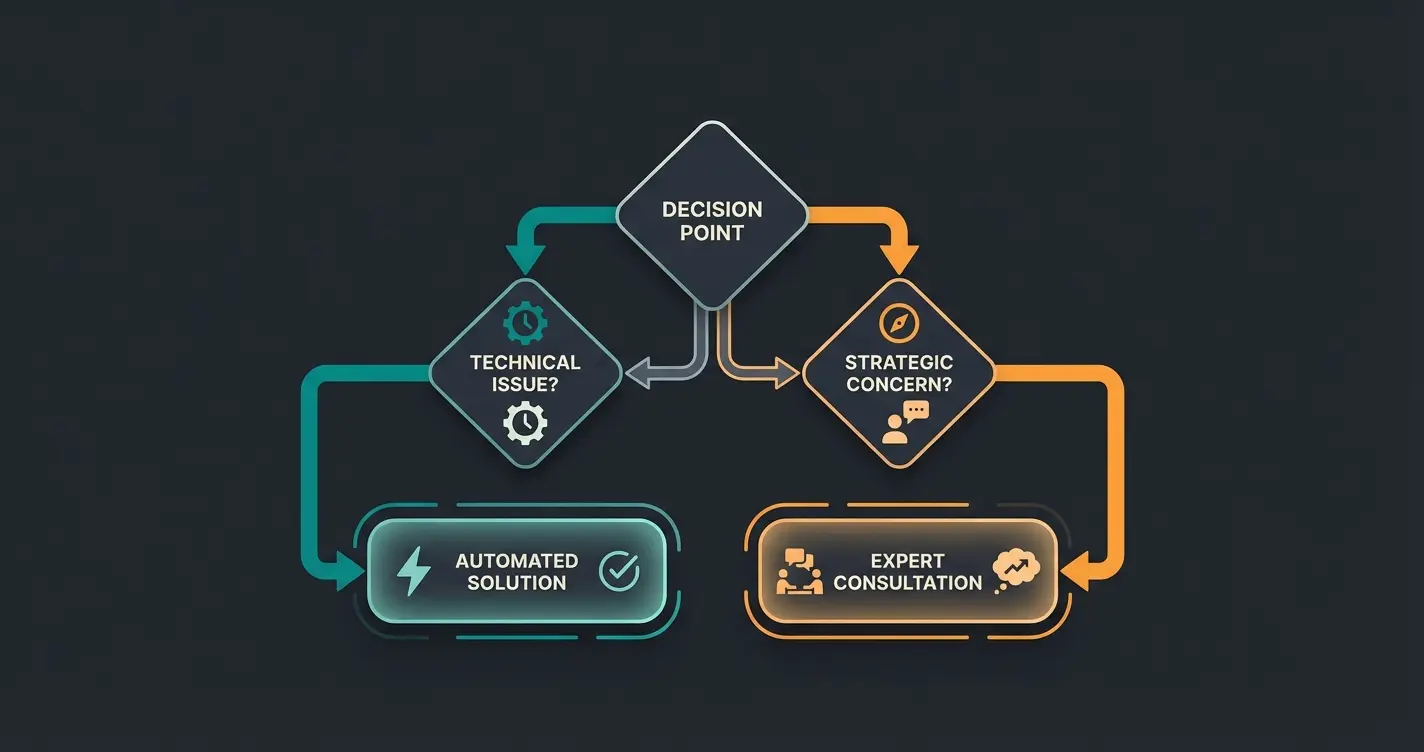
Are you losing customers because the shop is slow (technical problem) or because customers don't know what to buy (consultation problem)? The answer determines your optimal strategy:
- If it's a technical problem: Switch to Shopify (for speed & ease of use). The platform handles infrastructure so you can focus on marketing and sales.
- If it's a consultation problem: Stay on a stable system (or switch to a cheaper one) and invest the saved budget in AI Product Consultation. This addresses the root cause of low conversion.
Conclusion: Don't Just Look for a New Landlord
The search for Shopware alternatives is more complex than ever in 2025. Prices are rising everywhere—whether through Shopware's new plans, Shopify's transaction fees, or the general inflation in developer hourly rates. But focusing solely on platform costs misses the larger opportunity.
Our Strategic Recommendations
Based on comprehensive analysis of the market and merchant needs, we offer these targeted recommendations:
- For Pure B2C Brands with Standard Products: Switching to Shopify is often the most liberating step. 'German Compliance' is solvable with apps, and TCO is usually lower than Shopware Evolve. The platform's ease of use accelerates your time to market.
- For Complex B2B Scenarios: Check whether you can bear the costs for Shopware Evolve. If not, JTL-Shop is a solid, cost-effective German alternative with native compliance and warehouse management integration.
- The Game Changer: Regardless of which backend you choose—stop viewing your shop as a silent warehouse. The real alternative to the 'price war' is 'consultation competence.' This is where sustainable differentiation lives.
The future doesn't belong to shops with the most filters but to shops that best understand their customers. Whether you stay with Shopware, migrate to Shopify, or choose another platform entirely, the decisive factor for success in 2025 will be your ability to guide customers through their purchase journey.
Frequently Asked Questions About Shopware Alternatives
Yes, Shopify is an excellent alternative for B2C businesses, particularly those wanting to reduce technical complexity. German legal compliance (GDPR, button solution, imprint) requires additional apps from providers like Trusted Shops or IT-Recht Kanzlei, but these are well-established solutions. The main limitations appear in complex B2B scenarios where Shopware's native features remain stronger.
Starting March 2025, Shopware's Fair Usage Policy requires all shops exceeding €1 million GMV to migrate to paid plans (Rise, Evolve, or Beyond). Rise starts at approximately €600/month, while Evolve costs around €2,400/month. Continuing on the free Community Edition is no longer permitted for high-revenue shops.
Yes, AI Consultation layers are designed as 'headless' solutions that integrate with virtually any e-commerce platform. They connect via API to your existing product catalog and sit on top of your current shop, whether that's Shopware, Shopify, WooCommerce, or another system. This approach means you can gain consultation capabilities without platform migration.
Platform migration typically costs €50,000-100,000+ with 3-12 months implementation time and potential SEO traffic losses of 15-30%. AI Consultation implementation costs a fraction of this amount, deploys in weeks rather than months, and can increase revenue by 10-15% through improved conversion rates. For many merchants, the AI approach delivers faster and higher ROI.
Regular chatbots answer predefined FAQs ('Where is my order?'). AI Product Consultation systems are Guided Selling solutions that understand context, conduct natural dialogues about customer needs, and provide personalized product recommendations with explanations. They function like a knowledgeable salesperson rather than an automated help desk.
Whether you stay with Shopware or switch platforms, AI Product Consultation is the upgrade that directly impacts revenue. See how leading e-commerce brands are converting browsers into buyers through intelligent dialogue.
Book Your Free Demo TodayNote: The prices and policies mentioned are based on information from late 2024/early 2025 and may change through provider adjustments. Always verify current pricing directly with vendors before making decisions.
