Introduction: The B2B Purchasing Landscape is Shifting
German B2B e-commerce stands at a pivotal crossroads. For years, the formula seemed simple: anyone wanting to successfully run a WooCommerce B2B operation would install a wholesale pricing plugin, hide the shop behind a login, and verify VAT IDs. That was the standard. But in 2025, this purely transactional approach no longer suffices.
Why? Because your business customers' behavior has fundamentally changed.
We're witnessing an "Amazonification" of B2B purchasing, paired with new expectations for technical autonomy. According to a recent Gartner study, 61% of B2B buyers now prefer a purchasing experience without any interaction with a sales representative. They don't want to call and ask whether part A is compatible with machine B. They want to know immediately—at 11 PM or 6 AM—without sitting in a phone queue.
This is where a massive gap emerges in the current WooCommerce landscape. Most shops excel at processing orders (Checkout) but fail miserably at guiding customers to the right product (Discovery). When comparing Shopware vs WooCommerce, this discovery challenge affects both platforms equally.
In this article, we analyze why the classic tech stack for WooCommerce wholesale is reaching its limits and how you can close this gap with a hybrid strategy—combining solid B2B plugins with intelligent AI consultation. We'll show you how to transform your shop from a static order list into an automated technical advisor.
B2B buyers prefer purchasing without sales rep interaction
B2B buyers research products online before contacting sales
Modern B2B buyers expect round-the-clock support access
Guided selling increases average B2B order values
The Standard B2B Stack: Foundation and Its Limitations
Before we discuss artificial intelligence, we need to examine the foundation. A WooCommerce B2B shop in Germany must complete certain technical and legal requirements. The current top search results and plugin lists focus almost exclusively on this level.
The Must-Haves for the German Market
Anyone operating B2B in Germany cannot avoid certain basic functionalities. These are typically covered by established plugins like B2B Market (from MarketPress), WholesaleX, or B2B for WooCommerce as detailed by PluginHive.
- Role-Based Pricing: The heart of every WooCommerce B2B plugin. You must be able to give customer group A (e.g., "Gold Resellers") a 20% discount while customer group B ("Industrial Customers") sees net prices.
- Visibility Control: Not every product is meant for everyone. Often B2B catalogs must be completely hidden from guest users or prices only made visible after login ("Hide Price until Login").
- Legal Compliance & Tax (German Market): In Germany, the plugin German Market (or Germanized) is practically mandatory as noted on WordPress.org. It handles correct VAT display (especially for EU reverse charge procedures), legally compliant invoices, and terms & conditions integration. A solid B2B setup must absolutely be compatible with these compliance tools.
- VAT ID Validation (VIES): Automatic verification of VAT identification numbers via the EU's VIES interface is essential for legally issuing net invoices to EU countries, as explained by Code-X and Netz-Gaenger.
The Limitation: The "Knowledge-Assumed" Trap
These tools are powerful, but they have a critical weakness: They assume the customer already knows exactly what they want.
Imagine you sell industrial filters. Your WooCommerce wholesale shop has 5,000 SKUs. The plugin ensures the customer sees their individual price. The plugin allows them to add 50 items to the cart at once (Bulk Order). The plugin verifies their tax ID.
But the plugin doesn't help with the question: "Which filter do I need for my 15-year-old hydraulic press operating at 80 degrees?"
This is where the "Consultation Bottleneck" emerges. The customer cannot find the product through static search or filters, abandons the site, or calls support. This is exactly where German B2B shops lose revenue daily—not at checkout, but in the discovery phase. Understanding AI-driven product consultation becomes essential for bridging this gap.
The Missing Component: Automated Product Consultation
The next evolutionary stage in B2B WooCommerce is the transition from pure catalog management to Consultative Commerce.
The Problem of Complex Catalogs
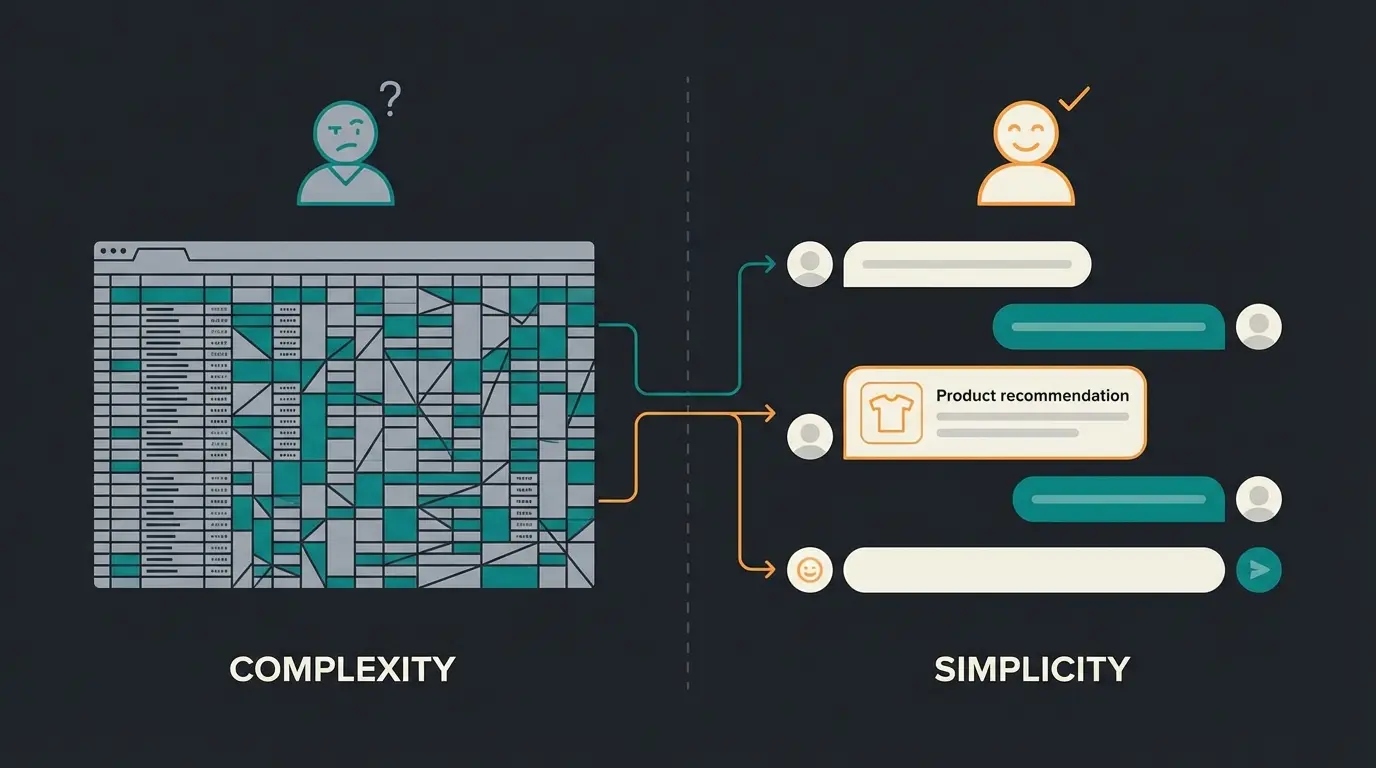
In the B2B sector, products are often explanation-intensive. Technical specifications, compatibilities, and application areas cannot easily be compressed into static filters ("Color," "Size," "Material"). A buyer often doesn't search for an article number (SKU) but for a solution to a problem.
- Classic Search: Customer types "gasket 50mm." Result: 200 products. Customer is overwhelmed.
- Consultative Approach: Customer describes: "I need a gasket for an oil line, 5 bar pressure, outdoor use."
Previously, the latter required a human sales representative. But given the skilled labor shortage and the above-mentioned preference for self-service, this manual path is no longer scalable. Implementing Conversational Commerce strategies addresses this exact challenge.
The "Pre-Checkout" Gap
Most competitors and plugin manufacturers ignore this phase. They optimize the shopping cart but not the path to it. When we look at search results for "woocommerce b2b," we find guides for hiding prices but no guides for finding solutions.
Here lies your opportunity ("Blue Ocean"): Position your shop not as a "warehouse list with login" but as a digital solution provider.
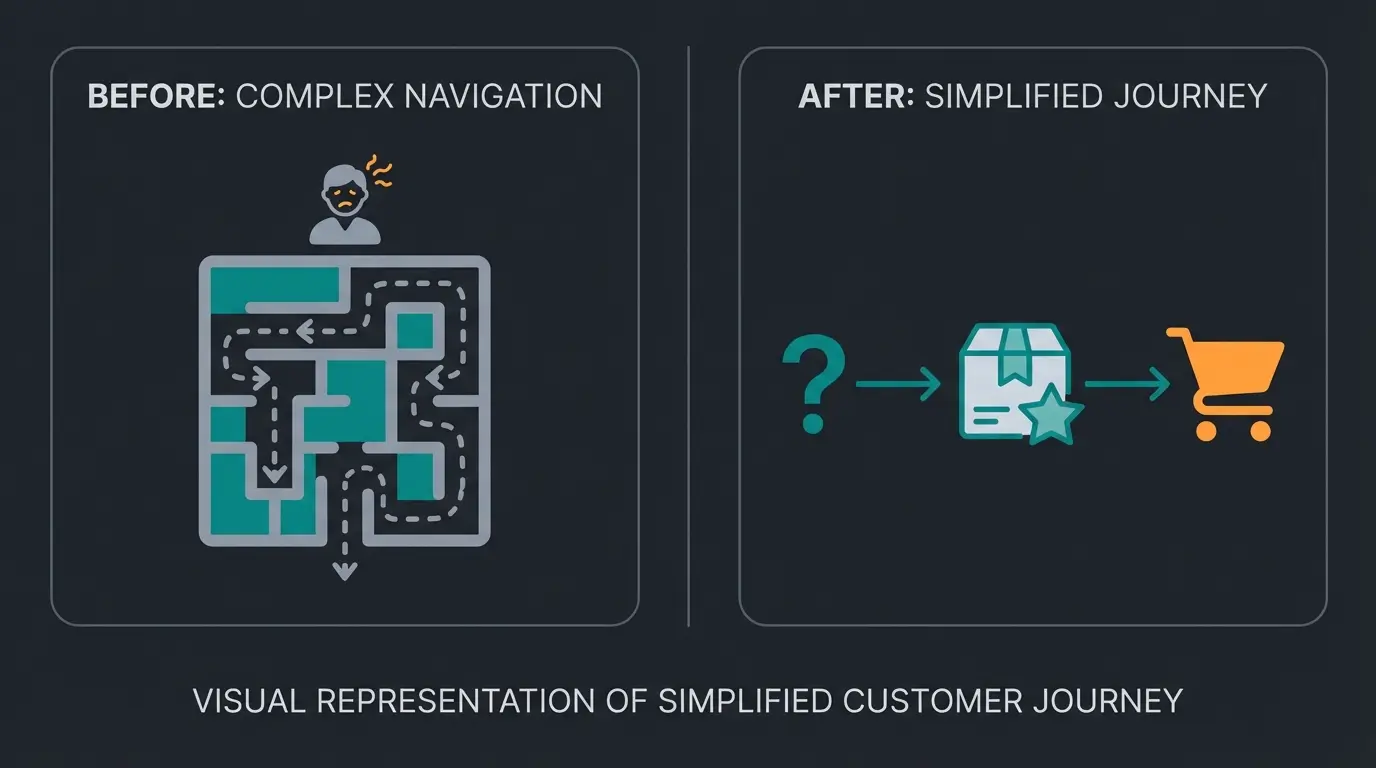
Visitor lands on your WooCommerce B2B store with a specific need or problem
AI Sales Engineer asks 2-3 targeted technical questions to understand requirements
System recommends the exact compatible product with technical justification
Customer adds to bulk order form with correct pricing applied automatically
Streamlined checkout with VAT validation and role-based pricing intact
How AI Transforms WooCommerce B2B Commerce
Artificial intelligence (AI) in 2025 is no longer a gimmick—it's a hard competitive factor. But caution: we're not talking about simple chatbots that recite business hours.
More Than a Chatbot: The AI Sales Engineer
An AI Sales Engineer is a system that possesses deep technical knowledge about your product catalog and actively advises customers. Unlike static search bars, the AI conducts a sales conversation (Guided Selling). This approach to AI Guided Selling represents a fundamental shift in B2B e-commerce.
This level of AI Product Consultation transforms how B2B buyers interact with online stores. The AI doesn't just list products—it understands the problem and provides solutions.
RAG Technology: Why the AI Doesn't Hallucinate
One of the biggest concerns in B2B ("German Efficiency") is reliability. A chatbot must not invent false technical data.
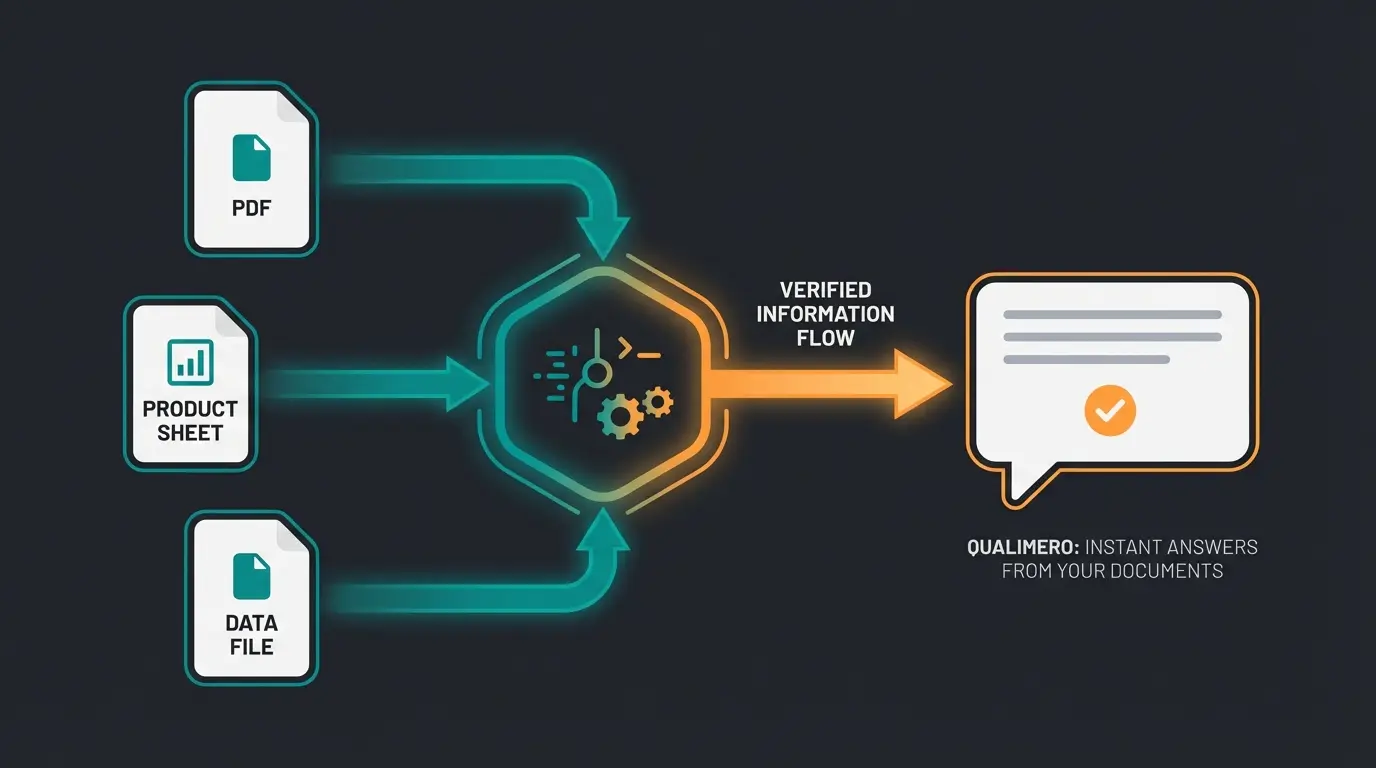
The solution is called RAG (Retrieval-Augmented Generation) as documented on GitHub and WordPress.org. With this technology, the language model (like GPT-4) isn't simply "let loose." Instead, it's linked to your specific knowledge database:
- PDF data sheets of your products
- Technical manuals
- Your WooCommerce product descriptions and attributes
When a customer asks a question, the AI first searches your documents for factual information and then formulates an answer based only on these facts. If the information isn't in your data sheets, the AI honestly responds: "I don't have information on that. Should I connect you with an expert?" This approach, as highlighted by JNextServices, creates the trust (Trust & Safety) so important in the German market.
See how AI-powered consultation can reduce support tickets by 60% while increasing conversion rates. Join leading B2B companies already using intelligent product guidance.
Start Your Free TrialTechnical Implementation & Data Privacy (Critical for Germany)
How do you integrate this new world of AI into an existing, often complex German WooCommerce setup?
Integration Into Existing Workflows
An AI tool must not be a foreign element. It must communicate seamlessly with your WooCommerce B2B plugin and German Market.
- Data Synchronization: The AI must have access to live data. If a product is "Out of Stock," the AI Sales Engineer must not recommend it. Modern solutions use APIs to synchronize inventory levels in real-time, as explained by Alhena.ai.
- Price Authority: The AI should ideally not quote prices in chat if you use complex tiered pricing. Instead, it should link to the product page or add the product to the cart, where your B2B plugin (e.g., B2B Market) then calculates the correct, customer-specific price. This avoids discrepancies.
- Hybrid Model (Human Handover): For highly complex inquiries or large projects, the AI must be able to seamlessly hand over the chat to a human employee ("Human Handover"), as detailed by Assisto. This is the hybrid strategy: AI for the 80% standard questions, humans for the 20% high-value deals.
This hybrid model aligns perfectly with AI-powered digital sales strategies that maximize both efficiency and customer satisfaction. For complex pricing strategies, understanding Shopware B2B pricing models can provide valuable insights.
GDPR and the EU AI Act: What You Need to Watch
Germany is a world champion in data protection. An AI project can quickly fail here if compliance is ignored.
- EU AI Act (Transparency Requirement): Since the EU AI Act came into force (phased from 2024/2025), AI systems that interact with humans (like chatbots) must be clearly labeled, as noted by Veribot, Ecovis, and Qualimero. Practical Tip: The bot must introduce itself: "I am your digital assistant (AI)." The impression that one is speaking with a human must not be created when that's not the case.
- GDPR: Server location matters—use providers offering hosting in the EU or enterprise solutions (e.g., via Microsoft Azure OpenAI in Europe), as recommended by Pexon Consulting. Execute a Data Processing Agreement (DPA) with the AI provider. Practice data minimization—the AI should not train on personal data. RAG systems have an advantage here since they use company data (catalog) but don't necessarily need to use customer data from chat for model training.
Comparison: Static B2B Search vs. AI Consultation
To clarify the added value for your business strategy, a direct comparison between the current standard and the AI-supported future is worthwhile.
| Feature | Standard B2B Plugin (Status Quo) | AI Sales Engineer (The Future) |
|---|---|---|
| Discovery (Finding) | Manual filters & search bars (requires expertise) | Guided needs analysis (dialogue-based selling) |
| Support Availability | Static FAQ pages or ticket system (wait times) | 24/7 Technical instant answers (real-time) |
| Buyer Effort | High: Must know SKU or exact category | Low: Describes problem or uploads photo |
| Sales Team Role | Answers repetitive standard questions ("Does X fit Y?") | Freed for complex closings & key account management |
| Conversion Rate | Depends on user patience | Higher through active purchase consultation |
| Data Foundation | Static product attributes | Dynamic knowledge from PDFs, manuals & history |
This transformation represents the core of what an Intelligent sales consultant brings to B2B e-commerce. The shift from static catalogs to dynamic consultation fundamentally changes the buyer experience.
Practical Tips for Implementation
If you want to upgrade your WooCommerce wholesale shop now, proceed step by step:
- Data Cleansing: AI is only as smart as your data. Ensure your product descriptions in WooCommerce are current and technical data sheets are available as searchable PDFs.
- Start Small: Implement the AI consultant first for one complex product category, not for the entire assortment.
- Test the Human Handover: Ensure your sales staff is notified when the AI can't proceed. Nothing frustrates B2B customers more than a dead end.
- Update Legal Texts: Adapt your privacy policy and indicate the use of AI assistants.
- Monitor and Optimize: Track which questions the AI handles well and where it escalates. Use this data to improve your product documentation.
- Train Your Team: Ensure sales staff understands how to work alongside the AI, handling escalated queries efficiently.
For companies exploring this transformation, studying successful implementations like the AI Employee case study provides valuable real-world insights. Additionally, understanding the broader context of AI personalization in customer service helps frame the strategic importance of this shift.
The Shopware Alternative: When to Consider Switching
While WooCommerce offers flexibility, some B2B operations find that purpose-built platforms better serve their needs. Understanding Shopware B2B capabilities helps make informed platform decisions. The key isn't which platform you choose—it's implementing effective consultation strategies that bridge the discovery gap.
Whether you're on WooCommerce or considering alternatives, the integration of AI Chatbot for E-Commerce solutions represents a platform-agnostic improvement that transforms customer experience across any system.
Conclusion: The Future is Hybrid
The market for WooCommerce B2B in Germany is ripe for the next step. While plugins for prices and taxes (like German Market) form the indispensable backbone, competition will increasingly be decided at the front lines: in consultation.
The days when B2B customers were willing to click through 50 pages of confusing tables are over. They expect the efficiency of Amazon combined with the expertise of an engineer.
An AI-supported solution doesn't replace your sales team—it scales them. It catches routine inquiries, safely guides customers through the jungle of your assortment, and delivers a purchase-ready customer to the checkout process. Those who implement this Consultative B2B strategy today secure the decisive advantage for 2025 and beyond.
Are you ready to evolve your shop from order form to advisor?
Frequently Asked Questions About WooCommerce B2B
For the German market, the combination of B2B Market (or WholesaleX) with German Market (or Germanized) provides the essential foundation. These handle role-based pricing, VAT validation via VIES, and German legal compliance. However, for complex catalogs, you'll need to supplement with AI-powered consultation tools to bridge the product discovery gap.
Standard chatbots handle FAQ-style questions with pre-programmed responses. An AI Sales Engineer using RAG technology actually understands your product catalog, can analyze technical requirements, ask clarifying questions like a human expert, and recommend specific SKUs based on compatibility and use case. It's the difference between a phone tree and a technical consultant.
Yes, when implemented correctly. Key requirements include: using EU-hosted servers, signing a Data Processing Agreement with the AI provider, clearly identifying the AI assistant as artificial intelligence (EU AI Act compliance), and ensuring the AI uses RAG technology that doesn't train on personal customer data. Your privacy policy must also be updated to disclose AI usage.
Yes, modern AI solutions integrate via API with your existing setup. The AI typically doesn't display prices directly—instead, it recommends products and adds them to the cart where your B2B plugin (like B2B Market) applies the correct customer-specific pricing. This maintains price integrity while improving product discovery.
B2B shops implementing AI consultation typically see 40-60% reduction in repetitive support inquiries, 20-30% improvement in conversion rates due to better product discovery, and significant time savings for sales teams who can focus on high-value deals. The exact ROI depends on your catalog complexity and current support ticket volume.
Join forward-thinking B2B companies transforming their WooCommerce stores with AI-powered consultation. Reduce support load, increase conversions, and deliver the expertise your buyers expect—24/7.
Get Started Free