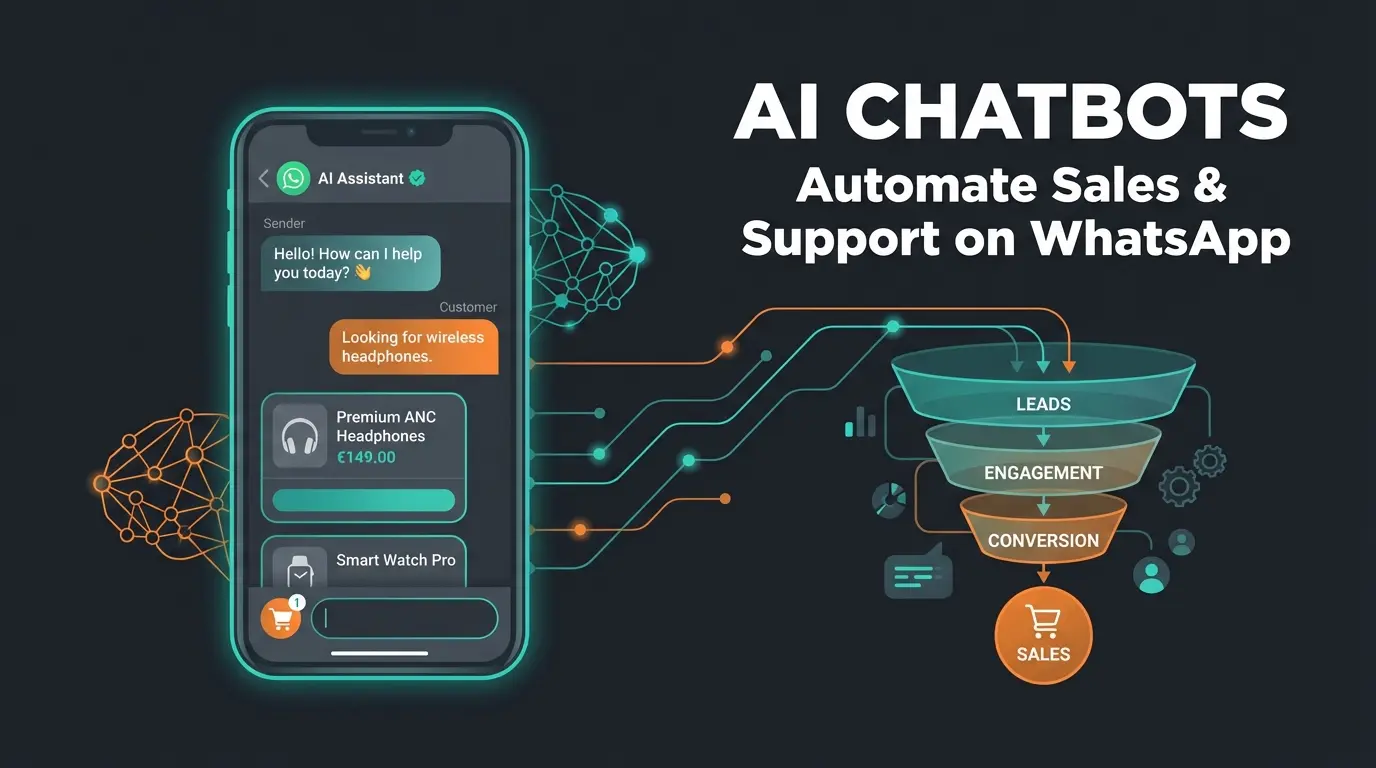
The E-Commerce Conversion Crisis: Why Choice Overload Kills Sales
In the constantly evolving landscape of e-commerce, customer engagement has become synonymous with personalized experiences. While global e-commerce volume was projected at $5.4 trillion for 2023, the average online conversion rate remains stuck at just 2.86%. This stark contrast highlights the enormous potential for improving customer acquisition and retention in the digital marketplace.
But here's the real problem most businesses overlook: customers aren't leaving because they don't want to buy. They're leaving because they can't decide. This phenomenon, known as the Paradox of Choice, means that more product options often lead to fewer purchases. When faced with 50 similar laptops or 100 running shoes, customers freeze, abandon their carts, and leave empty-handed.
The evolution from traditional e-commerce to AI-driven employees isn't just a technological leap—it's a paradigm shift in how businesses interact with their customers. At the center of this transformation lies the evolution of WhatsApp bots, from simple automated response systems to sophisticated AI-driven employees that can actually sell.
Projected 2023 market size
Industry-wide standard
Customers who leave without purchasing
With AI sales consultation
The Early Days of WhatsApp Bots with Artificial Intelligence
WhatsApp, with its global user base of over 2 billion, has long been recognized as a powerful platform for business-customer interactions. The introduction of WhatsApp bots marked the first step toward leveraging this enormous potential for automated customer service.
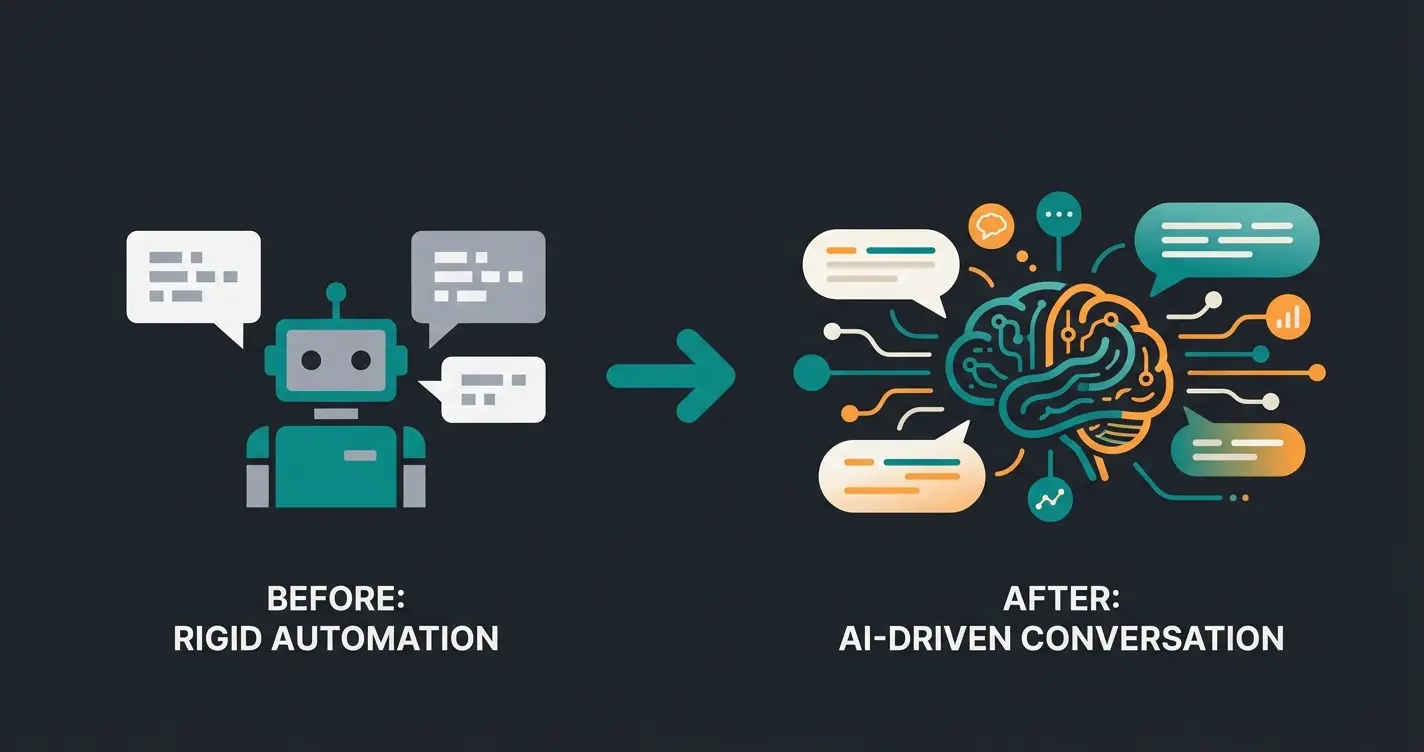
In their earliest form, WhatsApp bots were rudimentary tools designed to handle basic inquiries and deliver simple, predefined responses. These bots operated on a rule-based system, offering quick answers to frequently asked questions, sharing business hours, or providing product information.
Although revolutionary for their time, these early bots were limited in their capabilities. They struggled with context, nuance, and complex inquiries, often leaving frustrated users when their needs fell outside the bot's narrow understanding.
Despite these limitations, early WhatsApp bots laid the foundation for what was yet to come. They demonstrated the potential for automated customer interactions on a platform where users already felt comfortable. Businesses quickly recognized the value in terms of cost savings and 24/7 availability, paving the way for further innovation.
The Rise of AI-Powered WhatsApp Bots
As artificial intelligence and natural language processing technologies advanced, so did the capabilities of WhatsApp bots. The integration of AI marked a significant leap forward, transforming these bots from simple rule-based systems to intelligent conversation partners.
AI-powered WhatsApp bots brought several essential improvements:
- Natural Language Understanding: These bots could interpret user intent, even when inquiries were phrased in different ways.
- Context Awareness: AI bots could maintain context throughout a conversation, leading to more coherent and meaningful interactions.
- Learning Capability: Unlike their predecessors, AI bots could learn from interactions and continuously improve their responses.
- Personalization: By analyzing user data and past interactions, AI bots could offer personalized recommendations and tailored responses.
The WhatsApp API played a crucial role in this development. It provided developers with the tools to create more sophisticated bots, integrate them with other systems, and leverage WhatsApp's features more effectively. This API became the bridge between WhatsApp's massive user base and the growing capabilities of AI, opening new possibilities for businesses to connect with their customers.
The emergence of AI-powered WhatsApp bots marked a significant improvement in user experience. Customers could now have more natural conversations, receive more accurate and helpful responses, and enjoy a level of personalization that was previously unattainable with rule-based bots. By leveraging AI chatbots, the customer experience was significantly enhanced, as they personalize and optimize the shopping experience by analyzing behavioral patterns and providing tailored product recommendations.
What Is an E-Commerce Chatbot?
Definition and Core Functions
An e-commerce chatbot is an advanced software tool designed to assist customers with digital shopping. These chatbots, often powered by artificial intelligence (AI), have evolved from simple question-and-answer systems to complex AI agents capable of handling a wide variety of tasks. From providing product recommendations to processing payments—e-commerce chatbots are versatile helpers in online retail.
Conversational AI in e-commerce has proven extremely popular because it significantly improves the customer experience. Through 24/7 access, customers can receive support at any time, increasing satisfaction and loyalty. Additionally, these chatbots offer personalized recommendations based on individual customer preferences and behavior. This leads not only to a better user experience but also to higher conversion rates.
For e-commerce businesses, AI chatbots are a simple way to scale high-quality customer interactions. They enable data-driven insights into what customers expect from a digital storefront and help streamline order processing for employees. Overall, e-commerce chatbots contribute to increased efficiency while simultaneously providing a personalized and engaging shopping experience.
| Feature | Rule-Based FAQ Bot | AI Sales Consultant |
|---|---|---|
| Learning Capability | None - static responses | Continuous improvement from interactions |
| Dialogue Depth | Single question-answer | Multi-turn consultative conversation |
| Primary Goal | Deflect support tickets | Drive conversions and sales |
| User Experience | Frustrating for complex queries | Natural, personalized guidance |
| Product Recommendations | Generic links to categories | Needs-based, contextual suggestions |
| Scalability | Limited by predefined rules | Handles thousands simultaneously |
The Critical Difference: Support Bots vs. Sales Consultants
This is where most businesses get it wrong. They implement a chatbot thinking it will boost sales, but they've actually deployed a glorified FAQ machine. Understanding the distinction between a support bot and a sales consultant is crucial for e-commerce success.
Generation 1: The Support Bot
Support bots answer questions like: "Where is my package?" or "What are your return policies?" They're valuable for reducing ticket volume, but they don't generate revenue. They're cost centers, not profit centers.
Generation 2: The AI Sales Consultant
Sales consultants answer questions like: "Which running shoe fits my marathon goals?" or "What laptop should I buy for video editing on the go?" They don't just respond—they guide, consult, and close. They're revenue generators.
Conversational Commerce: The Next Frontier
As AI technology continued to advance, a new concept emerged in the e-commerce world: Conversational Commerce. AI technologies support businesses in analyzing customer behavior, providing personalized product recommendations, and optimizing customer service through the use of chatbots. This approach goes beyond simple customer service, aiming to replicate the experience of shopping with a knowledgeable and attentive salesperson.
AI employees in Conversational Commerce represent the pinnacle of this technology:
- Understand complex inquiries and respond with nuanced, contextually appropriate answers
- Guide customers through the entire shopping journey, from product discovery to purchase
- Offer personalized product recommendations based on customer preferences and behavior
- Handle objections and negotiate, similar to a human sales representative
- Integrate with inventory and pricing systems to deliver real-time information
- Process transactions directly within the chat interface
The strength of AI employees lies in their ability to create a shopping experience that feels personal, engaging, and tailored to each individual customer. They bring back the human touch that was often lost in the transition to digital commerce, but with the added benefits of 24/7 availability and scalability.
AI initiates conversation based on user behavior (time on page, scroll depth, exit intent)
Ask qualifying questions to understand customer requirements, budget, and preferences
Present curated options based on specific needs, not overwhelming product dumps
Address concerns about price, features, or compatibility with intelligent responses
Suggest the perfect product with reasoning, plus complementary items
Complete transaction within the conversation or smooth handoff to cart
The 5 Key Benefits of an AI Sales Consultant
The integration of artificial intelligence (AI) into e-commerce offers a multitude of benefits that enhance both efficiency and customer satisfaction. By analyzing customer behavior and preferences, AI systems can create personalized recommendations that not only increase customer satisfaction but also significantly boost revenue.
1. Revenue While Your Sales Team Sleeps
Your human sales team works 8 hours. Your AI sales consultant works 24. During nights, weekends, and holidays, your AI is actively guiding customers toward purchase decisions—not just answering "What time do you open?"
2. Hyper-Personalization Beyond "Hello [Name]"
True personalization means: "I see you looked at the red hiking boots last week. Are you planning a mountain trip? I can help you find the perfect gear based on your destination and experience level." This creates a one-to-one shopping experience at scale.
3. Rescue Abandoned Carts in Real-Time
When a customer hesitates at checkout, your AI can proactively engage: "I noticed you're considering the premium package. Many customers have the same question about whether the extra features are worth it. Can I explain the key differences?"
4. Black Friday Scalability
Human consultants can handle maybe 3 conversations at once. Your AI handles 1,000 simultaneous consultations during peak traffic without breaking a sweat—or asking for overtime pay.
5. Free Your Support Team for What Matters
By automating pre-sales questions ("Which size should I order?"), your human team can focus on complex complaints and high-value customer recovery where emotional intelligence matters most.
See how AI-powered sales consultation can increase your conversion rates by up to 64%. Our intelligent chatbot doesn't just answer questions—it closes sales.
Start Your Free TrialCase Study: E-Commerce Transformation with AI WhatsApp Bots
To illustrate the transformative power of AI-powered WhatsApp bots in e-commerce, let's examine a real-world case study:
An online retailer struggling with traditional lead generation methods decided to implement AI-powered qualification for their customers.
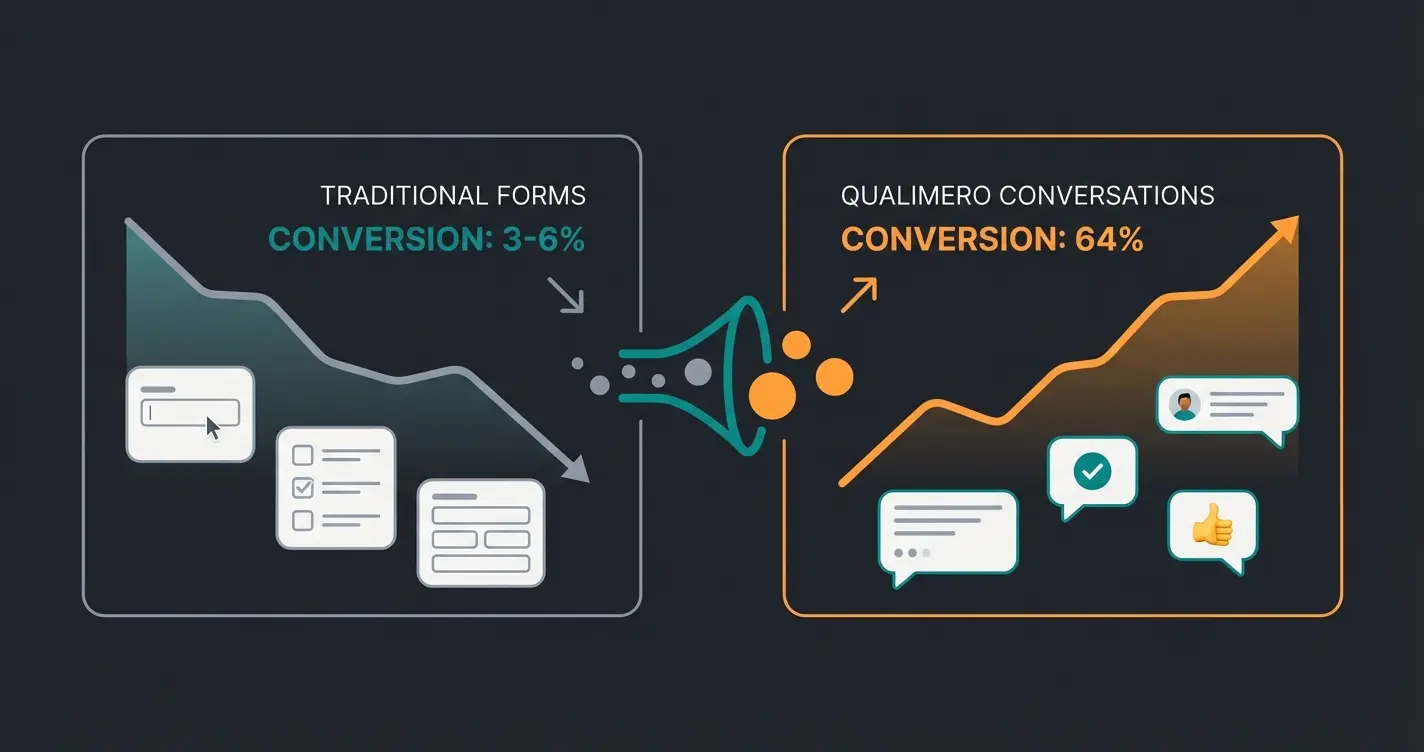
Previously, the retailer used a "Heyflow" form to collect information about customer intentions, preferences, budget, and contact details. Although this method seemed promising, it suffered from a low conversion rate of 3-6%, with significant drop-offs at the budget question and contact information collection.
The implementation of the AI-powered WhatsApp bot delivered remarkable results:
- Conversion Rate Increase: The conversion rate rose from the previous 3-6% to an astonishing 64%. This dramatic increase was attributed to the bot's ability to engage customers in natural, dynamic conversations.
- Personalized Interactions: The AI agent could adapt its responses in real-time based on user inputs, creating a more engaged and personalized experience. This dynamic interaction helped overcome customer objections and hesitations more effectively than a static form.
- Improved Lead Nurturing: The WhatsApp platform enabled seamless follow-up actions. For example, if a customer mentioned going on vacation, the bot not only noted this information but also engaged in friendly conversation about it and set an appropriate follow-up date.
- Higher Customer Satisfaction: Users appreciated the more natural and engaged interaction compared to filling out a form. The conversational approach made the process feel less like a transaction and more like a helpful dialogue.
- Enhanced Data Collection: Since interactions occurred via WhatsApp, customers naturally provided their contact information simply by participating in the conversation, eliminating the need for a separate, often off-putting step to collect this data.
- Increased Average Order Value: The AI agent's ability to highlight product qualities and benefits often convinced customers to invest more than originally intended, effectively leading to upselling through conversation.
This case study demonstrates the potential of AI-powered WhatsApp bots not only to improve conversion rates but also to enhance the overall customer experience. It's crucial to consider customer needs and feedback to continuously optimize offerings and services and increase customer satisfaction.
Enhancing Customer Service Through AI Chatbots
AI chatbots are revolutionizing customer service in e-commerce by providing fast and efficient solutions to customer inquiries. These intelligent systems are capable of delivering support around the clock, leading to a significant increase in customer satisfaction. Customers appreciate the ability to receive immediate answers to their questions without depending on the availability of a human employee.
Another advantage of AI chatbots is their ability to assist customers in product searches and create personalized recommendations. By analyzing customer preferences and behavior, these chatbots can make tailored suggestions that match individual customer needs. This leads not only to higher conversion rates but also to an improved shopping experience.
Additionally, AI chatbots contribute to reducing operational costs by automating routine tasks and increasing efficiency. Tasks such as answering frequently asked questions, processing returns, and managing orders can be handled by chatbots, giving employees more time for more complex tasks. By using AI chatbots, e-commerce businesses can better understand and serve their customers, leading to higher customer satisfaction and retention.
Overall, AI chatbots offer a powerful solution for improving customer service in e-commerce. They enable companies to scale high-quality and personalized interactions, increase efficiency, and simultaneously reduce operational costs. Through the implementation of AI chatbots, e-commerce businesses can enhance their competitiveness and deliver an outstanding customer experience.
AI Chatbots and Data Privacy (GDPR Compliance)
For the German and European market, data privacy isn't optional—it's essential. Any AI chatbot solution must be GDPR (DSGVO) compliant to build trust with privacy-conscious consumers.
When evaluating AI chatbot solutions, look for providers that offer "Made in Germany" or "EU-hosted" options. This isn't just about compliance—German consumers actively prefer businesses that take data protection seriously. A well-designed AI chatbot that clearly communicates its privacy practices can actually become a trust signal rather than a concern.
WhatsApp Bot Experiences: What Businesses Report
The experiences of both businesses and customers with WhatsApp bots have evolved significantly over time. In the early days of rule-based bots, user experiences were often mixed. While some appreciated the quick responses for simple inquiries, many found the bots frustrating when dealing with more complex issues.
With the increasing adoption of AI-powered bots, user experiences improved dramatically. Customers report higher satisfaction scores and appreciate the bots' ability to understand context, deliver relevant information, and handle a broader spectrum of inquiries.
From a business perspective, experiences have been largely positive. Companies report:
- Reduced customer service costs
- Increased engagement rates
- Improved lead qualification
- Higher customer satisfaction scores
- Valuable insights from analyzing bot conversations
However, it's worth noting that the success of a WhatsApp bot depends heavily on its implementation. Poorly designed or implemented bots can still lead to frustrating user experiences. In an online shop, it's particularly important that published content is high-quality and legally secure, especially when using AI-generated texts. This underscores the importance of careful planning and continuous refinement of bot implementations.
Integration: How Does AI Get Into Your Shop?
Many businesses assume implementing an AI chatbot requires months of development and a team of engineers. The reality? Modern solutions offer low-code or no-code setups that can be deployed in days, not months.
Integration Options
- WhatsApp Business API: Direct integration for conversational commerce on the world's most popular messaging platform
- Website Widget: Embed the AI consultant directly on your product pages and checkout
- Shopify Integration: Native plugins that sync with your product catalog and inventory
- WooCommerce Compatibility: Seamless connection with WordPress-based stores
- Custom API: For enterprise solutions requiring deeper system integration
The key is choosing a solution that connects with your existing tech stack—your CRM, inventory management, and order processing systems—so the AI has real-time access to the information it needs to sell effectively.
The Future of Conversational Commerce
Looking to the future, the potential of AI-powered WhatsApp bots in e-commerce seems limitless. Several trends and developments will likely shape the evolution of this technology: Online shops must adapt to rising customer expectations and employ innovative solutions like AI-powered bots to improve user experience and address challenges such as high bounce rates.
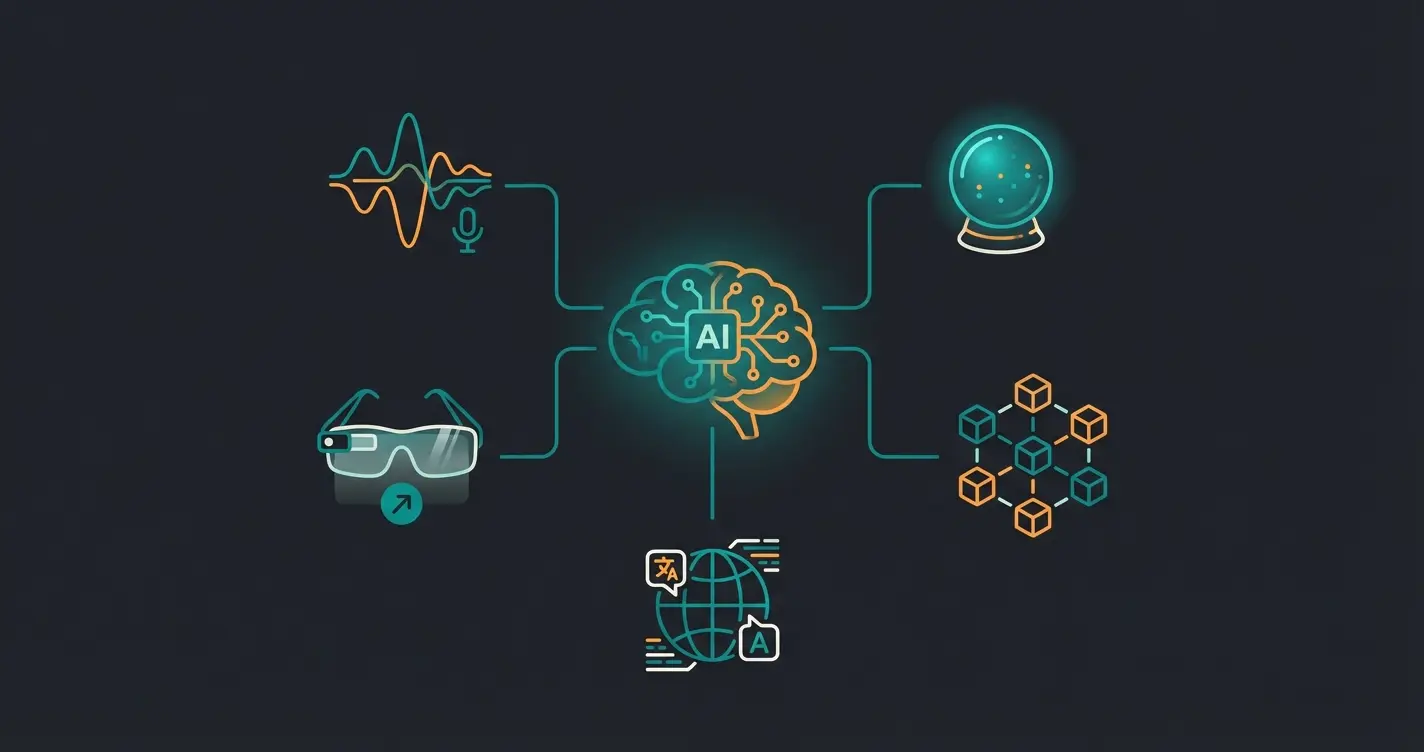
- Enhanced Emotional Intelligence: Future bots may be able to recognize and respond to emotional cues in text, enabling even more empathetic and personalized interactions.
- Integration with AR/VR: As augmented and virtual reality technologies advance, WhatsApp bots could potentially guide customers through virtual product demonstrations or try-ons.
- Predictive Analytics: By leveraging big data and machine learning, bots could offer predictive suggestions and anticipate customer needs before they're even expressed.
- Voice and Video Integration: As WhatsApp functionality expands, bots may evolve to handle voice and video interactions, further blurring the line between digital and in-person shopping experiences.
- Blockchain Integration: For industries where trust and security are paramount, blockchain technology could be integrated to ensure secure transactions and data handling within bot interactions.
- Multilingual Capabilities: Advanced AI could enable bots to communicate seamlessly in multiple languages, breaking down language barriers in global e-commerce.
Implementing AI WhatsApp Bots in Your Business
For businesses looking to leverage this technology, there are some important considerations and steps:
- Define Clear Objectives: Determine what you want to achieve with your WhatsApp bot. Is it customer service, lead generation, sales, or a combination?
- Choose the Right AI Platform: Select an AI platform that integrates well with the WhatsApp Bot API and aligns with your business requirements. Consider factors like scalability, customization options, and ease of integration with your existing systems.
- Design Conversation Flows: Create natural, engaging conversation flows that guide users toward your business goals while providing value at every step.
- Focus on Personalization: Use user data and conversation history to deliver personalized experiences. This could include product recommendations, tailored offers, or personalized content.
- Implement Continuous Learning: Set up systems to continuously train and improve your bot based on user interactions. This could involve regular reviews of conversation logs and periodic refinements of bot responses.
- Ensure Human Backup: While AI can handle a broad spectrum of interactions, there will always be situations requiring human intervention. Implement a seamless handoff process from bot to human agent when necessary.
- Respect Privacy and Comply with Regulations: Ensure your bot implementation complies with data protection regulations like GDPR. Be transparent about data usage and provide users with options to manage their data.
- Monitor and Analyze Performance: Implement analytics to track key performance indicators such as conversion rates, user satisfaction, and average handling time. Use these insights to continuously refine your bot strategy.
- Integration with Other Systems: For maximum efficiency, integrate your WhatsApp bot with other business systems such as CRM, inventory management, and order processing.
- Provide User Education: Help your customers understand how to interact with the bot and what they can expect from it. This can improve adoption rates and user satisfaction.
Is Your Shop Ready for AI? The Readiness Checklist
Before implementing an AI sales consultant, honestly assess whether your business is positioned to benefit:
- ☐ Do you sell products that require explanation or consultation?
- ☐ Is your support team overwhelmed with "Which product is right for me?" questions?
- ☐ Do you have high traffic but low conversion rates?
- ☐ Are you experiencing significant cart abandonment?
- ☐ Do customers frequently need guidance choosing between similar products?
- ☐ Is your competition already using conversational commerce?
If you checked three or more boxes, your business is likely a strong candidate for AI sales automation. The more "yes" answers, the higher your potential ROI.
Conclusion: The Conversational Commerce Revolution
The evolution from simple WhatsApp bots to AI-powered employees represents a significant leap in customer engagement technology. This development has brought us closer to transferring the personalized, attentive service experience of brick-and-mortar shopping into the digital realm.
By leveraging these advances, businesses can dramatically improve their conversion rates, customer satisfaction, and overall e-commerce performance. The ability to engage customers in natural, personalized conversations at scale opens new possibilities for relationship building, understanding customer needs, and driving revenue.
However, it's important to remember that technology is only a tool. The key to success lies in how businesses implement and use these tools to create value for their customers. Looking to the future, the most successful e-commerce businesses will be those that find the right balance between technological innovation and the human touch.
As we stand at the threshold of this Conversational Commerce revolution, one thing becomes clear: The future of e-commerce isn't just about transactions—it's about conversations. By embracing AI-powered WhatsApp bots and Conversational Commerce, businesses can create more engaging, personalized, and ultimately successful e-commerce experiences.
This technology holds the potential to fundamentally change how we shop online. It brings the personal element back to digital commerce while simultaneously creating efficiency and scalability that wasn't possible in traditional retail. For businesses that want to remain competitive in the rapidly evolving world of e-commerce, adopting and mastering these Conversational Commerce technologies is becoming increasingly crucial.
As we enter this new era, it will be exciting to observe how businesses leverage these technologies to innovate, differentiate, and ultimately create better customer experiences.
In conclusion, the evolution of WhatsApp bots is more than just a technological advancement—it's a paradigm shift in how businesses interact with their customers. By combining the best of human empathy and technological efficiency, these AI-powered conversational agents open new possibilities for personalized, engaged, and effective customer interactions in the digital age.
A regular chatbot follows pre-programmed rules and can only answer questions it was specifically designed for—typically support queries like 'Where is my order?' An AI sales consultant uses machine learning and natural language processing to understand context, ask qualifying questions, and guide customers through a consultative buying process, actively driving conversions rather than just deflecting support tickets.
Implementation costs vary widely based on complexity and scale. Simple rule-based bots might cost €500-2,000 for setup, while sophisticated AI sales consultants with full integration typically range from €5,000-25,000 for initial implementation plus monthly licensing fees. However, businesses often see ROI within 2-3 months through increased conversion rates and reduced support costs.
Yes, WhatsApp chatbot marketing can be fully GDPR compliant when implemented correctly. Key requirements include: obtaining explicit consent before messaging, providing clear privacy information, using EU-based data storage, offering easy opt-out mechanisms, and being transparent that users are communicating with AI. Choose providers that specialize in the European market and offer built-in compliance features.
AI chatbots don't replace human sales staff—they augment them. AI handles high-volume, repetitive consultations (sizing questions, feature comparisons, basic recommendations) 24/7, while human staff focus on complex negotiations, emotional situations, and high-value accounts. The best results come from seamless handoff between AI and humans when conversations require genuine emotional intelligence.
Most businesses see initial results within 2-4 weeks of deployment. Early indicators include reduced support ticket volume and increased engagement rates. Meaningful conversion improvements typically emerge after 6-8 weeks as the AI learns from interactions and conversation flows are optimized based on real user behavior data.
Your customers want guidance, not more options. Deploy an AI sales consultant that turns confused browsers into confident buyers—with conversion rates up to 64%.
Book Your Demo Today