What Does a Professional Shopware Shop Really Cost?
How much does it cost to have a professional Shopware shop developed? This is the first question every merchant asks when venturing into e-commerce or planning a relaunch. The short answer for 2025: A professional Shopware 6 project typically ranges between €15,000 and €60,000 for small to medium-sized businesses, while enterprise solutions can quickly exceed the €100,000 mark.
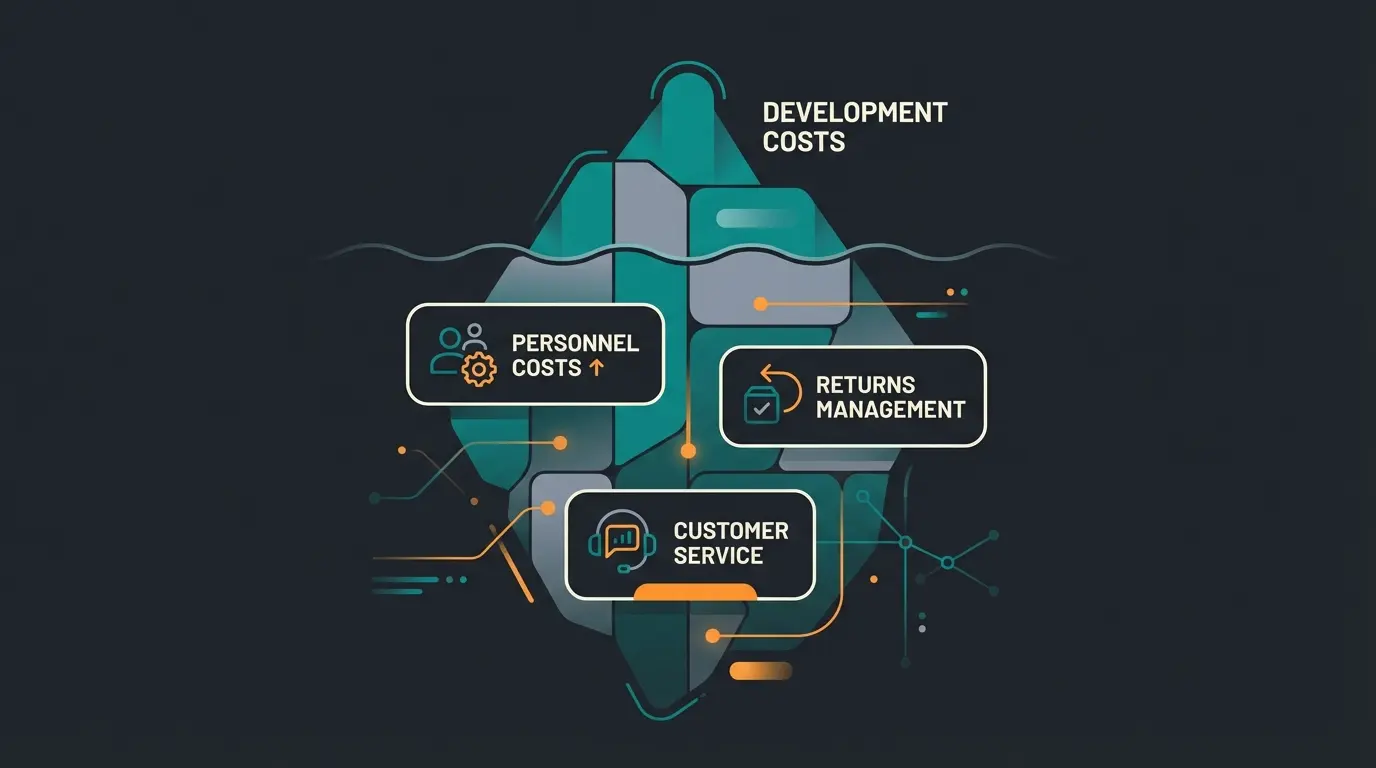
However, these numbers only tell half the story. Those who focus solely on development costs (Capex) overlook the most dangerous part of the iceberg: the ongoing operational costs (Opex), particularly for personnel, customer service, and returns management. According to Operun, understanding the full scope of expenses is crucial for accurate budget planning.
In this comprehensive guide, we break down not only the current agency prices and Shopware license models for 2025 (including the new Fair Usage Policy), but also show you why a "cheap" shop without intelligent consultation technology can cost you a fortune in the long run. We analyze the Total Cost of Ownership (TCO) and explain why investing in AI-powered product consultation might be the most important budget decision for your project. For a detailed look at Shopware AI features, check out our dedicated guide.
The 3 Price Tiers for Shopware Projects: An Overview
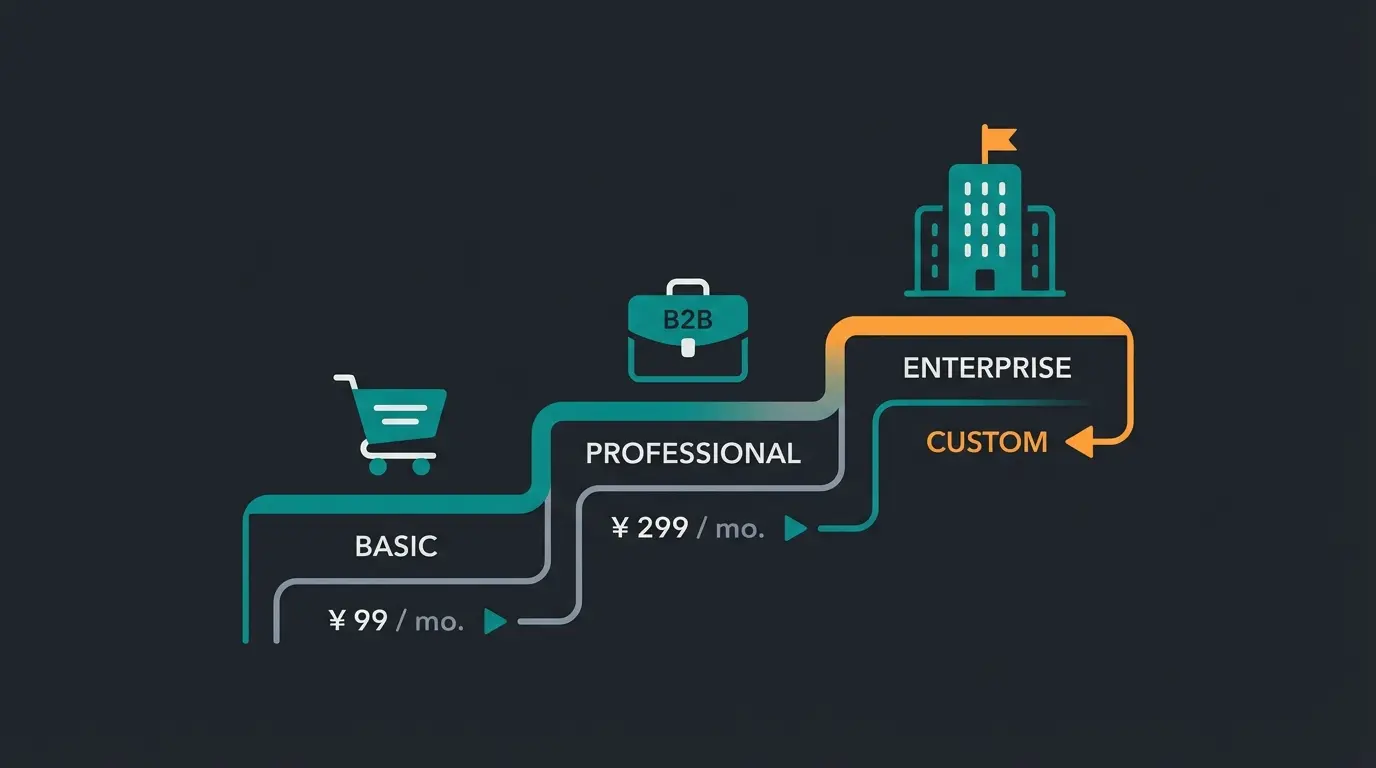
To set a realistic budget, you first need to define which league you're playing in. Agencies and freelancers typically calculate based on complexity. Here's a realistic assessment of market prices in Germany for 2025, according to research from Buzzwoo and Shop-Studio.
1. The Starter Shop (Basic Setup)
- Price Range: €10,000 – €25,000
- Target Group: Startups, small merchants, proof-of-concept projects
- What You Get: Installation of Shopware 6 (often Community Edition or Rise), use of a standard theme from the Shopware Store with CI customization (colors, logo, fonts), setup of standard payment methods (PayPal, credit card) and shipping, no or only very simple interfaces (e.g., CSV import), standard functionalities without individual programming
2. The Professional Shop (Customization)
- Price Range: €25,000 – €75,000
- Target Group: Established SMEs, brand manufacturers, ambitious merchants
- What You Get: Individual theme design (screen design & frontend development) optimized for UX, connection to ERP/inventory management (e.g., JTL, SAP Business One, Microsoft Dynamics), data migration from legacy systems (Shopware 5, Magento, WooCommerce), extended SEO optimization and performance tuning, use of specific plugins or light custom development
3. The Enterprise Shop (High-End)
- Price Range: €75,000 – €200,000+
- Target Group: Market leaders, corporations, complex B2B models
- What You Get: Headless architecture or complex system landscapes, in-depth B2B functions (individual price lists, rights & roles, OCI punchout), PIM integration (Product Information Management), multi-shop/multi-country setups, custom plugin development for special business processes
Basic setup with standard theme and simple features
Custom design with ERP integration and migration
Headless architecture with complex B2B features
Standard development duration for professional shops
Shopware 6 License Costs 2025: Rise, Evolve & Fair Usage
In addition to one-time development costs, you need to budget for monthly license fees. Shopware has significantly shifted its pricing model toward "Software as a Service" (SaaS) and subscriptions. For a complete breakdown, see our Shopware editions comparison.
The Current Plans at a Glance
According to OMR, Shopware, and Tikal, here are the current pricing tiers:
| Edition | Price (Monthly) | Target Group | Key Features |
|---|---|---|---|
| Shopware Rise | from €600 | Growing merchants | Social Shopping, CMS Rules, Basic Support (8h response) |
| Shopware Evolve | from €2,400 | Mid-market / B2B | B2B Suite, Advanced Search, Flow Builder Pro, Phone Support |
| Shopware Beyond | from €6,500 | Enterprise | Multi-Inventory, Subscriptions, High-Priority Support (1h) |
IMPORTANT: The New Fair Usage Policy (March 2025)
For users of the free Community Edition (CE), there has been a crucial change since March 2025. Shopware introduced a Fair Usage Policy, as confirmed by Qualimero and Shopware official documentation:
- Under €1M GMV (Gross Merchandise Volume): The Community Edition remains free to use, including access to the Shopware Store and Account.
- Over €1M GMV: Anyone generating more than 1 million euros in revenue through the shop must upgrade to a paid plan (Rise, Evolve, or Beyond) to continue having access to updates, the plugin store, and the account.
This is a critical factor for your budget planning: If you plan to scale quickly, you should firmly factor in license costs of at least €600/month (Rise) or €2,400/month (Evolve) in the medium term. Themeware provides additional insights on theme costs within these editions.
The Biggest Cost Drivers (And Where to Save Money)
When you receive a quote from an agency, you might wonder: "Why does position X cost so much?" Here's a breakdown of the biggest cost drivers. If you're considering alternatives, our Shopware vs Shopify comparison provides valuable insights.
1. Interfaces – The Hidden Money Pit
Connecting your online shop to the outside world is often the most expensive item. A clean connection to your ERP (e.g., SAP, Sage, Weclapp) or PIM is complex.
- Cost Factor: €5,000 – €20,000
- Savings Tip: Use existing middleware solutions or certified connectors instead of custom interface programming wherever possible.
2. Design & UX – Custom vs. Theme
An individual design created by a UX designer in Figma and then implemented pixel-by-pixel in Shopware is labor-intensive.
- Cost Factor: €3,000 (theme customization) vs. €15,000+ (custom design)
- Savings Tip: For the start, a high-quality premium theme (approx. €500 license + 2-3 days customization) is often sufficient. Invest the saved money in conversion optimization and content instead.
3. Data Migration
Moving product data, customer histories, and orders from an old system (e.g., Shopware 5) is rarely "one click." Data must be cleaned and mapped.
- Cost Factor: €2,000 – €10,000
- Savings Tip: Clean your data before the project starts. Delete inactive records and old items. The cleaner the source, the cheaper the migration.
Create detailed specifications to reduce agency risk buffers
Prepare product data, images, and texts before migration
Use premium themes and certified connectors where possible
Allocate saved budget to AI consultation for long-term ROI
Ongoing Costs: The Often Underestimated Iceberg
Many merchants calculate: Development costs + Hosting = Total costs. This is a dangerous miscalculation. The true costs arise in operation. For detailed guidance on maintenance, explore our Shopware 6 support resources.
Technical Operating Costs
For a high-performance Shopware 6 shop, you need specialized hosting (e.g., from Timme, maxcluster, or Profihost). According to DMSolutions and Trusted.de:
- Hosting: €50 to €500 per month, depending on traffic
- Maintenance & Updates: Shopware regularly releases updates. Agencies offer maintenance contracts to apply security patches. Costs: €200 – €1,000 per month according to Shopwareagentur.info
Personnel Costs & Customer Service: The Pivot Point
Here lies the biggest lever for your profitability. An online shop is not a self-runner. Customers have questions: "Does spare part X fit machine Y?", "What size do I need?", "Is this compatible?". This is where AI eliminates waiting times and transforms the customer experience.
In a classic setup, you need personnel to answer these inquiries via email, phone, or chat:
- Costs: A qualified support employee costs (including payroll taxes) approximately €40,000 – €50,000 per year.
- The Problem: If you're not available on weekends or evenings, customers don't buy – or they buy the wrong thing.
This brings us to the biggest profit killer in e-commerce: Returns. Consider working with a Shopware full service agency that understands these challenges.
Why Classic Search & Filter Shops Cost More to Operate
Most Shopware shops operate on the "search & filter" principle. The customer must know what they need themselves. If they don't find it or are unsure, one of two things happens:
- Cart Abandonment: They go to Amazon or a competitor.
- Wrong Purchase & Return: They order "to try" or guess.
The True Costs of a Return
Current studies show that a single return costs the merchant an average of €5 to €10 (process costs, value loss, shipping) – in the furniture sector even up to €20, as reported by Viazon and Spiegel. With a return rate of 30% (often 50% in fashion), this massively destroys margin.
This is your opportunity for differentiation: Instead of putting the budget only into a "pretty design," you should invest in automated product consultation. Learn more about KI E-Commerce strategies that are transforming the industry.
The Paradigm Shift: From Searching to Being Advised
Classic chatbots were often frustrating ("I didn't understand your question"). Modern AI Product Consultants (AI-powered sales advisors) change the game. They act like an experienced salesperson in the store, and you can learn more about implementing Shopware 6 chatbots effectively:
- They ask about needs ("What do you want to use the bicycle for?")
- They understand context
- They suggest suitable products and explain the "why"
For a comprehensive understanding of this technology, explore our guide on AI product consultation.
| Feature | Rule-Based Chatbot | AI Product Consultant |
|---|---|---|
| Context Understanding | Limited to keywords | Full conversational context |
| Product Knowledge | Static FAQ responses | Dynamic catalog intelligence |
| Upselling Capability | None | Intelligent recommendations |
| Setup Effort | High maintenance | Self-learning system |
| Customer Experience | Frustrating | Natural conversation |
| GDPR Compliance | Varies | Built-in compliance |
Investment Example: Shopware Shop with AI Consultation
Let's set up a Total Cost of Ownership (TCO) calculation for the first year. We compare a "standard shop" with high manual effort against an "AI-optimized shop". You can also see real results in our AI Employee conversion case study.
Scenario: A medium-sized merchant (e.g., sports equipment or technical parts).
| Cost Position (Year 1) | Option A: Classic Shop | Option B: Shop with AI Consultation |
|---|---|---|
| Development (Agency) | €30,000 | €35,000 (incl. AI setup) |
| Shopware License (Rise) | €7,200 | €7,200 |
| Hosting & Maintenance | €6,000 | €6,000 |
| Support Personnel | €80,000 (2 employees) | €40,000 (1 employee + AI) |
| Return Costs* | €20,000 (high rate) | €14,000 (reduced rate) |
| TOTAL COSTS YEAR 1 | €143,200 | €102,200 |
Assumption: 2,000 returns at €10 each for Option A vs. 30% reduction through better consultation for Option B.
The Analysis
Although the AI shop was €5,000 more expensive in development (initial setup of the AI, training the data), it saves €41,000 in operational costs in the first year. For more details on B2B pricing structures, check our Shopware B2B pricing guide.
- Personnel Efficiency: The AI intercepts 80% of standard questions ("Does it fit?", "Delivery time?"). Your human expert handles only complex cases.
- Return Reduction: Because customers are better advised before purchase, they order the wrong thing less often.
- Conversion Uplift: A customer who is advised is more likely to buy than one who only stares at a filter list.
Discover how AI product consultation can reduce your total cost of ownership by 30% or more while increasing conversions.
Get Your Free AnalysisBudget Checklist for Your Shopware Project
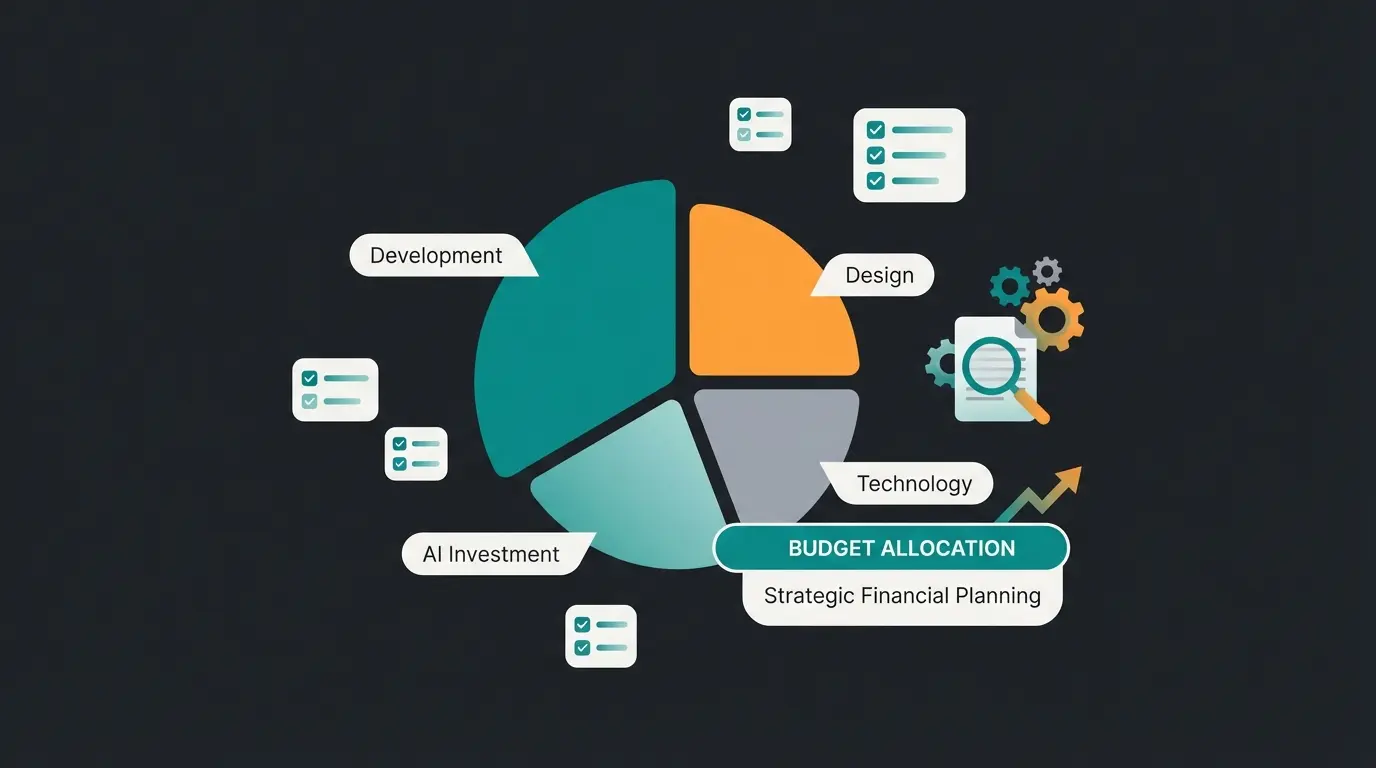
Before you request quotes, use this checklist to avoid hidden costs and distribute your budget wisely.
1. Preparation (Saves Agency Hours)
- Requirements Document: Have you defined all functions in writing? (The vaguer the briefing, the higher the agency's "risk buffer")
- Data Quality: Are your product data (images, texts, attributes) clean and exportable?
2. Technology & Setup
- License Check: Is my GMV over €1M? If so, budget for Shopware Rise/Evolve (Fair Usage Policy!)
- Interfaces: Do I really need a real-time connection to the ERP, or is a daily sync sufficient at first?
3. The Intelligence Layer (Budget Shift)
- Consultation vs. Design: Am I willing to spend €5,000 less on "fancy design effects" and invest it in an AI solution that lowers my returns?
- Support Capacity: How many inquiries do I expect? Can I handle that with the current team, or do I need automation?
4. Buffer
Always plan a 15-20% buffer on top of the quoted price for unforeseen requests during development.
Conclusion: Invest in Revenue, Not Just Technology
The question "What does it cost to have a Shopware shop developed?" can be answered more precisely than ever in 2025: Between €15,000 and €60,000 for the technology.
But the winner in tomorrow's e-commerce is not the merchant with the most expensive code, but the one with the best user experience. In an era where customers expect answers around the clock, automated product consultation becomes the decisive competitive advantage.
Our Recommendation
Don't view your Shopware relaunch as a pure IT project. View it as building a digital sales team.
- Don't cut corners on the wrong things (performance, SEO)
- Use standard themes to free up budget for what matters
- Invest the saved money in an AI infrastructure that reduces your personnel costs and increases your conversion rate
A shop for €30,000 that actively sells and avoids returns is always cheaper in the end than a shop for €20,000 that only passively lists products and causes high follow-up costs.
Frequently Asked Questions
The Community Edition is license-free, but since March 2025, it's tied to the Fair Usage Policy (max €1M revenue). Additionally, costs arise for hosting and potentially plugins. Once you exceed €1M in gross merchandise volume, you must upgrade to a paid plan like Rise, Evolve, or Beyond.
In Germany, hourly rates in 2025 typically range between €90 and €150. Freelancers are often cheaper (€70-€100) but offer less reliability and backup, according to Freelancermap. Always factor in the cost of potential project delays when choosing between agencies and freelancers.
Yes, through cloud tariffs and Shopware Rise, getting started has become easier. However, you should check whether for very small projects (under 100 items), Shopify might not be the more cost-effective solution, as the maintenance effort for Shopware is higher.
A standard professional Shopware shop takes 3-6 months from concept to launch. Starter shops may be completed in 6-8 weeks, while enterprise projects with complex integrations can take 9-12 months or longer.
AI product consultation can reduce support staff requirements by 50% by handling 80% of standard customer inquiries automatically. Additionally, better pre-purchase consultation typically reduces return rates by 20-30%, directly improving your bottom line and total cost of ownership.
Stop overspending on operations. Our AI-powered solution cuts support costs in half while boosting conversions. See how much you could save.
Start Your Free Trial