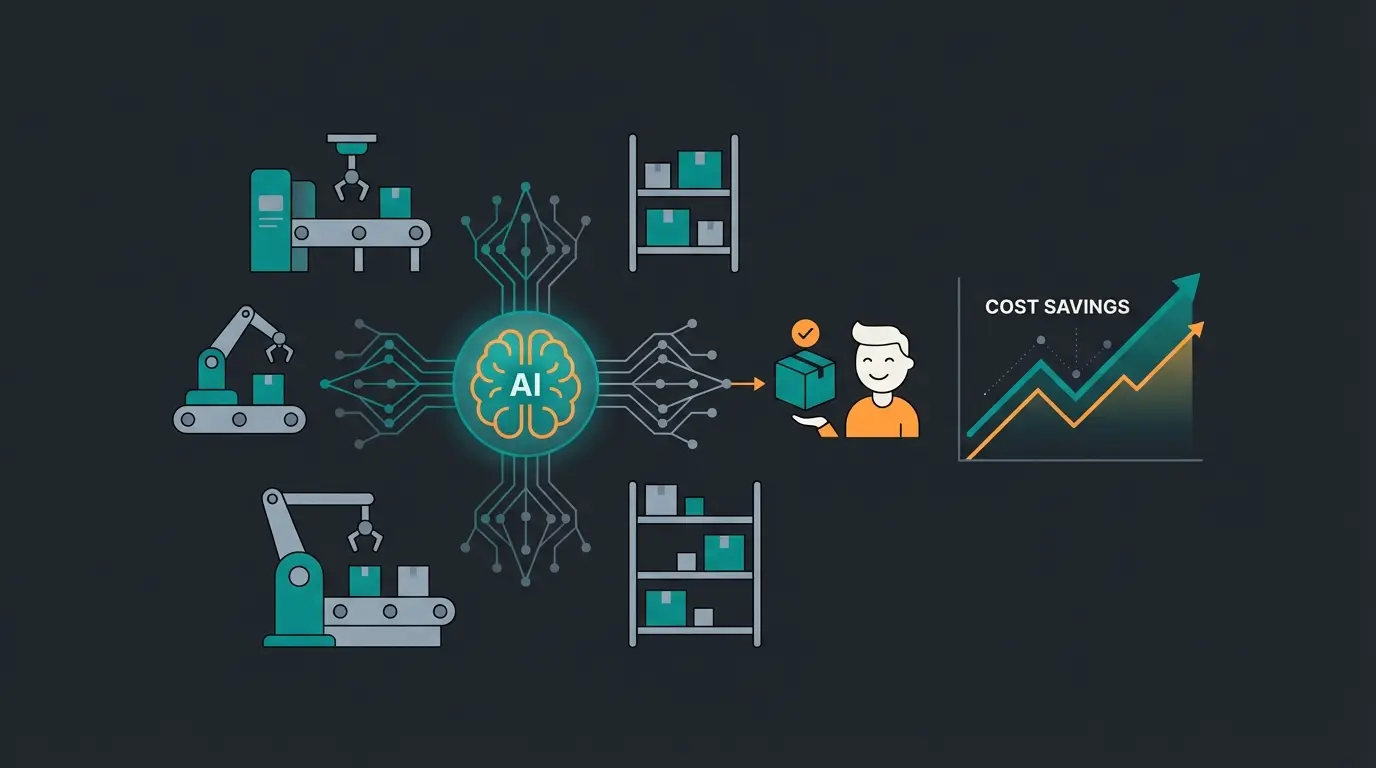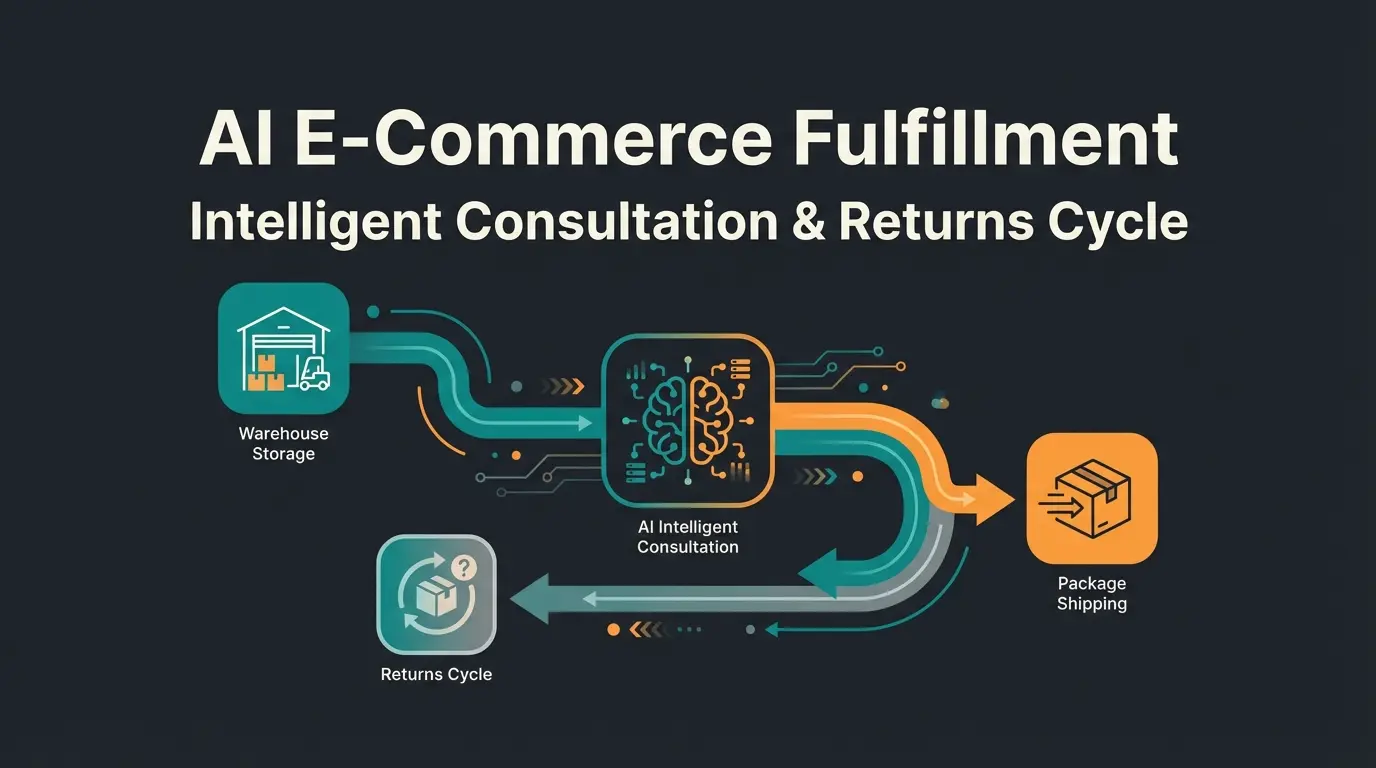
The E-Commerce Fulfillment Paradox Explained
When online retailers discuss Shopware fulfillment, conversations typically revolve around boxes, tape, and shipping carriers. The focus centers on cut-off times, warehousing costs, and the fastest connection to DHL or UPS. This makes sense—speed has become a baseline expectation in the age of Amazon Prime. However, in 2025, efficient logistics alone no longer guarantees profitable growth.
We're heading toward a paradox: logistics operations are becoming faster and more automated, yet costs continue to explode. Why? Because we're solving the wrong problem. We optimize how packages travel to customers and back (reactive logistics) instead of ensuring packages never need to return in the first place (preventive logistics). This fundamental shift in thinking represents the future of AI consulting in e-commerce.
This article challenges your existing fulfillment strategy. We demonstrate why AI-powered product consultation is the most powerful lever for your Shopware fulfillment success and how implementing "pre-fulfillment" strategies can drastically reduce your return rates while protecting your profit margins.
Current State of Shopware Fulfillment in Germany
Before revolutionizing the strategy, let's examine the current landscape. Anyone searching for "Shopware fulfillment" today primarily finds solutions for physical goods handling. The German market is mature and highly competitive, with numerous providers offering similar services.
The Traditional Fulfillment Chain
For Shopware merchants, there are traditionally two paths to choose from, each with distinct advantages and challenges:
- In-House Fulfillment: Using warehouse management plugins like Pickware that integrate directly into the Shopware backend. Merchants maintain full control but also bear complete responsibility for staffing and scalability challenges.
- Outsourcing to 3PLs: Connecting to external Third Party Logistics providers like byrd or YouSellWeSend. These providers excel at scalability and often offer better shipping rates through bundling effects.
The Technological Foundation: Shopware 6
Shopware 6 provides ideal conditions for both models as an "API-first" platform. Thanks to its open architecture, inventory levels synchronize in real-time, and shipping status updates automatically reach customers. Extensions in the Shopware Store enable connections to virtually all major logistics providers and ERP systems. The platform's flexibility makes it possible to implement AI-powered sales intelligence across your entire operation.
Hidden Costs of Efficient Logistics Operations
Efficiency in shipping becomes meaningless without accuracy. The greatest threat to e-commerce margins isn't DHL's shipping rates—it's the return. According to Spiegel, German retailers face staggering return-related expenses that far exceed what most businesses account for in their logistics planning.
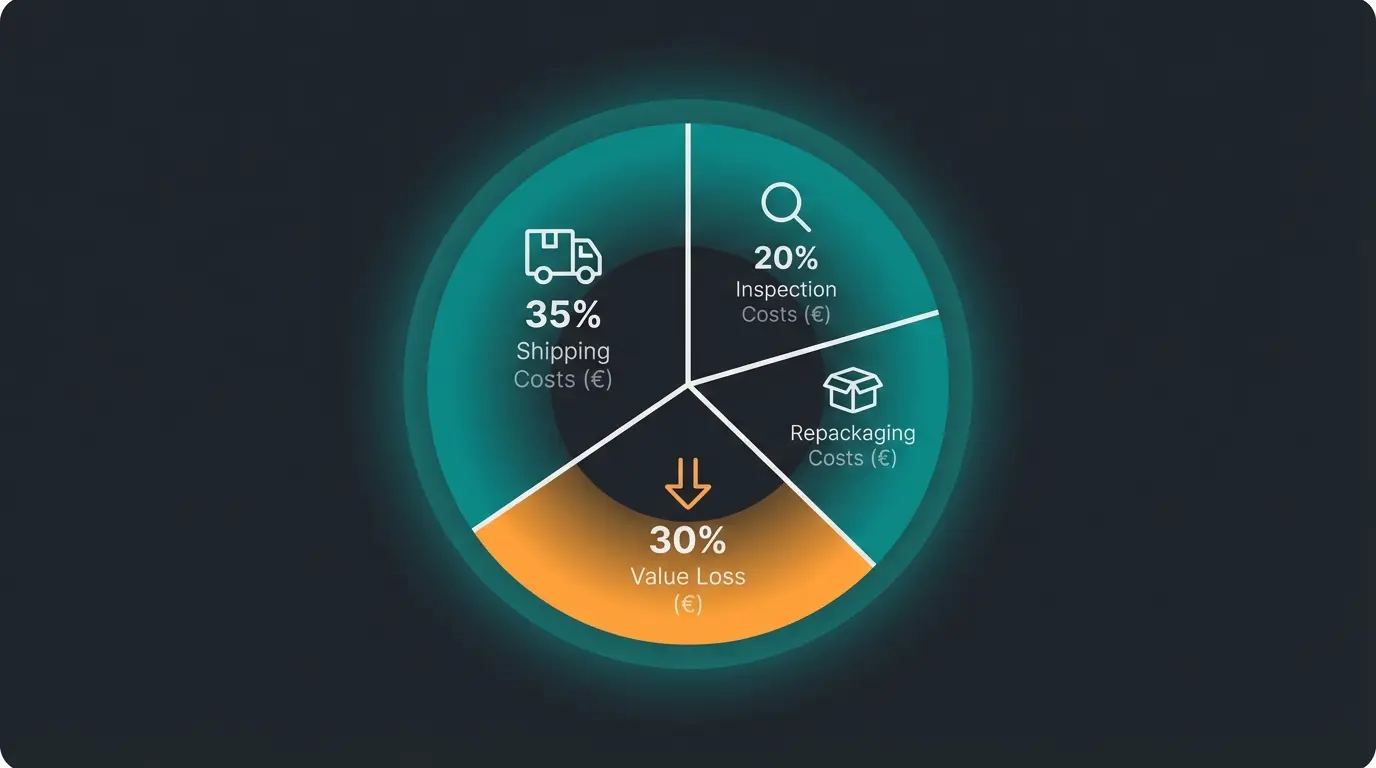
Anatomy of Return Costs Breakdown
Current studies from the EHI Retail Institute paint a concerning picture for merchants who haven't mastered their returns management:
- Average Processing Costs: Handling a single return costs online retailers between €5 and €10. For bulky goods or home furnishings, these costs quickly escalate to €10-20 per item
- Primary Cost Drivers: The largest expense isn't return shipping itself—it's inspection and quality control (examination, refurbishment, repackaging)
- Value Depreciation: While fashion items can often be resold as A-grade merchandise (76-99% of the time), segments like consumer electronics or DIY products suffer enormous value loss from opened packaging
Average processing cost including handling, inspection, and restocking
Average return rate in fashion e-commerce, reaching 75% in extreme cases
Returns caused by sizing, fit, or product misunderstanding issues
The Returns Trap in Fashion E-Commerce
The situation is particularly dramatic in fashion retail. Here, selection orders (one item in three sizes) are practically built into the business model. Return rates average between 26% and 50%, reaching up to 75% in peak cases according to FashionUnited. This creates a massive opportunity for merchants who can prevent returns through AI.
The calculation is simple: If you reduce your logistics costs by 10% (by negotiating with your shipping carrier), you might save €0.50 per package. But if you prevent a return through better consultation, you immediately save €10-20. The leverage is incomparable, and this is where KI E-Commerce solutions deliver exceptional ROI.
Pre-Fulfillment: The AI Consultation Revolution
We define Pre-Fulfillment as all measures occurring during the shopping process that reduce the logistics burden after purchase. The most powerful tool for this purpose is AI-powered product consultation, fundamentally changing how AI consultation transforms the customer journey.
Why Consultation Equals Logistics
In a physical store, a customer tries on pants. If they don't fit, they hang them back on the rack. Cost to the merchant: nearly zero. In e-commerce, the fitting room relocates to the customer's living room—at the merchant's expense. This fundamental difference drives the entire returns crisis.
AI tools function as virtual sales consultants that digitally simulate this "try-on" or "consultation" experience before any merchandise moves. By addressing uncertainty at the moment of decision, these tools prevent the costly back-and-forth of physical returns. AI-powered sales consultants represent the new frontier in e-commerce optimization.
Technologies for Shopware 6 Integration
The Shopware marketplace already offers powerful tools addressing exactly this challenge. Here's how AI-powered product consultation integrates with your existing tech stack:
- Guided Selling & Product Finders: Plugins like the Guided Selling Assistant for Shopware 6 guide customers through targeted questionnaires ("Who is this gift for?", "Which color do you prefer?"). The result isn't a list of 50 products—it's ONE perfect recommendation. This reduces the "Paradox of Choice" and increases accuracy.
- AI Product Advisors (Chatbots): Newer plugins leverage Large Language Models (like GPT-4) to conduct genuine conversations. The AI Product Advisor answers specific questions about fit, material, or compatibility ("Does this sneaker run small?"). It uses product data to eliminate uncertainties that would otherwise lead to selection orders.
- Intelligent Cross-Selling: AI recommenders analyze shopping carts in real-time and suggest matching accessories (e.g., the correct cable for a printer). This prevents follow-up orders and individual shipments, reducing fulfillment costs per order.
Shopper lands on product page with questions about sizing, compatibility, or features
Virtual advisor engages through chat or guided selling questionnaire to understand needs
Customer receives personalized recommendation backed by data, eliminating guesswork
Customer purchases one correctly-matched item instead of multiple for comparison
Package arrives, customer is satisfied, no return initiated—fulfillment complete
Reactive vs. Proactive Fulfillment Comparison
Understanding the fundamental difference between traditional and AI-augmented approaches helps clarify why this shift matters so significantly for your bottom line:
| Feature | Traditional Fulfillment (Reactive) | AI-Augmented Fulfillment (Proactive) |
|---|---|---|
| Focus | Speed & Shipping Price | Accuracy & Cart Quality |
| Returns Strategy | Fast Processing (Label in Package) | Prevention (Right Item in Package) |
| Customer Interaction | Post-Purchase (Tracking Email) | Pre-Purchase (Consultation Chat) |
| Primary Cost Driver | Shipping Volume & Warehouse Space | Return Processing & Value Loss |
| Core Technology | Warehouse Management System (WMS) | AI Consultant & Guided Selling Plugins |
This comparison highlights how AI-powered Guided Selling fundamentally shifts the economics of e-commerce fulfillment from damage control to prevention.
Case Study: AI Cuts Logistics Costs by 70%
Let's calculate this using a concrete scenario. Consider a fictional Shopware retailer for running shoes, "RunFast GmbH," to understand the real financial impact of AI-powered consultation.
Scenario A: Without AI Consultation
- Customer is uncertain between size 42 and 43
- Customer orders both sizes (selection order)
- Cart value: €300 (2x €150)
- Fulfillment: 1 package out, 1 return back
- Outbound shipping: €5.00
- Return shipping & processing (inspection, repackaging): €15.00 (conservative estimate based on EHI data)
- Total logistics cost: €20.00 for net revenue of €150
- Logistics ratio: 13.3% of revenue
Scenario B: With AI Size Advisor
- Customer is uncertain, uses the AI advisor in the shop
- AI asks about customer's current shoe model and compares fit data
- Recommendation: "Take size 42—this model runs large"
- Customer orders only size 42
- Cart value: €150
- Fulfillment: 1 package out, 0 returns
- Outbound shipping: €5.00
- AI licensing costs (allocated): approximately €0.50
- Total logistics cost: €5.50
- Logistics ratio: 3.7% of revenue
This scenario demonstrates exactly why AI consultation boosts revenue while simultaneously reducing operational costs. The dual benefit creates a powerful business case for implementation.
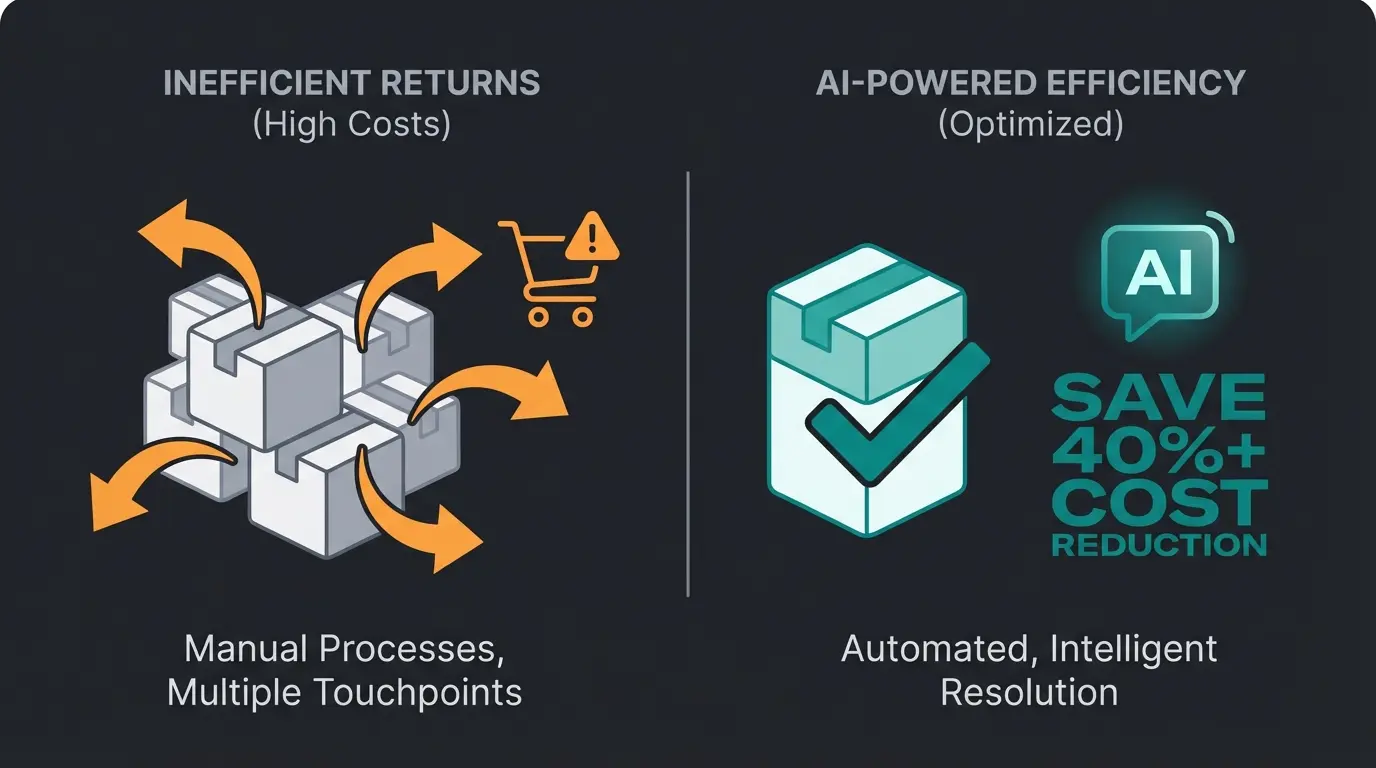
Discover how AI-powered product advisors can reduce your return rates by 20%+ and transform your Shopware logistics from cost center to competitive advantage.
Start Free Trial TodayIntegration: Connecting AI with Shopware Logistics
The major advantage of Shopware 6 is that "Pre-Fulfillment" (AI) and "Post-Fulfillment" (Logistics) don't need to remain separate silos. They can be technically connected to create a seamless, intelligent operation. Understanding how AI product consultation reduces TCO becomes clear when you see the integration possibilities.
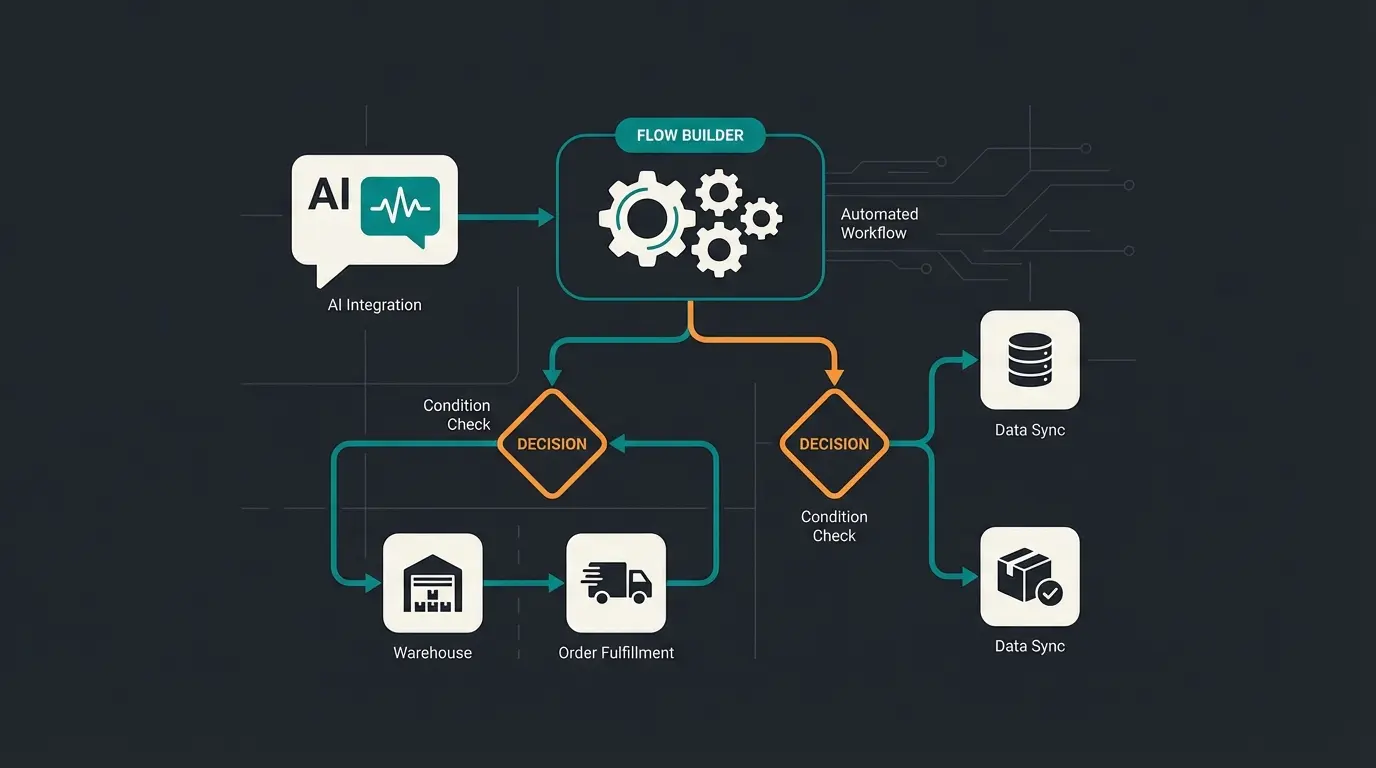
The Shopware Flow Builder as Integration Bridge
The Flow Builder is the automation centerpiece in Shopware 6. It enables merchants to define business rules without programming knowledge, creating sophisticated workflows that respond to customer behavior in real-time.
According to Shopware's official documentation, the Flow Builder supports complex conditional logic that can incorporate data from AI consultation tools. Here's a practical example of intelligent integration:
- Trigger: Order is placed in the system
- Condition: Did the customer use AI size consultation? (This can be marked via a tag or additional field on the order)
- Action Options: If YES: Order goes directly to "Fast Lane" shipping (since return probability is low). If NO AND Critical Category (e.g., shoes): Send automated email "Are you sure about the size? Check again here" OR flag for manual review if it's an obvious selection order (e.g., same item, 3 sizes)
Data Flow to Warehouse Management
Modern plugins like the AI Product Advisor collect valuable insights beyond immediate sales impact. When customers frequently ask "Is this material waterproof?" and the answer "No" leads to purchase abandonment or returns, that's a signal for purchasing or product management teams.
This data shouldn't die within the chatbot—it should flow back into your merchandise management system. Shopware Analytics and extensions provide the necessary interfaces for this intelligence loop. Implementing AI-powered sales consultants creates feedback mechanisms that improve your entire operation over time.
Practical Implementation Guide for Your Shop
How do you start implementing a "Pre-Fulfillment" strategy in your Shopware store? Follow this structured approach to maximize impact while minimizing implementation risk.
Step 1: Conduct Returns Analysis
Use your existing data to identify opportunities. Which products have the highest return rates? Understanding the root causes directs you toward the right solutions:
- Is it "Fit" issues (Fashion)? → Solution: AI Size Advisor implementation
- Is it "Functionality" questions (Electronics)? → Solution: Compatibility checker or AI product consultation chatbot
- Is it "Appearance" concerns (Home Goods)? → Solution: Better visualization or AR plugins for realistic previews
Step 2: Choose the Right Plugin
The Shopware Store offers diverse solutions. Pay attention to these criteria when selecting your AI consultation tools:
- Compatibility: Does the plugin support Shopware 6.6+? Ensure future-proof technology choices
- Data Sovereignty: Does the AI learn from YOUR product data, or is it just a generic chatbot with limited relevance?
- Integration Depth: Can the tool be embedded in Shopping Experiences (Erlebniswelten)? Seamless integration improves adoption
Step 3: Start with an MVP Approach
Don't launch across your entire shop simultaneously. Select the category with the highest return costs (e.g., pants or running shoes). Implement a Guided Selling process there and measure the change in return rate after 30 days compared to the previous period. This controlled approach, as recommended by Händlerbund for new technology implementations, minimizes risk while proving value.
The Future of Shopware Fulfillment Strategy
The term "fulfillment" (meaning "completion" or "satisfaction") must be reinterpreted for 2025. It's no longer just about completing the delivery—it's about fulfilling the customer's expectation of the product itself.
Market data analysis shows clearly: return costs are the biggest profit killer in German e-commerce, as documented extensively by BTE industry research. Those who understand Shopware fulfillment only as "packing packages" are optimizing the wrong end of their business.
By investing in Pre-Fulfillment, you transform your logistics from a cost factor into a competitive advantage. The cheapest shipment is and remains the one that makes customers happy—and never comes back.
2025 Shopware Fulfillment Readiness Checklist
Use this checklist to evaluate your current position and identify improvement opportunities:
- ✓ Data Check: Do you know your exact return costs per item (including handling & value loss)?
- ✓ Root Cause Research: Do you know WHY items return (size, defect, "didn't like it")?
- ✓ Consultation Gap: Are there products requiring explanation that receive no online consultation?
- ✓ Tech Stack Assessment: Are you already using Guided Selling or AI plugins from the Shopware Store?
- ✓ Automation Review: Is your Flow Builder configured not just to send invoices but to proactively respond to return risks?
Frequently Asked Questions
Traditional fulfillment focuses on optimizing shipping speed and warehouse efficiency after orders are placed. AI-augmented fulfillment adds a 'pre-fulfillment' layer using AI product consultation to ensure customers order the right products initially, dramatically reducing return rates and associated costs.
AI product consultation typically reduces return rates by 15-30% depending on the product category. Fashion retailers often see the highest improvements since many returns result from sizing issues that AI advisors can address before purchase. This translates directly to logistics cost savings of €10-20 per prevented return.
Yes, AI consultation tools integrate seamlessly with Shopware 6 through the API-first architecture. The Flow Builder enables sophisticated automation where AI consultation data influences logistics workflows—for example, fast-tracking orders from customers who used the size advisor since they're less likely to return items.
Most merchants see measurable return rate reductions within 30-60 days of implementing AI consultation. Given that each prevented return saves €10-20, shops with moderate traffic typically achieve positive ROI within the first quarter, with ongoing savings compounding as the AI learns from more customer interactions.
Fashion and footwear benefit most due to high base return rates (26-50%) primarily caused by sizing issues. However, electronics (compatibility questions), furniture (size/fit concerns), and any complex products requiring explanation also see significant improvements from AI-guided consultation approaches.
Join leading Shopware merchants who've reduced logistics costs by implementing AI-powered pre-fulfillment strategies. See how AI consultation can work for your specific product categories.
Get Your Free Assessment