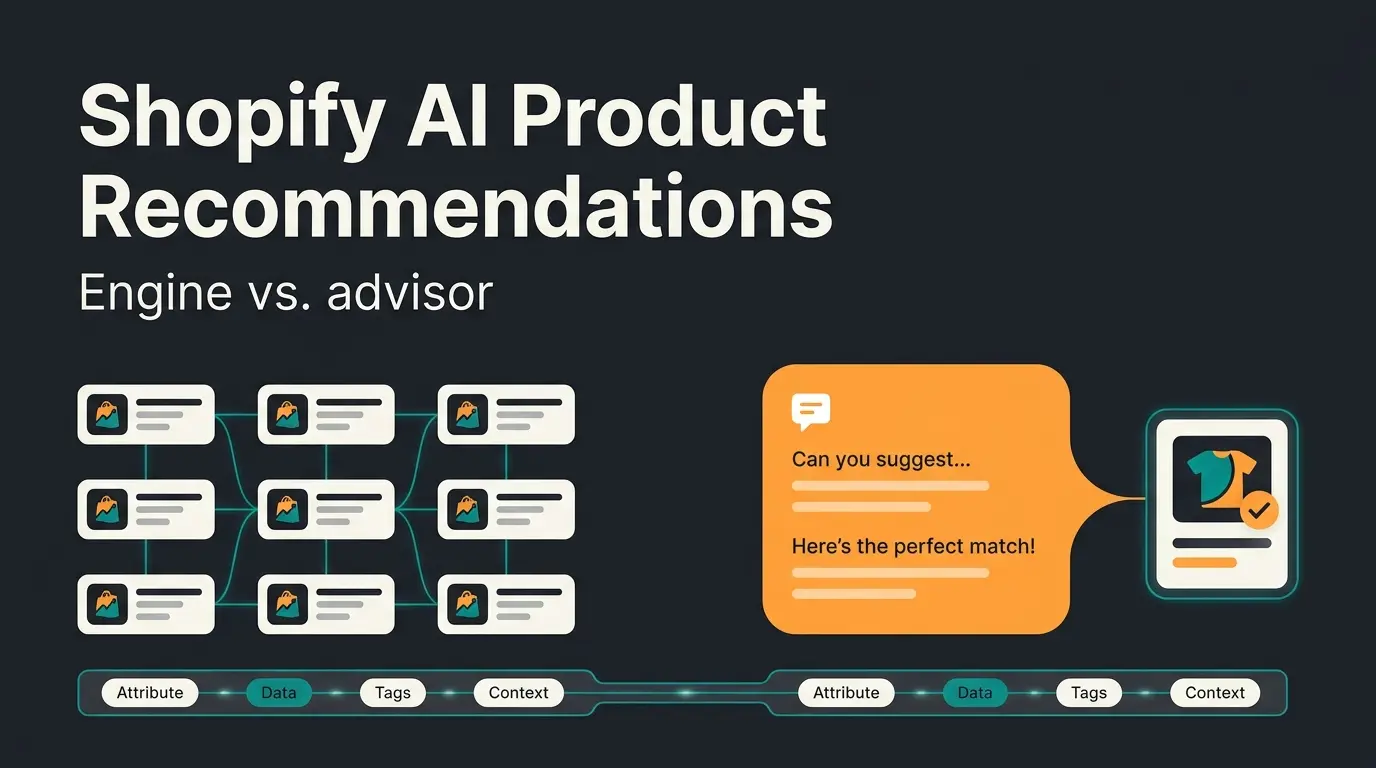
Introduction: The End of "Choice Overload"
Are you familiar with this problem? A customer enters your online shop, overwhelmed by hundreds of options, clicks frustratredly through complex filters, and eventually leaves the page without making a purchase. Customers often leave not because they can't find anything – but because they can't decide. This is the phenomenon of "Choice Overload".
This is exactly where AI product finders come in. They are developing into a central tool for modern online shops to resolve this overwhelm. These intelligent systems use machine learning and artificial intelligence to suggest suitable products to customers and radically simplify the purchasing process. The German e-commerce market with a turnover of 85 billion euros in 2023, shows the enormous potential for this technology, but the competition for the customer's attention is getting tougher.
The integration of AI product finders into existing online shops enables a significant increase in the conversion rate and massively improves the shopping experience. According to current studies, AI-supported consulting systems increase the average shopping cart value by up to 35%. It's no longer just about "finding", but about real "consulting".

What is an AI Product Finder? (Definition & Delimitation)
An AI product finder is far more than an improved search bar. It functions as a Digital Sales Consultant that is available around the clock. While a classic search passively waits for the customer to know exactly what they want (e.g. "running shoes size 42 red"), the AI finder proactively approaches the customer and determines their needs in dialogue (e.g. "What do you want to use the shoes for? For asphalt or forest paths?").
The German e-commerce market is characterized by research-oriented customers who look for detailed information before making a purchase. AI product finders address this behavior through precise, personalized recommendations, creating the kind of trust that only a human salesperson can build in a retail store.
The Difference: Static Filter vs. Real AI Consulting
Many shop operators still confuse "Smart Filters" or static quizzes with real AI. A static quiz follows a rigid decision tree: If A, then B. If the customer does not fit into this grid, the process fails. A real AI, on the other hand, understands context, nuances and can translate technical data into customer benefits.
| Feature | Static Product Finder (Old) | AI Product Advisor (New) |
|---|---|---|
| Logic | Rigid "If-Then" Tree | Dynamic Context Understanding |
| User Input | Only Multiple Choice Buttons | Natural Language (Chat) + Buttons |
| Flexibility | Fails with complex requests | Adapts questions dynamically |
| Maintenance | High (Manual Maintenance of Trees) | Low (Auto-Sync with Product Feed) |
| Goal | Filtering / Reduction | Sales Conversation & Consulting |
Advantages of AI Product Finders for Online Retailers
The use of AI in the sales process is not a technical gimmick, but a direct lever for important business key figures.
1. Personalized Product Recommendations & Brand Voice
The automatic customer profiling by AI systems enables tailor-made product suggestions in real time. Modern AI solutions analyze customer behavior not only on the basis of clicks, but on the basis of the guided conversation. A decisive advantage here is the Brand Voice: The AI can be trained to match the tone of your brand – whether as a humorous buddy in the sneaker store or as a serious expert in B2B machine trading.
2. Optimization of User Experience (UX)
A simplified product search significantly reduces frustration and purchase cancellations. Current analyses show that optimized search functions can reduce the dropout rate by up to 30%. The customer feels understood ("Psychological Safety"), which strengthens the bond with the shop.
3. Increase in Conversion Rate & Shopping Cart Values
The integration of AI product finders leads to measurable improvements in shop performance. Industry statistics show increases in the conversion rate of an average of 15-25%. More importantly, as the AI actively cross-sells ("I recommend this docking station for this laptop, because..."), the average shopping cart values also increase significantly.
Average increase through AI consulting
Fewer incorrect purchases thanks to better advice
Consultation also on weekends and at night
4. Efficiency gains and reduction in returns
The automation of customer consulting through AI systems enables considerable cost savings in customer service. Shop operators benefit from reduced personnel costs with improved consulting quality at the same time. An often underestimated factor: When customers buy the right product, the return rate drops drastically – a massive cost saving factor in logistics.
Technology & Challenges: How does the AI "think"?
How does the AI manage to translate complex technical data into understandable language? The magic lies in the combination of structured product data (feeds) and Large Language Models (LLMs). The AI "reads" the technical specs (e.g. "9kg drum") and translates them into customer benefits (e.g. "Ideal for families of 4 or more").
Data Protection and GDPR
Especially in the German market, data protection is non-negotiable. GDPR-compliant data storage is at the heart of the requirements. Customer data must be transmitted in encrypted form and ideally processed on European servers. Transparency is key here: The customer must know that he is interacting with an AI in order to build trust.
Turn visitors into buyers with Qualimero's AI product finder. Test it now for free.
Start for freeImplementation: To the AI consultant in 4 steps
The integration of an AI product finder into an existing online shop requires a structured approach, but is much easier today than it was a few years ago. The right planning and implementation is the key to successful AI-supported product consulting.
- Data Preparation: The basis is your product feed. The cleaner the attributes (size, material, intended use) are maintained, the more precise the AI can advise.
- API Configuration: The technical integration usually takes place via an API interface or plugins for systems such as Shopify or Shopware. The product database is synchronized with the AI system.
- Frontend Integration: Integration of the chat widget into the shop design. The widget should not be intrusive, but placed prominently enough to be perceived as help.
- Testing & Training: First, the AI should be tested with a limited product catalog. Feedback from test customers helps to sharpen the "personality" of the AI.

Success Measurement and KPIs
How do you know if the investment is worth it? The systematic measurement of relevant key figures is crucial. In addition to the classic e-commerce KPIs, you should consider new metrics:
- Conversion Rate: How many users who interacted with the AI end up buying?
- Time-to-Decision: Does the AI shorten the time to purchase decision?
- Confidence-to-Buy: Are there fewer questions for human support?
- Average Shopping Cart Value: Does the AI-powered cross-selling work?
Practical Examples & Case Studies: Flora and Home24
AI product finders show impressive results in practice that go far beyond theoretical advantages.
Case Study: AI employee Flora at Neudorff
An excellent example is the AI employee Flora, which was implemented at Neudorff. The challenge: Garden products are complex and require explanation. The AI-based consulting solution now achieves an accuracy of 97% in product recommendations and responds to customer inquiries in less than 5 seconds on average.
The result is remarkable: The provider was able to reduce the costs per consultation by 99.2% by integrating the AI solution. At the same time, the quality of the advice improved through the consistent consideration of all relevant standards and legal requirements, which is often difficult to ensure with seasonal temporary staff.
Case Study: Home24 & Industry Data
AI concepts are also used in the furniture trade, where visualization and accuracy of fit are crucial. Online furniture retailers such as Home24 use data-driven recommendations to significantly increase conversion rates. An analysis of over 1,000 online shops confirms this trend: AI product finders are particularly effective for assortments with a high need for explanation (electronics, sports equipment, cosmetics). Here, they often lead to a reduction in the return rate of 20-35%, as customers are less likely to order "on the off chance".
Conclusion: The Future is Dialogue
The era of static filters and endless search results pages is coming to an end. Customers today no longer expect a mere list of products, but orientation and advice. An AI product finder is the bridge between the efficiency of e-commerce and the empathy of a sales conversation.
AI-supported customer consulting is increasingly becoming the standard. Anyone who still relies on the pure "search box" today risks losing the customer at the moment of decision. Start the dialogue with your customers now – automated, scalable and personal.
Yes absolutely. Small teams in particular benefit from the relief in support. Since many AI solutions are billed on a usage basis, the costs scale with success.
With modern solutions with existing plugins (e.g. for Shopify), a first prototype can go live within a few days. Fine-tuning the data and the brand voice usually takes 2-4 weeks.
No. The AI takes over repetitive questions and initial advice ("Which cable fits?"). This gives your human experts the freedom to take care of complex problem cases and VIP customers.
A good system recognizes its limits. It then seamlessly forwards the customer to a human employee (Human Handover) or offers a contact form instead of giving a wrong answer.
Integrate your own AI product finder now and increase your sales through real advice.
Request demo now