Introduction: The Untapped Potential of Your Warehouse
If you operate within the Shopware ecosystem, one name is impossible to avoid: Pickware. It's the undisputed market leader when it comes to transforming warehouse chaos into structured efficiency. Merchants love it, agencies recommend it, and the seamless integration with Shopware is legendary. According to Shopware, this native integration is what sets Pickware apart from external ERP solutions.
But let's be honest: A perfectly organized warehouse doesn't sell a single product on its own.
Most e-commerce strategies today end at the loading dock. We optimize pick lists, automate shipping labels, and celebrate when a package leaves the warehouse in under 3 minutes. That's important—essential even. But it's only half the battle. While we operate at Formula 1 level in the backend (logistics) thanks to tools like Pickware WMS, we often drive with the handbrake on in the frontend (sales and consultation). This is where AI-powered sales consultants become a game-changer.
In this article, we go a step further than typical installation guides. We'll not only analyze why Shopware Pickware is the foundation for every serious Shopware merchant, but we'll also show you how to leverage this logistical excellence to build a sales machine with Artificial Intelligence (AI) that doesn't just deliver to your customers—it advises them. The integration of AI product consultation represents the next evolution in e-commerce excellence.
Welcome to the era of the "Smart Shop Stack."
Part 1: The Foundation – Why Shopware Pickware Dominates
Before we discuss the future, we need to understand the foundation. Why is the combination of Shopware and Pickware so dominant in search results and in the tech stacks of German mid-market companies? As noted by iCreative Technologies, the native architecture provides unmatched reliability.
What is Pickware Actually? (More Than Just a Plugin)
Unlike external ERP systems (Enterprise Resource Planning) that must be connected through complex interfaces, Pickware is an inventory management system directly integrated into Shopware. There are no data silos. The ERP is your shop backend. This fundamental difference is what makes the comparison with systems like JTL particularly relevant—a topic we explore in our AI consultation gap analysis.
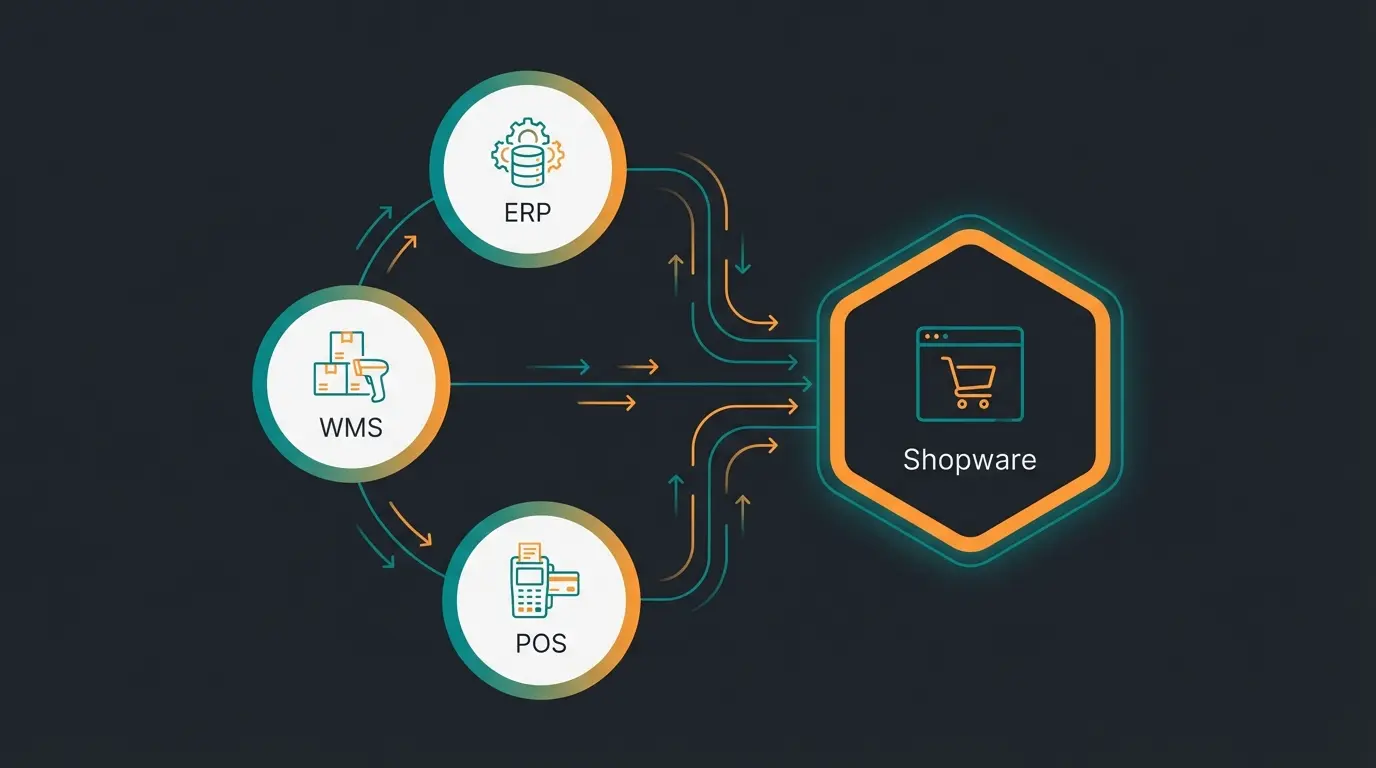
The system consists of three main components that mesh together seamlessly:
- Pickware ERP: The central control unit for purchasing, inventory management, and supplier orders directly in the Shopware admin. This centralization is crucial for powering AI e-commerce solutions.
- Pickware WMS (Warehouse Management System): The mobile solution for the warehouse. With barcode scanners and iOS devices, walking routes are optimized, picking errors are eliminated, and inventories are digitized. According to Pickware, these features reduce operational costs significantly.
- Pickware POS (Point of Sale): An iPad cash register system that connects brick-and-mortar stores with online shops. If you sell a shirt in the store, the stock in the online shop drops in real time. As Kassensystemevergleich confirms, this omnichannel capability is essential for modern retail.
The Killer Features: Why Merchants Switch to Pickware
Analysis of the current market landscape shows that merchants primarily choose Pickware for three key reasons. Understanding these advantages is essential for anyone comparing Shopware vs Shopify for complex product catalogs:
- No Connector Problems: This is the strongest argument. With external systems (like JTL, Xentral, or SAP), the "connector" (the bridge between shop and ERP) can be a source of errors. When Shopware releases an update, the connector often needs adjustment. With Pickware, this doesn't apply since it works natively on the Shopware database. Dreikon confirms this eliminates a major IT headache.
- Real-Time Data Sovereignty: Since there are no synchronization intervals (e.g., "sync every 15 minutes"), inventory levels are always 100% accurate. This is, as we'll see later, the critical prerequisite for AI applications.
- Chaotic Warehousing: Pickware enables professional storage strategies like chaotic warehousing (dynamic storage). A product has no fixed location but is placed wherever there's space. The system "remembers" the location. This saves up to 30% of storage space and optimizes walking routes. Pickware documentation provides detailed guides on implementation.
Part 2: The Hard Facts – Costs and Target Audience
A frequent search term around "Shopware Pickware" relates to costs. Transparency is crucial here, as many merchants shy away from the investment. Understanding the pricing structure helps you compare options properly, similar to our analysis in the Shopware B2B pricing guide.
Pricing Structure (2024/2025)
Pickware uses a rental model (SaaS) based on feature scope. Here's an overview based on current market data from OMR and Pickware's pricing page:
| Module | Target Audience | Price (approx.) | Included Services |
|---|---|---|---|
| ERP Starter | Beginners | from €99/month | Basic inventory management, stock tracking, reporting |
| ERP Advanced | Growing businesses | from €299/month | Extended features, phone support (important for critical ops) |
| WMS (Warehouse) | Professionals | from €129-199/license | Mobile barcode scanner app, digital pick lists, shipping automation |
| POS (Point of Sale) | Omnichannel | from €89-149/register | iPad register, TSE-compliant, card payment integration |
Who Benefits Most from Shopware Pickware?
The analysis shows: Pickware isn't the cheapest solution (JTL often scores with a free entry-level WMS), but it's the most efficient for Shopware purists. Understanding your customer needs is essential, as we discuss in our guide on Shopware customer service optimization:
- Ideal for: D2C brands (Direct-to-Consumer), merchants processing 50 to 5,000 orders per day, and companies wanting to minimize their IT complexity.
- Less suitable for: Merchants who primarily sell on Amazon/eBay and only run their own shop "on the side" (multichannel tools are often stronger here).
Inventory synchronized instantly without sync delays
Through chaotic warehousing optimization
Average time from order to dispatch with WMS
Native integration eliminates sync failures
Part 3: The Missing Link – From Logistics to Sales Intelligence
Up to this point, we've covered what 95% of all articles on this topic address: how to manage inventory. Now we come to your competitive advantage—the aspect that transforms operations into conversions through AI consulting in e-commerce.
The Problem: The "Mute" Warehouse
Imagine you're using Pickware. Your inventory is 100% accurate. You know you have exactly 3 red mountain bikes in size L in stock.
A customer visits your online shop. They're looking for a mountain bike. They use filters. They click through categories. They might find the red bike, maybe not. They have questions: "Does this bike fit someone who's 6'1" tall?" or "Is it available for immediate delivery?"
The problem: Your ERP (Pickware) knows everything, but your customer must search laboriously. The intelligence of your warehouse isn't being used for consultation. This represents a massive opportunity for AI product consultation implementation.
The Solution: AI as the Bridge Between Stock and Need
This is where AI-powered product consultation comes into play. Instead of leaving customers alone with filters, innovative merchants deploy AI consultants that directly access the Shopware (and thus Pickware) database. The emergence of conversational commerce has made this more accessible than ever.
Why is the combination of Pickware + AI so powerful?
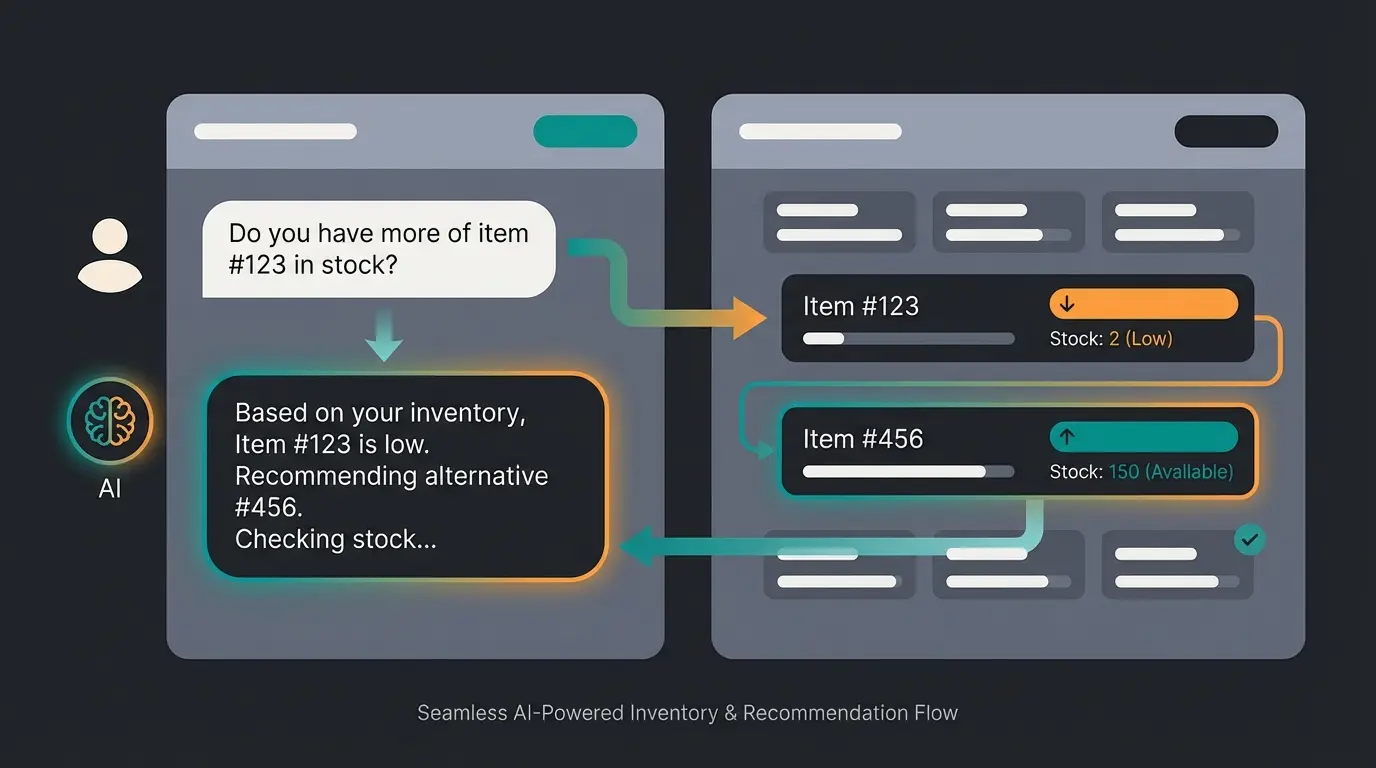
- Prevention of "Empty Sales": An AI that recommends products must know if they're available. Since Pickware updates inventory in real-time in the Shopware core, your AI never recommends a product that's currently out of stock.
- Data-Driven Upselling: Pickware provides data on return rates. A smart AI could learn: "Don't recommend Product A (high return rate according to ERP), recommend Product B instead (satisfied customers)."
- Instant Information: "Do you still have this in stock?" – This question often clogs customer support. An AI connected to Pickware inventory responds in milliseconds: "Yes, we have 3 in stock and can ship tomorrow if you order by 2 PM."
Part 4: Strategic Comparison – Logistics vs. Consultation
To illustrate the added value, a direct comparison is worthwhile. Many merchants invest massively in logistics (Pickware) but neglect conversion (AI). You need both. This is where understanding your complete Shopware SEO guide becomes essential for driving traffic to your AI-enabled shop.
| Feature | Pickware (Backend Power) | AI Product Consultation (Frontend Power) |
|---|---|---|
| Primary Goal | Efficiency & Fulfillment (reduce costs) | Conversion & Customer Satisfaction (increase revenue) |
| User | Warehouse staff & Purchasing | End customer & Website visitor |
| Data Foundation | Inventory levels, purchase prices, storage locations | Product attributes, customer questions, sales psychology |
| Core Question | "How do I get the package out quickly?" | "How do I help the customer buy the right thing?" |
| ROI Driver | Time savings per package, error reduction | Higher average order value (AOV), fewer returns |
The Synergy: The AI sells the product (Frontend). Pickware delivers the product (Backend). If either is missing, the e-commerce process fails. Understanding this synergy is crucial for implementing effective AI product consultation strategies.
Visitor engages with AI consultant asking about product suitability and availability
AI analyzes attributes, checks live Pickware inventory, and suggests matching in-stock items
Customer adds recommended product to cart and completes purchase
Digital pick list appears on warehouse staff device with optimized walking route
Worker scans product and location barcodes to ensure accuracy
Package dispatched, inventory updated in real-time across all channels
Part 5: The Smart Shop Scenario – A Practical Example
Let's walk through a concrete scenario of how a modern Shopware shop with Pickware and AI works in practice. This demonstrates the power of combining backend efficiency with frontend intelligence.
Scenario: The Bicycle Retailer "BikePro"
Step 1: The Customer Enters the Shop
A visitor is looking for an e-bike for tours but is unsure about frame size. Traditional navigation would require clicking through dozens of products and hoping to find size charts. This is where modern Shopware Flow Builder automation combined with AI consultation shines.
Step 2: The AI Consultation (Frontend)
Instead of clicking through 50 filters, the customer chats with the AI assistant:
- Customer: "I'm looking for an e-bike for weekend tours. I'm 5'11" and prefer blue."
- AI (accessing Shopware data): Analyzes attributes and checks live inventory levels.
Step 3: The "Pickware Check" (Background)
The AI identifies the "TourMaster 3000" model. Before recommending it, it checks inventory:
- Result: The blue model is sold out (stock = 0).
- Action: The AI recommends the anthracite model instead, which according to Pickware WMS is immediately available.
Step 4: The Close
The customer purchases the available bike, confident in the recommendation and availability information.
Step 5: The Logistics (Backend)
- The order lands in Shopware.
- Pickware WMS immediately updates the stock (reserved).
- A digital pick list appears on the warehouse worker's iPod. They're guided by barcode scan to the correct storage location (chaotic warehousing).
- Shipping label is printed automatically.
Step 6: The Result
A happy customer, no cancellation due to stock issues, and an efficient shipping process. This is the Smart Shop Stack in action.
See how AI-powered product consultation integrates seamlessly with your Shopware Pickware setup to increase conversions while ensuring accurate inventory recommendations.
Start Your Free TrialPart 6: Implementation – Your Roadmap to an AI-Powered Store
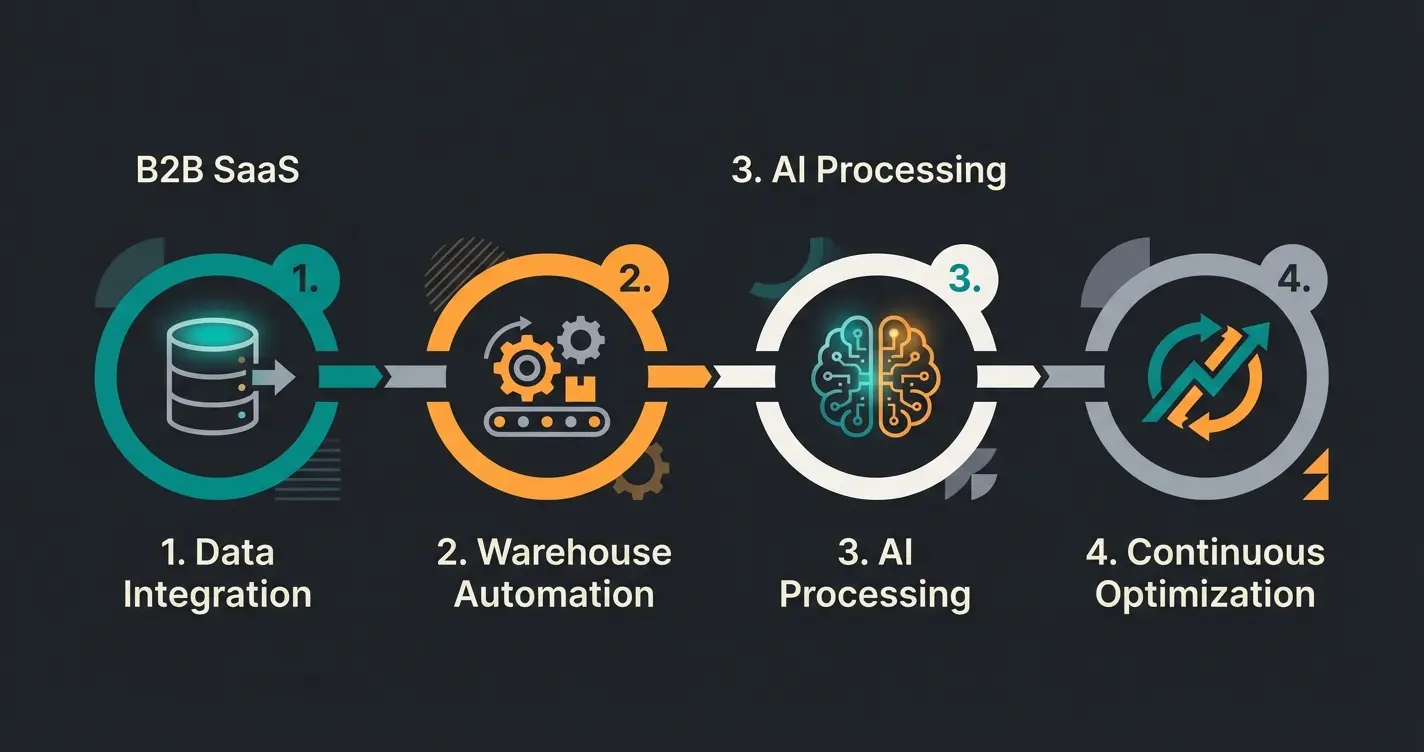
How do you get from a standard shop to this "Smart Shop Stack"? Here's a step-by-step guide that leverages your Pickware investment for maximum sales impact.
Step 1: Data Hygiene with Pickware ERP
Before you think about AI, your data must be correct. As Area-Net explains, clean data is the foundation:
- Centralization: Use Pickware as the single source of truth for inventory. Shut down Excel spreadsheets.
- Maintain Attributes: An AI can only advise if product properties (material, size, usage scenario) are maintained in Shopware. Pickware helps by cleanly importing supplier data.
Step 2: Automate Processes with Pickware WMS
Bring speed to your warehouse:
- Introduce digital pick lists.
- Use barcode scanners to reduce picking errors to near zero. Only when physical inventory matches digital inventory can the AI make reliable statements in the frontend.
Step 3: Activate Sales Intelligence (AI)
Integrate an AI solution that communicates natively with Shopware:
- Ensure the AI has access to live inventory (via API).
- Train the AI not just on support questions ("Where's my package?") but on sales consultation ("Which product suits me?").
Step 4: The Feedback Loop
Use return reasons from Pickware to improve the AI:
- If Product X is often returned due to "runs small" (recorded in Pickware), feed this information to the AI.
- The AI can then warn future customers: "Note: This model runs small, consider ordering a size up." This dramatically reduces return rates.
Conclusion: Build a Sales Machine, Not Just a Warehouse
The market for "Shopware Pickware" is full of guides on how to stick packages. But that's yesterday's thinking. In a competitive market, it's no longer enough to just be able to deliver. You must be able to advise—and scalably, 24/7.
The combination of Pickware (for operational excellence in the backend) and AI Consulting (for empathetic excellence in the frontend) is the most modern tech stack you can build today.
- Pickware ensures you can keep your promise (delivery).
- AI ensures you're allowed to make the promise in the first place (sale).
Stop viewing logistics and sales as separate silos. Connect the data. Use the real-time power of Pickware to give your AI the knowledge it needs to sell.
The Smart Shop Stack isn't just about efficiency—it's about creating a seamless experience where backend accuracy powers frontend intelligence. As Pickware notes, native integration with Shopware 6 makes this seamless connectivity possible.
Are you ready to transform your Shopware shop from a mere warehouse to an intelligent sales floor?
FAQ: Common Questions About Shopware Pickware
Yes, Pickware is fully optimized for Shopware 6 and was developed closely with Shopware as a "Preferred Technology Partner." Many features (like the Flow Builder) are natively supported. The native architecture ensures that updates are synchronized and compatibility is maintained automatically.
Technically yes, but it's not recommended. Pickware is designed as a replacement for external inventory management systems like JTL. Running them in parallel would lead to data conflicts. The decision is usually: Either JTL (with connector) OR Pickware (native). Most merchants find the native Pickware approach more reliable long-term.
Modern AI plugins for Shopware can often be installed via "plug and play." What's crucial, however, is the quality of the data you provide through Pickware. Clean product attributes and accurate inventory are more important than technical implementation skills.
With the "ERP Starter" package (from €99), entry is also possible for smaller merchants. As soon as you ship more than 10-20 packages per day, the costs pay for themselves very quickly through time savings in picking and packing. The efficiency gains compound as order volume grows.
AI consultation uses real-time Pickware data to recommend only in-stock products, provide accurate delivery estimates, and offer size/fit guidance based on return data. This builds customer confidence and reduces abandoned carts caused by uncertainty. Studies show AI-guided shopping experiences can increase conversion rates by 20-40%.
Combine the operational excellence of Pickware with AI-powered product consultation. Get personalized recommendations, real-time inventory intelligence, and 24/7 sales support.
Start Free Trial Today