
Introduction: From Product Catalogs to Digital Consultants
E-commerce stands at a massive turning point in 2025. For years, the mantra was simple: "Buy traffic, list products, optimize checkout." But the rules of the game have fundamentally changed. Today's customers no longer expect just a digital inventory list—they demand genuine consultation, similar to what they'd receive in a specialized brick-and-mortar store, but with the speed of the internet.
Anyone searching for a Shopware comparison today typically faces two complex questions that require careful consideration:
- System Decision: Is Shopware 6 even the right platform compared to giants like Shopify or Magento?
- Edition Choice: Is the (formerly) free Community Edition sufficient, or do the new 2025 licensing models (Fair Usage Policy) force an upgrade to Rise, Evolve, or Beyond?
This article goes far beyond a superficial feature comparison. We analyze Shopware from the perspective of Total Cost of Ownership (TCO), data sovereignty (a critical factor for German SMEs), and—this is our unique focus—AI readiness. Because the best shop system is worthless if it merely functions as a dumb backend in the age of artificial intelligence, instead of actively selling and consulting. For a detailed breakdown of all available plans, check out our complete Shopware Editions Comparison.
Quick Decision Matrix: Platform Comparison at a Glance
For those in a hurry, this matrix summarizes the strategic positioning of each system. Pay particular attention to the "AI Consultation Potential" column, which is often missing from standard comparisons but represents the most significant differentiator for modern e-commerce success.
| Criterion | Shopware 6 (Self-Hosted/PaaS) | Shopify (SaaS) | Magento / Adobe Commerce |
|---|---|---|---|
| Target Audience | Ambitious SMEs, B2B, D2C brands focused on individuality | Startups, D2C brands with standard products, dropshipping | Global corporations with massive IT departments |
| Maintenance Effort | Medium (updates required but automatable via PaaS) | Low (fully managed hosting) | Very High (complex architecture) |
| Data Protection (GDPR) | Excellent (German server location selectable, full data control) | Good (but US corporation, data transfer often debated) | Good (self-hosted) but complex to secure |
| B2B Focus | Strong (native B2B components, individual price lists) | Medium (B2B only good in Plus, often requires apps) | Strong (but extremely expensive to implement) |
| AI Readiness (Backend) | High (AI Copilot for text/images natively integrated) | High (Shopify Magic/Sidekick) | Medium (Sensei AI available but sluggish) |
| AI Consultation Potential (Frontend) | Very High (API-first allows deep integration of external sales AI) | Medium (closed ecosystem limits external data usage) | High (but API often slow/complex) |
| Cost Drivers | Initial setup & development | Transaction fees & app subscriptions (increase with revenue) | License costs & developer hourly rates |
This comparison reveals a crucial insight: while all platforms have invested in backend AI capabilities, Shopware's open architecture provides the most flexibility for implementing advanced AI product consultation solutions that directly impact customer experience and conversion rates.
Shopware Editions Compared: The 2025 Model Explained
The days when you could simply "buy" Shopware are over. Shopware has completely transitioned its model to subscriptions. Particularly significant in 2025 is the introduction of the Fair Usage Policy for the Community Edition, which fundamentally changes the calculation for growing businesses.
The Fair Usage Policy 2025: End of Free Scaling?
For a long time, the Community Edition (CE) was the insider tip: start for free and scale without limits. According to eazycode.de, this has fundamentally changed. Since March 2025, a revenue threshold (GMV - Gross Merchandise Volume) applies.
- The Rule: Starting at €1 million GMV per year, merchants must switch to a paid plan (Rise, Evolve, Beyond) to maintain access to the Shopware Store (plugins) and account support.
- The Consequence: The CE remains open source, but for professionally growing companies, it's effectively no longer a permanent solution without a commercial contract.
As themeware.design explains, this policy change represents a significant shift in Shopware's business model, pushing successful merchants toward commercial relationships while maintaining the open-source foundation for smaller operations and development purposes.
Detailed Edition Comparison: What You Get for Your Money
Here we analyze what you actually receive for your investment and, more importantly, why you need it. Understanding these distinctions is crucial for making the right decision for your business stage and requirements.
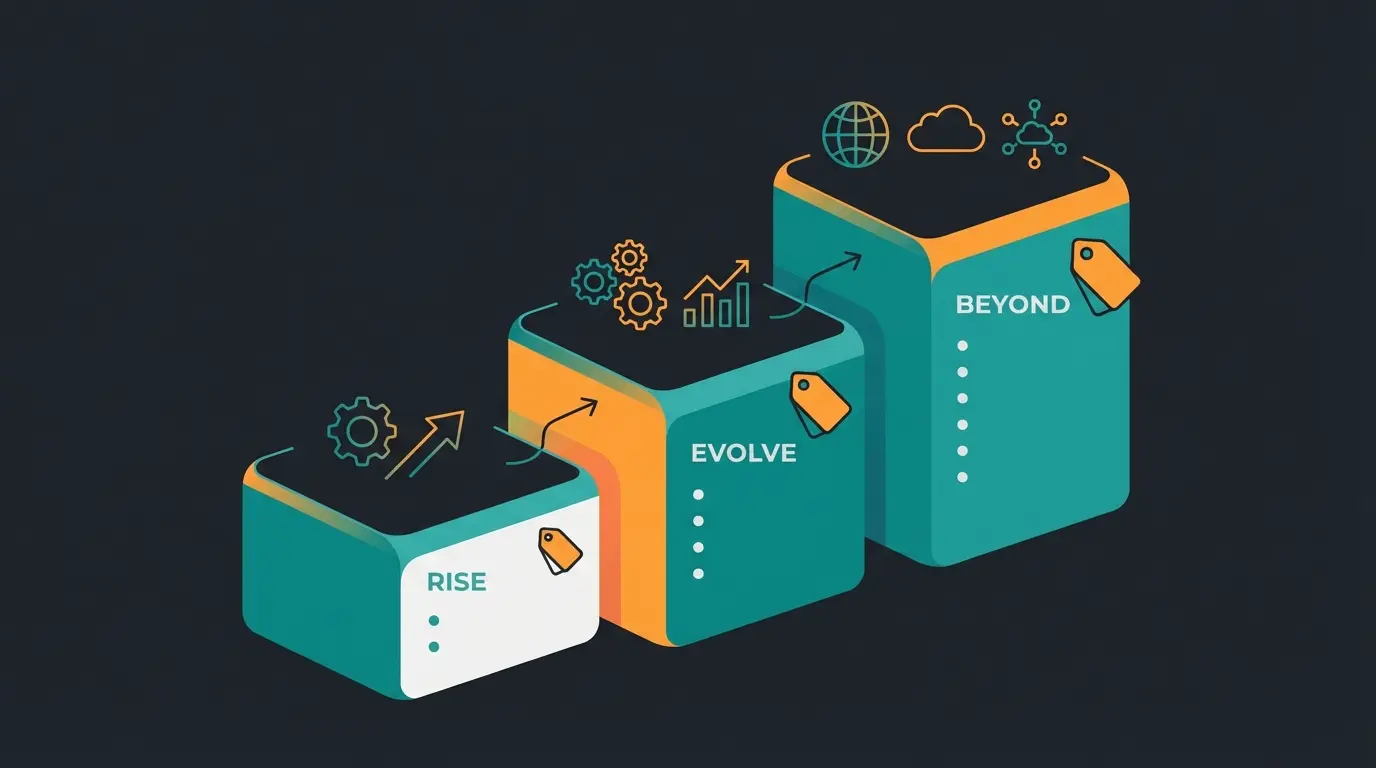
Shopware Rise: The B2C Standard
- Price: Starting at approximately €600/month
- Target Audience: Professional B2C shops that have outgrown the DIY phase
Why upgrade to Rise? According to tikal.de, Rise provides significant advantages over the Community Edition:
- Extended Flow Builder & Rule Builder: In the CE, these tools are basic. In Rise, you can build complex automations (e.g., "If customer buys from category X AND has VIP status -> Send webhook to CRM").
- Shopware AI Copilot: Access to native AI features like text generation, image keywords, and review summaries as detailed by atwix.com.
- Direct Support: Manufacturer support with response times under 8 hours, which is invaluable in emergencies. Learn more about support options in our Shopware customer service guide.
Shopware Evolve: The B2B Game-Changer
- Price: Starting at approximately €2,400/month (revenue-dependent)
- Target Audience: B2B companies and rapidly growing merchants
The Killer Feature: B2B Components. Previously, there was the "B2B Suite" (a monolithic plugin). Today, as into-commerce.de explains, there are B2B Components that are modular and API-first.
- Quick Orders: Streamlined ordering for repeat B2B customers
- Rights & Role Management: Control which employee can order what within customer organizations
- Quote Management: Professional proposal workflows for complex B2B negotiations
- Budget Approvals: Built-in approval workflows for organizational purchasing limits
These functions are essential for moving B2B sales from fax and phone to digital channels. For businesses looking to build comprehensive self-service portals, explore our guide on Shopware B2B customer portal implementation strategies.
Shopware Beyond: Enterprise Power
- Price: Starting at approximately €6,500/month
- Target Audience: Market leaders and complex corporations
Exclusive Features: According to Shopware's official documentation, Beyond includes:
- Multi-Inventory: Management of different warehouse locations directly in the core (e.g., US warehouse vs. German warehouse)
- Digital Sales Rooms (DSR): An interactive tool for video consultation and co-browsing. A sales representative can guide customers live through the shop.
- 24/7 Support: Maximum security for high-traffic events and mission-critical operations
Shopware vs. Market Leaders: Complete System Comparison
Once the edition question is clarified, the fundamental question remains: Why Shopware at all, and not the international competition? Let's examine the most common comparisons in detail.
Shopware vs. Shopify: A Battle of Philosophies
This is the most frequent comparison in Germany and represents fundamentally different approaches to e-commerce, as highlighted by digitalsprung.de and eshop-guide.de. For an in-depth analysis, read our comprehensive Shopware vs Shopify comparison guide.
Shopify (The "Worry-Free" Package):
- Advantage: Extremely fast launch (time-to-market). Hosting included with no server management required.
- Disadvantage: Transaction fees. If you don't use Shopify Payments, you pay up to 2% penalty fees on every sale. Additionally, data often doesn't reside exclusively in Germany, which can be problematic for strict compliance requirements (B2B/pharma).
- AI: Shopify "Sidekick" is capable, but you're trapped in a "walled garden." You cannot deeply integrate custom AI logic into the checkout without being a Plus customer.
Shopware (The "Freedom" Platform):
- Advantage: Data sovereignty. You decide whether the shop runs on Hetzner, AWS Frankfurt, or Timme Hosting. No transaction fees to Shopware (only payment provider costs). For detailed cost analysis, see our Shopware hosting costs guide.
- Disadvantage: Higher initial effort for setup and hosting management (except in Shopware Cloud).
Bottom Line: Choose Shopify for standard fashion/lifestyle products with a fast go-live requirement. Choose Shopware for complex products, B2B requirements, and when you want to maintain full control over your customer data.
Shopware vs. Magento (Adobe Commerce)
Magento was once the dominant player but is losing significant ground in the DACH region, as noted by Shopware's migration resources.
- Magento: Has become an "enterprise monster." Development is extremely expensive, and the system is cumbersome. It's only worthwhile for global corporations with €50M+ revenue and dedicated IT teams.
- Shopware: Is considered the "modern Magento." It uses current technologies (Symfony, Vue.js), is faster to develop, and significantly cheaper to maintain (TCO).
of German mid-market companies prefer Shopware for complex product ranges
average Shopify transaction fee cost for €1.5M annual revenue businesses
lower development costs with Shopware vs. Magento for comparable features
maximum response time with Shopware commercial plans vs. community forums
The Game Changer: AI & Product Consultation in Shopware
Here lies the biggest lever that most standard comparisons overlook entirely. Most articles discussing "AI" only mention backend efficiency (having AI write texts). That saves money but doesn't generate new revenue.
The true competitive advantage in 2025 lies in frontend AI (Consultative Selling)—the ability to guide customers through complex purchase decisions just like an expert salesperson would in a physical store.
Current State: Shopware AI Copilot (Backend)
Shopware has done solid work with the "AI Copilot." Available from the Rise Edition onward, it offers:
- Content Creation: Product descriptions at the push of a button
- Image Analysis: Automatic keywords for SEO optimization
- Export Assistant: CSV exports via chat commands
- Property Extraction: Reads texts and fills filter attributes (size, color, material)
The Problem: All of this helps the shop manager, but not the customer who stands helplessly before 5,000 products without knowing which one solves their specific problem. This is where Shopware product finders become essential for bridging the gap.
The Gap: Missing Sales Consultation
Neither Shopify nor Shopware offers an "out-of-the-box" AI salesperson that asks the customer: "What do you need the bicycle for? For commuting to work or for downhill racing?" and then recommends the appropriate product based on the actual needs assessment.
This consultation gap represents the single largest opportunity for e-commerce differentiation in 2025. While competitors focus on transactional features, businesses that implement consultative selling see dramatically higher conversion rates and significantly lower return rates.
Why Shopware Is the Best Foundation for Consultative AI
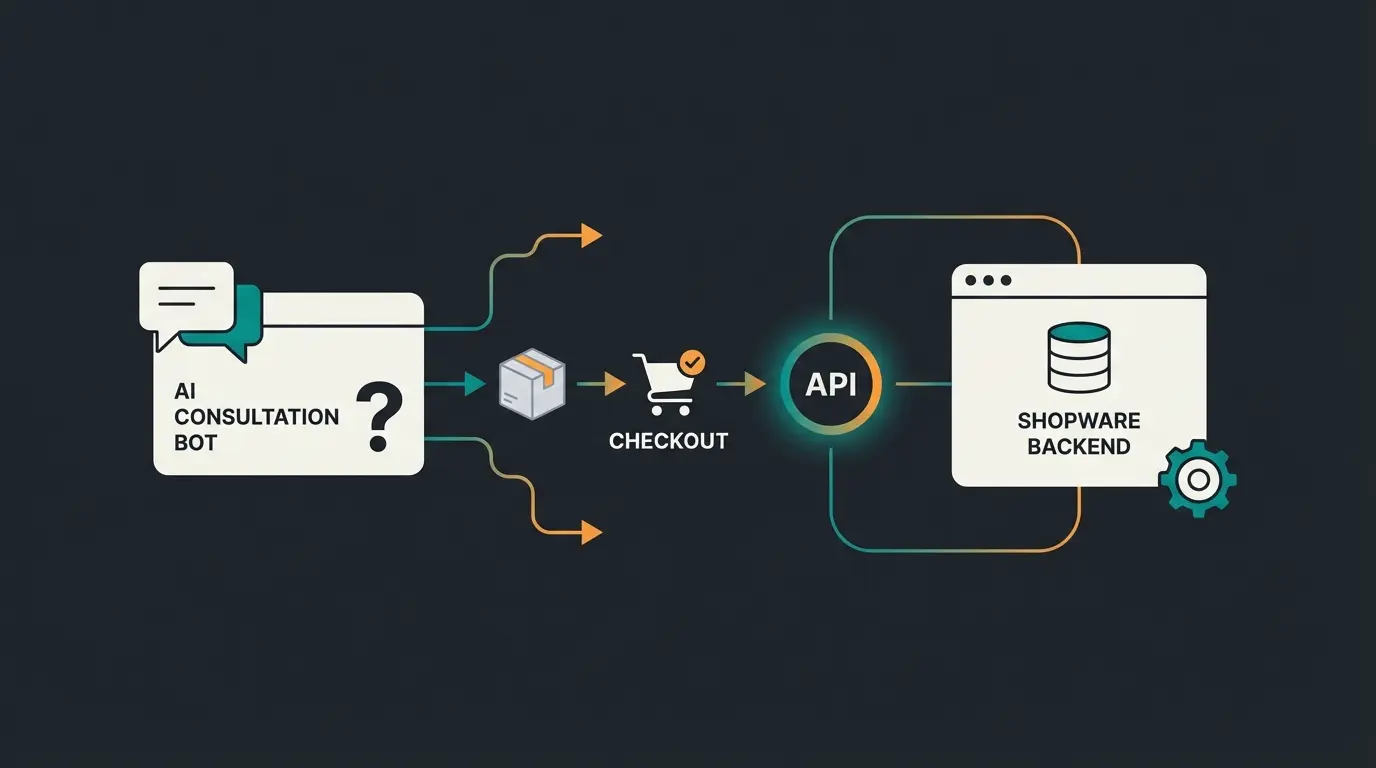
This is exactly where Shopware leverages its API-first architecture. Unlike closed SaaS systems, Shopware allows deep integration of external AI solutions, enabling true consultative commerce.
- Access to Structured Data: Shopware 6 stores product properties very cleanly. An external AI can retrieve this data via API in real-time to provide precise recommendations.
- Guided Selling Capability: While Shopware enables human consultation with "Digital Sales Rooms" (Beyond Edition), an automated AI consultation that's available 24/7 can be connected via the API.
- Hybrid Scenario: You can use Shopware as a robust transaction engine (cart, checkout) and layer the "consultation layer" on top through a specialized AI. This is significantly easier and more performant to implement with Shopware than with Shopify, where API limits often slow things down.
For businesses looking to implement this approach, our guide on Shopware personalization guide provides detailed strategies for creating personalized shopping experiences that drive conversions.
Stop losing customers to decision paralysis. Our AI consultation layer integrates seamlessly with Shopware to guide every visitor to the perfect product—24/7, without additional staff.
Start Your Free TrialTotal Cost of Ownership: The Real Calculation
Many merchants only compare license costs (€600 vs. €36). That's a naive calculation that ignores the true cost picture. Here's a realistic 3-year analysis for a growing merchant (€1.5 million revenue/year). For a complete breakdown, see our detailed Shopware TCO in 2025 analysis.
The Scenario
- Revenue: €1,500,000 per year
- Requirement: B2B & B2C mix, consultation necessary for complex products
Cost Comparison (Estimate Over 3 Years)
| Cost Item | Shopify Advanced | Shopware Rise (Self-Hosted) |
|---|---|---|
| License / Subscription | ~€14,000 (€384/month) | ~€21,600 (€600/month) |
| Transaction Fees* | ~€27,000 (0.6% with external payment) | €0 (No platform fee) |
| Hosting | €0 (Included) | ~€5,400 (~€150/month) |
| Apps / Plugins | ~€10,000 (Many features cost extra) | ~€3,000 (Much included in core/one-time) |
| Setup / Agency | ~€30,000 (Faster) | ~€50,000 (More complex) |
| TOTAL (3 Years) | ~€81,000 | ~€80,000 |
Note on Shopify: Those using Shopify Payments save the transaction fee but are bound to their conditions. Those wanting to use external providers (PayPal, invoice payment via Ratepay) pay the penalty fee, as documented by [tante-e.com](https://vertexaisearch.cloud.google.com/grounding-api-redirect/AUZIYQHF5eQpHD8D8upXPQI05583524NhANN7VT0u4SQaPFhgGQzJklocOUDLxE-cLlohJXr6io3fdNnfiYQXb1xxPo7iCKW6rOMMgeNmEsxKuFj5ITLdroIQlNHBglVbZlB9pXNHycpQiWeku0kQg==).
Key Insight: Despite higher initial costs (setup), Shopware is often cheaper from a certain revenue level because revenue-dependent fees disappear entirely. Additionally, you own the code and the data foundation—critical for businesses planning long-term growth and potential exit strategies.
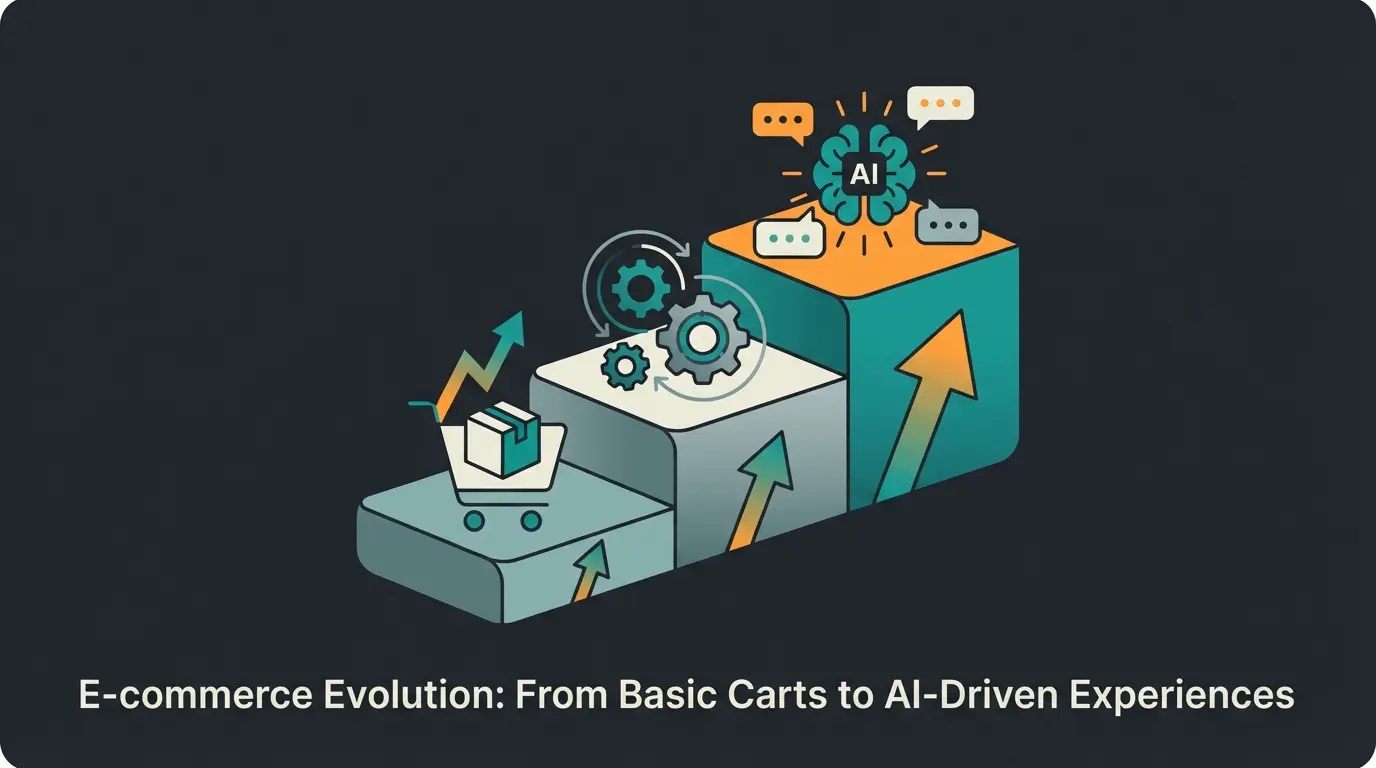
E-Commerce Maturity Model: Where Does Your Business Stand?
To understand where Shopware and AI consultation fit in the broader e-commerce landscape, the "E-Commerce Maturity Model" provides helpful context for strategic planning.
Focus on making products available. Basic search, filter, checkout. Customer must already know what they want. Typical: Basic Shopify or Shopware CE.
Focus on automating processes. Flow Builder, backend AI (Copilot), personalized newsletters. Efficient but still 'silent' toward the customer. Typical: Shopware Rise/Evolve.
Focus on Consultative Selling. AI-driven needs analysis, problem-solving instead of product lists. Result: Higher conversion rate, fewer returns because the RIGHT product was purchased. Typical: Shopware + External AI.
Most e-commerce businesses today are stuck between Stage 1 and Stage 2. They've optimized their backend operations but haven't addressed the fundamental challenge: customers who don't know what they need can't buy what they need. The jump to Stage 3 represents the biggest competitive opportunity in e-commerce today.
Implementing AI consultation also has significant downstream effects. When customers receive proper guidance to the right product, return rates drop dramatically. Learn more about leveraging AI for AI prevention Shopware returns reduction.
Standard vs. Consultative Commerce: Feature Comparison
Understanding the difference between traditional e-commerce features and next-generation consultative features helps clarify the investment priorities for 2025 and beyond.
| Feature Category | Standard Shop (Search, Filter) | Consultative Commerce (AI-Guided) |
|---|---|---|
| Product Discovery | Keyword search, category navigation | Natural language questions, needs-based recommendations |
| Decision Support | Product comparison tables | Interactive requirement analysis, personalized scoring |
| Customer Engagement | Static FAQ pages | Dynamic conversational guidance, context-aware assistance |
| Conversion Path | Browse → Add to Cart → Checkout | Consult → Recommend → Validate → Purchase |
| Return Prevention | Detailed product descriptions | Pre-purchase fit validation, expectation alignment |
| Data Utilization | Basic analytics, abandoned cart emails | Behavioral insights, purchase intent signals, preference learning |
The shift from standard to consultative commerce represents a fundamental change in how online stores operate. Rather than presenting products and hoping customers figure out what they need, consultative commerce actively guides customers through their decision-making process. This approach is particularly powerful for complex products, technical specifications, and B2B scenarios where purchase decisions involve multiple stakeholders.
For implementing conversational guidance, explore our comprehensive AI product consultation guide that covers everything from strategy to technical implementation.
Multi-Channel Strategy and Shopware Integration
Modern e-commerce rarely operates on a single channel. Shopware's architecture supports comprehensive multi-channel strategies, from marketplaces to social commerce to B2B portals. The key advantage is maintaining consistent product data and customer experience across all touchpoints.
For businesses expanding beyond their primary webshop, our Shopware multi channel strategy guide provides actionable frameworks for scaling across platforms while maintaining the consultative experience that drives conversions.
Conclusion: When Shopware Is the Right Choice
The Shopware comparison 2025 shows: The system from Germany has evolved from a pure shop system into a powerful commerce platform. The new editions (Rise, Evolve, Beyond) force higher monthly expenditures than before, but in return offer enterprise features for the mid-market—features that would otherwise require custom development or enterprise-tier competitors.
Our Recommendation
- Choose Shopware if you operate in the B2B sector or sell complex products that require more than an image and a price. Data sovereignty and customizability are unmatched in this price range.
- Budget correctly: Don't save at the wrong end (Community Edition without support). Instead, invest in automation (Flow Builder) and consultation capabilities.
- Close the consultation gap: Shopware provides the perfect foundation (data, API, checkout). But to truly win in 2025, you need to take customers by the hand and guide them to the right decision.
The Next Step
Are you planning a complex Shopware project, or do you want to transform your existing Shopware 6 shop from an "inventory list" into a "top salesperson"? Don't rely solely on backend features. Leverage Shopware's openness to integrate genuine AI sales consultation that works around the clock.
FAQ: Common Shopware Comparison Questions
It remains open source and license-free. However, starting at €1 million revenue (GMV), you lose access to important services (Store, Account), which makes professional operation effectively impossible without switching to a paid plan. The code itself remains free, but the ecosystem access that most professional stores depend on requires a commercial relationship.
Only if you truly need to manage multiple warehouse locations (Multi-Inventory) or want to intensively use "Digital Sales Rooms" for manual sales. For most SMEs, Evolve (for B2B) or Rise (for B2C) represents the "sweet spot" between features and cost. Beyond makes sense primarily for enterprise operations with complex logistics requirements.
Natively, Shopware only offers intelligent search and filters. For dialogue-based consultation (chatbots, buying advisors), you need external solutions. However, thanks to the API-first architecture, these can be seamlessly integrated—often with better results than native solutions from closed platforms.
At lower revenue levels (under €500K), Shopify often wins on TCO due to lower setup costs. However, as revenue scales, Shopify's transaction fees (0.5-2% depending on plan and payment method) accumulate rapidly. For businesses at €1.5M+ annual revenue, Shopware typically becomes more cost-effective, especially when using external payment providers.
Shopware's API-first architecture provides unrestricted access to product data, customer information, and order flows. Unlike Shopify's app ecosystem which limits data access and API calls, Shopware allows deep integration of external AI systems that can read and write data in real-time, enabling true consultative selling experiences.
Whether you're migrating from another platform or upgrading your existing Shopware installation, our AI consultation layer transforms product discovery. See how leading Shopware merchants are achieving 25%+ conversion improvements.
Schedule Your Demo