The Evolution: What Does a Shopware Developer Do Today?
In the past, it was sufficient for a developer to master PHP and adapt templates. With the transition to the Shopware 6 architecture, which is based on the Symfony framework and Vue.js according to Shopware, the field has become significantly more complex. Today, we broadly distinguish three profiles that you may need depending on your project phase.
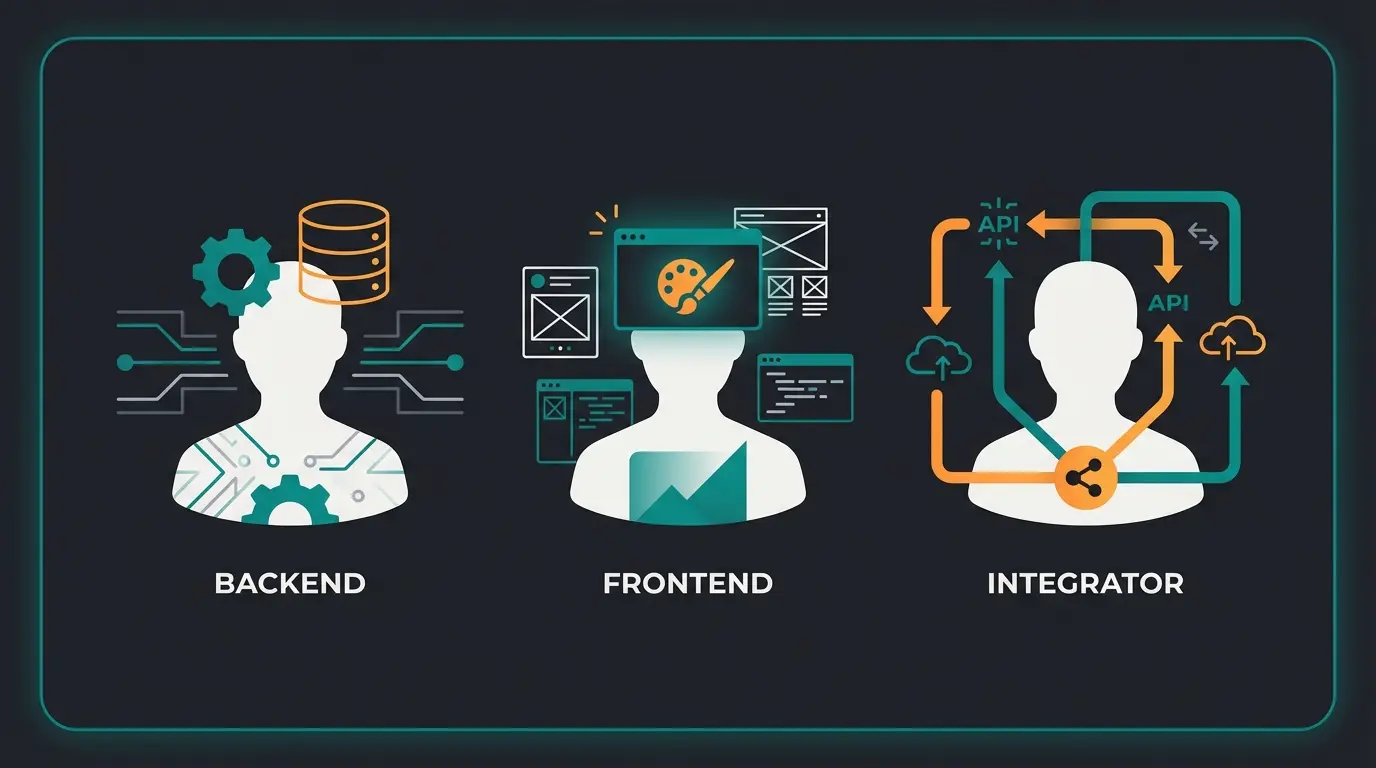
Backend Developer (The Engine Room Personnel)
The backend developer works "under the hood." They are responsible for business logic, databases, and interfaces (APIs). Their core competencies include PHP (current versions), Symfony Framework, MySQL/MariaDB, and Elasticsearch/Opensearch.
- Connecting ERP systems (e.g., SAP, Microsoft Dynamics, Pickware) as detailed by area-net.de
- Developing complex plugins for individual price calculations or warehouse logic
- Performance optimization of database queries
- Migration of data sets (products, customers) from SW5 to SW6 as explained by webfellows.eu
Frontend Developer (The Experience Architects)
Frontend developers ensure that the shop looks good and works on all devices. In Shopware 6, this is particularly important as the "Shopping Experiences" are heavily based on modern web technologies. Their core competencies include HTML5, SCSS/CSS, JavaScript (ES6+), Twig (Template Engine), and Vue.js.
- Implementing screen designs into a functional Shopware theme
- Adapting checkout processes for better usability
- Developing interactive elements (e.g., sliders, menus)
- Working with Composable Frontends (headless approaches) if the shop is not based on the standard storefront, as described by bay20.com and speardevs.com
The "Hybrid" / Solutions Architect (The Integrator)
This is the profile that is most valuable in 2025. This developer understands not only code but also the ecosystem. They know that you don't have to reinvent the wheel. Their task is to decide whether a function (e.g., an AI-powered search or a product advisor) should be self-programmed ("Build") or integrated via a SaaS solution ("Buy"). The added value they provide: They save the retailer thousands of euros in long-term maintenance costs (Technical Debt) by connecting specialized tools via API instead of writing monolithic plugins.
This new integrator mindset aligns perfectly with the emergence of AI-native e-commerce approaches, where developers focus on orchestrating intelligent systems rather than building every component from scratch.
2025 Market Analysis: Costs & Hourly Rates in Germany
The question "What does a Shopware developer cost?" cannot be answered universally, but market data for 2024/2025 provides clear benchmarks. Due to the shortage of skilled workers and the complexity of Shopware 6, prices remain consistently high.
Hourly Rates Compared
| Provider Type | Hourly Rate (Net) | Suitable For... | Risk |
|---|---|---|---|
| Junior Freelancer | €75 - €90 | Small adjustments, CSS changes, updates | Lack of experience with complex bugs; often no architectural vision |
| Senior Freelancer | €95 - €125 | Complex plugins, performance optimization, emergency support | Availability often limited; "bus factor" (What if they get sick?) |
| Specialized Agency | €110 - €160 | Complete relaunches, migrations, long-term support | Higher costs; overhead through project management (but ensures quality) |
| Offshore (India/Eastern Europe) | €30 - €70 | Pure execution of defined tasks | Communication barriers; code quality varies greatly; often no knowledge of German legal requirements (GDPR/button solution) |
These rates are confirmed by market research from knguru.de and freelancermap.de, with over 300 Shopware experts listed in Germany alone.
Why "Cheap" Often Becomes Expensive
An hourly rate of €80 sounds tempting compared to €140. However, the calculation rarely works out in e-commerce. Consider efficiency: A senior developer often solves a problem in 2 hours (2 x €140 = €280), while a junior takes 8 hours (8 x €80 = €640). Regarding maintainability, poor code ("spaghetti code") leads to future updates (e.g., to Shopware 6.7) failing or becoming extremely expensive according to Shopware's official documentation. Additionally, insecure plugins are the number one gateway for hacks, and experienced developers use standards that prevent security vulnerabilities.
8 hours at €80/hour for complex problem solving
2 hours at €140/hour for the same problem
Choosing experience over low rates
Current Market Situation: Demand is extremely high due to the Shopware 5 End-of-Life (July 2024) and the transition phase as noted by Shopware. Good developers are often booked out months in advance.
Freelancer vs. Agency: Who Fits Your Project?
The decision largely depends on the project size and your own know-how. Understanding when to choose each option can save you significant time and resources.
When You Should Choose a Freelancer
- You have internal technical know-how (e.g., a CTO) who can manage the freelancer and review the code
- It concerns specific tasks (e.g., "Create a plugin for shipping method X" or "Fix bug Y")
- You need high flexibility and direct contact without a project manager in between
- Platforms like Freelancermap currently list over 300 Shopware experts in Germany
When You Should Choose an Agency
If you're planning a complete relaunch or a complex migration from SW5 to SW6, frontend, backend, design, and SEO are all required simultaneously – something a lone developer can hardly manage according to online-rebellion.de. Working with a Shopware full service agency provides the comprehensive support these complex projects require.
- You need failure protection (vacation/illness should not stop the project)
- You require strategic consulting (e.g., "Which ERP fits us?", "How do we use AI in the shop?")
- Cost framework: A migration through an agency often starts at around €15,000 - €25,000, depending on data volume and complexity as reported by vierpunkt-commerce.de and 2hatslogic.de
The Elephant in the Room: Shopware 5 End-of-Life
If you're still using Shopware 5, your need for a developer is acute. Here's what you need to know about the current situation and your available options.
Status Quo: Since July 2024, there have been no official updates from Shopware according to area-net.de and Shopware. The risk is clear: Security vulnerabilities are no longer closed by the manufacturer.
Your Migration Options
- Immediate Migration to Shopware 6: The recommended path, but resource-intensive. For this, you need developers who are familiar with data migration tools and theme redevelopment.
- SafeFive: An external service that provides security updates for SW5. This is a valid interim solution to buy time but does not replace the need for a long-term migration strategy.
During the migration process, consider how you'll implement modern features like Shopware AI features and AI-powered customer service to maximize your investment in the new platform.
Build vs. Buy: The "Smart Store" Strategy for AI Features
Here lies the biggest misconception in the current market. Many shop operators believe: "I need an individual function, so my developer must program it." Especially in the area of Artificial Intelligence (AI) and Guided Shopping (product consultation), this reflex is often an expensive mistake.
The Problem with Custom Development
Let's assume you want a digital product advisor (e.g., "Which running shoe suits me?"). Your developer suggests: "I'll build a plugin. We'll create questions in the backend, link them with attributes, and build a frontend quiz."
The catch: This isn't AI – it's a decision tree (If A, then B). Every new product must be manually tagged. With every Shopware update (e.g., from 6.6 to 6.7), it must be checked whether the plugin still works as noted by Qualimero. Development + Testing + Design = Quickly 50-100 hours of work.
The Solution: Integration of Specialized AI Tools
A modern Shopware developer would say: "Let's not build that. Let's integrate a specialized AI." Shopware offers native functions with the AI Copilot (e.g., summarizing reviews, generating product texts) according to Shopware and their documentation. But for complex purchase consulting (Guided Shopping), there are specialized SaaS solutions that are connected via API. The emergence of Shopware AI capabilities has transformed what's possible.
Advantages of integration: These tools use LLMs (like GPT-4 or Claude) to understand context, not just keywords, as explained by coding9.de and Qualimero. The AI uses the existing Shopware data (properties, descriptions) directly via the API according to Shopware. The logic resides with the SaaS provider, keeping your shop lean.
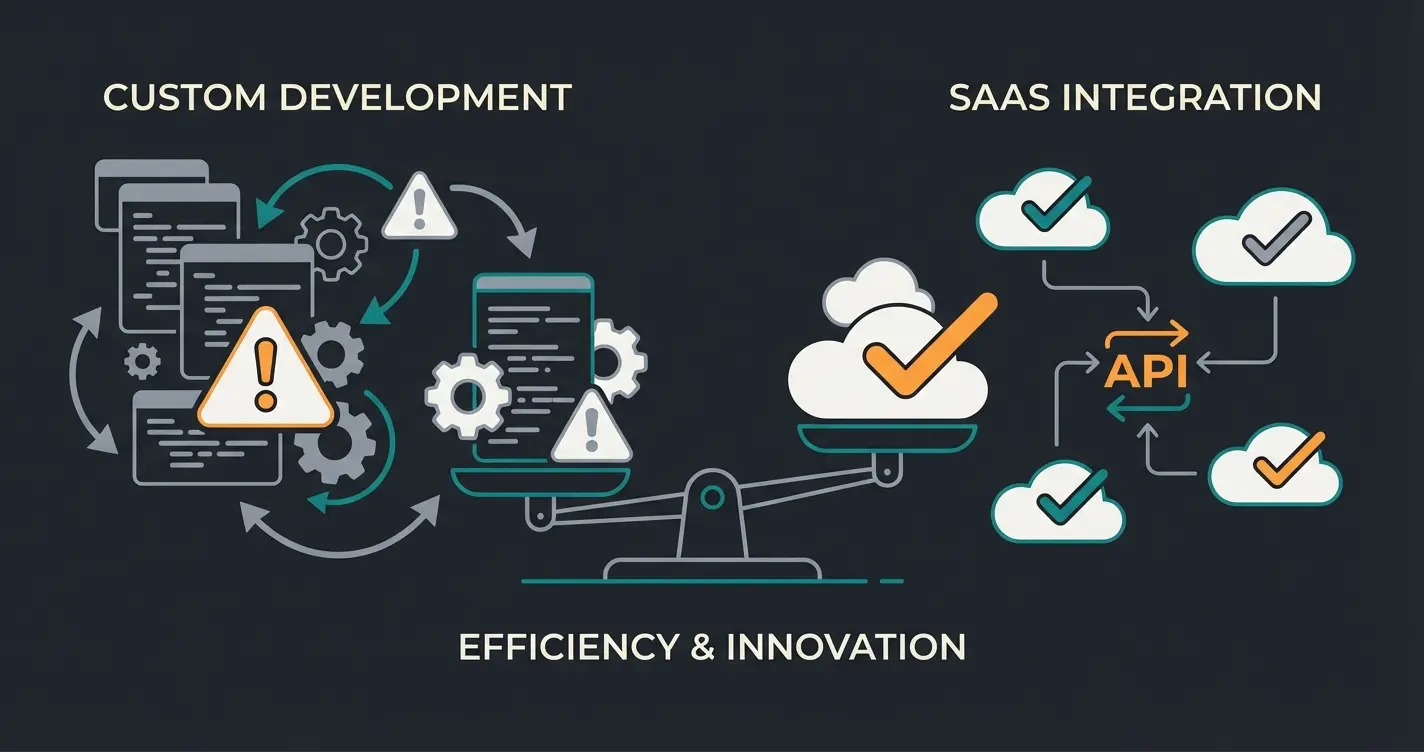
This is where AI-powered product consultation becomes a game-changer. Instead of building static quiz logic, retailers can leverage AI-powered guided selling that actually learns from customer interactions.
Case Study: €5,000 Custom Development vs. €600 Integration
To make the difference tangible, let's compare the costs for implementing an interactive product advisor in a Shopware 6 shop. This real-world comparison illustrates why the build vs. buy decision matters so much for your bottom line.
Scenario A: Classic Custom Development (Build)
You commission an agency or freelancer to write a plugin that guides customers through questions and filters products.
| Position | Effort (Hours) | Cost (at €100/h) | Note |
|---|---|---|---|
| Concept & Design | 10h | €1,000 | UX design for the quiz |
| Backend Development | 25h | €2,500 | Logic, database structure, filters |
| Frontend Development | 15h | €1,500 | Integration into Shopping Experiences, Vue.js |
| Testing & Bugfixing | 5h | €500 | Quality assurance |
| Initial Total | 55h | €5,500 | One-time development cost |
| Annual Maintenance | approx. 10h | €1,000 | Updates for new SW versions |
Result: You have a static quiz that must be manually maintained with every product range change. This approach, while functional, creates significant technical debt over time.
Scenario B: Integration of an AI Solution (Buy/Integrate)
Your developer integrates a specialized "AI Product Advisor" solution (SaaS) that runs via plugin or script in the shop and pulls data via API. This approach, favored by those implementing AI sales agents, offers dramatic efficiency gains.
| Position | Effort (Hours) | Cost (at €100/h) | Note |
|---|---|---|---|
| Selection & Setup | 2h | €200 | Create account, store API keys |
| Integration (Plugin) | 2h | €200 | Installation, styling adjustment (CSS) |
| Prompt Engineering | 2h | €200 | Train AI on shop tonality |
| Initial Total | 6h | €600 | One-time setup cost |
| Ongoing Costs | - | SaaS Fee | E.g., €50-100/month, includes constant updates |
Result: You save almost €5,000 initially. Your developer has time for more important things (e.g., performance optimization), and your customers receive consultation that actually responds to their questions thanks to AI, instead of just setting filters.
55 hours of development plus annual maintenance costs
6 hours of setup with included updates
Initial investment reduction with better results
See how AI-powered product consultation can transform your Shopware store without expensive custom development. Save thousands while delivering better customer experiences.
Start Your Free TrialChecklist: How to Brief Your Developer Correctly
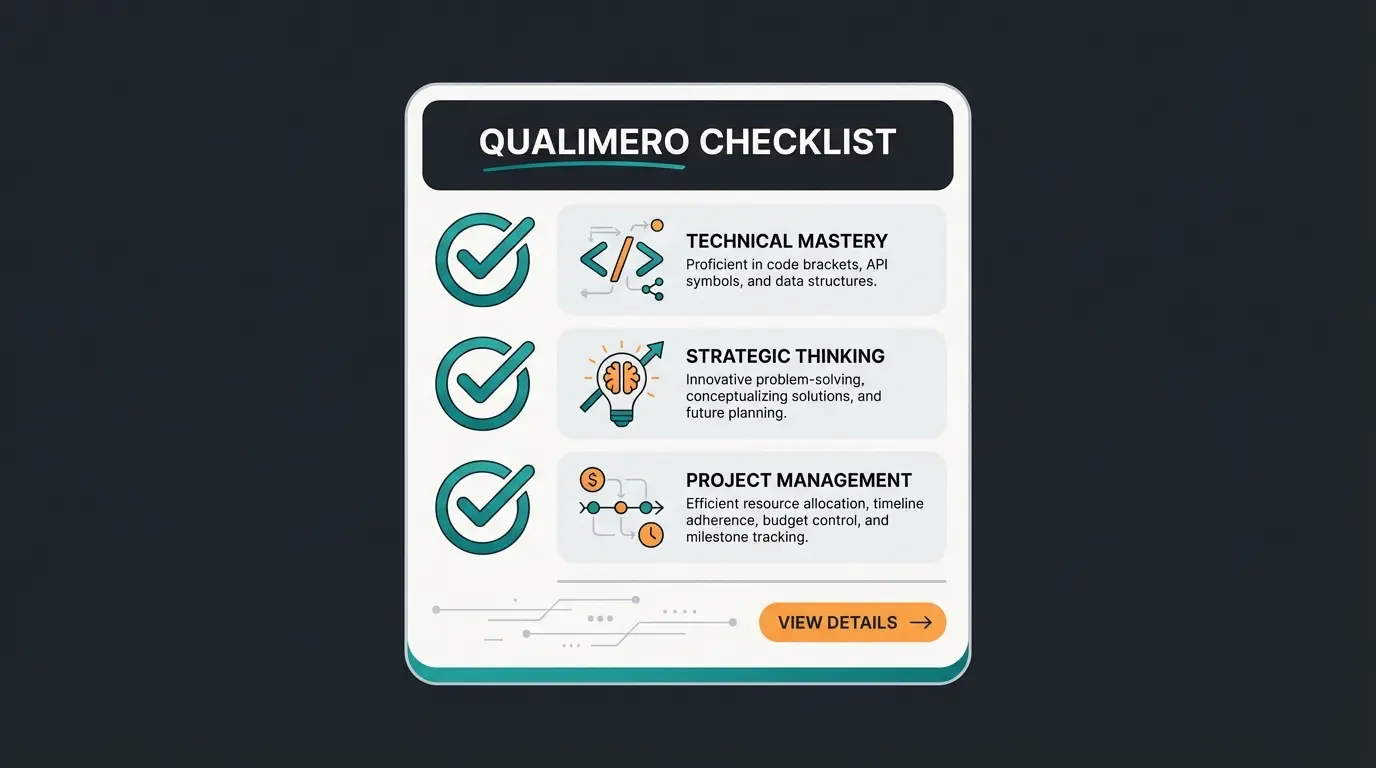
To find not just "any" developer but the right partner for a modern Shopware shop, use this checklist for your briefing or job posting. The right developer should understand both traditional development and modern AI selling approaches.
Technical Requirements (Hard Skills)
- Shopware 6 Certification: Are they a "Certified Developer" or "Certified Template Designer"?
- Tech Stack: Experience with Symfony (backend) and Vue.js (frontend/administration)
- Interfaces: Experience with the Shopware API (Sync API, Sales Channel API) for integrations
- Version Control: Does the developer work professionally with Git and deployment pipelines? (Avoids errors during go-live)
Strategic Competencies (Modern Mindset)
Beyond technical skills, modern developers need to understand the strategic landscape. They should be familiar with AI-ready product data requirements and understand how to prepare shops for future innovation.
- AI Understanding: Does the developer know the Shopware AI Copilot and how to connect external AI services?
- Headless/Composable: Do they have experience with Shopware Composable Frontends? (Important for future-proofing)
- Consulting Approach: Do they ask "Why do you want to build this?" or do they just write the quote?
Project Setup Guidelines
Briefing Quality: Don't define the solution ("Build me a plugin"), but the problem ("My customers can't find the right product"). Let the developer suggest the solution (Build vs. Buy). Budget: Plan realistically. A senior developer for €50/h essentially doesn't exist in Germany. Expect €90+ for quality work.
Articulate business challenges, not technical solutions
Check Shopware 6 credentials and tech stack experience
Evaluate their Build vs. Buy decision-making approach
Confirm API-first thinking and SaaS integration experience
Request examples of AI feature implementations
The Shopware Ecosystem: Understanding Integration Layers
To truly understand why integration beats custom development for many features, visualize your Shopware store as an ecosystem with distinct layers. Modern developers like those implementing AI-powered sales consultants understand this architecture intimately.
At the core sits Shopware 6 itself – the foundation handling commerce logic, product management, and order processing. Wrapped around this core is the Custom Code Layer – your developer's plugins for unique business logic, ERP connections, and theme customizations. Finally, the Integration Layer connects specialized SaaS tools via API: payment providers, shipping solutions, and crucially, AI-powered features like product consultation and personalization.
Understanding this layered architecture helps you make better decisions about where to invest development resources. Complex, business-specific logic belongs in the custom code layer. Standard features with better third-party solutions – especially AI capabilities – belong in the integration layer. This approach, embraced by forward-thinking AI-powered product consultation implementations, keeps your shop maintainable and future-proof.
Conclusion
The role of the Shopware developer has fundamentally changed. In 2025, it's no longer primarily about building monolithic systems but orchestrating intelligent, flexible e-commerce landscapes.
While the costs for qualified developers are high (and will remain so), the real savings potential lies in the strategy. Those who try to have complex features like product consultation, personalization, or search developed completely "from scratch" burn budget and build up technical debt.
Our Recommendations
- Look for developers who are integrators first and coders second
- Use standard plugins for standard problems (ERP, payment, shipping)
- Use specialized AI solutions for innovation (consultation, content) instead of reinventing the wheel
- Invest the saved development budget in optimizing user experience and frontend – where your brand differentiates
A modern Shopware shop is no longer a static building but a dynamic ecosystem. Your developer is the architect – choose them wisely.
Frequently Asked Questions
In Germany, hourly rates for experienced Shopware freelancers range between €95 and €125. Agencies typically charge between €110 and €160, but offer a complete team and failure protection in return. Junior developers may charge €75-90 but often take significantly longer to complete complex tasks.
In most cases: No. Developing a static advisor is expensive (approx. €5,000+) and maintenance-intensive. Integrating an AI-based solution is often cheaper (setup under €1,000) and offers a significantly better user experience through machine learning that actually understands customer needs.
The backend developer handles data, interfaces, and logic using PHP and Symfony. The frontend developer designs what the customer sees (design, usability) using Twig and Vue.js. In Shopware 6, both roles require understanding of the modern API-first architecture.
Yes. Shopware 5 reached "End-of-Life" in July 2024, meaning no more official security updates. Continued operation is only safely possible with external services like SafeFive, but migration is unavoidable in the long term. The sooner you migrate, the sooner you can leverage modern AI features.
Look for developers who ask about your business problems rather than immediately proposing custom solutions. Check if they have experience with API integrations and SaaS tools. Ask them specifically about their approach to Build vs. Buy decisions and whether they're familiar with AI product consultation solutions.
Connect with AI-powered product consultation that integrates seamlessly with Shopware 6. Skip the expensive custom development and start converting more customers today.
Get Started Free