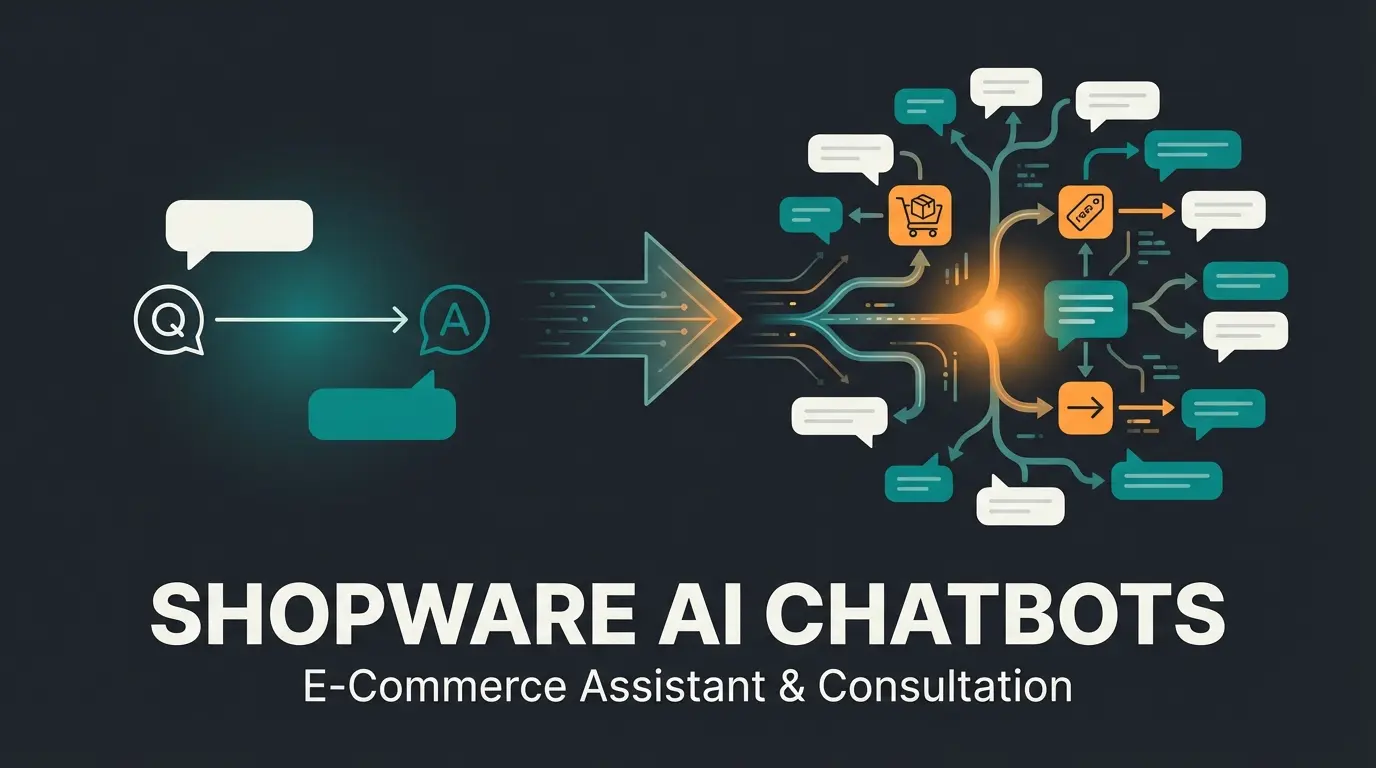
Create an AI Chatbot: Why Product Consultation is More Important than Customer Service (2025 Guide)
Learn how to transform your AI chatbot from a simple support tool into a proactive sales expert. A complete guide to NLP, platforms, and consultation logic.

Introduction: AI Chatbots as the Future of Customer Interaction
AI Chatbots are intelligent computer programs that simulate human conversations and can respond to customer inquiries in real-time. They represent a significant advancement in customer interaction, offering companies numerous advantages. By using an AI chatbot, companies can ensure 24/7 communication, shorten response times, and simultaneously reduce costs.
However, the landscape is changing. For customers, chatbots used to simply mean quick help with problems (Customer Service). Today, they increasingly expect personalized guidance during the buying process (Product Consultation). They don't just want to know where their package is; they want to know which package they should buy.
The growing importance of AI chatbots is reflected in market forecasts. According to a Forbes study, the AI market volume is expected to reach 407 billion dollars by 2027. This impressive figure underscores the enormous potential and future viability of this technology.
The 3 Levels of AI Chatbots: From Receptionist to Sales Expert
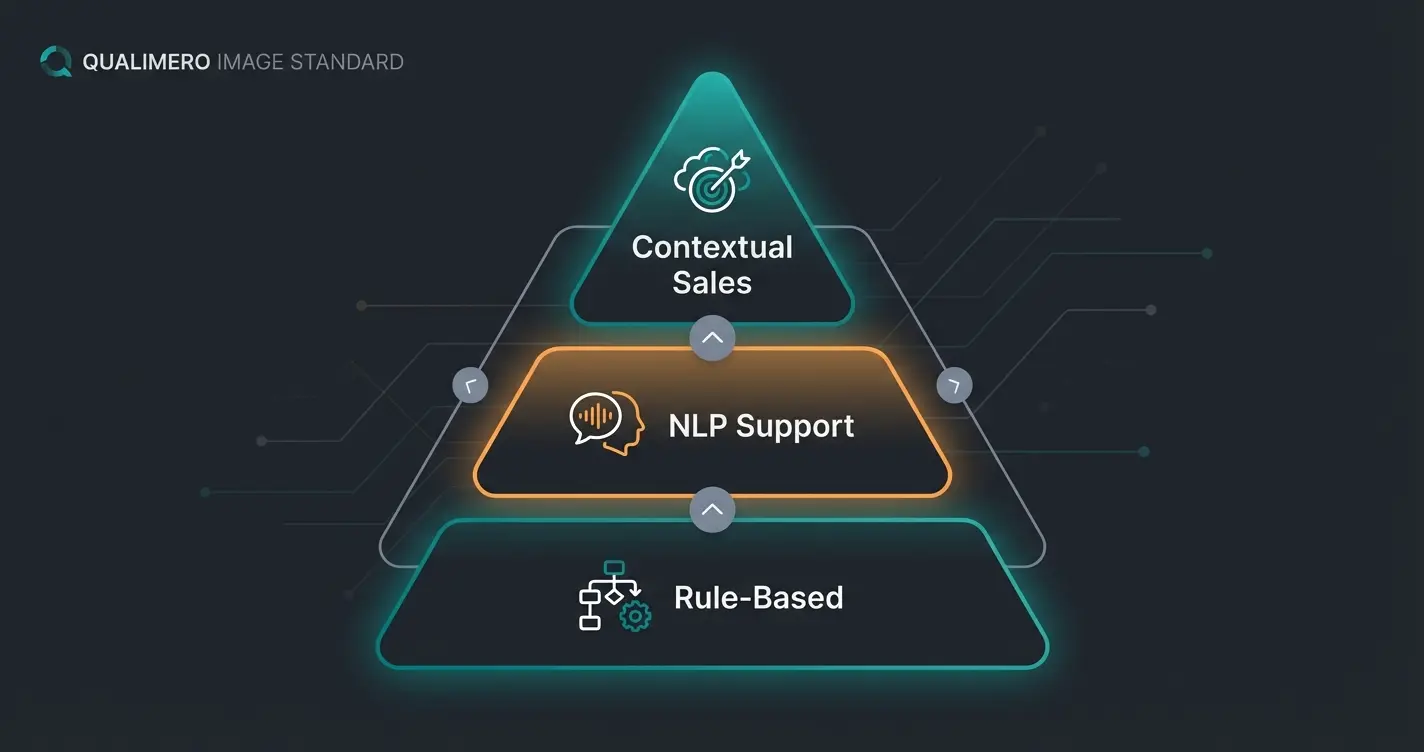
Before we dive into the creation process, it is crucial to understand where most companies fail. They build a support bot when they actually need a sales assistant. To differentiate your strategy, consider these three levels of evolution:
Rule-based buttons. Good for simple navigation, bad for complex questions.
Standard NLP/FAQ bot. Retreives answers from a text database. Great for Support.
Contextual AI. Asks qualifying questions (e.g., 'What is your budget?') to guide purchase decisions.
Most competitors stop at Level 2. Your opportunity to rank and convert lies in mastering Level 3: Product Consultation.
Step 1: Define Goals – Support vs. Consultation
The first step in introducing an AI chatbot is to define clear goals and identify suitable areas of application. This forms the foundation for successful implementation. While traditional advice focuses on ticket reduction, a sales-focused approach looks at different metrics.
When defining goals for chatbot marketing and consultation, consider these aspects:
- Efficiency Increase: Automating routine tasks and relieving the customer service team.
- Conversion Rate: The percentage of users who buy a product after consulting the bot (Key for Level 3 bots).
- Average Order Value (AOV): Does the bot successfully upsell?
- Data Acquisition: Collecting valuable customer insights (e.g., "60% of our users prefer red sneakers").
When selecting application areas, it is important to focus on those that offer the greatest added value. The blog about AI chatbots in customer service provides further inspiration for support scenarios, but don't overlook the power of a "Gift Finder" or "Product Configurator" in your sales funnel.
It is encouraging to see that according to a Forbes study, 64% of companies expect AI to increase their productivity. This underscores the potential of AI chatbots to increase efficiency across various business areas.
Step 2: Select Technology and Platform
When introducing an AI chatbot, selecting the right technology and chatbot platform is decisive for success. There are a variety of options on the market, differing in functionality, complexity, and pricing structure.
Available AI Technologies
- Rule-based Systems: Simple chatbots based on predefined rules and decision trees.
- Natural Language Processing (NLP): More advanced systems that can understand and process natural language.
- Machine Learning: Chatbots that learn from interactions and continuously improve.
- RAG (Retrieval-Augmented Generation): Essential for product consultation. It allows the AI to look up live product data (stock, price) before answering.
The choice of technology depends on your specific requirements. For a detailed explanation of AI Chatbot functionality, we recommend our detailed article on this topic.
Criteria for Selection
When deciding on a platform (like IBM Watson, Google Dialogflow, or specialized marketing bots), consider scalability and integration capability. Can the chatbot seamlessly integrate into your existing shop system to pull product data? For a comprehensive overview of different types, we recommend our article "Types of Chatbots - An Overview".
Don't settle for a basic FAQ bot. Start building a high-converting product consultation chatbot today.
Start Free TrialStep 3: Chatbot Personality and Sales Logic
After selecting the technology, the next step is developing the personality and conversation design. This is where you distinguish a "Search Tool" from a "Consultant."
Designing the "Sales Logic"
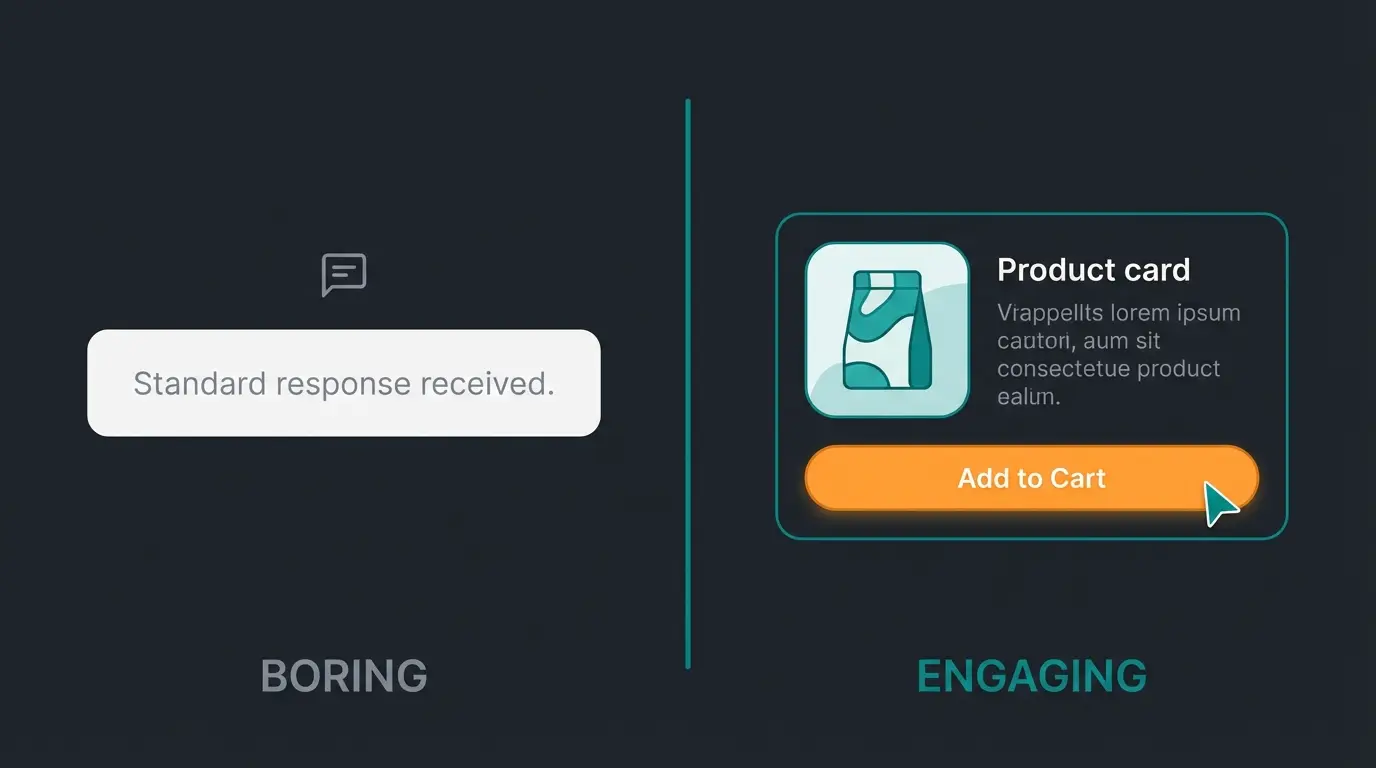
A support bot waits for a question. A sales bot asks questions to narrow down choices. This is crucial for overcoming "Choice Overload" in e-commerce.
| Scenario | The FAQ Bot (Reactive) | The Sales Expert (Proactive) |
|---|---|---|
| User: 'I need a laptop.' | Bot: 'Here is a link to our laptop category page.' | Bot: 'I can help with that. Are you looking for a gaming laptop or one for office work?' |
| User: 'Is this expensive?' | Bot: 'The price is $1,200.' | Bot: 'It is an investment at $1,200, but it includes a 3-year warranty and premium graphics card. Is that within your budget?' |
For further insights into effective strategies, we recommend our article "AI Chatbots in Marketing: Strategies and Best Practices". A well-structured conversation flow allows the chatbot to respond efficiently to customer inquiries while offering a positive user experience.
Step 4: Build and Train the Knowledge Base
A central aspect of introducing an AI chatbot is building a comprehensive knowledge base. For a sales bot, this goes beyond FAQs.
1. Information Collection: Start by systematically recording relevant information. For product consultation, this means structured data (CSV, JSON) of your product attributes (Color, Size, Technical Specs), not just text PDFs.
2. Integration of FAQs: Use existing FAQs as a foundation for the support aspect of your bot. The automation of FAQs by AI Chatbots can significantly increase the efficiency of your customer service. Identify the most frequently asked questions and ensure the chatbot can answer them precisely.
3. AI Model Training: Use the structured knowledge base to train the model. This includes introducing sample dialogues that mimic a sales consultation. The more extensive and diverse the training data, the better the chatbot will be able to respond to different purchase intents.
Step 5: Integration and Testing
Once the knowledge base is ready, integration and testing follow. This phase is critical to ensure the bot functions not just as a chat bubble, but as a part of your business ecosystem.
System Integration
Seamless integration into your existing IT infrastructure is vital. This may include integration into your website, mobile apps, CRM systems, or other customer service platforms. For a detailed guide on integration, the comprehensive guide to AI Chatbot Integration is recommended.
Functional and Performance Tests
Conduct comprehensive tests to ensure the chatbot works as expected. Check if it responds correctly to various inputs, delivers the right information, and forwards to human employees when necessary. Test different scenarios and conversation flows—specifically the "Product Consultation" flow where the user is undecided.
Include security tests to ensure the chatbot complies with data protection regulations. Check if all data transmissions are encrypted and if access to customer data is appropriately protected.
Step 6: Launch and Continuous Optimization
After careful planning and development, it is time to launch your AI chatbot and continuously improve its performance. The launch is just the beginning.
- Soft Launch: Begin with a limited introduction to identify and fix potential issues early.
- Feedback Loop: Implement mechanisms to collect user feedback.
- Monitor KPIs: Track not just "Time to Resolution" but also "Engagement Time" (longer might be better for sales!) and "Conversion Rate".
- Multilingual Expansion: For companies operating internationally, the use of multilingual AI Chatbots offers additional opportunities to increase global reach.
It is encouraging to know that 97% of business owners believe that ChatGPT will help their business. This underscores the enormous potential of AI chatbots for companies of all sizes and industries.
Conclusion: Success Factors for Your AI Chatbot
Introducing an AI chatbot is a transformative process that can elevate your company to a new level of customer interaction and efficiency. It is not just about answering FAQs; it is about guiding the customer journey.
With 64% of business owners believing that AI has the potential to improve customer relationships, now is the right time to invest in this technology. By following these six steps—and focusing specifically on the value of product consultation—you can turn a simple service tool into a powerful revenue generator.
A rule-based chatbot follows a strict script (if X, then Y), while an AI chatbot uses NLP to understand intent and context, allowing for more natural and flexible conversations.
A basic support bot can be set up in a few weeks, but a sophisticated product consultation bot with deep integration may take 2-3 months to perfect and train.
Not entirely. It handles initial consultation, qualification, and standard questions, freeing up human staff to handle high-value or complex deals.
Not necessarily. Many modern platforms offer 'No-Code' visual builders, though technical knowledge helps for API integrations.
Ready to build a bot that sells? Get our advanced AI Chatbot templates today.
Get Started