Introduction: Why Shopware Data Protection Needs Rethinking in 2025
German e-commerce stands at a turning point. For years, Shopware data protection was primarily a tedious obligation: update the imprint, set up the cookie banner, done. But with the arrival of generative artificial intelligence (AI) in online shops, the landscape is shifting dramatically.
Merchants face a dilemma today: On one hand, customers expect personalized, almost human-like consultation around the clock—a service only AI can deliver at scale. On the other hand, fear of warnings and GDPR compliance violations in Germany has never been higher. A single misconfiguration in the consent manager or an ill-considered data transfer to US servers can prove extremely costly.
The introduction of Shopware 6.6 and the new requirements of the EU AI Act have further complicated the landscape. It's no longer enough to simply check technical boxes in the backend. Anyone deploying AI for product consultation today must understand data protection as part of the user experience (UX). According to Shopware, IP addresses are stored by default in order data, making proper configuration essential.
This article is not a dry legal excursus. It's a strategic guide for Shopware merchants and agencies who want to implement AI-powered consultation securely. We bridge the gap between technical feasibility and legal security, showing how you can transform data protection from a brake into a competitive advantage. When AI chatbots transform customer service, understanding these compliance requirements becomes essential for sustainable business growth.
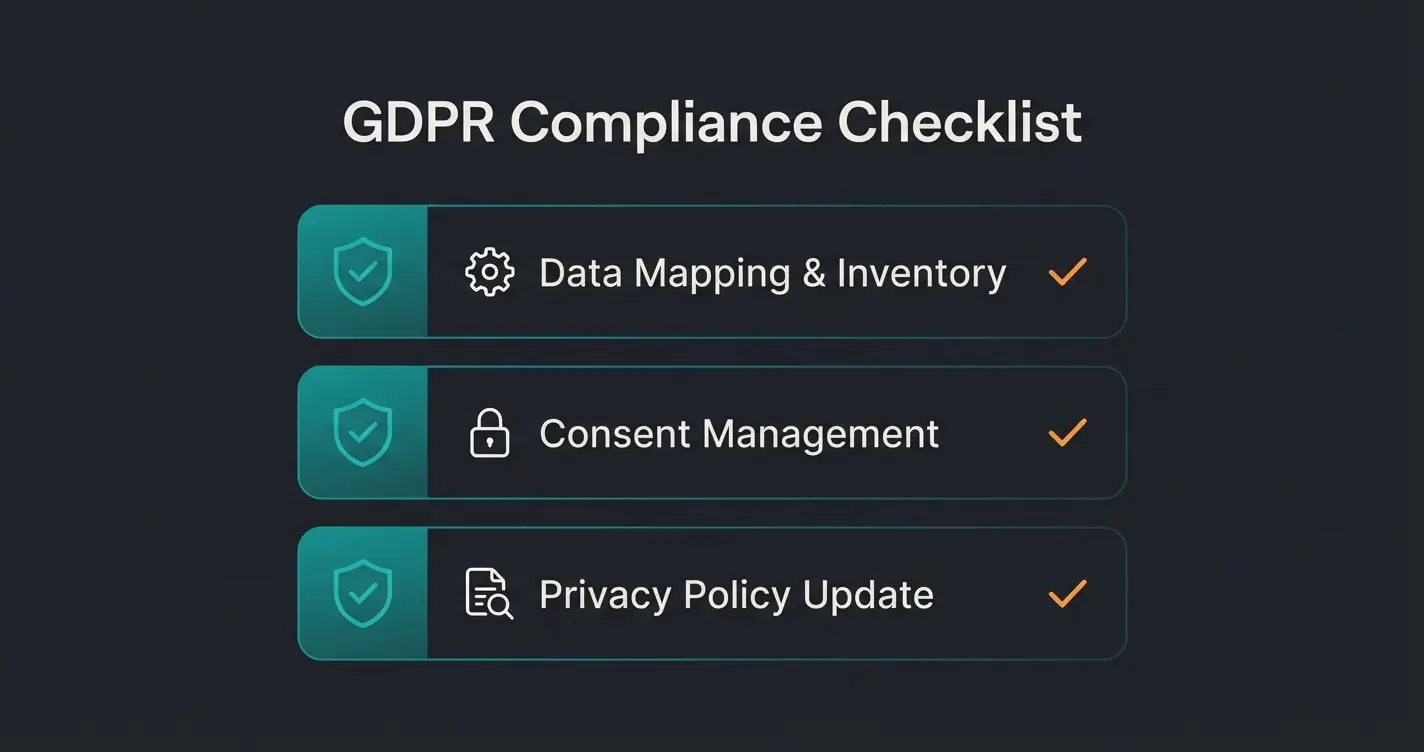
The Foundation: Essential Shopware Data Protection Checklist
Before we delve into complex AI topics, the foundation must be solid. Without clean basic configuration in Shopware, any further AI integration becomes a risk. Based on current updates from Shopware 6.6 and prevailing case law, these are the non-negotiable obligations that every shop owner must address.
Technical Basic Settings in Shopware 6
Shopware provides solid tools out of the box, but they must be configured correctly. Understanding Shopware security fundamentals is the first step toward comprehensive data protection.
- IP Address Storage: Shopware stores IP addresses by default in `version_commit_data` and with orders. Evaluate whether this storage is necessary for your purposes. Use plugins or server settings to anonymize IPs or automatically delete them after X days.
- Shopping Cart Persistence: Data in the shopping cart is stored even if the purchase is not completed. This must be made transparent in the privacy policy.
- SSL Encryption: An absolute must. Ensure that in the Shopware backend under Settings > System > Domains the option 'Force HTTPS' is active.
Consent Management (CMP) & Google Consent Mode V2
Since March 2024, Google Consent Mode V2 has been mandatory for everyone using Google Ads or Analytics. According to 8works.de, this represents a significant shift in how tracking consent must be handled.
- Shopware 6.6 Update: With version 6.6, Shopware has improved support for Consent Mode V2, though it often requires updates to consent manager plugins. The GitHub repository contains the latest implementation details.
- Partner Solutions: Shopware works closely with Usercentrics and Cookiebot. These tools offer plug-and-play solutions ensuring tracking scripts only fire after explicit consent.
- Caution with Advanced Mode: Use the 'Advanced Consent Mode' settings carefully. They allow Google to collect anonymized data ('pings') even without consent, which may exist in a legal gray area according to Codiverse.
Server Location & Data Processing Agreements
The physical location of your data is decisive for compliance. This is where many shop owners underestimate the requirements.
- Hosting: Use hosting providers with server locations in Germany or the EU (e.g., Hetzner, Timme, Profihost). When exploring options for AI product consultation, server location should be a primary consideration.
- Data Processing Agreement (DPA): You need a Data Processing Agreement with your hosting provider and every agency that has access to the backend. This is a legal requirement under GDPR Article 28.
The New Challenge: AI & Data Protection in Shopware
Here we enter new territory. While the basic settings are well-known, there is great uncertainty regarding AI. To master Shopware data protection in the AI era, we must first distinguish between two types of AI that are often confused—a distinction that has significant implications for compliance strategy.
Backend AI vs. Customer-Facing AI Consultants
Understanding this distinction is crucial for implementing proper data protection measures. The EU AI Act introduces specific requirements for each category, making this differentiation even more important.
| Feature | Shopware AI Copilot (Backend) | AI Product Consultant (Frontend) |
|---|---|---|
| User | The merchant (you) | The end customer (shopper) |
| Function | Write texts, generate images, export data | Purchase consultation, needs analysis, support |
| Data Risk | Low. Processes product data, no customer data for training | High. Processes direct customer inputs (chat history) |
| Legal Basis | Contract fulfillment / Legitimate interest | Consent or Contract |
According to Shopware's official documentation, the AI Copilot is GDPR-compliant because the infrastructure is hosted in Europe and no customer data is used for model training. However, for your own AI chatbot that communicates with customers, you are responsible for ensuring compliance.
Why Consultation Data Is Exceptionally Sensitive
Classic support bots answer questions like 'Where is my package?' This is usually unproblematic from a data protection perspective (order number + email). An AI product consultant goes deeper. It asks about needs and preferences, which creates a fundamentally different risk profile.
- Cosmetics Example: 'I have eczema and I'm looking for a cream.' -> Health data (Art. 9 GDPR) requiring special category protections
- Fashion Example: 'I need a dress in size XXL that conceals my belly.' -> Biometric/Personal preferences that reveal sensitive information
- Technology Example: 'I have a maximum budget of €500 because I'm a student.' -> Socioeconomic data that could enable discrimination
This data is generated unstructured in the chat history. If you simply send this text to a public OpenAI API in the USA without protective measures, you are potentially committing a data protection violation. This is why AI consultation builds trust only when implemented with proper safeguards.
The EU AI Act: Transparency Is Now Mandatory
The EU AI Act (AI Regulation) has been in force since August 2024, with transition periods until 2026. According to the official EU AI Act documentation, these requirements are non-negotiable.
- Article 50 (Transparency Obligations): Users must clearly recognize that they are interacting with an AI. The Händlerbund provides detailed guidance on implementation.
- Prohibition of Deception: A chatbot may not present itself as 'Employee Hans' or any human persona.
- Labeling Requirement: 'I am your virtual assistant' must be visible before the first interaction.
For merchants implementing AI virtual sales solutions, understanding these transparency requirements is fundamental to avoiding significant penalties. The KI Sales Support regulations specifically address customer-facing AI systems.
Or 7% of global turnover for prohibited AI practices
EU AI Act became legally binding
Deadline for compliance with banned AI uses
All provisions including transparency obligations enforced
Strategic Guide: Legally Integrating AI Consultants in Shopware
How do you integrate AI product consultation into Shopware that is not only secure but also converts? Here is the 'future-proof' approach that positions data protection as a competitive advantage rather than an obstacle.
Step 1: Understanding the Data Flow Architecture
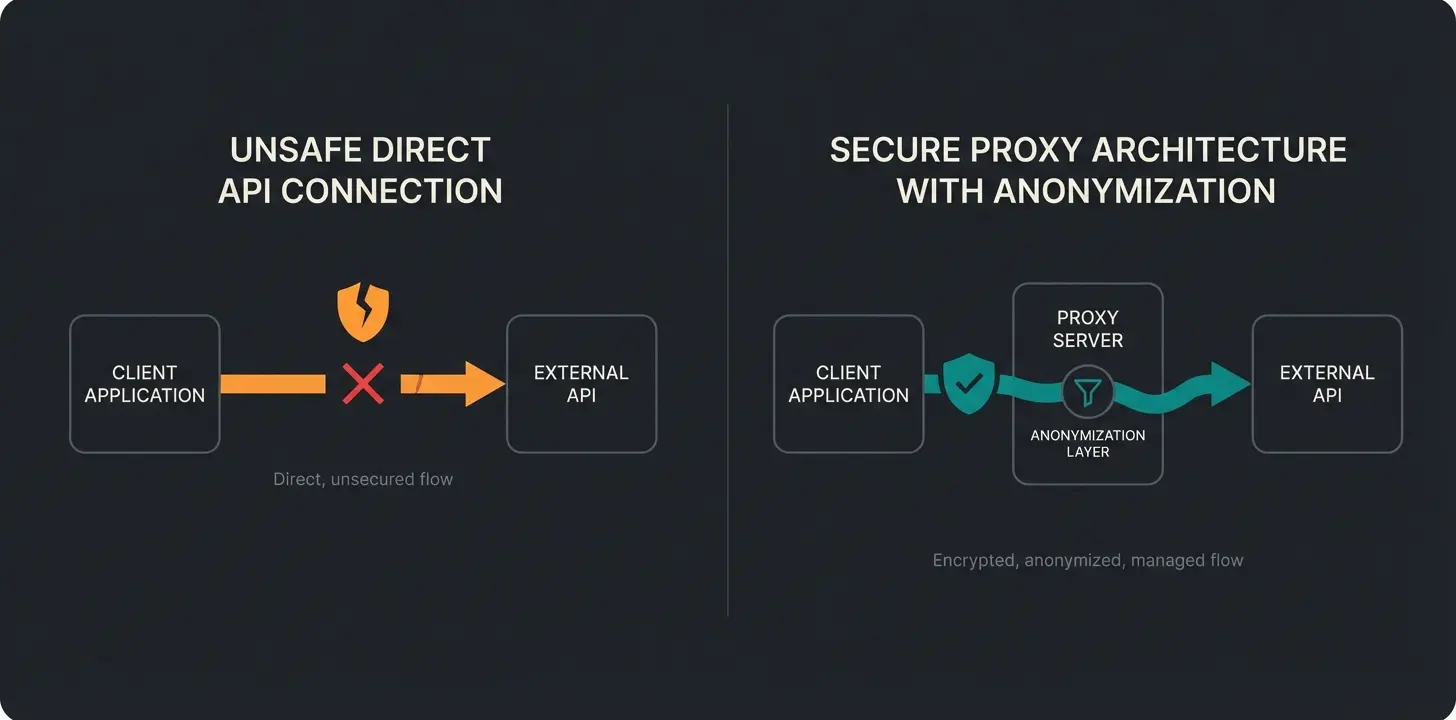
The biggest mistake is a direct connection from the customer's browser to a US AI interface. This seemingly simple approach creates significant compliance exposure that can be easily avoided with proper architecture.
The Secure Approach (Proxy Architecture): Customer → Shopware Server (Proxy/Backend) → Anonymization Layer → AI Model. This architecture ensures data sovereignty and compliance.
- The chat runs through your Shopware server (or the server of your European AI provider), maintaining data within your control.
- PII Filtering: Before the text goes to the LLM (Large Language Model), names, email addresses, and phone numbers are removed or pseudonymized. According to Fastbots.ai, this is a critical step for GDPR compliance.
- Context Cleaning: After the session, the context is deleted, ensuring no persistent storage of conversation data.
Step 2: Designing the AI Consent User Interface
How do you obtain consent without killing conversion? A huge pop-up before the chat scares users away and creates friction at the worst possible moment. When implementing professional AI consulting, the consent experience is critical.
Best Practice: Granular Consent in the Chat Window. Instead of annoying the user with another cookie banner when entering the page, integrate data protection into the chat start itself.
- The Soft-Start: The chat button is visible but not intrusive.
- The First Message: When the customer opens the chat, the AI greets them warmly.
- The Consent Gate: Before the customer can type, a small notice appears with a clear action button.
According to Dr-Datenschutz, this contextual approach to consent is both legally sound and user-friendly, maintaining conversion rates while ensuring compliance.
Step 3: Choosing the Right Legal Basis
Many merchants ask: 'Do I really always need consent?' The answer depends on your specific use case and data processing activities. Understanding AI-powered Guided Selling requirements helps clarify these distinctions.
- Legitimate Interest (Art. 6(1)(f) GDPR): Can be argued if the bot is purely functional (e.g., product search, navigation). Here, the merchant's interest in efficient customer guidance outweighs privacy concerns. The UK ICO provides extensive guidance on this assessment.
- Consent (Art. 6(1)(a) GDPR): Is mandatory when profiles are created (marketing), sensitive data (health) could be processed, or data is transferred to third parties (e.g., US providers) not covered by adequacy decisions.
Recommendation: Since good product consultation quickly becomes personal, explicit consent (the 'Start' button in the chat) is the safest path. This approach provides legal certainty while building customer trust.
Step 4: Leveraging Server Location as a Sales Argument
Use 'Made in Germany/Europe' as a trust signal. If you use an AI solution that runs on European servers (e.g., via Azure Europe or specialized German AI hosts), write this prominently in the chat header: 'Secure AI Consultant – Hosted in Germany 🇩🇪'
When evaluating AI product consultation solutions, European hosting should be a primary selection criterion. This isn't just about compliance—it's about competitive differentiation in privacy-conscious markets.
Deploy proxy-based architecture with EU-hosted servers and PII filtering layer
Implement contextual consent flow within chat interface, not separate popup
Add clear AI identification compliant with EU AI Act Article 50 requirements
Configure automatic session cleanup and prevent data retention for training
Update privacy policy with AI-specific clauses and maintain processing records
Our AI product consultant is built for European compliance: German server hosting, automatic PII filtering, and EU AI Act transparency features included. Start converting with confidence.
Start Your Free TrialCase Study: The Bio-Cosmetics Shop Scenario
Let's walk through this with a concrete example that illustrates the practical application of these principles in a real-world context.
Scenario: The online shop 'NatureGlow' uses Shopware 6.6 and wants to introduce an AI consultant for skincare products to increase conversion and provide personalized recommendations.
Challenge: Customers often enter details like 'I'm pregnant' or 'I'm allergic to nuts'—sensitive health information that requires special handling under GDPR Article 9.
The Compliant Solution Architecture
- Transparency: The bot is named 'NatureGlow AI Assistant' (not 'Sarah' or any human name). An icon shows a robot, not a human face, ensuring immediate recognition as AI.
- Data Filter: Middleware checks the input. The word 'pregnant' is recognized. The AI receives the context 'Condition: Sensitive', but does not permanently store this information in the customer profile—only transiently for the session duration (Session Storage).
- No Training: The DPA with the AI provider specifies that the data will not be used for training public AI models (Opt-Out clause explicitly included).
- Forgetting: As soon as the customer closes the window or types 'delete', the chat history is destroyed server-side with cryptographic verification.
Result: The customer feels understood and safe. The conversion rate for consultation-intensive products increased by 15% because customers felt comfortable being honest about their needs. This demonstrates how compliance enables rather than restricts business success.
Practical Implementation: Comparison Tables & Templates
Standard Chatbot vs. Privacy-Optimized Consultant
This comparison helps you evaluate potential solutions and understand what separates compliant AI consultation from risky implementations. According to Quickchat.ai, these differences are critical for European market success.
| Feature | Standard ChatGPT Plugin | Privacy-Optimized Solution |
|---|---|---|
| Server Location | Usually USA (OpenAI direct) | EU / Germany (Proxy) |
| Data Training | Data often used for training by default | Explicit 'No-Training' Agreement |
| PII Filtering | Sends everything (emails, names) | Filters PII before transmission |
| Shopware Integration | Often just iFrame | Deeply integrated with Shopware session management |
| Transparency | Often unclear | Labeling per EU AI Act Art. 50 |
| Data Retention | Indefinite or unclear | Automatic deletion after session |
| Compliance Documentation | Limited or none | Full audit trail and DPA included |
Privacy Policy Template for AI Consultation
Recommended Privacy Policy Section for AI Product Consultant:
'Use of the AI Product Consultant: On our website, we offer you the option of automated product consultation through an AI assistant. When you use this service, your inputs in the chat (e.g., product preferences, skin type, budget) are processed to generate suitable product suggestions from our range.
Legal Basis: Processing is based on your consent (Art. 6(1)(a) GDPR), which you grant by starting the chat.
Recipients: The data is processed by our technical service provider [Provider Name] on servers in [Country, e.g., Germany]. A Data Processing Agreement exists. Use of your data for training public AI models is contractually excluded.
Storage Duration: The chat history is automatically deleted after the session ends [or after X days].'
Data Protection as a Trust Enabler: The Business Case
The fear of Shopware data protection hurdles is understandable but, upon closer examination, unfounded—provided you proceed strategically. The new rules of the EU AI Act and GDPR are not prohibitions but guardrails for high-quality software that builds customer trust.
For Shopware merchants, this means adopting a proactive rather than reactive approach to compliance:
- Secure the Basics: Set up Shopware 6.6 and Consent Mode V2 cleanly as your foundation.
- Make AI Transparent: Tell your customers they are talking to a machine—this builds trust rather than destroying it.
- Minimize Data: Use AI solutions that filter data and don't train in the USA.
Secure, GDPR-compliant AI consultation signals to your customers: 'We respect your privacy as much as your wishes.' In a world full of data breaches and privacy scandals, this is the strongest sales argument you can have. According to E-Recht24, transparency and proper consent management are increasingly becoming competitive differentiators.
Observed in case studies with privacy-optimized AI consultants
German consumers worried about AI data handling
Customers more likely to share preferences with transparent AI
Potential penalty for non-compliance with data protection
Frequently Asked Questions About Shopware Data Protection & AI
Not necessarily. For purely functional bots (product search, navigation help), you may rely on legitimate interest under Art. 6(1)(f) GDPR. However, for AI product consultants that collect personal preferences, health information, or behavioral data, explicit consent is strongly recommended and often required. The safest approach is implementing a contextual consent button before chat interaction begins.
Article 50 of the EU AI Act requires transparency—users must clearly recognize they're interacting with AI. You must label your chatbot as artificial intelligence before the first interaction, avoid human names or personas that could deceive users, and update your implementation by August 2025 when prohibited practices provisions become enforceable.
You can, but with significant precautions. Direct API connections to US services without safeguards are problematic under GDPR. Best practice involves implementing a proxy architecture through EU servers, filtering PII before data leaves Europe, securing explicit 'no-training' agreements with the provider, and using Standard Contractual Clauses or confirming the provider participates in the EU-US Data Privacy Framework.
Shopware AI Copilot (backend) processes product data and assists merchants—it's GDPR-compliant by design with European hosting and no customer data training. Customer-facing AI consultants process direct customer inputs including potentially sensitive preferences, health information, and behavioral data. You're responsible for the latter's compliance, requiring proper consent mechanisms, PII filtering, and transparent labeling.
Under GDPR's data minimization principle, you should store conversation data only as long as necessary. Best practice is to delete chat history immediately after session end or within a defined short period (e.g., 24-48 hours). If you need data for service improvement, ensure it's anonymized and covered by your privacy policy. Never retain identifiable conversation data indefinitely.
Transform your Shopware store with GDPR-ready AI that converts. European hosting, automatic compliance features, and seamless Shopware integration—all included from day one.
Get Started FreeResources & Next Steps
Implementing compliant AI consultation doesn't have to be overwhelming. Start with the foundation—ensure your Shopware 6.6 setup meets basic GDPR requirements—then layer in AI-specific protections as you deploy consultation features.
- Infographic Download: The Secure Data Flow for Shopware AI (Visualization: Customer → Shopware Proxy → Anonymization → LLM)
- Official Shopware Documentation: Comprehensive guides for privacy settings and consent management
- EU AI Act Compliance Checker: Tools and checklists for Article 50 transparency requirements
- AICerts Certification Info: Details on AI compliance certification options
Disclaimer: This article serves general information purposes and does not constitute legal advice. For legally secure design of your shop, please consult a lawyer specializing in IT law.