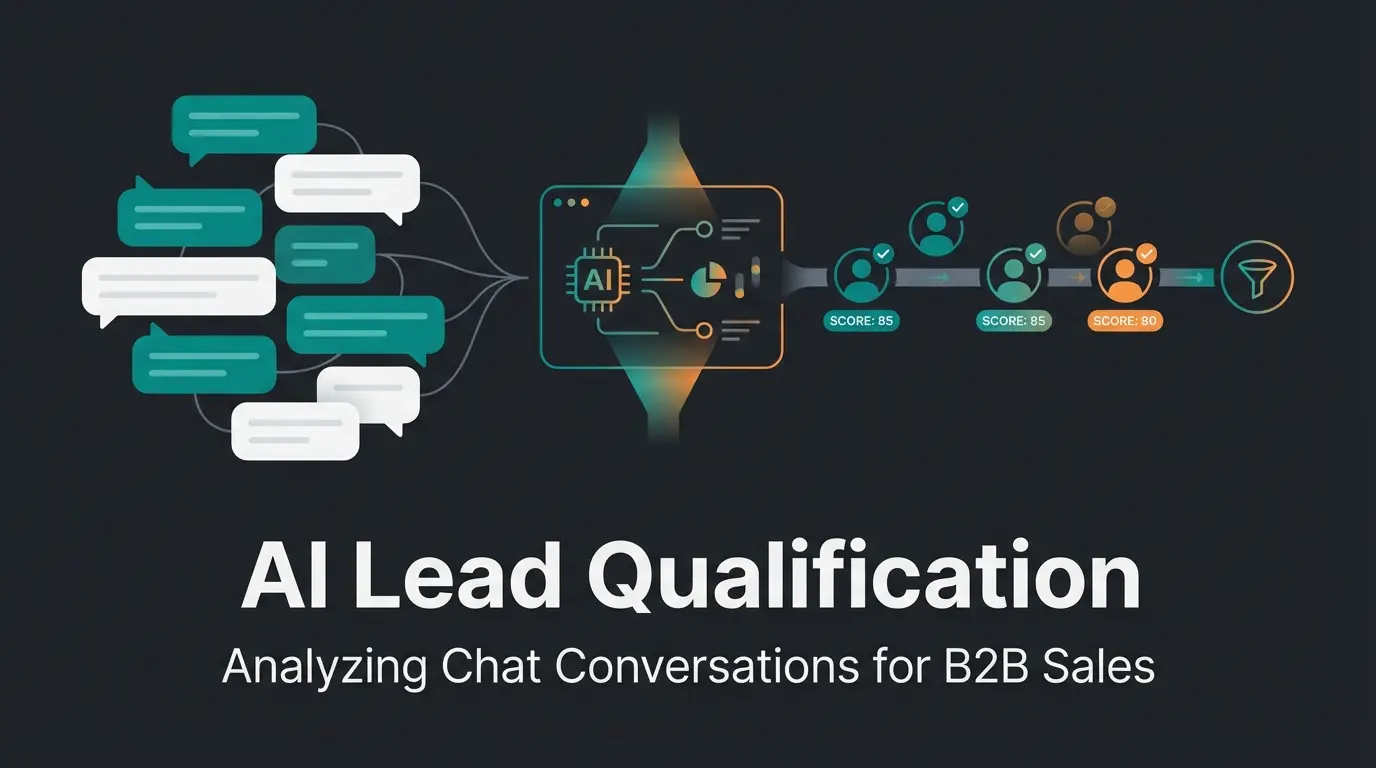
Introduction: The Missing Variable in Sales Forecasting
AI-powered sales forecasting is becoming a decisive tool for modern businesses. According to current statistics from Destatis, 12% of German companies already use AI technologies, with large enterprises leading at a 35% adoption rate. The implementation of AI systems for sales forecasting shows particularly impressive results: companies achieve efficiency improvements of up to 87% in their sales planning.
But here's the critical question most businesses are missing: What data are you actually feeding your forecasting AI?
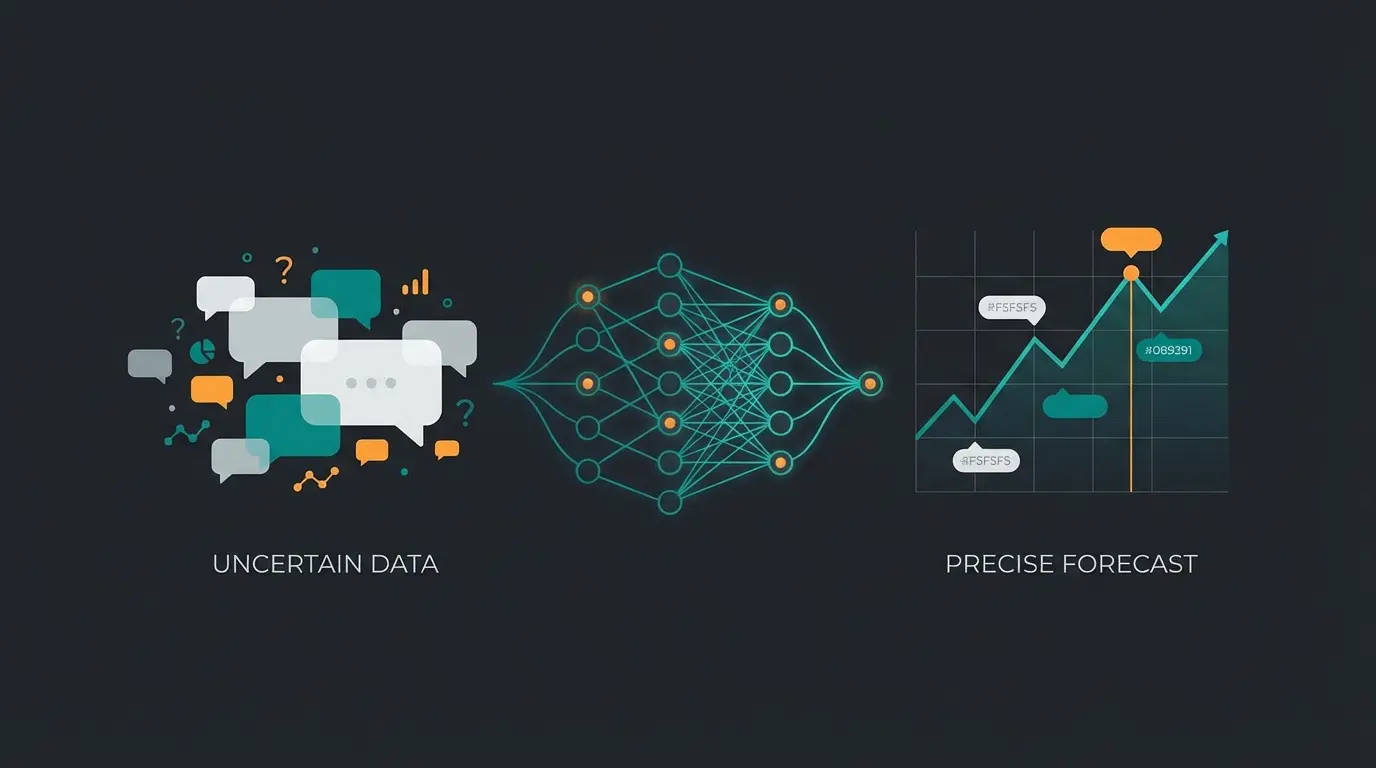
The latest developments in AI selling show that predictive analytics and machine learning in sales are no longer just future concepts. AI systems today analyze sales data, customer behavior, and market trends in real-time, delivering precise predictions for future sales developments. However, the vast majority of these systems share one fundamental limitation—they only look at CRM numbers, completely ignoring what happens during actual customer conversations.
The integration of AI sales forecasting leads to measurable improvements: reduction of forecast errors by an average of 45%, optimization of inventory management by 30%, and increase in sales efficiency by up to 87%. These numbers demonstrate the immense potential of AI-supported sales optimization. But the real breakthrough happens when you combine traditional data sources with conversation intelligence—the analysis of what customers actually say during product consultations.
What Is AI-Powered Sales Forecasting?
The foundation of successful AI sales forecasting lies in understanding its fundamental differences from traditional methods. While classic forecasting approaches often rely on historical data and static models, AI-powered systems use dynamic algorithms that continuously adapt to new data.
According to current sales analytics studies, the technical foundation of modern AI forecasting is based on three main components:
- Data Collection: Automated gathering of sales data, customer interactions, and market information
- Data Processing: AI-powered analysis and pattern recognition in large datasets
- Forecast Modeling: Development of adaptive prediction models through machine learning
Beyond Traditional Definition: Consultation-Based Forecasting
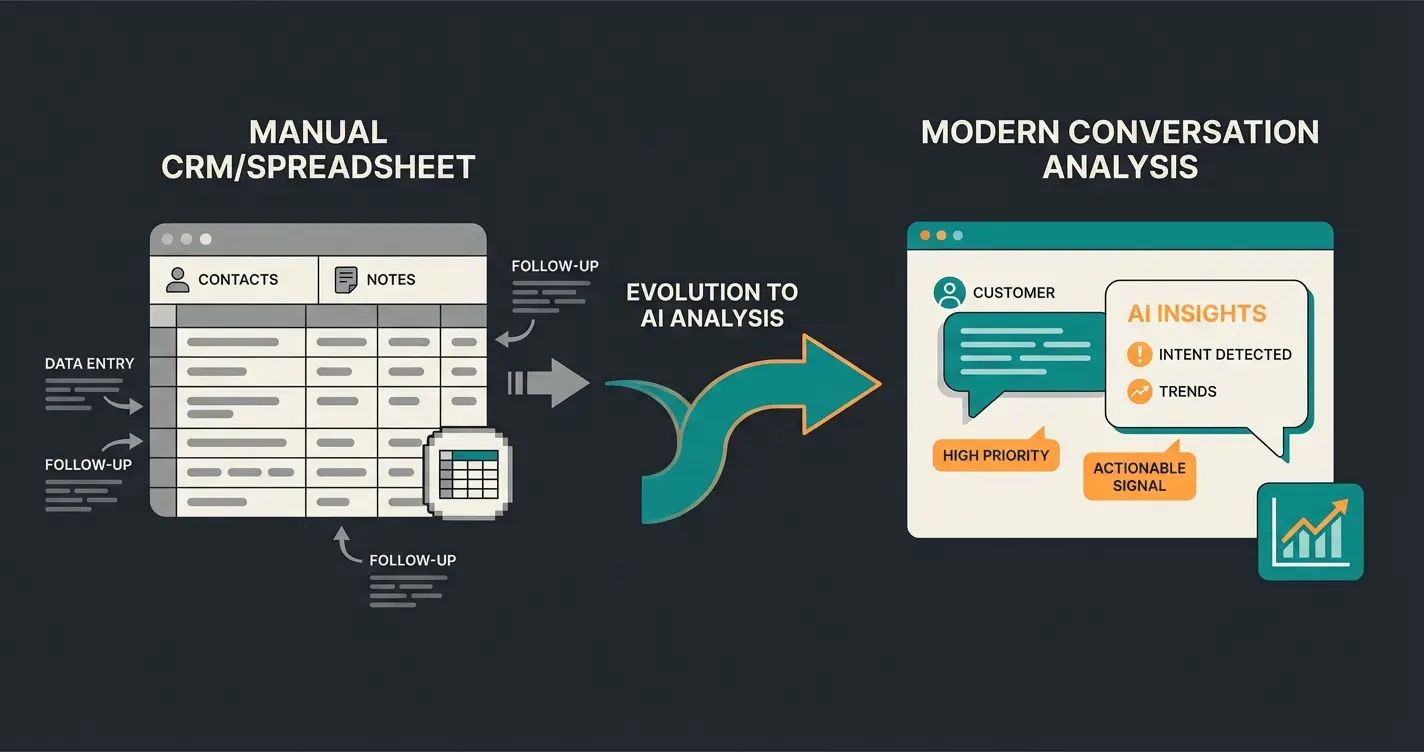
Standard AI forecasting tools analyze what we call quantitative data—numbers in your CRM like deal size, win rates, time in pipeline, and email frequency. This approach treats every customer interaction as a data point without understanding the substance of that interaction.
Consultation-Based Forecasting represents the next evolution. It analyzes the qualitative data—what customers actually ask, how they respond, which features interest them, and what objections they raise during product consultations. This is the difference between knowing when an email was sent versus understanding what the customer asked during the product consultation.
Data management plays a central role in forecast quality. The integration of various data sources—from CRM systems to market research data to conversation transcripts—enables a holistic view of the sales process. Quality assurance through automated validation processes and continuous monitoring is essential.
The implementation of AI sales forecasting requires a structured approach to data management. Successful systems are characterized by their ability to process different data formats and prepare relevant information for forecast models. This includes both structured data from sales systems and unstructured data from customer interactions—voice recordings, chat transcripts, and consultation logs that traditional systems completely ignore.
The 3 Pillars of Precise Sales Forecasting
Most AI forecasting solutions focus on just one data source: historical CRM data. While this provides a foundation, it's only one-third of what's needed for truly accurate predictions. A comprehensive AI forecasting system requires three distinct pillars.
Pillar 1: Historical Data (What Everyone Does)
This is the standard approach: analyzing past sales figures, conversion rates, deal velocities, and seasonal patterns. Machine learning models like LSTM (Long Short-Term Memory) networks excel at recognizing patterns in time-series data and deriving reliable forecasts from historical sales data. ARIMA models shine when processing seasonal data and short-term trends.
A study from the Digital Center Berlin shows that German companies improved their forecast accuracy by an average of 35% through the use of these AI algorithms—but this is just the baseline.
Pillar 2: Market Data (External Context)
The second pillar incorporates external factors: industry trends, economic indicators, competitor movements, and seasonal market fluctuations. This contextualizes your historical data within broader market dynamics. However, this data tells you about market conditions—not about individual customer intent.
Pillar 3: Interaction Data (The Hidden Champion)
This is where Conversation Intelligence becomes your competitive advantage. Interaction data captures what customers actually say during product consultations—their questions, concerns, feature interests, and buying signals. This is the leading indicator that traditional CRM data cannot provide.
Think about it: CRM data is inherently a lagging indicator. It only updates after a meeting, after an email, after a decision has already been influenced. But what happens during the consultation? That's where buying intent is formed, and that's exactly what Conversation Intelligence captures in real-time.
Accuracy improvement using traditional CRM analytics
Improvement when combining CRM with external market factors
Accuracy when analyzing actual customer consultation content
CRM Data vs. Consultation AI: A Direct Comparison
To understand why Conversation Intelligence outperforms traditional number-crunching, let's compare the two approaches directly. The differences are fundamental and explain why companies relying solely on CRM data consistently miss forecast targets.
| Aspect | Traditional Predictive Analytics | Consultation AI |
|---|---|---|
| Data Source | Numbers in CRM (past revenue, win rates, email frequency) | Actual conversation content (questions asked, concerns raised, features discussed) |
| Timing | Lagging indicator—updates only after interactions | Leading indicator—real-time intent signals during the conversation |
| Insight Type | Probability percentage (e.g., "70% chance to close") | Customer intent with reasoning (e.g., "High intent: asked about enterprise security and implementation timeline") |
| Actionability | Tells you the odds | Tells you what to say next to improve the odds |
| Signal Detection | Counts activities (calls made, emails sent) | Understands context (what was discussed, sentiment, specific objections) |
| Forecast Explanation | "Based on deal size and time in pipeline" | "Customer asked 3 high-intent questions about integration and pricing tiers" |
The critical difference lies in context understanding. Traditional AI knows that a sales rep sent five emails—but has no idea whether the customer responded with genuine interest or polite deflection. Consultation AI analyzes the actual conversation and understands that the customer asked about "enterprise security requirements" and "implementation timeline for Q2"—both high-intent buying signals.
How AI Predicts Revenue from Consultation Conversations
Understanding how Conversation Intelligence works in practice reveals why it's so much more accurate than traditional approaches. Let's walk through a specific example.
Scenario: A potential customer engages with your product consultation—whether through a chat interface, voice call, or video demo.
Traditional Bot Response: A standard FAQ bot answers the customer's questions about features and pricing, logs that an interaction occurred, and perhaps updates a "lead score" based on activity frequency. The CRM shows "1 chat session, 4 questions asked." That's all the forecasting model sees.
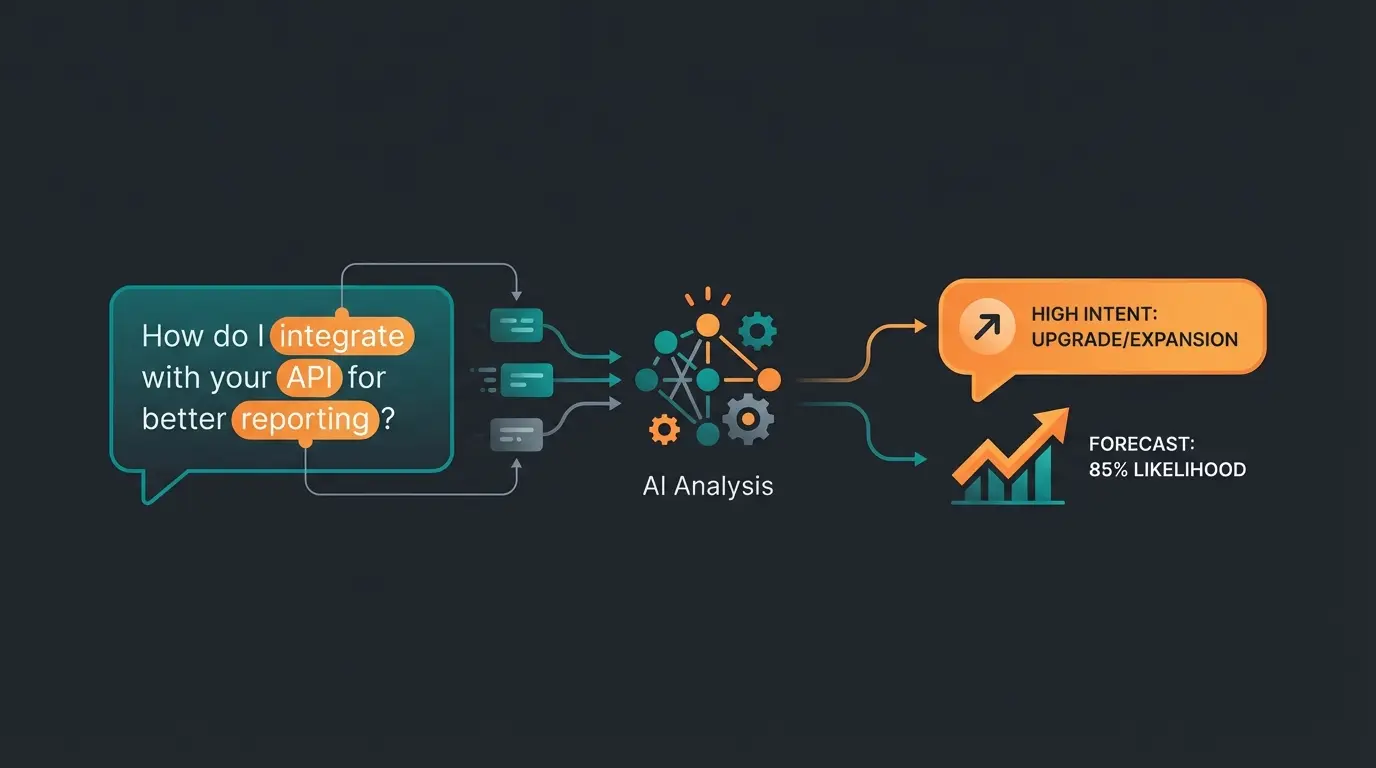
Conversation Intelligence Response: The AI analyzes the content of those four questions and discovers the customer asked: "Does this integrate with SAP?" and "What's the implementation timeline for a team of 50?" and "How does enterprise security work?" These are high-intent signals that dramatically change the forecast probability.
The Anatomy of a Forecast Signal
When a customer asks "Does this work with SAP?" during a product consultation, here's what happens with different systems:
- Traditional System: Logs "question asked" in CRM. No context. Forecast unchanged.
- Keyword Matching: Might flag "SAP" as a notable mention. Minimal impact.
- Conversation Intelligence: Recognizes this as an integration intent signal—the customer is evaluating how your solution fits their existing tech stack. This specific question correlates with a 23% higher close probability. Forecast automatically adjusts upward, and the system recommends follow-up content about enterprise integrations.
The difference isn't just in the forecast number—it's in the reasoning. Sales reps and managers can see why the AI predicts what it predicts, based on actual customer statements rather than abstract pattern matching.
Green Flags and Red Flags: Consultation Signals That Predict Sales
Conversation Intelligence works by identifying specific signals during customer consultations that reliably predict whether a deal will close. Understanding these signals transforms abstract AI predictions into actionable intelligence.
Green Flag Signals (High Buying Intent)
- Specific feature questions: "Does your solution support multi-currency invoicing?" shows evaluation depth
- Implementation timeline questions: "How long does deployment take for a 100-person team?" indicates active planning
- Pricing tier inquiries: "What's included in the enterprise plan?" signals budget consideration
- Integration requirements: "Does this connect with our Salesforce instance?" shows fit evaluation
- Stakeholder mentions: "I'd need to show this to our IT director" indicates buying committee involvement
- Comparison questions: "How does this compare to [competitor]?" shows active vendor evaluation
Red Flag Signals (Low Buying Intent)
- Generic one-word responses: "Okay" and "Interesting" without follow-up questions
- Free version focus: "Is there a free tier?" without interest in paid features
- Vague timeline: "Maybe sometime next year" indicates no urgency
- Feature browsing without depth: Asking about many features superficially without drilling into any
- Avoiding pricing discussion: Changing subject when costs come up
- No stakeholder mentions: Individual curiosity without organizational buy-in indicators
Qualimero's AI analyzes every product consultation to identify buying signals in real-time—giving your sales team forecasts they can actually trust.
See Conversation Intelligence in ActionBenefits of Consultation AI for Sales Forecasting
AI-powered product consultation delivers advantages that traditional CRM-based forecasting simply cannot match. Let's examine the specific benefits that drive the 87% efficiency improvement companies experience.
Early Warning System
Consultation AI identifies trends before they hit the CRM. By analyzing conversation patterns across all customer interactions, the system detects shifts in market sentiment, emerging objections, or competitive threats weeks before they show up in your pipeline metrics.
Example: If customers suddenly start asking about a competitor's new feature across multiple consultations, the AI flags this pattern immediately—allowing product and marketing teams to respond before deals start falling through.
Superior Lead Qualification
Traditional lead scoring assigns points based on form fills, page visits, and email opens. Consultation AI evaluates the substance of customer questions to determine true qualification. A lead who asks three specific implementation questions in a 10-minute chat is worth more than one who downloaded five whitepapers but never engaged meaningfully.
This better filtering means sales reps focus on genuinely qualified opportunities, and unqualified leads don't pollute the forecast pipeline with false optimism.
Objectivity: Removing Sales Rep Bias
Every sales organization struggles with "happy ears"—the tendency for reps to hear what they want to hear and forecast deals more optimistically than reality warrants. Consultation AI eliminates this bias by analyzing the actual transcript or chat log, not the rep's interpretation of it.
The forecast is based on what the customer said, not what the rep thinks they meant.
Rather than waiting for weekly pipeline reviews, Consultation AI updates forecasts in real-time as conversations happen. A deal that looked uncertain in the morning can be confidently forecasted after a consultation where the customer asked about contract terms and implementation scheduling.
Industry-Specific Applications
AI-powered sales forecasting offers significant advantages across different industries. Each sector benefits from specific applications of Conversation Intelligence tailored to their sales process.
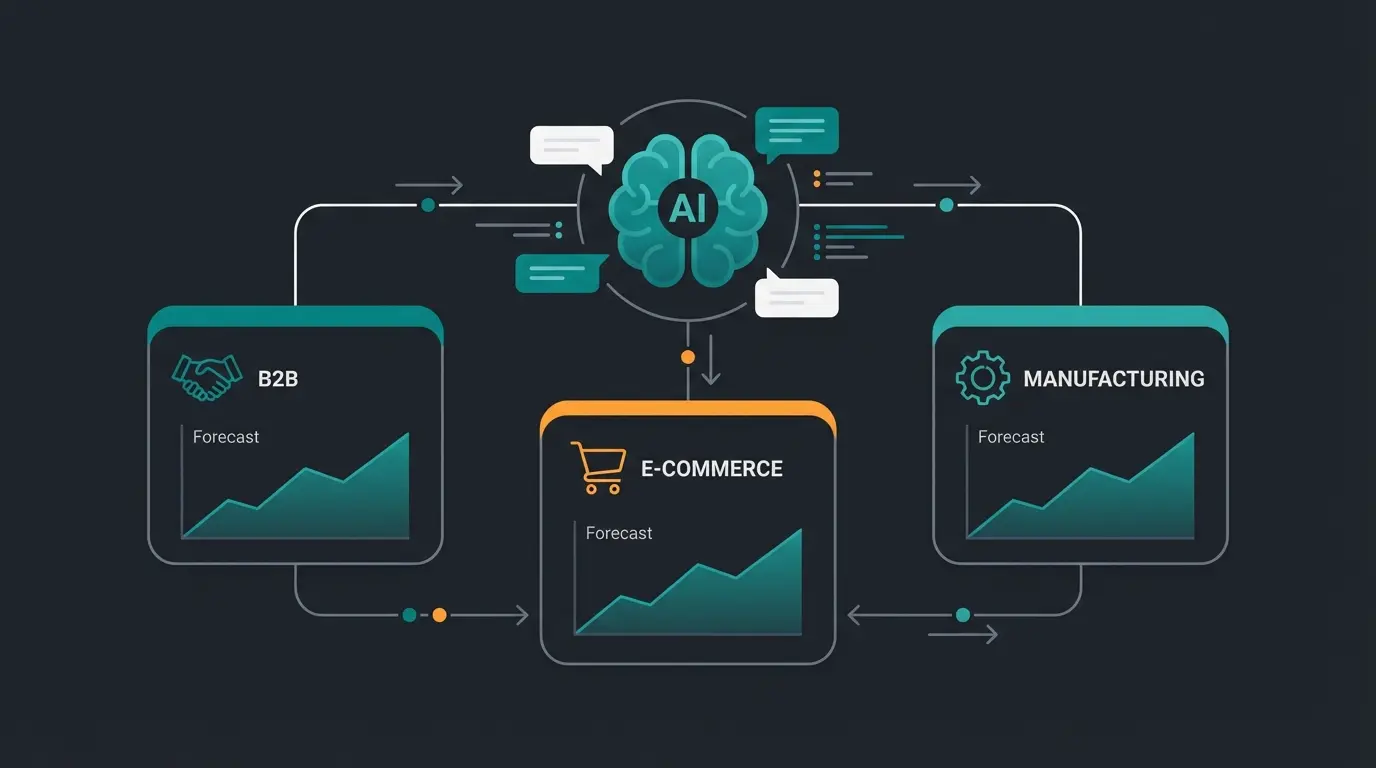
B2B Sales with AI Forecasting
Industrial companies use AI sales forecasting particularly effectively. They analyze historical sales data, market trends, and customer behavior to calculate purchase probabilities. One mechanical engineering company in Stuttgart increased its sales efficiency by 45% through AI forecasting.
In B2B contexts, Consultation AI shines by analyzing complex technical discussions. When a prospect asks detailed questions about API specifications or enterprise deployment options, the AI recognizes these as high-intent signals specific to B2B buying cycles.
E-Commerce Optimization
Online retailers benefit from AI-powered sales forecasting through automated inventory optimization and personalized product recommendations. The conversion rate demonstrably increases by up to 28% when consultation AI powers product recommendations. A leading German online retailer reduced their warehouse costs by 32% through precise demand forecasting.
E-commerce Consultation AI analyzes chat interactions to understand what customers actually want versus what they initially searched for—enabling smarter inventory decisions based on expressed intent, not just browsing behavior.
Production Planning with AI
Manufacturing companies use AI sales forecasting for demand-driven production planning. The algorithms consider seasonality, market developments, and customer orders. A mid-sized food company optimized their production utilization by 23% through AI-based demand forecasting enhanced by customer consultation data.
Practical Implementation of AI Sales Forecasting
The integration of AI sales forecasting requires a structured approach. According to the guidelines from the Federal Ministry of Economics, companies must pay particular attention to data protection aspects.
The first step is connecting the AI solution to existing CRM and ERP systems. This enables automated data exchange and the integration of forecasts into operational processes. Data quality and consistency are crucial considerations.
Integration with Existing Systems
Successful AI implementation in mid-sized companies requires seamless connection with existing systems. CRM systems, ERP software, and merchandise management systems must be able to communicate with each other.
Interfaces to important data sources are decisive for precise forecasts:
- Sales Data: Historical sales figures and customer interactions
- Market Data: Industry trends and competitive information
- External Factors: Economic indicators and seasonal influences
- Consultation Data: Chat logs, call transcripts, and interaction records
For technical implementation, companies should rely on standardized interfaces. REST APIs and modern microservice architectures ensure flexible and scalable integration. The systems must comply with strict German data protection regulations.
Common Implementation Mistakes to Avoid
Common errors during implementation can be avoided through careful planning. These include insufficient data preparation, inadequate employee training, and missing process adjustments. A step-by-step introduction with pilot projects has proven effective in practice.
Assess current data sources and identify conversation data capture points
Connect AI solution to CRM, ERP, and consultation platforms via APIs
Train AI on historical consultation data and sales outcomes
Deploy with one team or product line to validate accuracy
Scale to all teams with continuous model refinement
Measurement and Optimization
Precise monitoring of AI sales forecasting is decisive for long-term success. The right KPIs and systematic optimization strategies help continuously improve forecast accuracy.
Central KPIs for Forecast Quality
The evaluation of AI sales forecasts is based on specific performance indicators:
- Forecast Error (MAPE): Measures the average percentage deviation between prediction and actual sales result
- Hit Rate: Percentage of forecasts within a defined tolerance limit
- Bias: Systematic over- or underestimation of sales figures
- Response Time: Speed of model adjustment when market conditions change
- Signal Accuracy: How reliably identified conversation signals predict outcomes
Strategies for Forecast Optimization
Continuous improvement of forecast quality requires a structured approach. Through regular model reviews and parameter adjustments, prediction accuracy can be steadily increased. Central optimization measures include expanding the data foundation, refining the algorithms, and integrating new market factors.
AI systems learn continuously from new data. Regular review of forecast quality and model adjustments guarantee steady improvement in prediction accuracy. Systematic error analysis identifies optimization potentials and enables targeted adjustments to the AI models.
ROI Calculation and Economic Viability
The implementation of AI sales forecasting requires investments in technology and expertise. A well-founded ROI analysis helps evaluate economic viability. According to current studies from the Federal Statistical Office, companies achieve efficiency improvements of 25-35% on average through AI systems.
Cost Aspects of AI Implementation
Various cost factors must be considered in the economic calculation. These include software licensing costs, employee training expenses, and potential system adjustments. The national AI strategy offers guidance and funding opportunities here.
Measuring Business Success
Business success through AI sales forecasting shows in various areas. This becomes particularly evident in the reduction of warehouse costs, improvement of delivery reliability, and increase in customer satisfaction. Experiences from German mid-sized companies demonstrate that investments typically pay off within 12-18 months.
Return on investment after 12 months of implementation
Typical time to recoup initial AI investment
Average decrease in forecast inaccuracy
Reduction in excess stock through better predictions
Using Forecast Results for Business Decisions
AI sales forecasts provide a solid foundation for strategic business decisions. With forecast accuracy of up to 87%, companies can significantly increase their planning certainty. The integration of sales analytics enables precise evaluation of predictions.
The gained data flows directly into various business areas:
- Inventory Management: Optimization of stock based on predicted demand
- Personnel: Needs-based planning of sales and support teams
- Marketing: Targeted campaign planning during high-sales phases
- Production: Adjustment of manufacturing capacities to predicted sales volumes
Data Protection and Compliance
When implementing AI systems for sales forecasting, companies must observe the legal framework. The German data protection guidelines provide clear specifications for handling customer data.
AI-powered systems require careful documentation of data processing. This includes storage, processing, and deletion of information according to GDPR requirements. Conversation data especially requires explicit consent frameworks and clear retention policies.
The Future of Sales Forecasting Is Conversational
Technological development opens new possibilities for even more accurate predictions. Through improved algorithms and larger data volumes, forecast precision continuously increases.
Current trends show the potential for the coming years:
- Real-Time Adjustment: Dynamic forecast adaptation through live conversation data
- Automation: Self-learning systems with minimal manual configuration
- IoT Integration: Connection with IoT devices for expanded data foundation
- Conversation Intelligence Evolution: Deeper sentiment analysis and intent prediction from customer consultations
The companies that will dominate their markets in the next decade won't be those with the most CRM data—they'll be those who understand what their customers actually say, want, and need during product consultations.
Traditional forecasting tells you the probability of a deal closing. Conversation Intelligence tells you why it will close and what to do to make it happen. That's the difference between guessing and knowing.
Traditional Excel forecasting relies on manual data entry, historical averages, and static formulas that can't adapt to changing conditions. AI-powered forecasting uses machine learning algorithms that continuously learn from new data, identify complex patterns across thousands of variables, and adjust predictions in real-time. Most importantly, advanced AI systems analyze qualitative conversation data from customer consultations—not just CRM numbers—to understand actual buying intent.
Conversation Intelligence analyzes the actual content of customer interactions: chat transcripts, call recordings, email exchanges, and product consultation logs. It identifies specific buying signals like feature questions, implementation timeline inquiries, pricing discussions, and stakeholder mentions. This qualitative data is combined with traditional quantitative sources (CRM history, market data) for forecasts that understand both what happened AND what was said.
Most companies see initial ROI within 4-6 months of implementation, with full return on investment averaging 285% after 12 months. Immediate benefits include reduced forecast errors (45% improvement average), better inventory management (30% cost reduction), and increased sales efficiency. The key to fast ROI is starting with a focused pilot—one team or product line—before scaling.
Yes, modern AI forecasting solutions integrate seamlessly with major CRM platforms (Salesforce, HubSpot, Microsoft Dynamics) and ERP systems through REST APIs and standardized connectors. The AI layer sits on top of your existing infrastructure, enhancing rather than replacing your current tools. Most implementations require no changes to how your sales team uses their existing systems.
Standard predictive analytics is a lagging indicator—it only updates after meetings, emails, and decisions have already happened. Conversation Intelligence provides leading indicators by analyzing intent signals during live customer consultations. It understands context (what was discussed) not just frequency (how many emails). When a customer asks about enterprise security and implementation timelines, Conversation Intelligence recognizes these as high-intent signals that dramatically change the forecast—something traditional CRM analytics completely misses.
Join the companies achieving 87% forecast accuracy with AI that listens to customer conversations—not just CRM numbers. See how Conversation Intelligence transforms your sales predictions.
Start Your Free Analysis