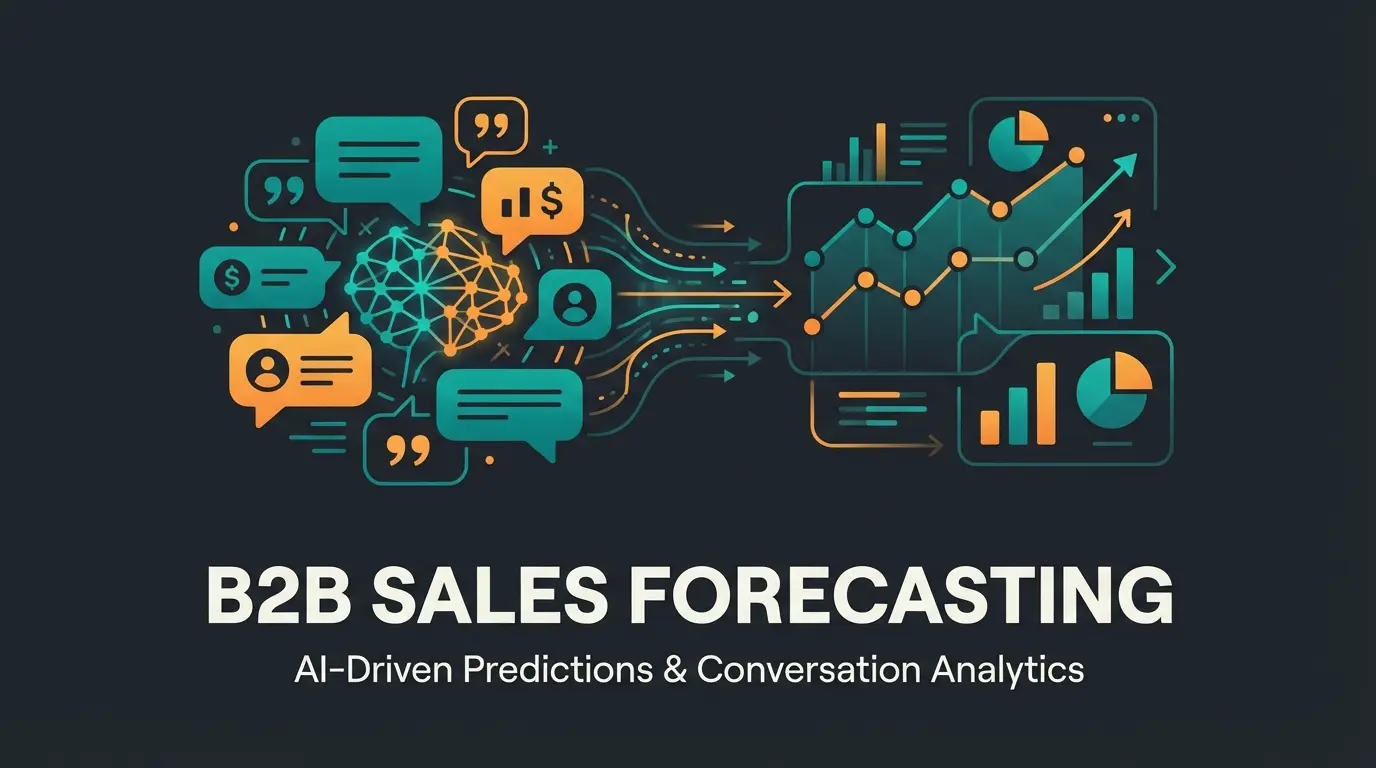
Introduction: The Broken Promise of Traditional Lead Scoring
AI-based lead scoring is fundamentally transforming the B2B sales landscape. The integration of artificial intelligence into lead qualification enables precise evaluation and prioritization of potential customers. Current market data shows that companies with AI-powered lead scoring can increase their conversion rates by an average of 35%.
Yet here's the frustrating reality many sales teams face: Your highest-scoring lead—the one who downloaded three whitepapers, attended two webinars, and visited your pricing page fifteen times—goes completely silent when your sales rep reaches out. Meanwhile, someone who had a single meaningful conversation about their specific integration needs signs within a week.
AI-powered sales optimization is gaining particular importance in the B2B sector. Studies confirm: 67% of B2B companies plan to implement AI solutions for their lead management within the next 12 months. This development is driven by increasing data availability and improved analysis capabilities.
The integration of AI into existing sales processes enables automated, data-based evaluation of leads. This leads to more efficient resource allocation and higher closing rates in sales. But the question remains: Are we scoring the right things? This article challenges the conventional wisdom and reveals why conversational qualification represents the future of lead scoring.
What Is Lead Scoring? A Clear Definition
Lead scoring is a methodology used by sales and marketing teams to rank prospects against a scale representing the perceived value each lead brings to the organization. The resulting score determines which leads should be prioritized for sales engagement and which require further nurturing.
The fundamental goal is straightforward: help sales teams focus their limited time on prospects most likely to convert. Instead of treating every inquiry equally, lead scoring creates a systematic approach to prioritization based on objective criteria rather than gut feelings or first-come-first-served processing.
Effective lead scoring connects marketing efforts directly to sales outcomes, creating accountability and measurable ROI across the entire customer acquisition process. When implemented correctly, it bridges the notorious gap between marketing qualified leads (MQLs) and sales qualified leads (SQLs).
The Classics: Explicit vs. Implicit Data
Traditional lead scoring relies on two primary data categories that have defined the practice for over a decade. Understanding these foundations is essential before examining why they're no longer sufficient.
Explicit Data: What Prospects Tell You
Explicit data encompasses information prospects directly provide through forms, registrations, and profile updates. This includes firmographic details like company size, industry, annual revenue, and geographic location. It also covers demographic information such as job title, department, seniority level, and decision-making authority.
Typical scoring assignments might include: +10 points for C-level executives, +5 points for managers, +15 points for companies in your target industry, and +10 points for organizations with 500+ employees. This data is valuable because it's factual and directly stated—no inference required.
Implicit Data: What Behavior Reveals
Implicit data derives from prospect behavior and engagement patterns. This includes website visits, content downloads, email opens and clicks, webinar attendance, and social media interactions. The assumption is that more engagement signals higher interest and purchase intent.
Standard implicit scoring might assign +5 points for visiting the pricing page, +3 points for downloading a whitepaper, +10 points for requesting a demo, and +1 point for opening a marketing email. AI-powered lead generation systems often heavily weight these behavioral signals.
The Problem with Conventional Scoring Models
Traditional lead scoring was built for an era when digital interactions were relatively scarce and therefore meaningful. Today's digital landscape has fundamentally changed, yet many scoring systems haven't evolved. This creates systematic blind spots that cost companies qualified opportunities while wasting resources on false positives.
The Vanity Metrics Trap
Many traditional scoring systems heavily weight what industry experts call 'vanity metrics'—engagement signals that feel significant but don't correlate with purchase intent. Someone downloading a whitepaper might be a graduate student conducting research, a competitor gathering intelligence, or someone who simply collects content without any buying authority.
Email opens are particularly misleading. Automated preview panes trigger false opens. Security scanners inflate click rates. A prospect might open every email while simultaneously evaluating three competitors, with no intention of choosing your solution. Activity without context creates noise, not signal.
The Delayed Data Problem
Traditional scoring operates on batch processing. Lead scores update overnight or after specific triggering events. By the time sales receives a 'hot lead' alert, the prospect may have already moved to a competitor who responded faster. In the B2B buying journey, timing often matters more than targeting.
The integration of AI-powered customer service data reveals another timing issue: prospects often reach peak purchase intent during active problem-solving moments—moments that traditional scoring misses entirely because they happen between scheduled score updates.
Missing Context: Clicks Don't Explain Why
Perhaps the most significant limitation is the absence of context. A click on your pricing page tells you someone visited—it doesn't tell you whether they found your prices competitive or prohibitively expensive. A webinar registration indicates initial interest—it doesn't reveal specific pain points, timeline, or budget constraints.
Traditional scoring treats all engagement as positive, but prospects interact with content for many reasons unrelated to purchase intent. Without understanding the 'why' behind behavior, scoring remains sophisticated guesswork at best.
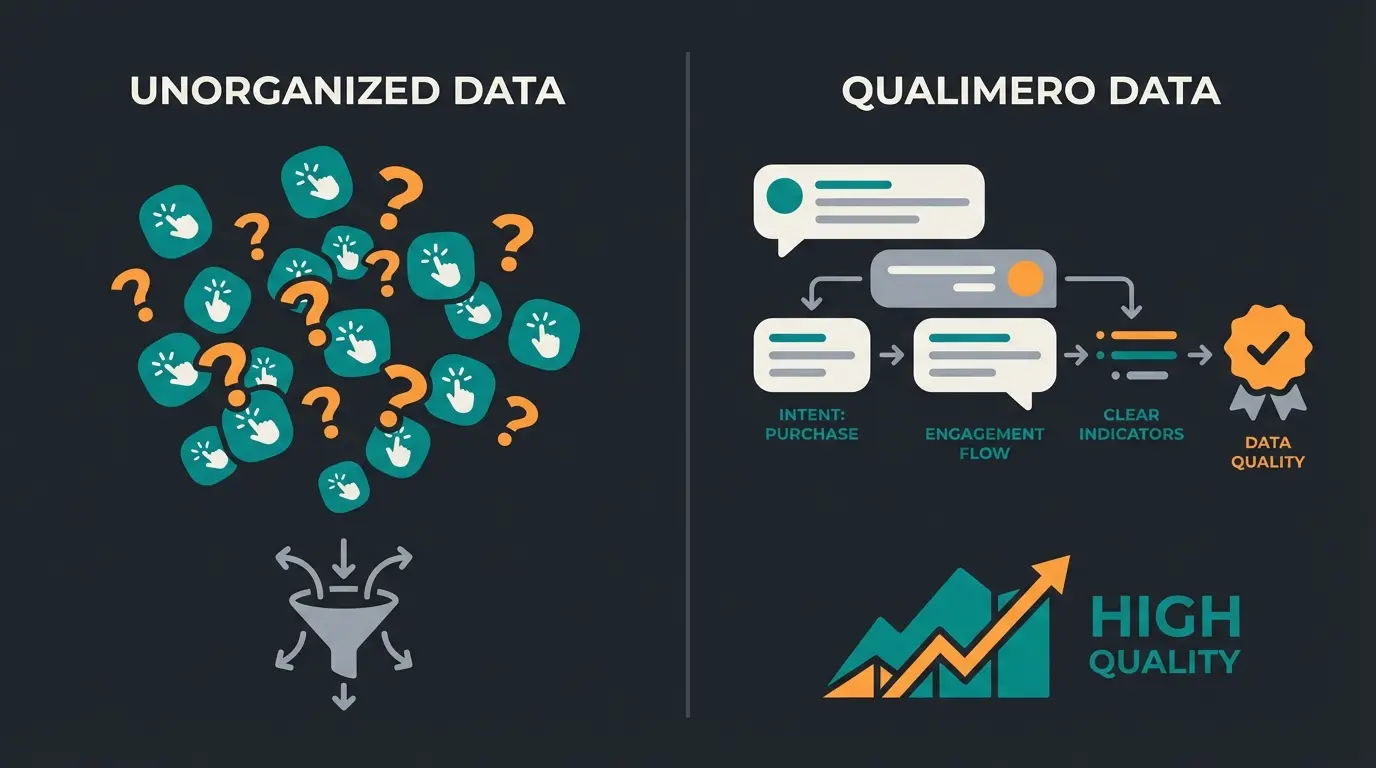
The Game Changer: AI Lead Scoring Through Consultation
Here's the paradigm shift that's revolutionizing lead qualification: instead of passively tracking anonymous clicks, engage prospects in meaningful dialogue. This conversational approach—where AI-powered product consultation simultaneously helps and qualifies—represents the most significant advancement in lead scoring methodology in a decade.
Consultation Is Qualification
Traditional workflows follow a linear path: collect data, score leads, then provide consultation. Conversational AI flips this model: the consultation itself becomes the qualification mechanism. As the AI helps prospects find solutions, it naturally uncovers budget, timeline, authority, and need—the classic BANT criteria—through helpful dialogue rather than interrogative forms.
When a prospect asks 'Does this integrate with Salesforce?' they're revealing their tech stack and integration requirements. When they inquire about 'pricing for a team of 50,' they're disclosing company size and potential deal value. When they ask 'Can we implement this before Q4?' they're sharing timeline urgency. Every question is a qualification signal.
Zero-Party Data: The Gold Standard
Conversational qualification captures what marketers call 'zero-party data'—information customers intentionally and proactively share. Unlike third-party data purchased from external sources or first-party data inferred from behavior, zero-party data comes directly from the prospect's own words about their needs, preferences, and intentions.
This data is inherently more accurate because there's no inference or assumption involved. When a prospect tells your AI consultant 'We have a budget of €50,000 allocated for this initiative,' that's dramatically more reliable than inferring budget from company size proxies. Zero-party data eliminates the guesswork that plagues traditional scoring.
Real-Time Score Updates During Live Interaction
AI conversational scoring operates in real-time, updating qualification assessments with every exchange. The moment a prospect reveals high-intent signals—specific product questions, implementation timeline discussions, budget confirmations—the system can immediately alert sales teams or even facilitate a warm handoff within the same session.
This real-time capability transforms the traditional funnel. Instead of leads going cold between scoring and outreach, sales can engage at the precise moment of peak interest. The window between intent expression and sales contact collapses from days to seconds.
Higher lead scoring precision through direct qualification vs. behavioral inference
Reduction in lead processing time through real-time qualification
Lower processing costs per lead compared to traditional methods
Higher conversion rates among conversationally qualified leads
Practical Comparison: Static Forms vs. AI Consultant
To understand the transformative potential of conversational qualification, let's examine two scenarios representing the traditional and modern approaches to lead capture and scoring.
Scenario A: Traditional Form-Based Capture
A prospect visits your website interested in your solution. They encounter a gated whitepaper requiring name, email, company, job title, and phone number. The form creates friction—many prospects abandon rather than complete it. Those who do provide minimal information, often with fake phone numbers to avoid sales calls.
The lead enters your system with sparse data. Your scoring algorithm assigns points based on job title and company size—if provided accurately. Behavioral scoring adds points as the prospect browses your site over subsequent visits. Days or weeks later, the lead crosses a scoring threshold and gets assigned to sales. By then, the prospect may have already solved their problem elsewhere.
Scenario B: AI Consultation Experience
The same prospect arrives and is greeted by an AI consultant offering immediate help: 'I can help you find the right solution for your needs. What challenge are you trying to solve?' The conversation begins—no form required, no friction created.
As the dialogue progresses, the AI naturally learns that the prospect is a VP of Operations at a mid-market manufacturing company, struggles with production scheduling inefficiencies costing €200,000 annually in overtime, has budget approval pending Q3 board review, and needs implementation before peak season in October.
Within minutes, the AI has captured detailed BANT qualification data through helpful consultation. The prospect received value (guidance toward relevant solutions) while the system gathered rich qualification insights. If intent signals cross the threshold, a human sales rep can join the conversation in real-time while interest peaks.
| Dimension | Traditional Form-Based | Conversational AI |
|---|---|---|
| Data Source | Cookies, forms, third-party data | Zero-party data from direct conversation |
| Data Timing | Delayed batch processing | Real-time continuous updates |
| Data Accuracy | Low (inferred, often incomplete) | High (explicitly stated by prospect) |
| User Experience | Passive tracking, friction forms | Active assistance, value exchange |
| Context Capture | None (actions without reasons) | Rich (intent, objections, requirements) |
| Sales Handoff | Delayed by hours or days | Instant at peak interest moment |
Technical Foundations of AI Lead Scoring
Understanding the technology powering modern AI lead scoring helps organizations evaluate solutions and set realistic implementation expectations. The technical infrastructure has matured significantly, making enterprise-grade conversational qualification accessible to mid-market companies.
Machine Learning Algorithms in Lead Scoring
The technical foundation of AI lead scoring consists of machine learning algorithms that learn from historical data and recognize patterns. These systems analyze various data points including company characteristics, interaction behavior, and demographic information.
Compared to traditional lead scoring, AI-powered systems offer decisive advantages: the algorithms continuously adapt to new data and automatically refine their evaluation criteria. This enables significantly more precise prediction of purchase probability. Natural Language Processing (NLP) capabilities allow the system to understand not just what prospects do, but what they mean when they communicate.
Relevant Data Types and Integration
For effective lead evaluation, AI systems analyze various data sources including firmographic data (company size, industry, location), behavioral data (website visits, download activities), engagement metrics (email interactions, social media activities), and technographic data (technologies used, IT infrastructure).
The integration of this data occurs through modern API interfaces and enables holistic evaluation of each lead. AI systems can also consider indirect signals such as interaction timing or visit patterns, weighted against conversational insights for comprehensive qualification.
Process Optimization Through AI
Automated data processing through AI significantly reduces manual evaluation processes. Simultaneously, lead evaluation quality increases through the consideration of numerous factors that human analysts could hardly capture simultaneously. The combination of behavioral tracking and conversational intelligence creates scoring accuracy previously impossible at scale.
Discover how conversational AI qualification can transform your lead scoring accuracy and sales efficiency. Book a personalized demo to see real-time intent detection in your industry.
Schedule Your DemoSystem Components for AI Lead Scoring
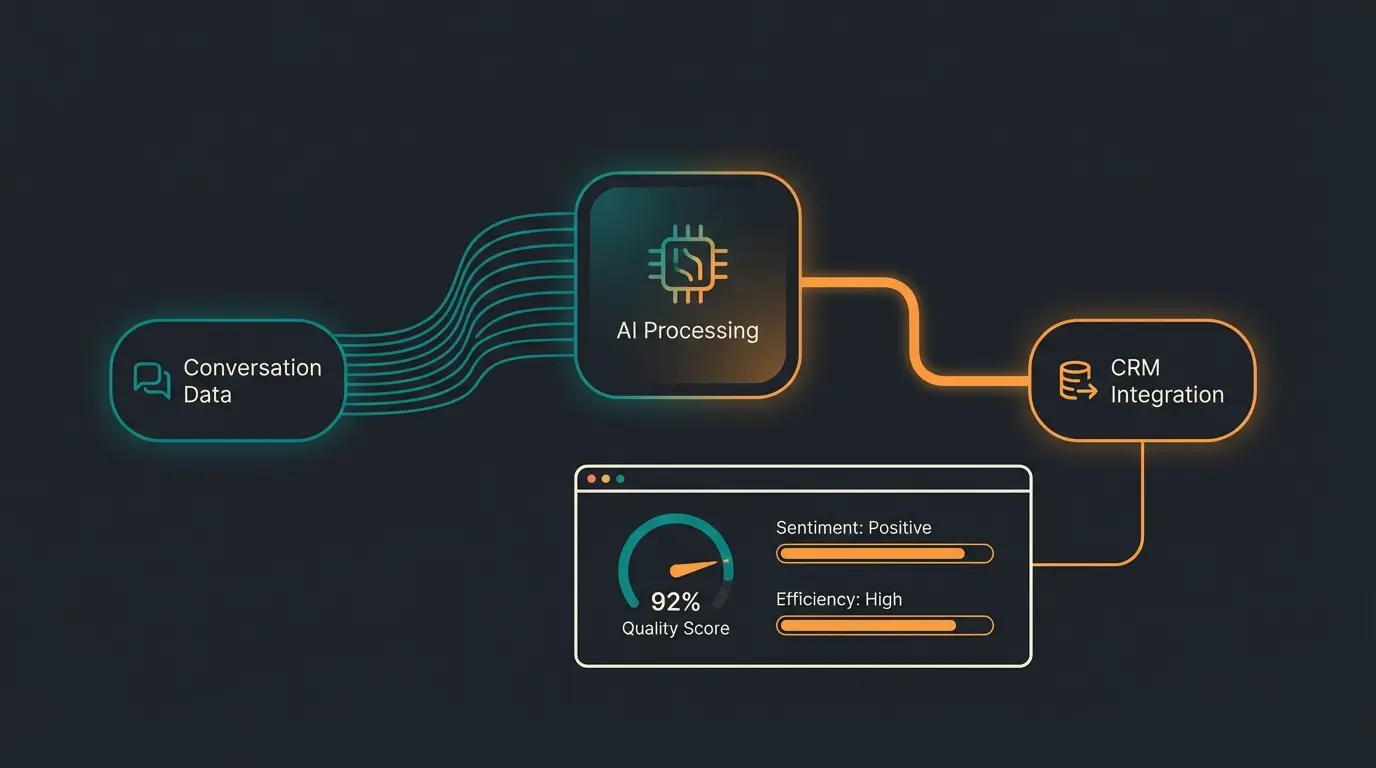
An effective AI lead scoring system is built on three central pillars: technical infrastructure, integration of various data sources, and CRM connection. These components work seamlessly together to generate precise evaluations of potential leads.
Technical Infrastructure Requirements
The foundation of an AI lead scoring system forms a powerful technical infrastructure. This includes databases, analysis tools, and processing units. Machine learning algorithms process large amounts of data and identify relevant patterns in customer behavior. A cloud-based solution provides the necessary scalability and flexibility.
Modern implementations typically require secure API connectivity, webhook capabilities for real-time notifications, and sufficient processing power to handle concurrent conversations. Data encryption and privacy compliance (particularly GDPR for European operations) must be built into the architecture from the start.
Data Source Integration
Integration of various data sources enables holistic evaluation of leads. This includes website activities, social media interactions, and AI-powered customer service data. Linking this information creates a comprehensive picture of the prospect and their purchase readiness.
CRM Connection and Customer Service Integration
Connection to the CRM system is crucial for functional lead scoring. The system automatically collects and analyzes customer interactions, communication histories, and sales records. This integration enables dynamic adjustment of scoring criteria based on actual sales successes.
The Iceberg: What Conversational AI Uncovers
Traditional lead scoring only captures what's visible above the surface. Conversational AI qualification dives deep beneath the waterline to reveal the intelligence that actually predicts purchase behavior.
Above the Surface: Traditional Scoring Data
Conventional scoring systems track the visible: page views, content downloads, email opens, webinar registrations, and form submissions. This surface-level data is easy to collect but limited in predictive value. It tells you that something happened without explaining why or what it means for purchase likelihood.
Below the Surface: Conversational Intelligence
Through natural dialogue, AI consultation uncovers the critical intelligence hidden below: specific budget ranges and approval status, implementation timelines and urgency drivers, technical requirements and integration needs, decision-making process and stakeholder involvement, competitive alternatives under consideration, past vendor experiences and relationship preferences, and specific pain points with quantified business impact.
This below-the-surface intelligence represents the difference between knowing a prospect visited your pricing page and knowing they have approved budget, urgent timeline, and specific technical requirements your solution perfectly addresses.
Practical Benefits and ROI Analysis
AI lead scoring delivers measurable improvements across the entire sales and marketing operation. The return on investment becomes evident through multiple value drivers working in combination.
Measurable Improvements
AI lead scoring leads to significant improvements in lead qualification. Automated evaluation reduces manual processes by up to 80% and measurably increases lead evaluation accuracy. AI-based product consultation supports precise assessment of customer interest while simultaneously providing prospect value.
ROI Analysis
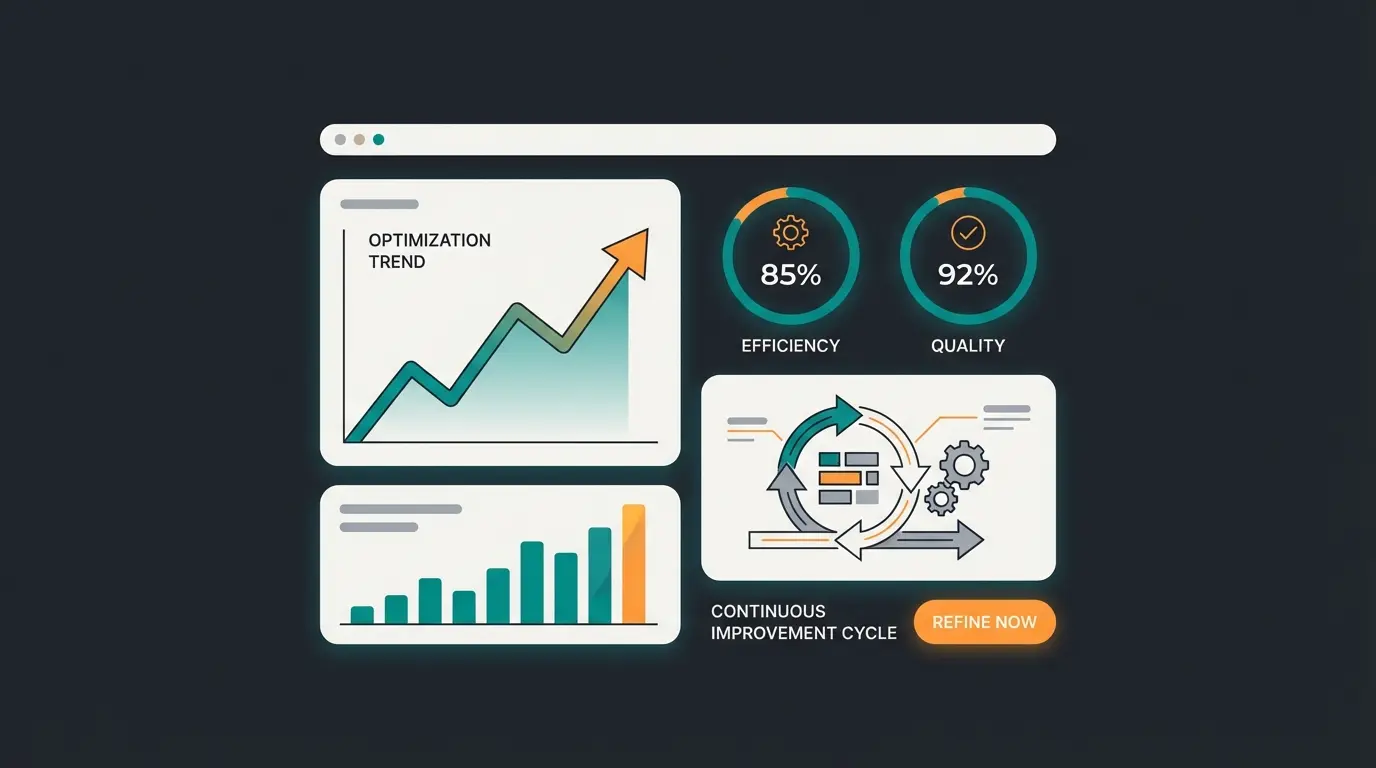
The investment in AI lead scoring pays off through multiple factors. Cost reduction reaches 60% lower processing costs per lead. Efficiency gains show 40% higher conversion rate among qualified leads. Time savings deliver 70% faster lead processing. Quality improvements demonstrate 85% more accurate lead evaluation compared to traditional methods.
Efficiency Gains Across the Organization
Automation through AI enables sales teams to focus on promising leads. The system automatically prioritizes leads with high closing probability and optimizes resource distribution in sales. This focus leads to measurable increases in sales closings while reducing burnout from chasing unqualified prospects.
Product Consultation and Scoring Synergy
The integration of AI into product consultation additionally improves lead evaluation quality. The system analyzes interest in specific products and derives valuable insights for scoring. This connection enables more precise assessment of purchase readiness and supports sales representatives in targeted outreach.
Three Steps to Modern Lead Scoring Implementation
Transitioning to conversational AI qualification requires structured implementation. These three steps provide a roadmap for organizations ready to move beyond click-counting.
Document the specific characteristics, behaviors, and conversation signals that indicate high-value prospects. Include qualification questions and buying signals unique to your sales process.
Move beyond clicks to map the specific phrases, questions, and discussion topics that indicate purchase intent. 'What's your integration process?' signals more than ten page views.
Configure immediate alerts and warm handoffs when conversations reveal high-intent signals. The goal: human engagement at peak interest moment.
Implementation Guide: Technical Requirements
A structured implementation process forms the foundation for successful AI lead scoring. Technical integration begins with thorough analysis of existing systems and data sources.
The basis for AI lead scoring forms a solid technical infrastructure. Central is a CRM system that supports lead capture and processing. Data quality plays a decisive role—it must be consistent and current. Automated lead generation optimally complements the process.
A cloud-based solution provides necessary scalability and enables integration of various data sources. Systems must work GDPR-compliantly and provide secure interfaces.
Implementation Steps
Step-by-step introduction of AI lead scoring follows a clear plan. The data analysis phase involves evaluating existing customer data and defining relevant scoring criteria. System setup integrates the AI solution into existing CRM systems. Model training calibrates AI algorithms with historical data. The testing phase runs parallel operation with manual scoring for validation. Go-live involves gradual takeover by the AI system.
Integration and Training
Employee involvement is crucial for success. Sales teams need training on working with the new system. AI-powered customer service must understand and utilize lead evaluations. Cross-functional alignment between marketing, sales, and customer success ensures consistent lead handling throughout the customer journey.
Best Practices and Error Prevention
Successful implementation of AI lead scoring requires attention to details and potential pitfalls. These practical recommendations help with optimal implementation.
- Data Consistency: Regular review and cleansing of the data base for precise scoring results
- Integration: Seamless connection with existing CRM and marketing automation systems
- Testing Phase: Conduct A/B tests to validate scoring models before full deployment
- Employee Training: Regular training for the sales team on effective use of AI insights
- Feedback Loops: Establish mechanisms for sales to report on lead quality accuracy
Common Mistakes to Avoid
During AI lead scoring implementation, frequently avoidable errors occur. Overweighting individual data points can lead to distorted results. Balanced weighting of various factors is essential for scoring accuracy. Regular adjustments of scoring criteria based on actual sales successes optimize accuracy.
Avoid rushing implementation without adequate testing phases. The most common errors arise from inadequate data maintenance and insufficient employee training. Pay attention to balanced weighting of scoring criteria and resist the temptation to over-engineer initial implementations.
Optimization Strategies
Begin with clear definition of scoring criteria. AI sales processes must be transparent and traceable. Establish regular reviews of score quality and adjust criteria as needed based on outcome data.
Conduct regular analyses of scoring results. Use feedback from sales to improve algorithms. A continuous improvement process ensures lead evaluation quality and alignment with evolving market conditions.
Future Outlook: Where AI Lead Scoring Is Heading
AI-based lead qualification continues to evolve, bringing new technologies and possibilities. Current developments show that machine learning and Natural Language Processing continuously improve lead evaluation accuracy.
Current AI Developments
The integration of AI-powered sales processes enables more precise prediction of purchase behavior. New algorithms analyze not only structured data but also communication patterns from customer service and social interactions.
Technology Trends 2025 and Beyond
AI-powered lead generation increasingly connects with expanded analysis methods. This development enables even more accurate assessment of lead quality.
- Predictive Analytics: Forecasting models use historical data to evaluate future purchase probabilities with increasing accuracy
- Real-time Scoring: Dynamic adjustment of lead scores based on current interactions, enabling instant sales engagement
- Multimodal Scoring: Integration of text, voice, and visual data into qualification assessment
- AI Automation: Automated adjustment of scoring models through self-learning systems that improve without manual intervention
- Sentiment Analysis: Understanding emotional signals and buying readiness through conversation tone analysis
Future Perspectives
AI-powered product consultation will develop with lead scoring into a holistic system. Companies benefit from automated, precise lead qualification with simultaneous cost savings and increased conversion rates.
The integration of enhanced privacy technologies will improve data security and transparency in lead scoring while maintaining compliance with evolving regulations. Simultaneously, new AI models enable even more accurate personalization of customer outreach and lead evaluation, creating virtuous cycles of improvement.
Frequently Asked Questions
Traditional lead scoring relies on manual point assignment based on demographics and behavioral data like clicks and downloads. AI-powered lead scoring uses machine learning to analyze patterns, predict purchase intent, and—in conversational implementations—capture zero-party data directly from prospect conversations for dramatically higher accuracy.
Conversational AI captures explicit statements from prospects about their needs, budget, timeline, and requirements—zero-party data that's far more accurate than inferred behavioral signals. When a prospect tells an AI consultant they have €50k budget and need implementation by Q4, that's definitive qualification data, not an inference from page visits.
Companies typically see 35% higher conversion rates, 60% lower lead processing costs, 70% faster qualification cycles, and 85% improvement in scoring accuracy. The ROI accelerates over time as machine learning models improve from accumulated data and outcome feedback.
A phased implementation typically spans 8-12 weeks: 2-3 weeks for data analysis and criteria definition, 2-3 weeks for system integration and configuration, 2-4 weeks for model training with historical data, and 2 weeks for parallel testing before go-live. Organizations with clean CRM data can often accelerate this timeline.
Yes, modern AI lead scoring solutions integrate with major CRM platforms (Salesforce, HubSpot, Microsoft Dynamics, etc.) through APIs and native connectors. The key requirement is bidirectional data flow—scoring insights must update CRM records while CRM data informs scoring model refinement.
Conclusion: Quality Over Quantity
The era of click-counting lead scoring is ending. As B2B buying journeys become more complex and prospects grow increasingly sophisticated, the limitations of traditional scoring become untenable. Measuring activity without understanding intent creates false confidence and wasted resources.
Conversational AI qualification represents more than an incremental improvement—it's a fundamental shift in how organizations identify and prioritize sales opportunities. By engaging prospects in helpful dialogue, companies simultaneously provide value and gather the rich qualification intelligence that predicts purchase behavior.
The organizations winning in today's competitive landscape aren't those with the most leads or the most sophisticated click-tracking. They're the ones engaging prospects in meaningful conversations, understanding specific needs, and responding at the moment of peak intent. Stop chasing points. Start having conversations that qualify.
Ready to move beyond clicks and downloads? Discover how conversational AI can qualify leads through helpful consultation while delivering dramatically higher conversion rates.
Start Your Free Trial