Introduction: The Silent Profit Killer
If you run a Shopify store, you know the feeling: your revenue dashboard shows green numbers, but at the end of the month, actual profits look sobering. The reason often hides in your return rate.
Current studies from the EHI Retail Institute show that processing returns costs an average of €10 to €20 per item, according to Spiegel. These costs comprise:
- Shipping and return shipping fees
- Personnel costs for inspection and refurbishment (ironing, repackaging)
- Depreciation of goods (B-stock)
- Lost Customer Lifetime Value (CLV)
While large players like Amazon or Zalando absorb these costs through sheer volume and mixed calculations, a return rate of 30% can be existentially threatening for small and medium-sized Shopify brands.
Most merchants respond with reactive management: they install apps to print return labels faster. This is important but doesn't solve the core problem. In this article, we'll show you the path from mere managing to preventing—through the use of new AI technologies that function as the next generation of Shopify returns apps.
Average return rate in German e-commerce varies dramatically by industry
Processing costs before accounting for lost revenue
Percentage who ignore or misunderstand static size charts
1,000 orders at 20% returns at €15 each equals significant margin erosion
The Basics: Setting Up Native Shopify Returns
Before we discuss AI and strategy, the fundamentals must be in place. Shopify has massively improved its native Shopify returns functions in recent updates (especially since Winter '23/24). For many starter shops, this solution is initially sufficient.
Prerequisite: New Customer Accounts
To use the native "Self-Serve" returns function, you must switch to New Customer Accounts. The classic accounts with password login don't support this feature, as confirmed by Froonze and Shopify's official documentation.
The Difference:
- Classic: Customer logs in with email and password.
- New: Customer enters email and receives a 6-digit one-time code (One-Time Password) via email. This is more secure and reduces support tickets for forgotten passwords.
Guide: Activating Self-Serve Returns
According to Sunrise Integration, here's the step-by-step process:
- Open Admin Area: In your Shopify Admin, click on `Settings` in the bottom left.
- Select Customer Accounts: Click on `Customer accounts`.
- Switch Over: Ensure in the "Accounts in online store and checkout" section that the Edit option is selected and activate New Customer Accounts.
- Activate Self-Serve: Scroll down to the "Self-serve returns" section. Check the box for Turn on return requests, as detailed by Shopify Help and SyncTrack.
Defining Return Rules
For the system to know what's allowed, you need to establish rules. YouTube tutorials provide detailed walkthroughs:
- Return Period: Standard is 14 days (legally required in Germany) or 30 days (customer-friendly).
- Return Shipping Costs: Determine whether the customer or you pay for shipping.
- Restocking Fee: You can define percentage fees for returns (Caution: legally complex in Germany, more on this later).
- Exceptions: Define "Final Sale" items that cannot be returned (e.g., hygiene products, personalized goods).
The Process from the Customer's Perspective
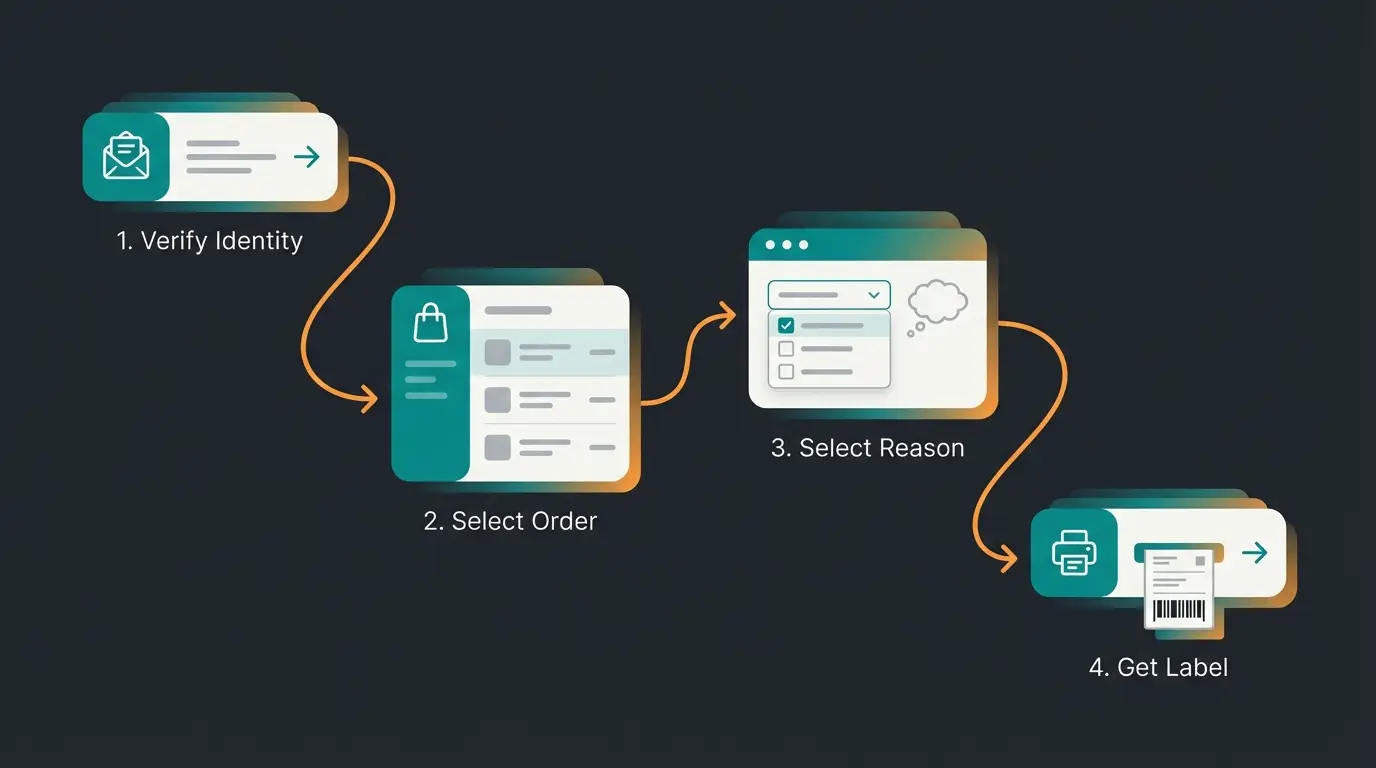
After activation, the process looks like this for your customers:
- Customer clicks on the profile icon in the shop or a "Request Return" link.
- Enter email address -> Receive code via email -> Login.
- Overview of orders is displayed.
- Click "Request Return" for the corresponding order.
- Select the reason (e.g., "Too small", "Don't like it").
- You receive the request in the backend, review it, and approve it.
- Shopify sends (if configured) the label to the customer.
Why Returns Really Happen: A Data Analysis
To lower your Shopify return rate, we need to understand why customers send products back. A look at the data paints a clear picture, especially in the fashion sector.
The Top Reasons for Returns
According to research from Shopify, Bloomreach, and ReadyCloud:
- Fit & Size (approx. 50-60%): "Too small", "Too big", "Cut doesn't fit body type".
- Bracketing (Selection Orders): Customers intentionally order size M and L to keep one and return the other.
- Product Doesn't Match Description: Color looks different, material feels different.
- Damage / Defect: Classic warranty case.
- Change of Mind: Regretted impulse purchase.
The Problem with Bracketing
The bracketing phenomenon is extremely prevalent in German e-commerce. Customers use their living room as a fitting room. This is convenient for the customer but toxic for your margins.
- You pay outbound shipping for 2 items.
- You pay return shipping for 1 item.
- You have refurbishment costs for 1 item.
- The item is "out of stock" for other customers for 1-2 weeks while it's at the customer's home.
The Insight: Most returns aren't "product errors" but customer uncertainties at the moment of purchase. Static size charts are ignored or misunderstood by 80% of mobile users. This is where the lever for real optimization lies. Understanding this is crucial for implementing AI-powered return prevention strategies effectively.
Strategy 1: Reactive Management (Apps & Logistics)
The first line of defense is an efficient Shopify returns management system. When a return happens, it must be processed as quickly, cheaply, and customer-friendly as possible. This is where specialized apps come into play that can do far more than Shopify's native solution.
Why Use External Apps?
In contrast to native Shopify, apps like 8returns, Sendcloud, or ReturnZap offer:
- Automated Labels: Instant download of DHL/Hermes labels (no manual creation by you).
- Exchange Logic: "Would you prefer size L or a voucher with 5% bonus instead of a refund?" (Saves revenue!).
- Branding: The returns portal looks exactly like your shop, not like a technical Shopify page.
- Analytics: Detailed evaluation of return reasons per product.
Top Shopify Returns Apps Compared
| App | Focus | Special Feature | Pricing Model |
|---|---|---|---|
| 8returns | Branding & UX | Very strong focus on design and self-service. Excellent exchange functions to avoid refunds. | From approx. €109/month (incl. 100 returns) |
| Sendcloud | All-round Logistics | Combines shipping & returns. Strong if you use many different carriers (DHL, DPD, UPS). | From approx. €29 + label costs |
| Pickware / Xentral | ERP & Warehouse | If you have your own warehouse. Returns are directly posted in the merchandise management system. | Part of ERP price |
| ReturnZap | Flexibility | Good integration, often cheaper entry, supports many rules. | From approx. $19/month |
Detailed pricing information is available from Shopify App Store listings, PickYourApp, Sendcloud, Latori, and ReturnZap.
The Limits of Reactive Management
These tools are fantastic for reducing process costs. They make returns cheaper and faster. But: They don't prevent the return.
Even with the best app in the world, you still have shipping costs and blocked inventory. To truly increase profitability, we need to intervene one step earlier: Before the click on "Buy".
See how AI-powered product consultation reduces return rates by 25%+ through intelligent pre-purchase guidance. No more bracketing, no more size uncertainty.
Start Free TrialStrategy 2: Preventive Management with AI
Welcome to the "Third Era" of returns management:
- Manual: Writing emails, maintaining Excel lists.
- Automated: Returns portals (8returns, etc.).
- Preventive: AI-powered shopping consultation.
The Concept: Consultation Instead of Support
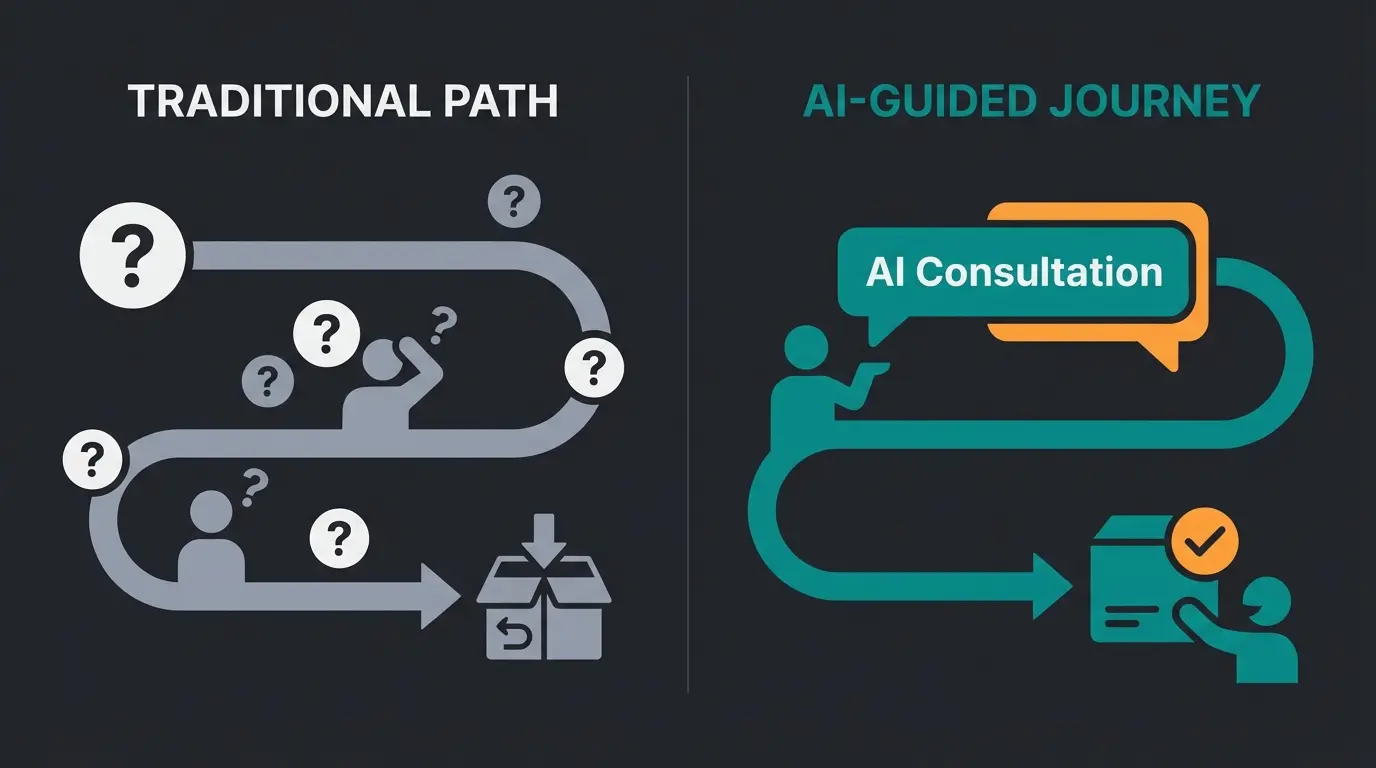
Why do customers order two sizes? Because they're unsure. Why are they unsure? Because an online shop is normally "silent." In a physical store, a salesperson looks at the customer and says: "This shoe runs small, better take a size up." In online retail, this instance is missing—until now.
New AI product consultation assistants fill this gap. They're not simple chatbots that recite FAQs. They're trained product advisors that understand customer needs and guide them to the right purchase decision.
How AI Reduces Return Rates
1. Active Size Consultation Against Bracketing
Imagine a customer adds running pants in size M and L to their cart.
- Without AI: The purchase goes through. Return is pre-programmed.
- With AI: The assistant recognizes the pattern or proactively asks: "Hey, I see you're torn between M and L. This model has a very stretchy waistband. If you use it for yoga, M is enough. For running, customers often recommend L for more freedom. What's your main sport?"
This type of intelligent AI chatbot engagement transforms uncertain browsers into confident buyers.
2. Semantic Analysis of Customer Questions
Customers often ask questions indirectly. An AI tool analyzes questions like "Is the fabric scratchy?" on the product page. If such questions accumulate, the AI adapts its consultation or reports to you: "Product description for item XY is misleading, please adjust."
This connects directly to AI customer service automation, where intelligent systems learn from every interaction to improve future consultations.
3. Visualization & Fit Prediction
Advanced tools use AI to predict the perfect fit based on minimal customer input (height, weight, preferred brands). This goes far beyond static tables and represents the future of automated product consultation.
Browsing products with purchase intent but sizing uncertainty
Proactive guidance based on customer profile and product specifics
AI suggests optimal size/variant based on intended use and preferences
Customer buys the right product the first time
Product matches expectations, no return necessary
The ROI of AI Prevention
Let's do the math:
- A shop with 1,000 orders/month.
- Return rate: 20% (200 returns).
- Cost per return: €15.
- Total return costs: €3,000/month.
If an AI consultant reduces the rate to just 15% through better consultation (50 fewer returns):
- Direct savings: €750.
- Plus: Higher conversion rate as uncertain customers still buy.
- Plus: Less CO2 emissions from reduced shipping.
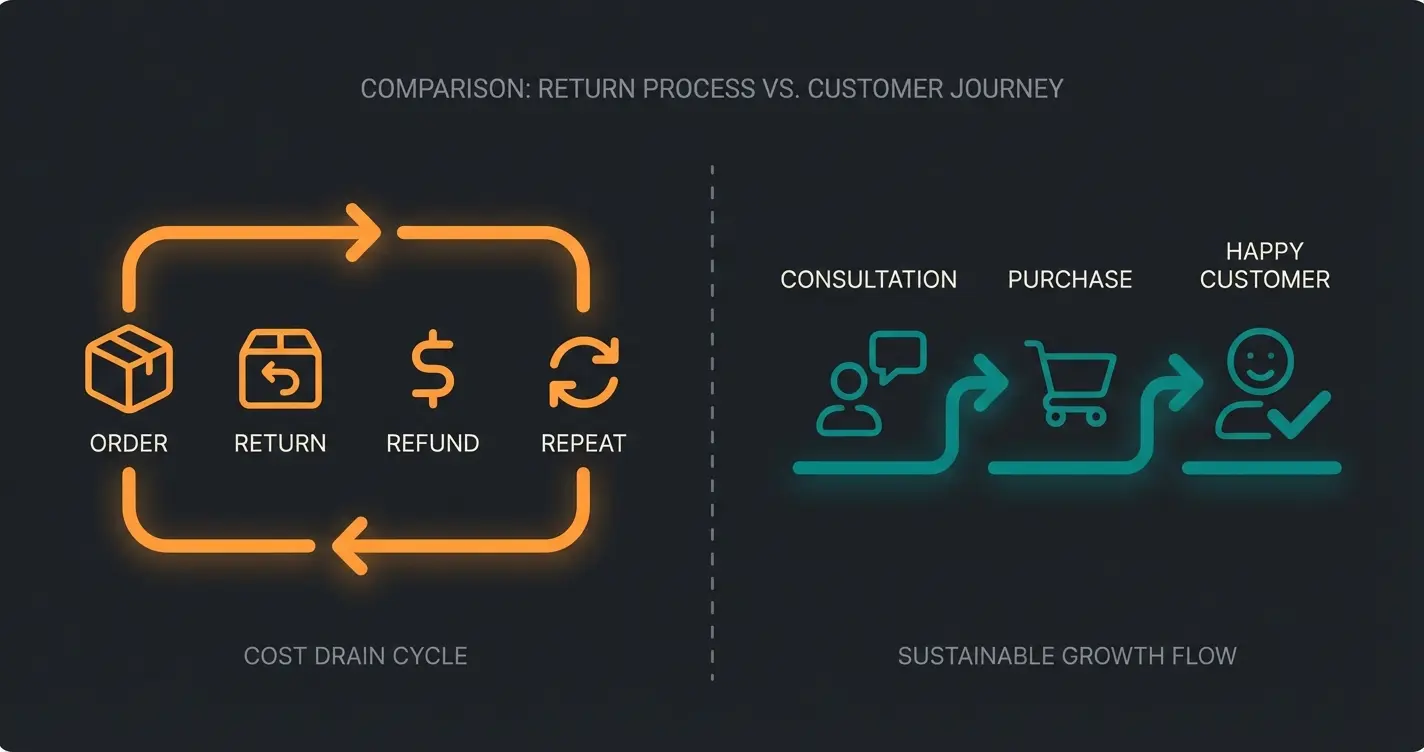
Strategy Conclusion: While returns apps fight the symptoms (managing the return), AI fights the cause (the wrong purchase decision). This is similar to how AI cart abandonment prevention addresses issues before they impact revenue.
The Returns Cost Iceberg
Most merchants only see the visible shipping costs of returns. But like an iceberg, the majority of costs hide beneath the surface:
| Visible Costs (Above Water) | Hidden Costs (Below Water) |
|---|---|
| Return shipping (€5-8) | Customer support time (15-30 min per case) |
| Refund processing fees | Packaging and materials for inspection |
| Label printing | Product cleaning and refurbishment |
| Damaged goods written off as B-stock | |
| Lost Customer Lifetime Value | |
| Inventory blocked during return process | |
| Opportunity cost of lost sales |
When you factor in all hidden costs, each return can cost 3-4x what merchants typically budget. An AI employee in e-commerce can dramatically reduce these costs by preventing returns at the source.
Legal Framework: Right of Withdrawal in Germany
A Shopify returns article for the German market wouldn't be complete without the legal framework. Germany is extremely consumer-friendly, which poses challenges for merchants. Understanding withdrawal rights and return prevention is essential for compliance.
The Right of Withdrawal (14 Days)
In the EU, consumers fundamentally have a 14-day right of withdrawal without giving reasons.
- Deadline: Starts from receipt of goods.
- Exceptions: Sealed hygiene products (if seal broken), unsealed software/CDs, custom-made goods.
Who Bears the Costs?
According to law, the merchant can pass return shipping costs to the customer, if they informed them in the withdrawal policy before contract conclusion, as noted by Tuuli Shop and Res Fortes.
- Reality: Large players have accustomed customers to "free returns".
- Trend 2024/2025: More and more brands (e.g., Zara, Uniqlo) are introducing return fees (e.g., €2.95) deducted from the refund amount. This is an effective measure against "fun orderers" but potentially lowers conversion rate.
The Checkbox in Checkout
Many merchants ask: "Does the customer need to actively click a checkbox for Terms & Conditions/Withdrawal in Shopify Checkout?"
- Legal Situation: No, an active checkbox is usually not mandatory in Germany according to Händlerbund and IT-Recht-Kanzlei, as long as links to Terms & Conditions and Withdrawal are clearly visible and transparently linked before purchase completion ("By placing your order, you accept our Terms..."), as explained by Shopify community discussions and IT-Recht-Kanzlei.
- Shopify Setup: Shopify doesn't offer a checkbox in the standard checkout (only customizable with Shopify Plus). The solution is the "Review notice html" text block in language settings to insert the legal notice including links.
For shops dealing with complex products, understanding AI consultation obligations in online retail is increasingly important for compliance.
Reactive vs. Preventive: A Clear Comparison
To understand why the shift to prevention matters, let's compare both approaches directly:
| Aspect | Reactive Tools (Returns Portals) | Preventive Tools (AI Consultation) |
|---|---|---|
| Primary Goal | Process returns faster | Avoid returns entirely |
| Timing | Post-purchase (after problem occurs) | Pre-purchase (before checkout) |
| Cost Impact | Reduces processing costs by 20-30% | Reduces return volume by 25-40% |
| Customer Experience | Smooth return process | Right product first time |
| Revenue Impact | Saves operational costs | Rescues lost revenue |
| Data Usage | Tracks return reasons | Predicts and prevents issues |
| Integration Complexity | Moderate (logistics focus) | Low to moderate (frontend widget) |
| ROI Timeline | Immediate cost savings | 2-4 weeks to see reduction |
The most successful Shopify merchants combine both approaches: AI prevention as the first line of defense, and efficient processing apps as the backup. This mirrors best practices in Shopware chatbot integration where consultation and support work together.
Checklist: Your Perfect Returns Process
Now combine all elements into a watertight system.
Phase 1: Prevention (Before Purchase)
- Detailed Product Descriptions: Measurements, material feel, care instructions.
- High-Res Images/Videos: Show the product on a model (with model size information).
- Integrate AI Consultant: Implement a tool that answers questions and recommends sizes to stop bracketing.
- Social Proof: Use reviews that address fit ("Runs small").
Phase 2: The Policy (The Rules)
- Withdrawal Policy: Legally compliant (e.g., via Händlerbund/IT-Recht Kanzlei apps).
- Cost Decision: Free returns vs. fee (e.g., €3.50). Tip: Make exchanges free but refunds paid.
- Deadline: 14 days (mandatory) or 30+ days (trust signal).
Phase 3: Processing (After Purchase)
- Set Up Portal: Either Shopify Native (Self-Serve) or App (8returns).
- Automation: Labels should be created automatically (upon approval).
- Communication: Email updates to customer ("Return received", "Refund initiated").
For shops with complex inventory needs, integrating returns with Shopware ERP systems ensures seamless data flow across all operations.
Phase 4: Analysis (Learning)
- Evaluate Data: Which products have the highest rate?
- Feedback Loop: If Product A always comes back due to "too small" -> adjust product page or add AI notice.
Frequently Asked Questions
First, switch to New Customer Accounts in Settings > Customer accounts. Then scroll to 'Self-serve returns' and enable 'Turn on return requests'. Define your return rules including timeframe, shipping costs, and exceptions. Customers can then request returns through their account without contacting support.
According to industry studies, processing a return costs between €10-20 per item. This includes visible costs like shipping and refund fees, plus hidden costs like customer support time, product refurbishment, inventory blocking, and lost customer lifetime value. The total true cost can be 3-4x the shipping cost alone.
Yes, AI-powered product consultation can reduce return rates by 25-40% by addressing the root cause: customer uncertainty. By providing personalized size recommendations, answering product questions in real-time, and identifying when customers are bracketing, AI prevents wrong purchases before they happen.
Yes, merchants can pass return shipping costs to customers if they clearly inform them in the withdrawal policy before purchase. However, the 14-day right of withdrawal itself cannot be restricted. Many brands now charge €2-5 for returns while making exchanges free to encourage keeping products.
Reactive management focuses on processing returns efficiently after they happen using apps like 8returns or Sendcloud. Preventive management uses AI consultation to stop returns before they occur by guiding customers to the right product. The best strategy combines both approaches.
Conclusion: From Managing to Preventing
The topic of Shopify returns has evolved. It's no longer just about shipping packages back and forth. It's about profitability and customer experience.
The native Shopify solution is now a solid foundation for beginners. Apps like 8returns elevate the experience to a professional level and enable revenue-saving exchanges. But the real leverage for 2025 lies in prevention.
Those who use AI not just for SEO texts but for active customer consultation in the shop break the vicious cycle of high marketing costs and high return rates. The technology exists today to guide every customer to exactly the right product—eliminating the need for that return label entirely.
The Three Eras of Returns:
- Manual Era: Email support, Excel tracking, high labor costs
- Automation Era: Self-serve portals, automated labels, improved efficiency
- Prevention Era: AI consultation, predictive guidance, returns eliminated at source
The merchants winning in 2025 and beyond are those who recognize that the best return is the one that never happens. By investing in pre-purchase consultation rather than just post-purchase processing, you protect margins, improve customer satisfaction, and build sustainable competitive advantage.
Don't just rely on a better returns portal. Start where the decision is made: at consultation. Test today how an AI product advisor guides your customers to the right size—and makes the return label obsolete.
Start Free AI Consultation