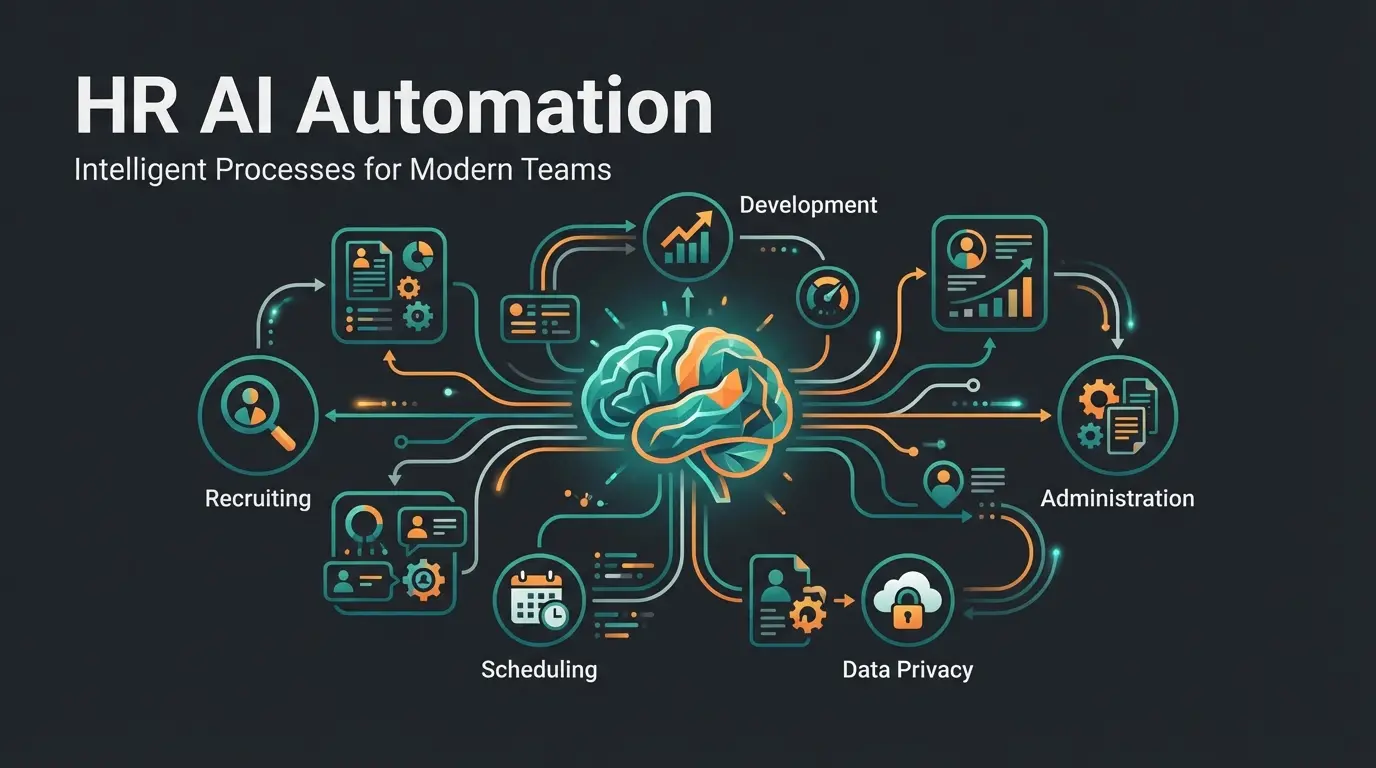
Introduction to AI in Recruiting: Beyond Automation
Artificial intelligence is fundamentally transforming HR work. According to a current Bitkom study, 57% of German companies are already using AI technologies or planning to implement them. Recruiting in particular offers enormous potential for process optimization and quality improvement through AI—but only when implemented correctly.
The fundamentals of artificial intelligence are based on self-learning algorithms that analyze large amounts of data and recognize patterns. In the recruiting context, this means automated analysis of application documents, pre-qualification of candidates, and optimization of candidate communication. However, most current implementations barely scratch the surface of what's possible.
The German recruiting market shows dynamic development: Current market data confirms that 35% of companies already use AI tools in their application process. This rate is continuously increasing as the benefits for HR departments become measurable. Yet here's the critical insight: most of these tools function as little more than digital bouncers—screening out candidates and answering basic FAQs—rather than truly engaging and advising prospective employees.
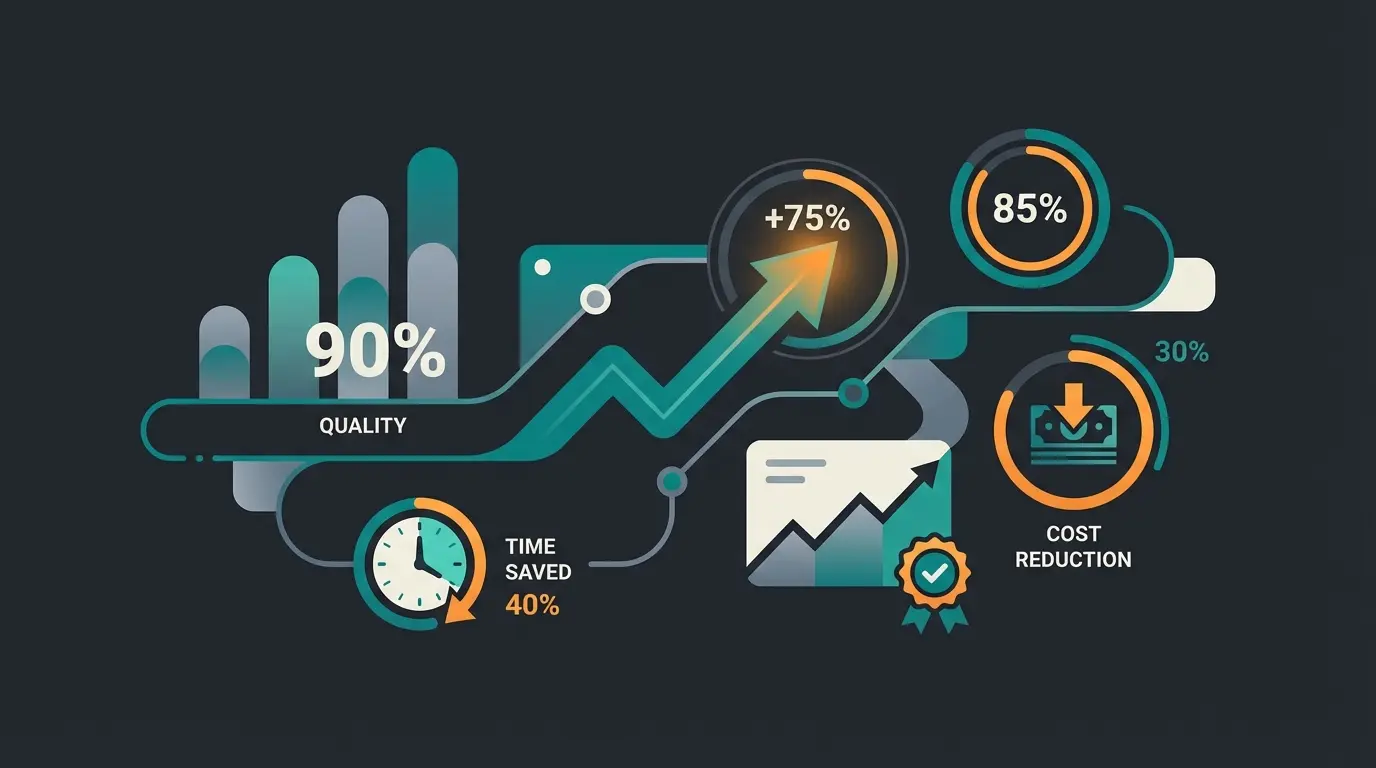
The concrete benefits for HR departments manifest in various areas: Processing time per application reduces by an average of 75%. The quality of candidate selection demonstrably increases through objective, data-driven decisions. Simultaneously, candidate experience improves through faster response times and personalized communication. But these efficiency gains often come at the cost of the human touch that makes candidates feel truly valued and understood.
The Evolution: From FAQ Bots to Consultative AI
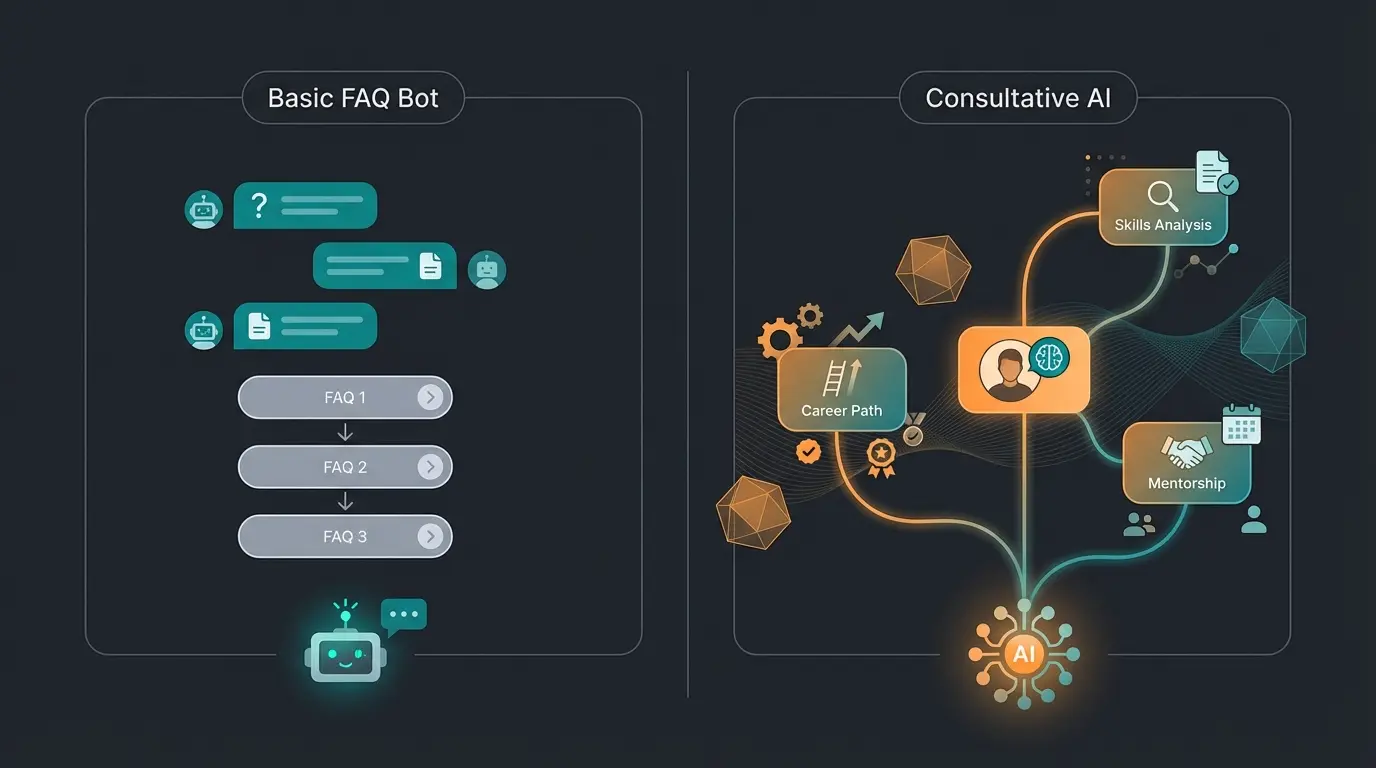
Here's the uncomfortable truth about most AI recruiting tools: they're essentially glorified FAQ machines. Ask them about office location, they respond. Ask about benefits, they provide a list. But ask them whether a specific role aligns with your career aspirations, work-life balance needs, or professional growth trajectory—and they fall silent. This is where the concept of Consultative AI enters the picture.
Think of a job vacancy as a complex product. Just like someone shopping for enterprise software or a sophisticated piece of machinery, candidates have nuanced questions that can't be answered with pre-programmed responses. They want to understand how a role fits their life, their ambitions, their circumstances. Traditional chatbots fail here because they were never designed for this level of consultation.
| Feature | Traditional FAQ Bot | Consultative AI |
|---|---|---|
| Interaction Depth | Reacts to keywords ('What is the salary?') | Asks clarifying questions ('What are your salary expectations based on your experience level?') |
| Primary Goal | Close the ticket, end conversation quickly | Find the perfect match between candidate and role |
| Candidate Feel | Processed and filtered | Understood and valued |
| Conversion Impact | High drop-off rates from confusion | Higher application completion through clarity |
| Human Element | Replaces human interaction | Augments human recruiters by handling informational load |
The shift from administrative AI to consultative AI represents a fundamental reimagining of the recruiting process. Instead of treating candidates as data points to be sorted, consultative AI treats them as valued customers who deserve personalized guidance toward the right opportunity.
Concrete Application Areas for AI in Recruiting
Automated Application Analysis
AI-powered resume analysis enables instant evaluation of application documents. Modern AI systems automatically recognize relevant qualifications, professional experience, and soft skills. The software matches these against the requirement profiles of open positions and creates precise matching results.
But here's where most systems stop—and where consultative AI begins. Beyond simple keyword matching, advanced systems use semantic analysis to understand the context behind a candidate's experience. They can identify transferable skills that might not match job requirements verbatim but indicate strong potential. This moves beyond the 'digital bouncer' model toward genuine talent discovery.
AI Career Advisors for Candidate Communication
Automated candidate communication through AI assistants is revolutionizing the application process. But calling them 'chatbots' undersells their potential. Think of them instead as AI Career Advisors—virtual assistants that don't just answer questions but actively guide candidates toward roles that genuinely fit their aspirations.
Leading providers like Personio and Workday integrate this technology into their recruiting suites. However, the differentiation lies in whether these systems merely schedule interviews and provide status updates, or whether they engage in meaningful consultation about career fit, company culture, and growth opportunities.
AI-Optimized Job Postings
Artificial intelligence analyzes successful job postings and automatically optimizes texts for better performance. The software considers factors such as target audience appeal, gender-neutral language, and SEO relevance. Companies achieve higher visibility for their vacancies and target suitable candidates more effectively.
Advanced Matching Algorithms
The technical foundation of modern matching algorithms consists of neural networks and Natural Language Processing. These technologies analyze both structured data from resumes and unstructured information from cover letters or social media profiles. The success rate for candidate pre-selection with leading systems exceeds 80%.
Critically, the best matching algorithms don't just assess whether someone can do the job—they evaluate whether someone will thrive in the role. This includes analyzing cultural fit indicators, communication style compatibility, and long-term retention likelihood based on career trajectory patterns.
Average decrease in processing time per application
Success rate of leading AI pre-selection systems
German companies using or planning AI in HR
Reduction in cost-per-hire with full AI implementation
The 5 Decisive Advantages of AI in Recruiting
1. Operational Efficiency
This is the standard benefit everyone talks about—and it's real. AI automates repetitive tasks like resume screening, interview scheduling, and status communications. But efficiency alone isn't the goal; it's efficiency in service of quality.
2. Enhanced Objectivity
When properly designed and regularly audited, AI systems can reduce unconscious bias in candidate evaluation. They assess qualifications consistently without being influenced by factors like names, ages, or photos that might trigger human bias.
3. 24/7 Consultation, Not Just 24/7 Answers
Here's where consultative AI truly differentiates itself. Traditional chatbots offer 24/7 availability to answer questions. Consultative AI offers 24/7 availability to actually sell the role—to help candidates understand why a position might be their perfect next career move, or honestly guide them toward a better-fitting opportunity elsewhere in your organization.
4. Deeper Talent Acquisition Insights
Advanced AI doesn't just match keywords—it understands candidate intent. Why is this person looking for a new role? What do they value most? What concerns might prevent them from applying? These insights transform recruiting from a filtering exercise into a genuine talent acquisition strategy.
5. Superior Candidate Experience
When AI handles the informational load—explaining role details, answering process questions, providing personalized guidance—human recruiters can focus on the emotional load. They can build genuine connections, address concerns with empathy, and make candidates feel valued. This hybrid approach transforms the application process from an interrogation into a conversation.
See how consultative AI can improve your candidate experience while reducing time-to-hire. Our intelligent career advisor technology goes beyond simple automation.
Start Free TrialImplementation of AI Recruiting Systems
Successful integration of AI systems into existing recruiting processes requires a structured approach. The following sections show how companies can systematically introduce AI solutions that go beyond basic automation.
Process Analysis
The first step toward integrating AI in recruiting is a thorough analysis of current processes. HR departments must document their workflows and identify optimization potential. A particular focus lies on time-intensive manual activities suitable for automation—but also on touchpoints where candidates currently feel confused, frustrated, or undervalued.
The analysis should include measurable KPIs such as processing times, cost per hire, and quality of candidate selection. But equally important: measure candidate sentiment. Where do people drop off? Where do they express confusion? These data points form the basis for later success monitoring after AI implementation.
System Selection
When selecting an AI system for recruiting, various criteria must be considered. AI-powered personnel selection must integrate seamlessly into existing IT infrastructure while offering genuine consultative capabilities.
- Functionality: Coverage of required recruiting processes plus consultative AI features
- Integration: Compatibility with existing HR systems and career pages
- Data Protection: GDPR compliance and data security (non-negotiable in Germany)
- User-Friendliness: Intuitive operation for recruiters and candidates alike
- Support: Availability of technical support and ongoing optimization
- Consultation Depth: Ability to handle complex, contextual candidate questions
Integration and Testing
Technical implementation ideally occurs in phases. A step-by-step integration process allows for adjustments and systematic employee training along the way.
The testing phase typically encompasses:
- Technical testing of AI functions across various candidate scenarios
- Training recruiters in system usage and understanding AI recommendations
- Parallel operation of old and new systems to ensure continuity
- Fine-tuning AI algorithms based on real candidate interactions
- Evaluation of initial results including candidate feedback
Visitor arrives on career page with questions about opportunities
Consultative AI engages, understands needs, and matches to relevant roles
AI pre-qualifies interested candidates through natural conversation
Recruiter focuses on emotional connection and cultural fit assessment
Data-backed decision with candidate who truly understands and wants the role
Practical Examples of Successful AI Integration
Case Study: Mid-Sized Manufacturing Company
A mid-sized mechanical engineering company with 500 employees introduced AI-powered application analysis. After six months, processing times reduced by 60%. The quality of candidate pre-selection demonstrably increased as the AI matched qualifications more precisely—but more importantly, candidates reported feeling better informed about role expectations before their first interview.
Case Study: Major Retail Corporation
A German retail corporation implemented an AI system for comprehensive recruiting. The results after one year demonstrate the power of consultative AI:
- 40% cost savings per hire
- 70% faster initial response to applications
- 25% higher matching quality based on 6-month retention rates
- 90% positive candidate feedback, with specific praise for 'feeling understood'
ROI Calculation Framework
The concrete savings through AI in recruiting can be calculated based on the following factors:
- Reduced personnel costs through process automation
- Shortened time-to-hire and reduced vacancy costs
- Improved quality of hires measured by retention and performance
- Lower turnover through better matching
- Reduced drop-off rates through consultative candidate experience
- Higher offer acceptance rates from better-informed candidates
The Zero-Click Application: A New Paradigm
Imagine a candidate arriving at your career page and, through a natural conversation with consultative AI, becoming so thoroughly informed and pre-qualified that the formal application becomes almost a formality. The AI has already explored their qualifications, explained the role in depth, addressed their concerns, and confirmed mutual fit. This is the Zero-Click Application paradigm.
Instead of lengthy forms that candidates abandon in frustration, consultative AI transforms the process into a conversation. By the time a candidate officially 'applies,' both parties already know it's a strong match. The traditional application barriers—confusing forms, unclear requirements, unanswered questions—dissolve into a guided consultation experience.
Legal and Ethical Considerations
Legal and Ethical Considerations for AI Recruiting
The integration of AI in recruiting requires careful attention to legal and ethical requirements. The GDPR places particular demands on handling applicant data, and the German General Equal Treatment Act (AGG) adds additional complexity.
GDPR-Compliant Implementation
HR professionals must observe data protection fundamentals when implementing AI systems. Automated processing of applicant data requires clear documentation and candidate consent. Central to compliance is transparency about what data is collected and how it's processed.
AI-based recruiting systems must strictly follow GDPR guidelines. Key aspects include transparent information to applicants about AI usage and their rights to information and deletion of their data. Candidates have the right to know how their data is being evaluated and how AI reaches its recommendations.
Fairness and Non-Discrimination
AI systems in recruiting must demonstrably work fairly and without discrimination. This means:
- Algorithm Testing: Regular checks for bias and skewed outcomes
- Database Balance: Balanced training data from various applicant groups
- Monitoring: Continuous surveillance of decisions for patterns of discrimination
- Documentation: Complete traceability of all processes and decisions
- Human Override: Ability for recruiters to question and override AI recommendations
Documentation Requirements
Complete documentation of AI-supported decision processes is legally required. Companies must be able to demonstrate how AI reaches its recommendations. This includes: documentation of all processed applicant data, explanation of selection criteria used, traceable justification of selection decisions, and regular audits of AI systems for fairness.
Future Perspectives: AI Recruiting Trends for 2025
The current development of AI technology shows clearly: the use of artificial intelligence in recruiting will evolve significantly through 2025 and beyond.
Emerging Technologies
AI systems are becoming more precise in candidate selection and more natural in communication. New technologies enable even better analysis of soft skills and personality characteristics. Video interviews with AI-supported analysis are becoming standard, while consultative AI capabilities deepen to handle increasingly complex career guidance conversations.
- Predictive Analytics: Forecasting candidate suitability based on success factors of existing employees
- Video Analysis: AI-supported evaluation of application videos and virtual interviews
- Semantic Skill-Matching: Automatic alignment of candidate profiles with requirements beyond keywords
- Process Automation: Fully automated pre-selection and scheduling coordination
- Conversational AI: Natural language understanding for genuine career consultation
Success Factors for Implementation
Successful integration of AI in recruiting rests on three pillars: technical infrastructure, employee qualification, and change management. A phased introduction with regular evaluation of results maximizes success prospects.
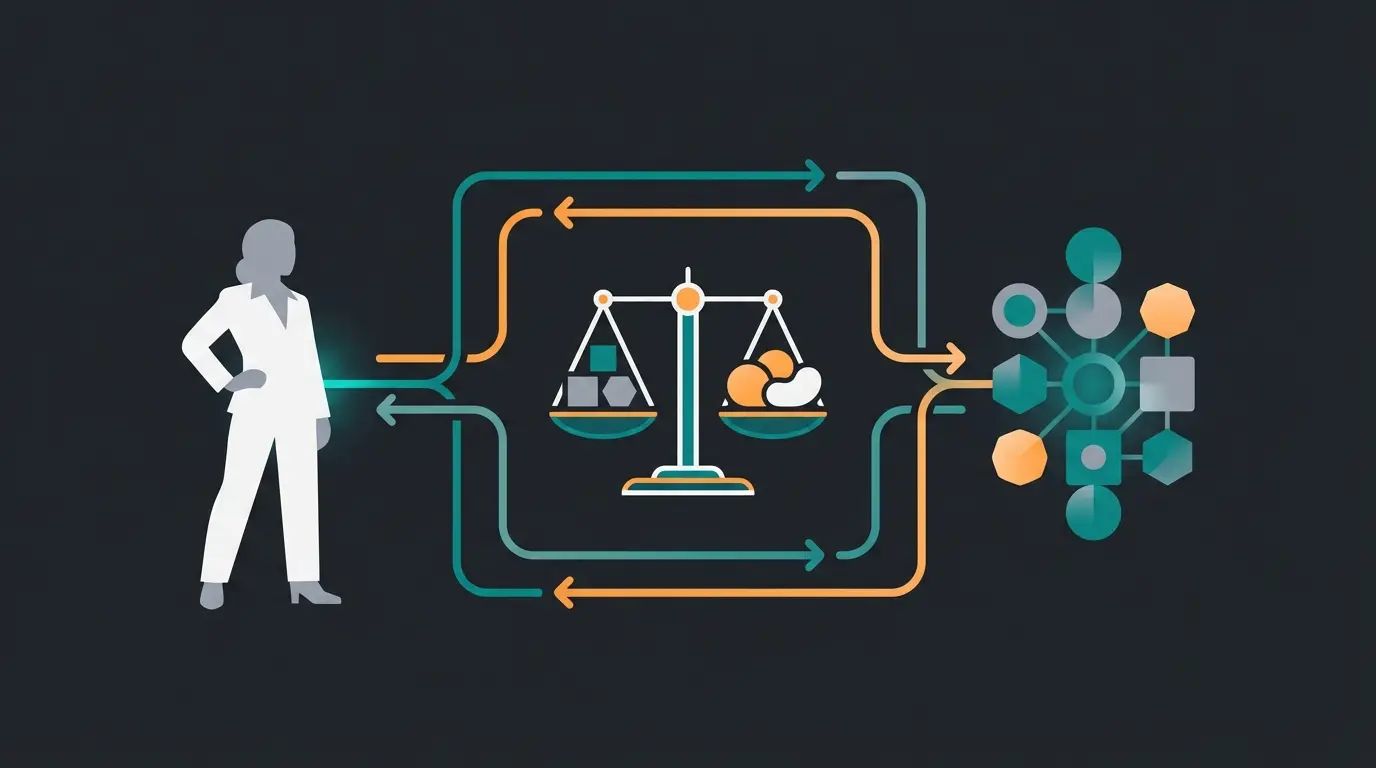
The optimal integration of AI systems enables more efficient processes while maintaining high quality in personnel selection. The key insight: AI should handle the informational and administrative load so human recruiters can focus on relationship-building, empathy, and the irreplaceable human elements of hiring.
Risk Minimization Strategies
Companies can minimize risks in AI implementation through the following measures:
- Pilot Projects: Phased introduction in individual areas before company-wide rollout
- Training Programs: Intensive employee qualification on AI capabilities and limitations
- Backup Systems: Alternative processes for system failures
- Quality Assurance: Regular review of AI decisions with human oversight
- Continuous Improvement: Feedback loops from candidates and recruiters to refine AI behavior
The Human-AI Hybrid: The Optimal Balance
The success of AI in recruiting depends significantly on the balance between automation and human expertise. The future isn't about AI replacing recruiters—it's about AI handling the informational and administrative load while recruiters handle the emotional and relational load.
For a future-proof implementation of AI in recruiting, a structured approach is recommended. The introduction of AI systems should be linked with clear objectives and success measurement. A dedicated project team with both technical and HR expertise guides the implementation.
Frequently Asked Questions About AI Recruiting
No—and this is a crucial distinction. AI in recruiting is designed to augment human recruiters, not replace them. AI excels at handling the informational load: screening resumes, answering candidate questions 24/7, scheduling interviews, and providing data-driven matching recommendations. Human recruiters remain essential for the emotional load: building relationships, assessing cultural fit through nuanced conversation, making final hiring decisions, and providing the empathetic human connection that candidates need during career transitions.
Yes, when implemented correctly. GDPR requires transparency about how candidate data is processed, clear consent mechanisms, the right to explanation of automated decisions, and the right to human review. Companies must document their AI decision-making processes and ensure candidates can request information about how their applications were evaluated. The key is maintaining 'human in the loop' oversight rather than fully automated decision-making.
Costs vary significantly based on company size, feature requirements, and implementation complexity. Basic chatbot solutions may start around €200-500/month, while comprehensive consultative AI platforms with advanced matching capabilities typically range from €1,000-5,000/month for mid-sized companies. Enterprise solutions can exceed €10,000/month. The ROI calculation should consider time savings (averaging 75% reduction in processing time), improved quality of hire, and reduced turnover from better matching.
A FAQ bot reactively answers predefined questions with scripted responses—it knows 'what' but can't explain 'why' or 'how.' Consultative AI proactively engages candidates in dialogue, asks clarifying questions to understand their needs, and provides personalized guidance. Think of the difference between a vending machine (select option, receive product) and a knowledgeable sales consultant who understands your situation and recommends the best solution.
Preventing AI bias requires a multi-layered approach: use diverse, balanced training data that represents various candidate groups; conduct regular algorithmic audits to detect skewed outcomes; maintain human oversight of AI recommendations; document all decision criteria; and continuously monitor hiring outcomes across demographic groups. The AI should be a tool that supports objective decision-making, with human recruiters maintaining final authority.
Move beyond basic FAQ bots to intelligent career advisors that improve candidate experience while accelerating quality hiring. See how our AI consultation technology works.
Get Started Free
Lasse is CEO and co-founder of Qualimero. After completing his MBA at WHU and scaling a company to seven-figure revenue, he founded Qualimero to build AI-powered digital employees for e-commerce. His focus: helping businesses measurably improve customer interaction through intelligent automation.